
Why Your Sump Pump Float Switch Matters More Than You Think
A sump pump float switch is the automatic control device that turns your sump pump on when water rises to a dangerous level and off when the pit is drained. Without a working float switch, your pump either won’t activate when flooding starts, or it will run continuously until the motor burns out—leaving you with a flooded basement and expensive repairs.
Quick Answer: How to Check/Replace Your Float Switch
- Disconnect power to the sump pump at the outlet or breaker
- Manually lift the float to see if you hear a “click” (the switch activating)
- If no click, the switch is likely failed and needs replacement
- If it clicks but pump doesn’t run, test the pump directly by plugging it in without the float switch
- Replace the float switch if it’s stuck, tangled, or electrically failed (most have piggyback plugs for easy swap)
If your pump runs nonstop, won’t turn on during heavy rain, or cycles rapidly every few minutes, your float switch is probably stuck, tangled, or worn out. These issues are common—float switches are mechanical devices exposed to water, debris, and constant movement, so they eventually fail. Some get stuck between the pump and the pit wall, others stop responding after thousands of cycles, and many just wear out without warning.
I’m Tyler Steiner, founder of Prime Heating & Cooling, and I’ve helped hundreds of New England homeowners diagnose and replace failing sump pump float switches before they lead to basement flooding. In this guide, I’ll walk you through exactly how to test, adjust, and replace your float switch—so you can protect your home from water damage.
What is a Sump Pump Float Switch and How Does It Work?
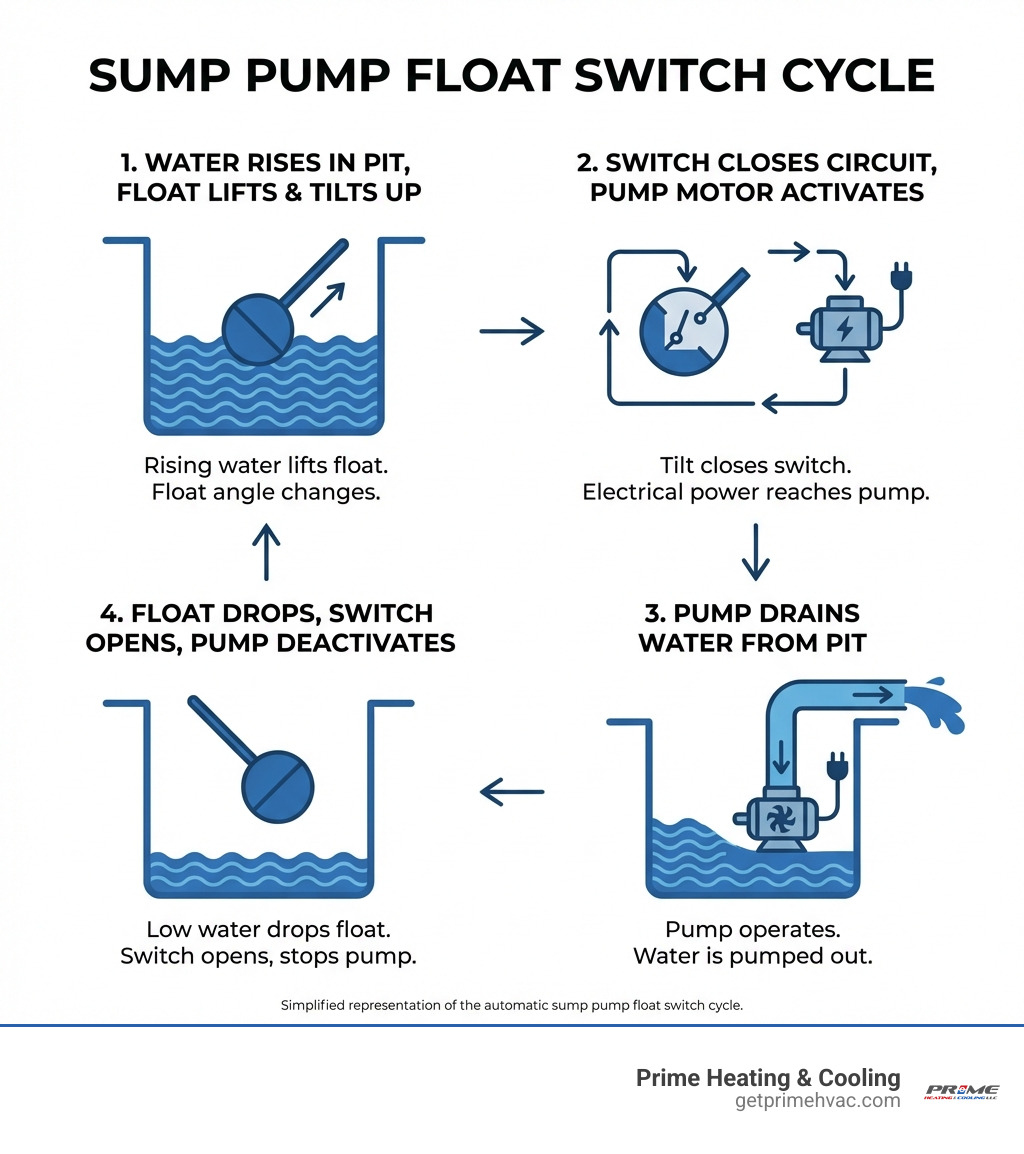
At its core, a sump pump float switch is a level-sensing device that acts as the brain of your sump pump system. Its primary function is to detect rising water levels in your sump pit and automatically activate your pump to drain the water away, safeguarding your basement from potential flooding. When the water subsides, the float switch signals the pump to turn off, preventing it from running dry.
How does this clever little device work its magic? Most float switches contain a mechanical switch inside a sealed, buoyant housing. As water levels rise, the float lifts with the water. When it reaches a predetermined “on” threshold, the internal mechanism—often involving a steel ball that shifts with gravity—closes an electrical circuit. This action sends power to your sump pump, prompting it to spring into action. Once the pump has successfully lowered the water level, the float drops, opening the circuit and turning the pump off.
This simple yet effective principle is vital for both “pump-down” and “pump-up” applications. For dewatering your basement, we typically use a Normally Open (NO) float switch. This means the circuit is open (no power) when the float is at rest (low water), and it closes (powers the pump) as the water rises. Conversely, a Normally Closed (NC) float switch is used in “pump-up” or filling applications, such as maintaining water levels in a cistern. In this case, the circuit is closed at rest, and it opens to stop the pump when the water level reaches the desired high point.
If you want to dive deeper into the electrical and mechanical principles behind float switches, resources like the sump pump article on Wikipedia provide additional background. Understanding how this essential component operates is the first step in ensuring your basement remains dry and your pump functions reliably. For more general information on these critical components, you can visit our Plumbing Services page.
The 4 Main Types of Float Switches: Pros, Cons, and When to Use Them
When it comes to sump pump float switches, there isn’t a one-size-fits-all solution. Different applications and sump pit configurations call for different types of switches. We’ll explore the four main types you’ll encounter, along with their advantages, disadvantages, and ideal use cases.
-
Tethered Float Switch: This is perhaps the most common type. It features a sealed float attached to the pump or discharge pipe by a flexible cord, or “tether.” As the water level rises, the float swings upward in an arc. When it reaches a certain angle, the internal switch activates the pump.
- Pros: Highly reliable and offers the most adjustable pumping range, typically between 7 to 36 inches. It’s often easy to replace if it uses a piggyback plug.
- Cons: Requires a larger sump basin to function properly, generally a minimum of 14 inches in diameter and 16 inches deep, to allow the float to swing freely without obstruction. Debris in the pit can also weigh it down or tangle its cord.
- Best Use: Ideal for larger sump pits where a wide range of water level activation is desired.
-
Vertical Float Switch: Designed for narrower spaces, this switch consists of a float that slides up and down a vertical rod or shaft. The “on” and “off” points are triggered by the float’s position on this rod.
- Pros: Excellent for tighter sump pits, requiring a minimum basin diameter of just 10 inches. It also offers an adjustable pumping range, albeit a smaller one, typically from 0.75 to 6.5 inches.
- Cons: The smaller pumping range can sometimes lead to more frequent cycling of the pump, potentially reducing its lifespan. Like tethered switches, it can be susceptible to debris interference.
- Best Use: Perfect for compact sump pits or narrow pump chambers where a tethered switch wouldn’t have enough room to operate.
-
Diaphragm Float Switch: This unique type doesn’t have a visible floating component. Instead, it relies on water pressure to activate an internal diaphragm, which then triggers the switch.
- Pros: Boasts the smallest footprint, making it suitable for the absolute tightest applications where neither tethered nor vertical switches can fit.
- Cons: Generally considered less reliable than other types. They are prone to clogging with sediment or debris, making them susceptible to malfunction. Their pumping range is usually very small, between 3 to 5 inches.
- Best Use: Reserved for highly specialized situations where space constraints are extreme and other options are simply not feasible.
-
Electronic Float Switch: Representing a more modern approach, electronic switches use sensors (often probes) to detect water levels rather than mechanical floats. They typically employ microprocessor technology and have no moving parts.
- Pros: Highly reliable due to the absence of moving parts, reducing mechanical wear and tear. Some advanced models, like the SumpWatcher, offer diagnostic warnings for pump motor failure or drainage issues. They often come with longer manufacturer guarantees (e.g., 5 years for SumpWatcher).
- Cons: Can be more expensive than traditional mechanical switches. Installation might involve specific sensor placement requirements.
- Best Use: For homeowners seeking maximum reliability, advanced features, and a longer-lasting solution, especially in critical applications.
To help you compare these options at a glance, we’ve put together this table:
| Float Switch Type | Minimum Basin Size | Pumping Range | Reliability | Best Use Case |
|---|---|---|---|---|
| Tethered | 14 inches | 7-36 inches | High | Larger basins, adjustable range |
| Vertical | 10 inches | 0.75-6.5 inches | Fairly High | Tighter spaces, narrow pits |
| Diaphragm | Smallest footprint | 3-5 inches | Low | Extremely tight, unique applications |
| Electronic | Varies | Programmable | Very High | Maximum reliability, advanced features |
Choosing the right sump pump float switch is crucial for effective water management. If you’re unsure which type is best for your specific setup in Rhode Island, our experts at Prime Heating & Cooling can provide guidance. You can find more details on how these switches work and which one might be right for you on our Plumbing Installations & Repairs page.
Is Your Float Switch Failing? Telltale Signs and Common Issues
A malfunctioning sump pump float switch can quickly turn a minor plumbing issue into a major headache, especially with Rhode Island’s unpredictable weather. Recognizing the signs of a failing float switch early can save you from costly basement flooding and extensive water damage.
Here are the telltale signs and common issues we often see:
- Pump Runs Continuously: If your sump pump keeps running long after the water has been drained, even when the pit is empty, it’s a strong indicator that the float switch is stuck in the “on” position. This can happen if the float is physically wedged against the pump or the pit wall, or if the internal electrical contacts have failed and remain closed. A continuously running pump will quickly overheat and burn out, leading to premature pump failure.
- Pump Won’t Turn On: This is perhaps the most alarming sign, as it directly leads to basement flooding. If water levels are rising in your sump pit but the pump remains silent, the float switch might be stuck in the “off” position, tangled, or has simply failed electrically. This means the circuit isn’t closing to activate the pump when it should.
- Irregular Cycling: Does your pump turn on and off very frequently, even with minimal water inflow? This “short cycling” can occur if the float switch is improperly adjusted, has a very small pumping range (common with some vertical or diaphragm switches), or is getting intermittently stuck. Short cycling puts undue stress on the pump motor, significantly reducing its lifespan.
Common Problems Affecting Your Float Switch:
- Stuck Float: The most frequent culprit. The float can become jammed between the pump and the pit wall, or against discharge pipes, preventing its free movement. As the pump vibrates during operation, it can “walk” across the bottom of the pit, eventually trapping the float.
- Debris Interference: Sump pits can accumulate dirt, silt, gravel, and other debris. This material can impede the float’s movement, causing it to get stuck or preventing it from rising or falling correctly.
- Tangled Cord: For tethered float switches, the cord can become tangled around the pump itself, the discharge pipe, or other objects in the pit. This restricts the float’s movement and can prevent activation or deactivation.
- Mechanical Wear and Tear: Float switches are mechanical devices designed to operate thousands of times. Over time, the internal components wear out. Contacts can corrode, the plastic housing can crack, or the internal switch mechanism can simply fail. As we often tell our customers, mechanical devices eventually fail, and float switches are no exception.
If you notice any of these signs, it’s crucial to address the issue promptly. Ignoring a failing sump pump float switch is like driving with a flat tire – it’s only a matter of time before it causes bigger, more expensive problems. For more comprehensive guides on common sump pump issues, check out our Sump Pump Repairs Guide.
A Step-by-Step Guide to Fixing Your Sump Pump Float Switch
Addressing a faulty sump pump float switch can often be a straightforward DIY task, but it requires careful attention to safety. Follow these steps to diagnose, adjust, and, if necessary, replace your float switch.
Safety First: Before You Begin
We cannot stress this enough: safety is paramount when working with electricity and water. Mixing the two can lead to severe injury or electrocution.
- Disconnect Power: Always, always, always disconnect power to your sump pump before you do anything else. Unplug the pump from the wall outlet. If it’s hardwired, turn off the dedicated circuit breaker in your electrical panel. Do not proceed until you’ve confirmed the power is off.
- GFCI Outlet: Ensure your sump pump is plugged into a Ground Fault Circuit Interrupter (GFCI) outlet. This device is designed to cut power rapidly if it detects an electrical fault, providing an extra layer of protection. According to the Electrical Safety Foundation International (ESFI), GFCIs are crucial for preventing electrocution in damp or wet locations like basements.
- Wear Gloves: While not strictly for electrical safety, wearing sturdy gloves can protect your hands from debris, sharp edges, or potentially contaminated water in the sump pit.
Taking these precautions ensures your safety and prevents accidental activation of the pump. For any extensive Plumbing Services or concerns, especially involving electrical components, it’s always wise to consult with a professional.
How to Test Your Float Switch
Once safety is established, you can proceed with testing the float switch.
-
Manual Test (Power Disconnected):
- Reach into the sump pit and manually lift the float switch.
- For most mechanical switches, you should hear a distinct “click” as the internal switch activates. This indicates that the mechanical components are moving correctly.
- If you don’t hear a click, or if the float feels stiff or stuck, it suggests a mechanical problem.
-
Bucket Test (Power Reconnected, with caution):
- Reconnect the power to the sump pump.
- Fill the sump pit with several buckets of water, mimicking a rising water level.
- Observe Activation: Watch to see if the float rises smoothly and the pump turns on when the water reaches the appropriate level.
- Observe Deactivation: Allow the pump to drain the water. Observe if the float drops smoothly and the pump turns off before the pit completely empties. The pump should turn off at least two inches above the pump intake to prevent it from running dry.
- If the pump fails to activate, runs continuously, or cycles irregularly during this test, your float switch is likely the culprit.
This simple testing method can quickly pinpoint whether the float switch is the source of your sump pump troubles. Regular checks like these are part of our 7 Plumbing Tips to Prevent Disasters in Rhode Island.
How to Adjust a Tethered Sump Pump Float Switch
Adjusting a tethered float switch is key to optimizing your sump pump’s performance and preventing short cycling.
Here’s how we approach it:
- Disconnect Power: As always, start by unplugging the pump or turning off its circuit breaker.
- Access the Float Switch: Locate the point where the float switch cord is tethered to the discharge pipe or pump body. This is your “tether point.”
- Adjust the Tether Point: Moving the tether point up or down along the discharge pipe will change the overall water level at which the pump activates. Raising the tether point will make the pump turn on at a higher water level, and vice-versa.
- Adjust the Tether Length: This is the length of the cord between the tether point and the float itself.
- To Increase Pumping Range (and prevent short cycling): Lengthen the tether. This means the float will need to travel further between its “on” and “off” positions, allowing more water to accumulate before the pump starts and draining more before it stops. A typical tethered switch can offer a pumping range of 7-36 inches.
- To Decrease Pumping Range: Shorten the tether. This will make the pump cycle more frequently, which is generally not recommended unless space is extremely limited.
- Set Water Level Set Points: We recommend setting the pump start level a minimum of 6 inches below your basement floor surface, ideally under the weeping tile. Ensure the pump’s intake remains submerged even when the pump turns off. This prevents the pump from running dry, which can lead to cavitation (air bubbles damaging the impeller) or airlocks.
- Consider a Weep Hole: If your sump pit tends to run completely dry, we often recommend drilling a small “weep hole” (about 3/16 inch) in the discharge pipe a few inches above the pump. This allows any water remaining in the discharge pipe to drain back into the pit, preventing cavitation if the pump loses its prime.
- Test and Readjust: Reconnect power and perform the bucket test described above. It’s common for adjustments to take 2-3 attempts to get the float set perfectly.
Proper adjustment ensures your pump activates efficiently, protects its motor, and keeps your basement dry without excessive cycling.
When to Replace Your Sump Pump Float Switch
While adjustment and troubleshooting can resolve many issues, there comes a time when replacement is the only option.
- Typical Lifespan: The lifespan of a sump pump float switch is unpredictable. As mechanical devices, they are subject to wear and tear and will eventually fail. While a sump pump itself might last 7-10 years, the float switch, with its constant movement, can fail much sooner. Electronic switches tend to have longer guarantees, sometimes up to 5 years, due to their lack of moving parts.
- Signs of Irreversible Failure:
- The float switch doesn’t click when manually lifted, even after clearing debris.
- The pump runs continuously or fails to turn on after you’ve tried adjusting the float and clearing obstructions.
- The float housing is visibly cracked or damaged.
- The electrical cord is frayed or damaged.
- Electrical Specifications: When replacing, always ensure the new float switch matches the electrical specifications of your existing pump. This includes:
- Voltage: Typically 115V for residential pumps in Rhode Island.
- Amperage: The float switch must be rated to handle the maximum amperage draw of your pump motor. Using an undersized switch can lead to premature failure.
- Cord Length: Float switches come with various cord lengths (e.g., 10 ft., 20 ft., 40 in.). Choose one appropriate for your pit depth and desired pumping range.
- Other Applications: Float switches aren’t just for sump pumps! They are also commonly used in sewage pumps, effluent systems, and even as triggers for high-water alarms in various water management applications.
Replacing a float switch is often a cost-effective repair that can extend the life of your entire sump pump system. For guidance on specific replacement procedures, you can find helpful resources like How to Replace a Sump Pump Float Switch to assist you.
Frequently Asked Questions about Sump Pump Float Switches
We often get questions from homeowners in Rhode Island about their sump pump float switches. Here are some of the most common inquiries and our expert answers:
How high should I set my sump pump float?
The ideal height for your sump pump float switch is a balance between preventing your basement from flooding and preventing your pump from running dry or short cycling. We generally recommend setting the “on” point of the float a few inches above the top of your sump pump motor, or approximately 4-6 inches above the pump’s suction intake. Crucially, the pump start level should be at least 6 inches below the floor surface, especially if you have weeping tiles, to ensure effective drainage. This setup helps to:
- Prevent Air Lock: By keeping the pump’s intake submerged, you maintain its prime and prevent air from getting trapped, which would stop the pump from working.
- Prevent Motor Burnout: Ensuring the pump turns off with some water still in the pit, and not running completely dry, protects the motor from overheating and premature wear.
What is the typical lifespan of a float switch?
Unlike some plumbing components with clear expiration dates, the typical lifespan of a sump pump float switch is quite variable. As we’ve discussed, they are mechanical devices constantly exposed to water, debris, and repeated cycles. This leads to inevitable mechanical wear. While a sump pump unit might last 7 to 10 years, the float switch component often fails sooner. Electronic float switches, with their lack of moving parts, generally offer greater longevity and often come with longer manufacturer guarantees (some up to 5 years).
There’s no predictable lifespan for a mechanical float switch; it can fail without warning. That’s why regular testing, as outlined above, is key to catching potential issues before they lead to water damage.
Can I replace just the float switch?
Yes, in most cases, you absolutely can replace just the sump pump float switch without needing to replace the entire sump pump. This is often a more cost-effective repair.
- Piggyback Plugs: Many float switches, especially tethered and vertical types, come with a “piggyback” plug. This means your pump plugs into the float switch’s plug, and then the float switch plugs into the wall outlet. This design makes replacement incredibly easy – simply unplug the old one, plug in the new one, and you’re good to go.
- Hardwired Switches: If your float switch is hardwired directly into your pump or electrical system, replacing it will require a bit more electrical know-how. In such instances, we recommend contacting a qualified professional to ensure the work is done safely and correctly.
Replacing just the switch is a common and effective way to restore your sump pump’s automatic functionality. You can explore various Pump Switches available to find the right fit for your system.
Conclusion
The sump pump float switch is a small but mighty hero in your home’s defense against water damage. Understanding how it works, recognizing the signs of failure, and knowing how to test and adjust it are crucial steps in proactive home maintenance. With Rhode Island’s blend of heavy rains and spring thaws, ensuring your sump pump system is in top condition isn’t just a convenience—it’s a necessity.
By taking the time to inspect and maintain your float switch, you can prevent costly basement flooding, safeguard your belongings, and protect the structural integrity of your home. If you’re ever in doubt, or if you prefer to leave it to the experts, Prime Heating & Cooling has been providing reliable plumbing services to communities across Rhode Island for 20 years. Our skilled technicians are available 24/7 with a customer-first approach, ready to deliver energy-efficient solutions and peace of mind.
Don’t wait for the next storm to find a faulty float switch. Contact us for professional plumbing installations & repairs today, and let us help you keep your home dry and safe.