
When Your Home Goes Cold: Understanding Furnace Ignition Failure
Furnace won’t ignite is one of the most stressful heating problems you can face, especially during a New England winter. When the temperature drops and your furnace refuses to light, it can transform your cozy home into an uncomfortably cold space within hours.
Quick Answer: Common Reasons Your Furnace Won’t Ignite
- Thermostat issues – Wrong settings, dead batteries, or incorrect mode
- Dirty air filter – Restricted airflow triggers safety shutoff
- Tripped circuit breaker – No power to ignition system
- Gas supply problems – Closed valve or gas line issue
- Faulty ignitor – Worn or broken ignition component
- Dirty flame sensor – Cannot detect flame properly
- Pilot light out – On older furnace models
Most furnaces are designed to last 15 to 20 years before needing replacement. During that time, ignition issues can happen for many reasons, from simple fixes like a tripped breaker to more complex problems like a failing ignitor or flame sensor. According to the Centers for Disease Control and Prevention (CDC), homeowners should have their heating system serviced by a qualified technician every year to prevent both performance issues and dangerous situations like carbon monoxide buildup.
When your furnace won’t ignite, it’s trying to tell you something. The good news? Many ignition problems have straightforward solutions you can tackle yourself. The key is knowing what to check first, understanding when a problem is beyond DIY repair, and recognizing when to call in professional help.
Safety First
Before you begin any troubleshooting, know this: if you smell rotten eggs (the odor added to natural gas), leave your home immediately and call your gas company. Don’t flip any switches or use any electrical devices. Gas leaks are life-threatening emergencies that require immediate professional response.
I’m Tyler Steiner, founder and CEO of Prime Heating & Cooling, and I’ve spent years diagnosing and repairing heating systems across Rhode Island and Massachusetts. Throughout my career, I’ve helped hundreds of homeowners troubleshoot situations where their furnace won’t ignite, from simple fixes to complex component failures that require expert intervention.
First Steps: Safety Precautions & Basic Checks
When your furnace decides to take an unexpected vacation, our first priority is always your safety. Before we dive into troubleshooting why your furnace won’t ignite, let’s ensure the environment is safe for us to proceed.
Safety Before You Start
We cannot stress this enough: your safety comes first. If you ever detect the distinct smell of rotten eggs, which is the odorant (mercaptan) added to natural gas to make leaks detectable, you must act quickly and decisively. This smell is a clear sign of a gas leak, which is extremely dangerous.
What to do if you smell gas:
- Evacuate Immediately: Get everyone, including pets, out of your home. Do not use your phone inside, do not turn lights on or off, and do not use any appliances. Any spark could ignite the gas.
- Call for Help: Once you are a safe distance away, call your gas company’s emergency line or 911.
- Do Not Re-enter: Wait for emergency services to give you the all-clear before re-entering your home.
Beyond gas leaks, we also need to be mindful of carbon monoxide (CO) – an invisible, odorless, and tasteless gas produced by fuel-burning appliances. The Centers for Disease Control and Prevention (CDC) recommends having your heating system serviced by a qualified technician every year to prevent CO dangers. For more information on carbon monoxide, you can visit the CDC’s FAQs or review the overview at Carbon monoxide poisoning. If your furnace is showing signs of malfunction, especially if you have CO detectors going off, it’s crucial to call us immediately.
Finally, when troubleshooting any electrical appliance, it’s always wise to cut the power. This isn’t just a suggestion; it’s a golden rule for preventing electrical shocks. We’ll guide you through specific power checks for your furnace, but always remember to err on the side of caution.
Simple Troubleshooting Steps When Your Furnace Won’t Ignite
Alright, with safety covered, let’s roll up our sleeves and tackle some of the most common, and often simplest, reasons your furnace won’t ignite. These are the first things we check when a customer calls us from places like Smithfield or Warwick, and they can often save you a service call.
-
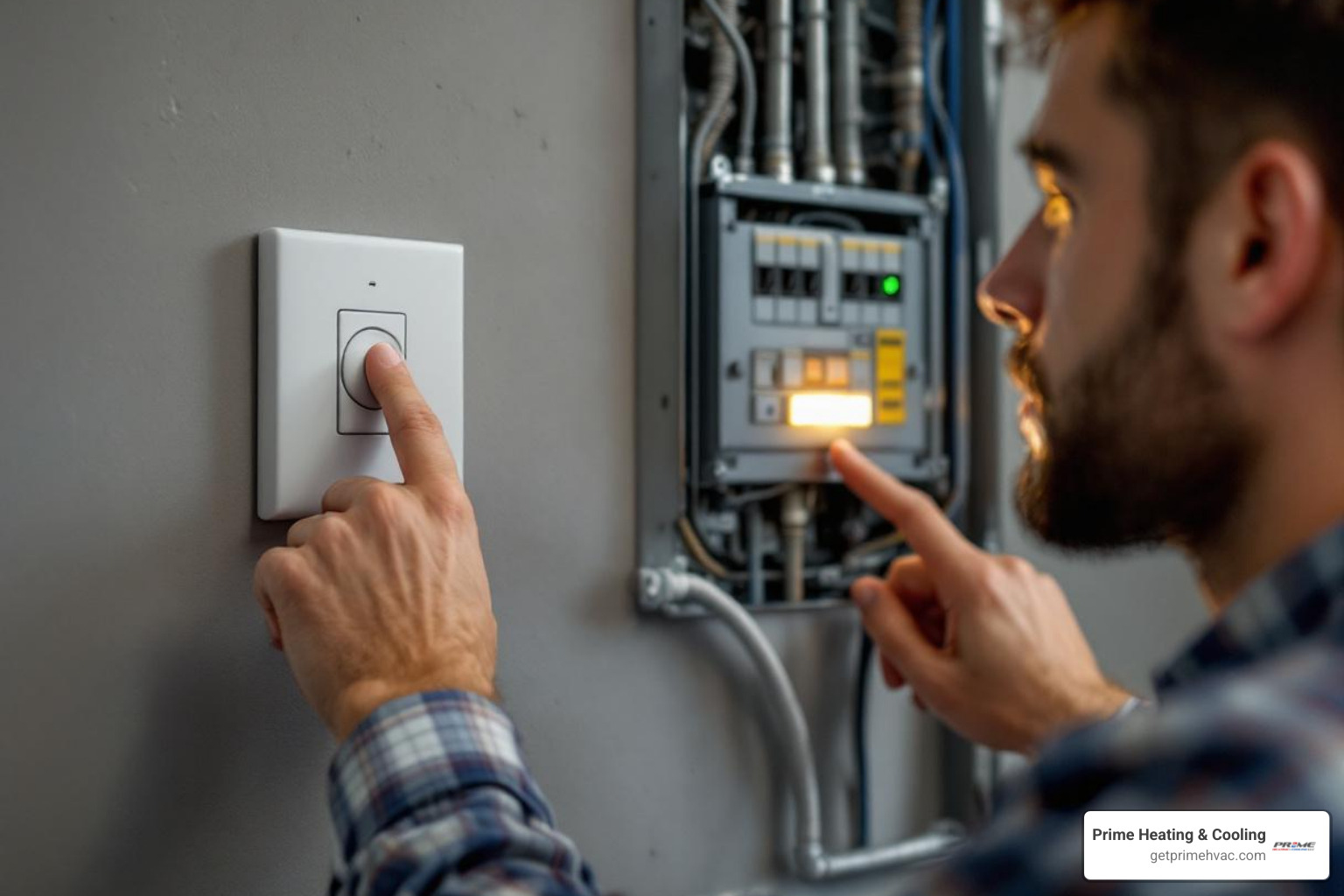
The Thermostat Check: This might sound obvious, but we’ve seen it countless times!
- Is it set to HEAT? Make sure your thermostat isn’t accidentally set to “Cool” or “Off.”
- Is the temperature setting high enough? Your furnace won’t kick on if the desired temperature is lower than your home’s current temperature. Try setting it a few degrees higher than what’s currently displayed.
- Are the batteries dead? Many digital thermostats run on batteries. If the screen is blank or flashing “low battery,” replacing them is a quick fix. We recommend using AA lithium batteries for better consistency and longer life.
- Is it communicating? If your smart thermostat has lost its programming or connection, it might not be sending the “call for heat” signal. Sometimes a simple reset of the thermostat can resolve this.
-
Circuit Breaker Trip: Furnaces require electricity to operate, even gas models, to power components like the blower motor, ignitor, and control board.
- Head to your electrical panel (usually in your basement or utility closet).
- Look for a breaker labeled “Furnace” or “HVAC” that has flipped to the “Off” or middle position.
- If you find one, firmly flip it all the way to “Off” and then back to “On.”
- Important: If the breaker trips again immediately, do NOT keep resetting it. This indicates a short or an overloaded circuit, and continuous resetting can cause damage or fire. This is a clear sign to call us for professional diagnosis.
-
Furnace Power Switch: Most furnaces have a dedicated power switch, often resembling a light switch, located on or near the furnace unit itself. It’s usually red or labeled.
- Ensure this switch is in the “On” position. It can sometimes be accidentally flipped off by a curious child, during cleaning, or by someone working nearby.
-
Furnace Door Safety Switch: Your furnace has a safety switch that prevents it from operating when the access panel or door is open. This is to protect you from moving parts and heat.
- Make sure the furnace door is securely closed and latched. If it’s even slightly ajar, the furnace won’t ignite.
These initial checks cover many common reasons a furnace won’t ignite. If these simple steps don’t resolve the issue, don’t worry, we’ll continue our investigation!
Why Your Furnace Won’t Ignite: Common Causes from Simple to Complex
Now that we’ve covered the basics, let’s dig deeper into the mechanical and systemic issues that prevent your furnace from lighting up. This section will diagnose the most frequent reasons for ignition failure, moving from easy-to-fix issues to more complex component failures.
Airflow Problems: The Clogged Filter Culprit
One of the most common,, culprits behind a furnace that won’t ignite is a dirty air filter. It’s like trying to breathe through a pillow – eventually, you’ll struggle!
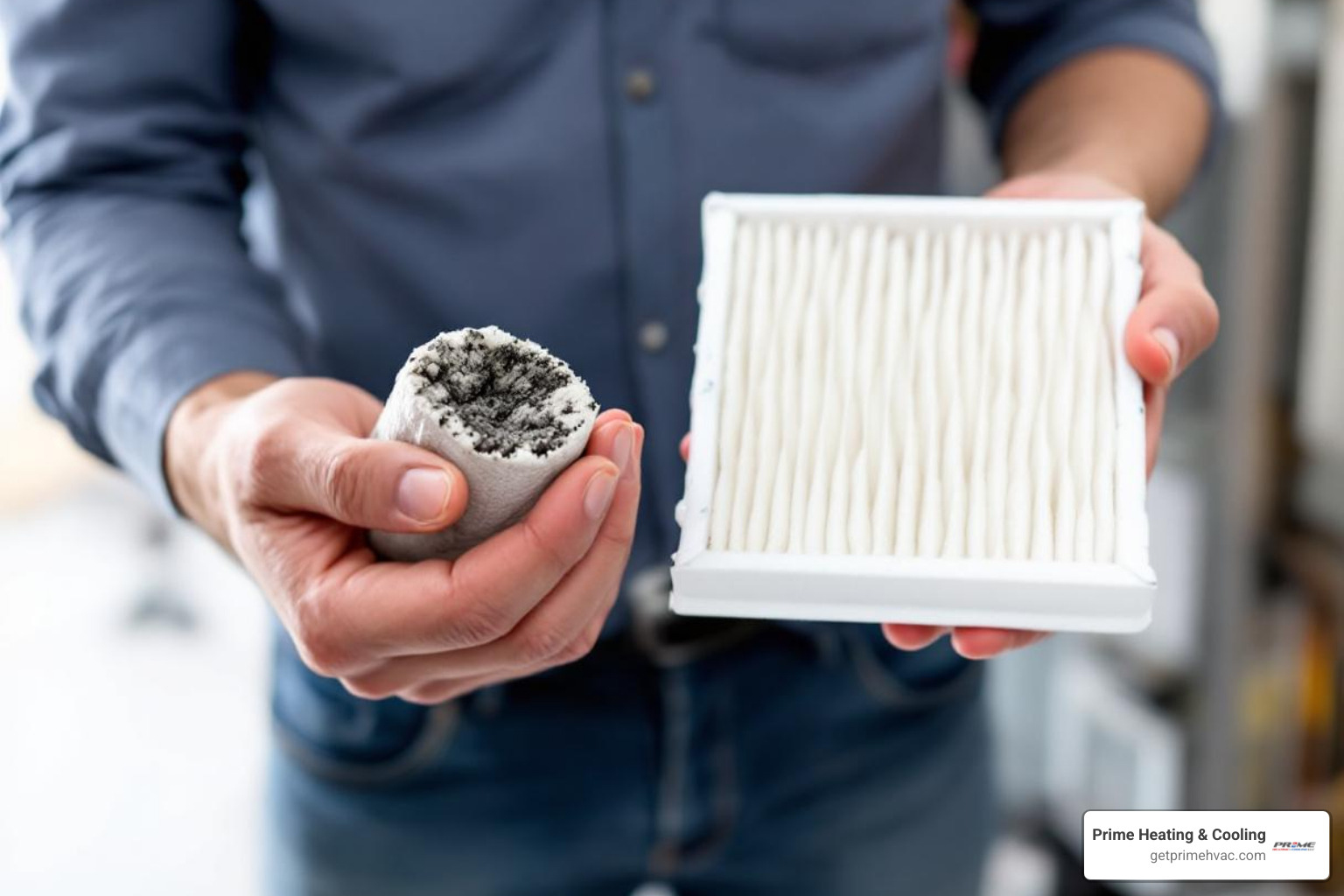
A dirty air filter restricts the crucial airflow your furnace needs to operate efficiently and safely. When airflow is impeded, the furnace’s heat exchanger can overheat. Modern furnaces are equipped with safety features, such as a high-limit switch, designed to prevent dangerous overheating. If this switch detects that the furnace is getting too hot due to restricted airflow, it will shut down the unit, preventing the burners from igniting as a safety measure. This can often lead to a scenario where your Furnace Keeps Turning On and Off, or simply refuses to start at all.
How often should you check or replace your air filter?
Filters should be checked every one to three months, depending on several factors:
- Filter type: Some high-efficiency filters can last longer.
- Household usage: If your furnace runs frequently, filters will get dirty faster.
- Pets: Pet dander significantly increases filter accumulation.
- Allergies: If anyone in your home has allergies, more frequent changes can improve indoor air quality.
- Dust levels: If you live in a particularly dusty area or are doing renovations, check more often.
We advise our clients in places like Lincoln and North Scituate to check their filters monthly and replace them every 1-3 months. It’s a simple, inexpensive task that can prevent major headaches and even costly repairs. If your filter is gray, brown, or black, and you can’t see light through it when held up, it’s definitely time for a change!
Fuel Supply Issues: Is Your Furnace Getting Gas?
For a gas furnace to ignite, it obviously needs gas! If your furnace won’t ignite, it’s crucial to confirm that it’s receiving its fuel supply.
- Check the Gas Valve Position: Near your furnace, you’ll find a manual shut-off valve on the gas line. This valve typically has a handle. If the handle is parallel to the gas pipe, it’s open (ON). If it’s perpendicular to the pipe, it’s closed (OFF). Ensure it’s in the open position. Sometimes, during maintenance or other household work, this valve can be accidentally turned off.
- Checking Other Gas Appliances: If the furnace gas valve is open, but your furnace still won’t ignite, it’s a good idea to check if other gas appliances in your home are working. Try lighting a burner on your gas stove or checking your gas water heater. If other gas appliances are also not working, the issue might be with your main gas supply from the utility company, or a broader gas line problem in your home. In such cases, contact your gas provider immediately.
- Gas Line Issues: A blocked or too-small gas line can also prevent your furnace from getting enough fuel. While rare, this can happen if there’s debris in the line or if the line isn’t adequately sized for your furnace’s needs. These are issues that definitely require professional attention.
Understanding Your Ignition System
Modern furnaces have come a long way from the continuously burning pilot lights of yesteryear. The type of ignition system your furnace uses directly impacts how we troubleshoot ignition problems. Furnaces manufactured since 2010 typically feature electronic ignitors, which are more efficient.
Let’s look at the differences:
| Ignition System Type | How It Works | Common Failure Points | Furnace Age |
|---|---|---|---|
| Standing Pilot Light | A small, continuous flame that ignites the main burners when the thermostat calls for heat. Always burning. | Pilot light goes out (drafts, clogged orifice, thermocouple failure). | Older furnaces (pre-2000s generally) |
| Intermittent Pilot | An electronic spark ignites a pilot light only when heat is needed. The pilot then ignites the main burners. | Spark ignitor failure, pilot light orifice clog, flame sensor issues for pilot. | Mid-range age furnaces (2000s-early 2010s) |
| Hot Surface Ignition (HSI) | An electrically heated silicon carbide or nitride ignitor glows red-hot to ignite the main burners directly. | Ignitor cracks or burns out (becomes too resistive), control board issues. | Modern furnaces (post-2010 generally) |
If your furnace won’t ignite and is an older model with a standing pilot light, checking if the pilot is lit is a crucial first step. If it’s out, you might be able to relight it by following the instructions on your furnace’s access panel. However, if it repeatedly goes out, it’s a sign of an underlying problem that needs professional diagnosis.
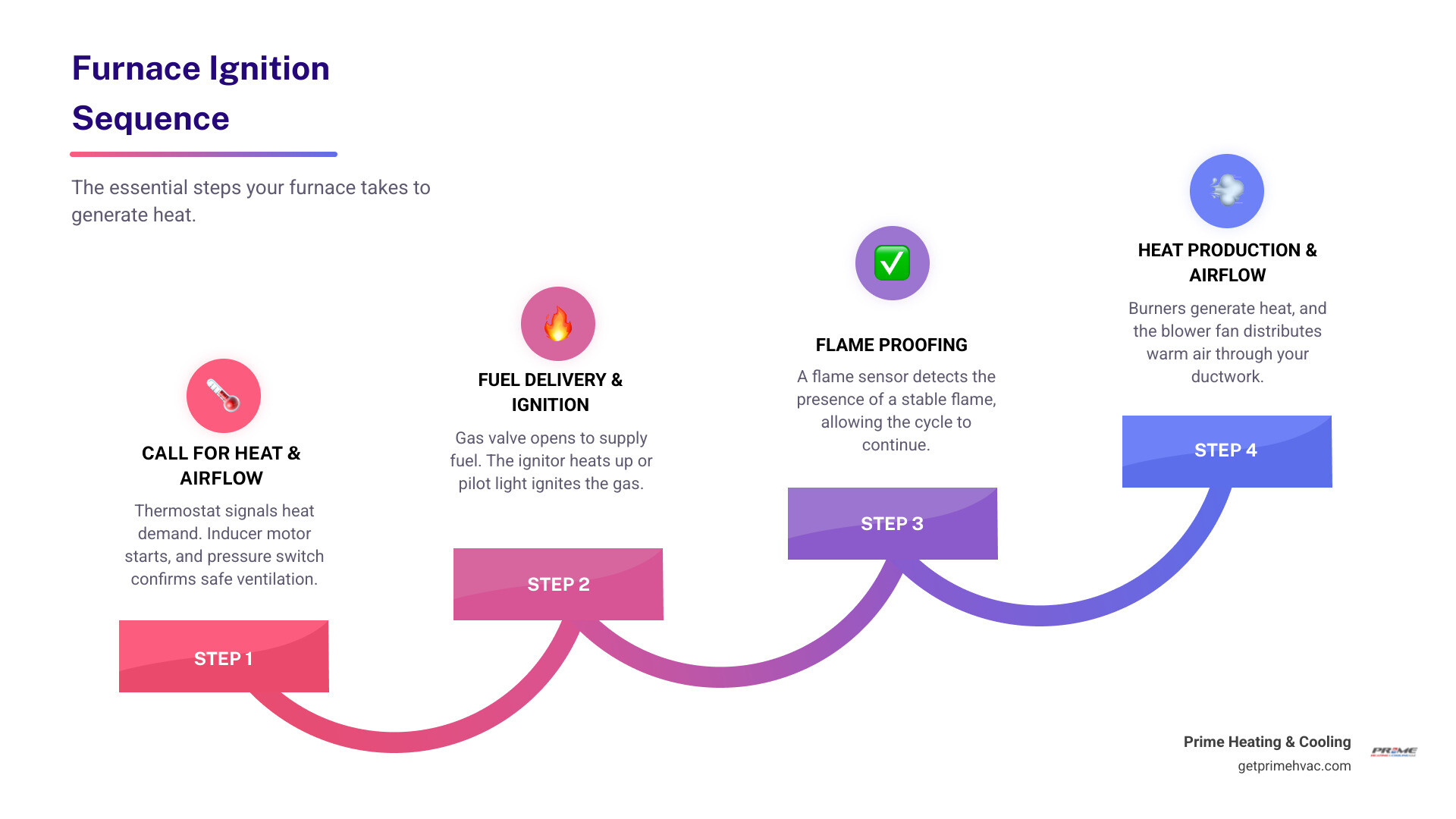
For furnaces with electronic ignition (Intermittent Pilot or Hot Surface Ignition), you won’t see a continuously burning flame. Instead, you might hear a clicking sound (spark ignitor) or see a glow (hot surface ignitor) just before the burners should light. If you hear clicking or see a glow, but no flame, the problem often lies with the gas valve or flame sensor. If you hear nothing at all, it could be the ignitor itself or the control board.
Advanced Issues Why a Furnace Won’t Ignite
When the simple checks don’t solve the mystery of why your furnace won’t ignite, we often move on to more intricate components. These issues typically require a trained eye and specialized tools, which is where our team at Prime Heating & Cooling, serving areas like Johnston and East Greenwich, really shines.
-
Faulty Flame Sensor: This small, metal rod is a critical safety device. Once the burners ignite, the flame sensor detects the presence of the flame and signals the control board that everything is working correctly. If the sensor doesn’t “see” a flame (even if there is one), it assumes a dangerous gas buildup and immediately shuts off the gas supply, preventing ignition.
- Dirty Flame Sensor: Over time, carbon buildup can accumulate on the flame sensor, insulating it and preventing it from accurately detecting the flame. This is a very common reason a furnace will light briefly, then shut off. Cleaning it with fine-grit sandpaper can sometimes resolve this, but it’s a delicate process best left to professionals to avoid bending or damaging the sensor.
- Malfunctioning Flame Sensor: Sometimes, the sensor itself can fail and need replacement.
-
Malfunctioning Ignitor: For electronic ignition systems, the ignitor is what actually starts the flame.
- Hot Surface Ignitor: If you have an HSI, it should glow bright orange for several seconds. If it’s cracked, broken, or not glowing, it won’t ignite the gas.
- Spark Ignitor: If you hear a rapid clicking sound but no ignition, the spark ignitor might be failing to produce a strong enough spark, or the gas isn’t reaching it.
- A common symptom of a failing ignitor is the furnace clicking but not igniting. Our technicians are experts in diagnosing and replacing these components quickly, ensuring your home in North Providence or Smithfield is warm again.
-
Dirty Gas Burners: Just like anything else, your furnace burners can get dirty over time. Dust, grime, or rust can accumulate, partially blocking the gas ports. This can lead to incomplete combustion, weak flames, or prevent ignition altogether. Dirty burners can also create higher amounts of carbon monoxide, posing a serious safety risk. Cleaning these requires careful disassembly and specialized tools, and we strongly advise against DIY attempts, as it could void warranties or create dangerous conditions. Our Expert Heating Repair in RI includes thorough burner cleaning.
-
Clogged Condensate Drain: This issue specifically affects high-efficiency condensing furnaces. These furnaces produce acidic water (condensate) as a byproduct, which drains away through a PVC pipe. If this drain line becomes clogged with algae or debris, the condensate will back up. Most high-efficiency furnaces have a safety float switch in the condensate pan that will shut down the furnace to prevent water damage, effectively stopping the ignition sequence. Clearing a clog can sometimes be a DIY task, but if the problem persists, it’s best to call us.
When to Stop and Call a Professional
While we empower our customers with knowledge, knowing your limits is key to avoiding costly mistakes or dangerous situations. Here’s when to pick up the phone and let the experts at Prime Heating & Cooling take over.
Signs You Need an Expert Technician
We understand the desire to fix things yourself, but some furnace problems, especially when your furnace won’t ignite, are best left to our skilled technicians. Call us immediately if:
- DIY Steps Failed: You’ve gone through all the basic troubleshooting steps (thermostat, circuit breaker, filter, gas valve) and your furnace still refuses to light.
- Breaker Trips Repeatedly: If your furnace’s circuit breaker keeps tripping after you reset it, there’s an electrical short or overload that needs immediate professional attention. This is a serious fire hazard.
- Burning Smells (Electrical/Plastic): While a faint dust smell is normal when turning on the furnace for the first time, a strong smell of burning plastic or electrical components indicates overheating or a failing part. Turn off the furnace and call us.
- Loud Banging Noises: A delayed ignition can sometimes cause a loud “bang” as gas accumulates before igniting. This is dangerous and means your ignition system is malfunctioning.
- Error Codes on Furnace Panel: Many modern furnaces have diagnostic lights or digital displays that show error codes. These codes provide valuable clues to our technicians, allowing for quicker and more accurate diagnosis.
- Gas-Related Repairs: Any work involving gas lines, gas valves, or burner assembly should only be performed by a licensed professional. The risks of gas leaks or improper combustion are too high for DIY attempts.
- You’re Unsure: If you’re ever uncomfortable or unsure about a step in the troubleshooting process, that’s your cue to call us. We offer reliable Tips for Hiring a Heating Contractor and are always ready to help.
Our team is equipped with the knowledge, tools, and experience to safely diagnose and repair complex furnace issues across all our service areas, including Scituate, Lincoln, and Coventry.
The Value of Professional Maintenance
An ounce of prevention is worth a pound of cure, especially when it comes to your furnace. Regular professional maintenance is the single best way to prevent your furnace won’t ignite emergencies and ensure your system runs smoothly all winter long.
The Centers for Disease Control and Prevention (CDC) recommends that homeowners have their heating system serviced by a qualified technician every year. What are the benefits?
- Preventing Future Problems: Technicians can spot small issues – like a dirty flame sensor or a weak ignitor – before they turn into major breakdowns. This proactive approach saves you from unexpected cold snaps.
- System Longevity: A well-maintained furnace lasts longer. Furnaces are designed to last 15 to 20 years, and regular tune-ups help them reach their full lifespan.
- Energy Efficiency: Clean and properly adjusted components work more efficiently, which translates to lower energy bills for your home in Providence or Franklin.
- Safety Inspections: Annual maintenance includes critical safety checks for gas leaks, carbon monoxide, and proper ventilation, protecting your family.
- Warranty Compliance: Many furnace manufacturers require annual professional maintenance to keep your warranty valid.
We offer comprehensive annual tune-ups that cover everything from cleaning burners and checking gas pressure to inspecting electrical connections and testing safety controls. It’s a small investment that pays off in comfort, safety, and savings. Learn more about The Importance of HVAC Tune-Ups for Rhode Island Winters.
Repair or Replace?
When your furnace won’t ignite, especially if it’s an older unit, the question often arises: should we repair it or consider replacing it? This is a common dilemma for homeowners in Smithfield and throughout Massachusetts.
Several factors come into play:
- Furnace Age: Furnaces are generally designed to last 15 to 20 years. If your furnace is approaching or has exceeded this age, and you’re facing a significant repair, replacement might be the more economical long-term choice.
- Frequency of Repairs: If you’re calling us for repairs every winter, the cumulative cost can quickly add up. At some point, these frequent repairs outweigh the cost of a new, more reliable system.
- Rising Energy Bills: An aging or inefficient furnace works harder to heat your home, leading to higher energy consumption and increased utility bills. A new, high-efficiency furnace can significantly reduce these costs.
- Cost-Benefit Analysis: We can help you weigh the cost of the current repair against the benefits of a new system, including improved efficiency, reliability, and potentially better comfort.
- Safety Concerns: If your furnace has recurring safety issues, such as carbon monoxide leaks or frequent gas valve problems, replacing it is often the safest option.
While a new furnace is a significant investment, the long-term savings on energy bills and reduced repair costs, along with improved comfort and safety, often make it a wise decision. Our team provides Expert Furnace Installation Services and can help you choose the right system for your home and budget.
Frequently Asked Questions about Furnace Ignition
Why is my furnace clicking but not turning on?
A clicking sound often indicates the ignition system is trying to start but failing. This is commonly caused by a faulty ignitor, a dirty flame sensor that isn’t detecting the flame, or a problem with the gas valve. When the furnace receives the “call for heat” from the thermostat, the control board initiates the ignition sequence. If it’s an electronic spark ignition system, you’ll hear rapid clicking as it attempts to generate a spark to light the gas. If the gas isn’t flowing, or if the flame sensor immediately tells the system there’s no flame after a brief ignition attempt, the system will shut down and try again, leading to that frustrating clicking sound without successful ignition. It’s a safety mechanism to prevent gas buildup.
Can a dirty filter really stop a furnace from igniting?
Yes, absolutely. A severely clogged filter restricts airflow, causing the furnace’s heat exchanger to overheat. When the heat exchanger gets too hot, a safety device called the high-limit switch will then shut the furnace down to prevent damage or a fire, which effectively stops the ignition process. This is a critical safety feature. Without proper airflow, the furnace cannot safely dissipate the heat it generates, leading to a shutdown even before the main burners can properly ignite or stay lit. This is why regular filter replacement is one of the easiest and most important maintenance tasks you can do to prevent your furnace won’t ignite issues.
Is it safe to relight my own pilot light?
For older furnaces with a standing pilot, it is generally safe if you follow the manufacturer’s instructions carefully. These instructions are usually found on a label inside the furnace’s access panel. You’ll typically need to locate the pilot assembly, turn a knob to the “pilot” setting, hold it down while lighting the pilot flame with a match or long lighter, and then hold the knob for a minute or so until the thermocouple (a safety device that senses the pilot flame) heats up. However, if the pilot light repeatedly goes out, it indicates an underlying problem like a faulty thermocouple, a strong draft, or a clogged pilot orifice. In such cases, it’s not just about relighting; it’s about diagnosing the root cause, which requires professional diagnosis from a qualified heating contractor. Repeated pilot outages are a sign that something is amiss and should be addressed by an expert to ensure safe operation.
Stay Warm with Reliable Furnace Service
A furnace that won’t ignite is a major inconvenience, but by following these diagnostic steps, you can often identify the problem. For simple issues like a wrong thermostat setting or a dirty filter, you can restore your heat quickly. For more complex problems involving gas valves, flame sensors, or electrical components, safety and expertise are paramount. Don’t hesitate to protect your home and comfort. The experienced technicians at Prime Heating & Cooling are available 24/7 to diagnose and resolve any ignition issues, ensuring your system runs safely and efficiently. For comprehensive diagnostics and repairs, explore our expert HVAC services in Rhode Island.