
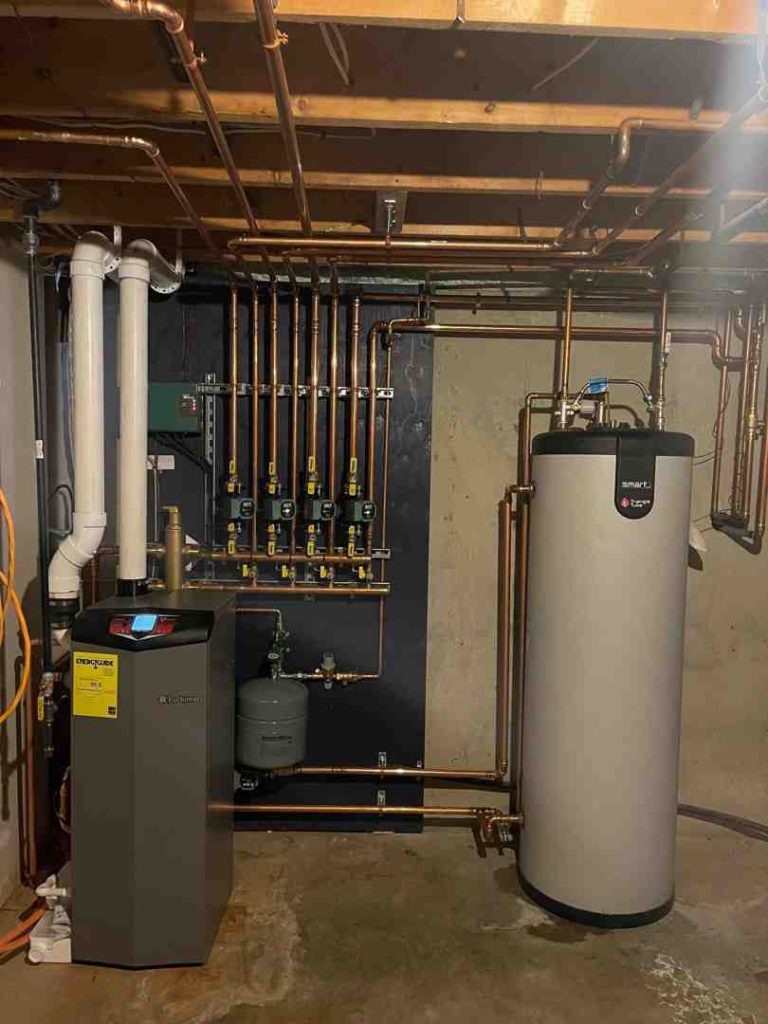
Why Your Water Heater Matters More Than You Think
Water heater replacement is often overlooked until your shower runs ice cold. Here’s what you need to know:
When to Replace Your Water Heater:
- Age: Most tank-style water heaters last 8-12 years
- Rusty water coming from taps
- Rumbling or banging noises from the tank
- Visible leaks around the base
- Inconsistent temperatures or lack of hot water
Why Replace Now:
- Avoid emergency costs and water damage
- Save up to 30% on energy bills with tankless models
- Save up to 60% with hybrid heat pump models
- Access federal tax credits up to $2,000 (30% of project costs through 2032)
Your water heater is a hard-working,, appliance essential for showers, dishwashing, and laundry. Accounting for up to 20% of your home’s energy use, a failing water heater presents warning signs like lukewarm water, strange noises, or leaks that demand attention.
Most tank-type heaters last 8-12 years. Waiting for a total failure can lead to emergency costs, limited choices, and potential water damage. The good news is that upgrading to a modern, energy-efficient water heater can significantly reduce your energy bills. With current federal tax credits offering 30% back (up to $2,000) on eligible heat pump water heaters, there’s never been a better time to replace an aging unit.
This guide covers recognizing failure signs, choosing the right unit, understanding costs, and the DIY vs. pro decision.
I’m Tyler Steiner, CEO of Prime Heating & Cooling. With extensive experience helping Rhode Island and Massachusetts homeowners with water heater replacement, I’ve seen how our plumbing services help them make proactive decisions that save money, prevent disasters, and ensure comfort.
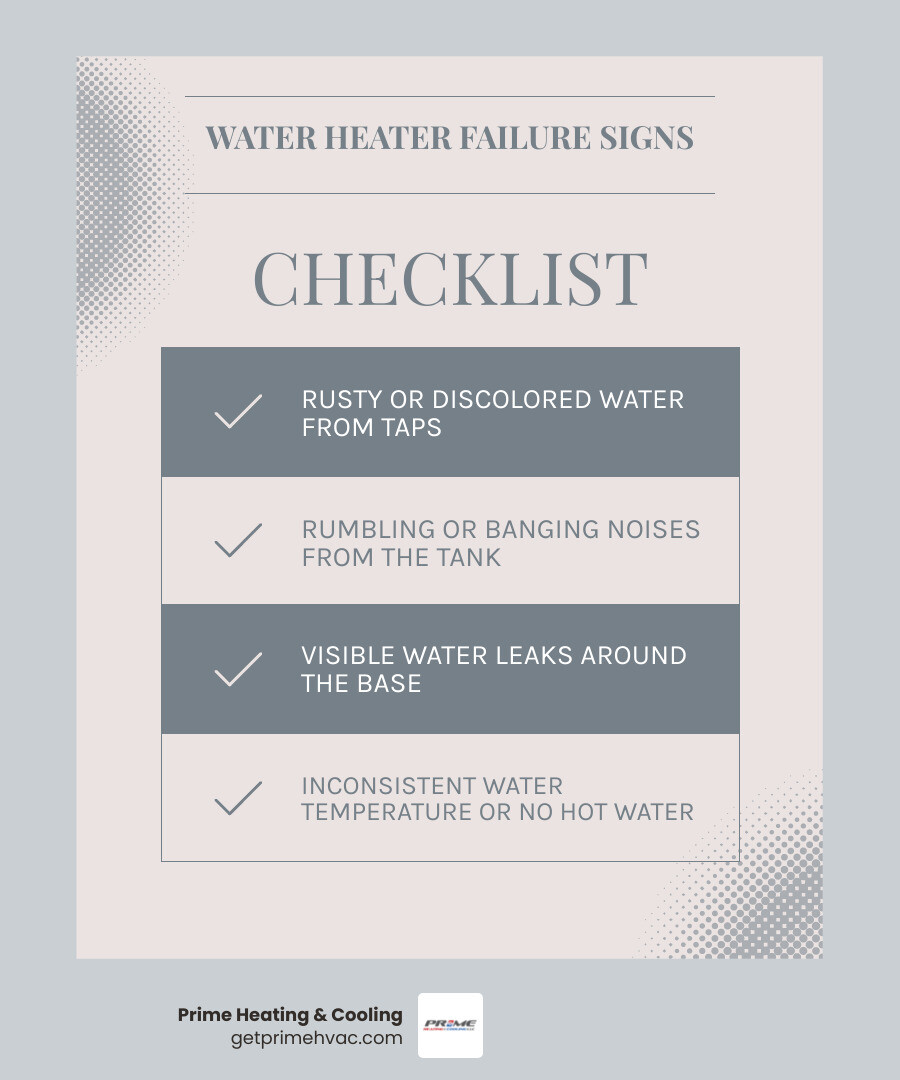
Is It Time for a Replacement? Key Signs Your Water Heater is Failing
A sudden cold shower is a rough start to any New England morning. Recognizing the signs of a failing water heater can prevent emergencies and water damage. Since most tank-type units last 8-12 years, it’s smart to plan for a water heater replacement as your unit ages.
Here are the key indicators that your water heater is failing:
- Age: If your unit is over 10 years old, it’s on borrowed time. You can find its age using the serial number on the manufacturer’s label, often decoded with charts from resources like InterNACHI. Proactive replacement is safer than waiting for a breakdown. When should you consider replacing your unit?
- Rumbling Noises: Rumbling or banging sounds usually mean sediment has built up in the tank. This sediment hardens, reducing efficiency and risking damage to the tank’s lining.
- Leaking Tank: A leak from the base of the tank is a major red flag, indicating internal corrosion. Unlike a leaky connection, a tank leak is usually irreparable and requires immediate water heater replacement.
- Rusty or Discolored Water:
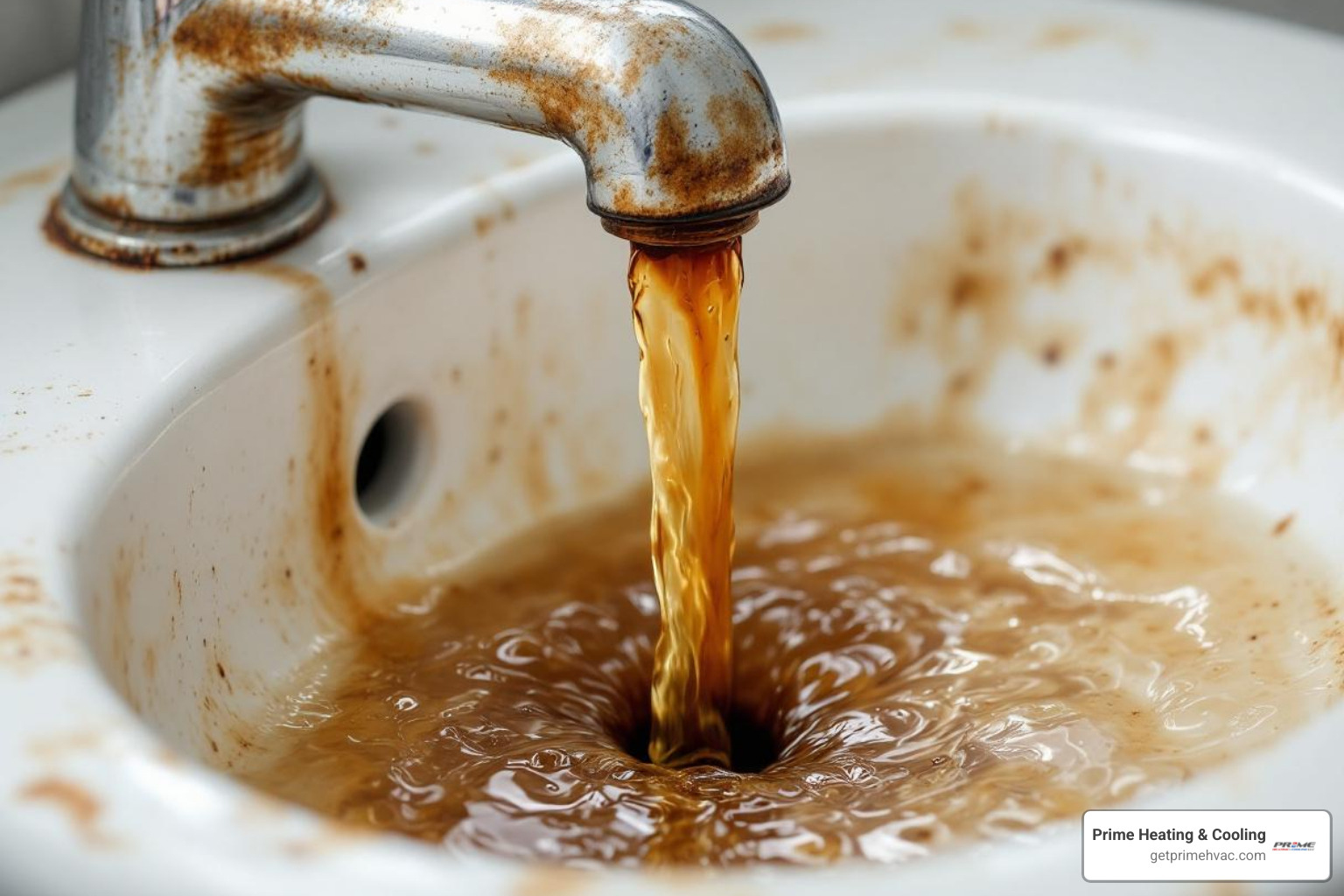
Rusty water from your hot tap points to corrosion inside the water heater's tank. If it only happens with hot water, the heater is the likely culprit, signaling it's deteriorating and may soon leak.
- Inconsistent Water Temperature or Lack of Hot Water: If you’re running out of hot water quickly, it could be a failing heating element, a bad thermostat, or sediment buildup reducing the tank’s effective capacity.
- Sediment Buildup: Common in areas with hard water like Rhode Island and Massachusetts, sediment settles in the tank, causing rumbling and reducing hot water. This buildup insulates the bottom, forcing the heater to work harder, which lowers efficiency and shortens its lifespan.
Ignoring these signs can lead to an emergency, water damage, and a rushed decision. We recommend addressing these issues proactively.
Common Water Heater Problems and Troubleshooting
While some signs point to water heater replacement, others may be repairable, saving you money in the short term.
- Temperature Issues: If your water is lukewarm, first check the thermostat. If the setting is correct, the issue could be a faulty heating element (electric) or burner assembly (gas).
- Noisy Operation: Besides rumbling, a high-pitched whine can indicate scale on heating elements, while whistling may point to a pressure relief valve problem. Flushing the tank can help with sediment noise, but new or persistent sounds need a professional inspection.
- Pilot Light Problems (Gas Water Heaters): A pilot light that repeatedly goes out could be caused by a dirty thermocouple, faulty gas valve, or a draft, preventing the burner from igniting.
- Minor Leaks vs. Tank Failure: Leaks from pipe connections or the temperature-pressure relief (TPR) valve may be fixable. However, a leak from the tank itself signals internal corrosion and means a replacement is needed.
- Importance of Regular Maintenance: Regular maintenance, like annual tank flushing and anode rod checks, can prevent many problems and extend your heater’s life and efficiency. For more details, see our tips for regular hot water services.
For any doubts, especially with gas or electrical systems, call a licensed professional. The Prime Heating & Cooling team can diagnose the issue and advise whether a repair or water heater replacement is the safest, most cost-effective solution for your home.
Choosing Your New Water Heater: Types, Fuels, and Sizing
Choosing a new water heater involves balancing efficiency, performance, and budget. This section will help you steer the options to find the best fit for your home.
Comparing Water Heater Types
The first major decision in water heater replacement is selecting the type of unit. Each has its own benefits and drawbacks.
- Conventional Storage Tank Water Heaters: The most common type, these units heat and store water in a large insulated tank, keeping it ready for use.
- Pros: Lower upfront cost, reliable, simple technology, easy to replace existing tank units.
- Cons: Higher operating costs due to standby heat loss, takes up significant space, can run out of hot water during peak demand.
- Tankless (On-Demand) Water Heaters: These units heat water instantly as it flows through a heating coil, eliminating standby heat loss for high efficiency.
- Pros: Endless hot water, significant energy savings (up to 30%), compact size, longer lifespan (20+ years).
- Cons: Higher upfront cost, can be more complex to install (requiring specific venting or electrical upgrades), may have a slight delay in hot water delivery.
- Heat Pump (Hybrid) Water Heaters: These highly efficient electric units use heat pump technology to pull heat from the surrounding air and transfer it to the water. They include backup electric elements for high-demand periods.
- Pros: Extremely energy-efficient (saving up to 60% on electric bills), significant long-term savings, environmentally friendly.
- Cons: Higher upfront cost, requires specific installation conditions (e.g., adequate unconditioned space like a basement or garage), can be taller and noisier than conventional units, requires a condensate drain.
For a deeper dive, explore our comparison of tank vs. tankless water heaters.
Here’s a quick comparison table:
| Feature | Conventional Tank | Tankless (On-Demand) | Heat Pump (Hybrid) |
|---|---|---|---|
| Upfront Cost | Low | High | High |
| Operating Cost | High | Low (up to 30% savings) | Very Low (up to 60% savings) |
| Lifespan | 8-12 years | 20+ years | 10-15 years |
| Efficiency | Moderate | High | Very High |
| Space Req. | Large tank | Compact (wall-mounted) | Large (taller tank) |
| Hot Water | Limited supply per tank | Endless supply | Limited by tank/recovery |
Fuel Sources: Gas, Electric, and Propane
The fuel type for your water heater influences its operating cost and installation requirements.
- Natural Gas: Often the most cost-effective fuel in RI and MA, natural gas heats water quickly. Installation requires a gas line and proper venting.
- Electric: Easy and less expensive to install since electricity is in every home. They are a great option where gas isn’t available, but standard models can have higher operating costs. Heat pump models run on electricity and are highly efficient.
- Propane: A good alternative for homes without natural gas access. It requires an on-site storage tank, and fuel costs can vary.
When choosing, evaluate local fuel availability and costs. Switching fuel types may have upfront costs for new lines but can offer long-term savings. The Department of Energy offers a great guide on selecting a new water heater.
How to Size Your Water Heater Correctly
Properly sizing your water heater is crucial. An undersized unit leads to cold showers, while an oversized one wastes energy and money.
- Household Size and Peak Hour Demand: Consider your household size and peak hot water usage (e.g., simultaneous showers and appliance use). A family of four can easily use over 100 gallons of hot water daily.
- First Hour Rating (FHR) for Tank Models: For tank models, the First Hour Rating (FHR) on the EnergyGuide label indicates how much hot water is available in the first hour. This should match your household’s peak demand.
- Gallons Per Minute (GPM) for Tankless Models: Tankless units are sized by their flow rate (GPM). We calculate the total GPM needed for all fixtures you might use at once (e.g., a shower at 2.5 GPM plus a faucet at 0.75 GPM).
- Avoiding Undersized or Oversized Units: We help you calculate the ideal size to meet your needs efficiently. We also measure your space, as newer models can be larger due to more insulation. The Department of Energy has a helpful sizing guide.
The Financials: Costs, Savings, and Incentives

Understanding the full financial picture of a water heater replacement is key. While the upfront cost is an investment, long-term energy savings and incentives can make an efficient model a smart financial decision for your home.
The Costs of Water Heater Replacement
The total cost of a water heater replacement includes more than just the unit itself:
- Unit Cost: Varies widely based on type (conventional, tankless, heat pump), size, and brand.
- Installation Cost: Labor costs are significant. Switching to a tankless or heat pump model might require plumbing, electrical, or venting modifications, increasing costs.
- Permits and Inspections: Many towns in Rhode Island and Massachusetts require permits to ensure installations meet safety and building codes.
- Disposal Fees: Removing and disposing of your old water heater may incur a fee.
For a detailed estimate, our team provides comprehensive quotes for all plumbing installation services in the RI/MA area.
Opening up Long-Term Savings with an Efficient Model
An energy-efficient water heater pays for itself through substantial long-term operational savings.
- ENERGY STAR Certified Models: An ENERGY STAR certified heat pump water heater (HPWH) can save a household of four over $330 annually on electric bills compared to a standard model, totaling over $3,530 in lifetime savings.
- Tankless Efficiency Savings: A tankless water heater can cut energy bills by up to 30% by eliminating standby heat loss.
- Heat Pump Water Heater Savings: These hybrid models can save up to 60% on energy costs, as they are at least twice as efficient as traditional electric water heaters.
- Reduced Energy Consumption: Using less energy lowers your carbon footprint, benefiting both your wallet and the environment.
These benefits are why we recommend energy-efficient options. For more details, consult the ENERGY STAR guide on heat pump water heaters.
Rebates, Tax Credits, and Incentives
Various incentives can help offset the upfront cost of an energy-efficient water heater.
- Federal Tax Credits: The Inflation Reduction Act provides a federal tax credit of 30% (up to $2,000) for eligible ENERGY STAR certified heat pump water heaters through 2032, making them much more affordable.
- State and Local Utility Rebates: Utility companies in Rhode Island and Massachusetts, like Mass Save and Rhode Island Energy, often offer rebates for energy-efficient upgrades to encourage lower energy consumption.
Here’s where to check for local incentives in Rhode Island and Massachusetts:
- Your local utility provider’s website (e.g., National Grid, Eversource, Rhode Island Energy)
- The ENERGY STAR Rebate Finder
- Your state energy office websites (e.g., Mass.gov or RI.gov energy sections)
Our team at Prime Heating & Cooling stays current on these programs to help customers maximize their savings on water heater replacement.
The Water Heater Replacement Process: DIY vs. Professional
After choosing your unit, the next step is installation—a critical phase for safety and code compliance. Deciding between DIY and professional water heater replacement is a major decision.
An Overview of the Installation Steps
A typical water heater replacement involves these key stages:
- Preparation and Safety First: Shut off the main water supply, plus the power (at the breaker) or gas supply to the old unit.
- Draining the Old Tank: Connect a hose to the drain valve and completely drain the old tank.
- Disconnecting Lines: Carefully disconnect all water, gas, electrical, and vent lines from the old unit.
- Removing the Old Unit: Carefully remove the old, heavy unit from its location.
- Positioning the New Unit: Move the new water heater into place, which requires careful handling and precise measurements.
- Connecting Plumbing and Vents: Connect new water lines, gas lines (for gas units), electrical wiring (for electric units), and any necessary venting.
- Filling and Testing: Slowly fill the new tank, checking all connections for leaks. Reconnect power or gas and test the unit to ensure it heats properly.
- Final Checks and Cleanup: Perform final safety checks, clean the area, and explain the new unit’s operation to the homeowner.
DIY vs. Professional Water Heater Replacement
We strongly recommend professional installation for water heater replacement for these key reasons:
- DIY Risks: Improper installation poses significant safety risks, including gas leaks, fires from faulty wiring, and major water damage from bad plumbing connections.
- Code Compliance: Professionals ensure the installation meets strict local codes in RI and MA, avoiding fines, insurance problems, and safety hazards.
- Warranty Protection: A DIY installation can void the manufacturer’s warranty, leaving you liable for future repair costs.
- When to Call a Professional: Always call a pro for jobs involving gas lines, high-voltage electricity, or complex venting. Switching heater types (e.g., tank to tankless) also requires professional expertise.
- Benefits of Expert Installation: With 20 years of experience, our technicians provide safe, code-compliant installations. We handle permits, disposal, and system optimization, giving you peace of mind. Our comprehensive services cover the entire process.
Special Considerations for Heat Pump and Tankless Heaters
Modern heat pump and tankless heaters have unique installation needs:
- Space Requirements for Heat Pump Models: These units need a large, unconditioned space (like a basement or garage) with good airflow and temperatures between 40-90°F to work efficiently. They are often taller than standard tanks.
- Condensate Drain Needs: Heat pump models produce condensate that must be routed to a floor drain or removed with a condensate pump.
- Noise Levels: The compressor on a heat pump unit produces noise similar to a refrigerator, which should be considered when choosing an installation location.
- Venting Requirements for Gas Tankless Units: Gas tankless models require special venting (often stainless steel) to safely exhaust fumes, which can affect installation cost and location.
- Electrical Upgrades: Electric tankless and heat pump models often need a dedicated 240-volt circuit, which may require an electrical panel upgrade in older homes.
Our team at Prime Heating & Cooling specializes in these advanced installations, ensuring optimal performance and safety for your home.
Frequently Asked Questions about Water Heater Replacement
Here are answers to common questions about water heater replacement we hear from our customers in Providence, North Providence, and beyond:
What is the average lifespan of a water heater?
Conventional tank heaters last 8-12 years, while tankless models can last 20+ years and heat pump models 10-15 years. Lifespan depends on water quality, usage, and maintenance. Proper care can certainly help extend these averages.
How can I make my new water heater last longer?
Regular maintenance is key to extending your water heater’s life and efficiency. We recommend:
- Flush the Tank Annually: This removes sediment buildup that can corrode the tank and reduce efficiency.
- Check the Anode Rod: This “sacrificial rod” attracts corrosive elements. Have it inspected and replaced every few years.
- Test the Temperature-Pressure Relief (TPR) Valve: This safety device should be tested periodically to ensure it functions correctly.
- Regular Inspections: Have a professional inspect your water heater annually to catch potential issues early.
Following the manufacturer’s schedule is crucial for safety and longevity. For more advice, see our plumbing tips to prevent disasters in Rhode Island.
Is a bigger water heater always better?
Not necessarily. An oversized water heater is inefficient and costs more to buy and operate due to standby heat loss (in tank models). The key is correct sizing based on your household’s peak demand, using metrics like First Hour Rating (FHR) for tanks or Gallons Per Minute (GPM) for tankless units. This ensures you have enough hot water without wasting energy.
Get Expert Water Heater Replacement in Rhode Island
Don’t wait for a cold-water crisis. A proactive water heater replacement saves you from emergency costs, water damage, and inconvenience. By choosing a modern, energy-efficient model, you can lower your utility bills and enjoy a reliable hot water supply for years to come.
Prime Heating & Cooling proudly serves homeowners and businesses across Rhode Island and Massachusetts, including Smithfield, Warwick, and the greater Providence area. Our 20 years of experience and customer-first approach ensure a smooth, stress-free water heater replacement.
Whether you want a conventional tank, a highly efficient tankless system, or a money-saving heat pump water heater, our experts can help. We guide you through selection, sizing, installation, and rebates. For expert installation of any system, including high-efficiency Navien tankless models, Contact a Navien Service Specialist in Rhode Island today!