Why Rhode Island Electric Bills Are Among the Highest in the Nation
Why Is My Electric Bill So High in Rhode Island? is one of the most common questions homeowners across the state are asking right now — and for good reason. Here’s the short answer:
The main reasons your Rhode Island electric bill is so high:
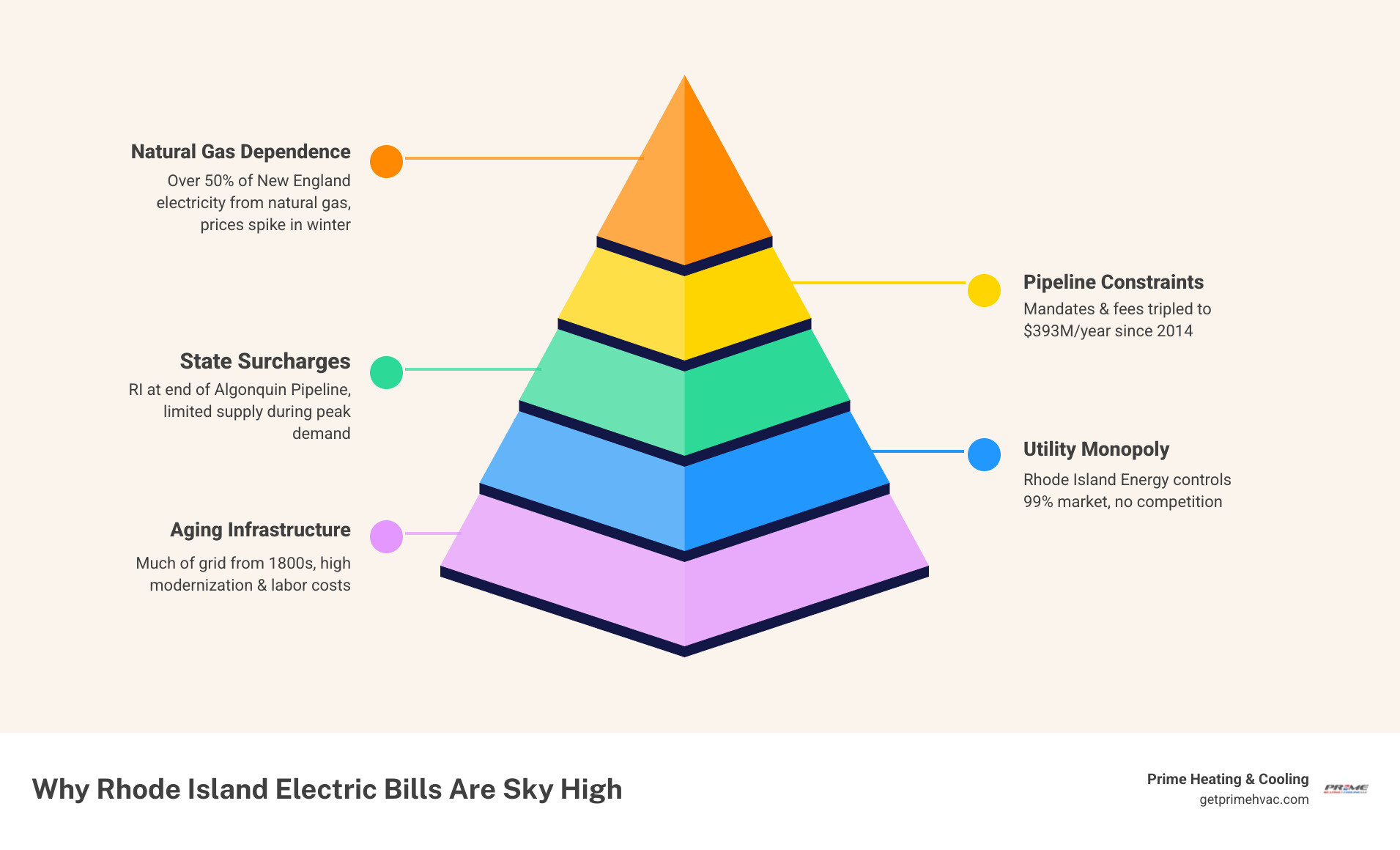
- Natural gas dependence — Over 50% of New England’s electricity comes from natural gas, which spikes in price every winter when heating demand surges
- Limited pipeline capacity — Rhode Island sits at the end of the Algonquin Gas Pipeline, meaning supply is constrained exactly when demand is highest
- State mandates and surcharges — Renewable energy standards, energy efficiency fees, and low-income support programs have tripled to $393 million per year since 2014
- Near-monopoly utility market — Rhode Island Energy controls 99% of the market, leaving little competitive pressure to lower prices
- Aging infrastructure — Much of Providence’s electrical grid dates back to the 1800s, and modernizing it is expensive
- High labor costs — Utility workers in Rhode Island earn significantly more than counterparts in other states, and those costs are passed to ratepayers
- Extreme weather — December 2025 heating demand ran 15% above the 26-year average, driving consumption — and bills — sharply higher
The result? Rhode Island residential customers now pay an average of 28.7 cents per kilowatt-hour, compared to the national average of just 17.1 cents. That’s nearly 70% more than what most Americans pay.
Residents across the state have taken to social media to share their shock — posting “eye-popping” utility bills on Reddit and Facebook, with one grassroots group, “Citizens Against Rhode Island Energy,” drawing 10,000 members almost overnight.
The frustration is real, and it’s backed by the numbers.
I’m Tyler Steiner, founder and CEO of Prime Heating & Cooling, and I’ve spent years helping Rhode Island homeowners cut energy waste through smarter, more efficient HVAC systems — one of the few areas where you can take control of your answer to Why Is My Electric Bill So High in Rhode Island? In this guide, I’ll break down every factor driving your bill up and show you exactly what you can do about it.
The Core Factors: Why Is My Electric Bill So High in Rhode Island?
To understand your bill, we have to look at how New England generates power. Unlike other regions that can tap into local coal or oil, our region relies heavily on natural gas. In fact, more than 50% of the electricity generated in New England comes from natural gas.
The problem is that Rhode Island doesn’t produce its own gas. We are at the literal “end of the tailpipe” for the Algonquin Gas Pipeline. When the weather gets cold, everyone in the Northeast turns on their heaters at the same time. This creates a massive bottleneck. Because the pipeline capacity is limited, the price for that gas skyrockets.
As noted in this Is your RI Energy bill high this winter? Here’s why. report, Rhode Island saw the second-highest increase in electricity prices in the nation in late 2025, with rates jumping nearly 23% per kWh.
| Region | Average Rate (cents/kWh) |
|---|---|
| Rhode Island | 28.7 |
| U.S. National Average | 17.1 |
| Louisiana | 11.5 |
Why Is My Electric Bill So High in Rhode Island During Winter?
Winter is particularly brutal for our wallets. We measure heating demand in “Heating Degree Days” (HDD). In December 2025, the HDD was 15% higher than the 26-year mean. Translation: it was a lot colder than usual, so your furnace or heat pump had to work overtime.
When the gas pipelines reach their limit during these “deep freezes,” the grid has to turn to “peaker” power plants. These are older facilities that burn expensive oil or coal just to keep the lights on. This energy is bought on the “spot market,” where prices are incredibly volatile. Rhode Island Energy is allowed to buy 15% of its supply this way, exposing you directly to those price spikes. You can find more details on this seasonal struggle in Energy bills high in Rhode Island this winter? Here’s why.
Regional Supply and Demand Issues
The ISO-New England grid manages our power, and they face a constant balancing act. Geopolitical events—like global supply constraints or international conflicts—can ripple through the market and land right on your doorstep in Warwick or Johnston. Because we lack the infrastructure to store vast amounts of natural gas or bring in more via new pipelines, we remain vulnerable to these global shifts. This Energy expert explains what’s causing higher electricity prices source highlights how regional constraints make the Northeast a “price island” during peak demand.
Understanding Your Rhode Island Energy Bill Components
If you look at your bill, it’s helpful to think of it as two separate buckets. About 1/3 of your bill is for “Delivery.” This is what Rhode Island Energy keeps to maintain poles, wires, and pay their staff. The other 2/3 of your bill is for “Supply,” state mandates, and taxes.

The “Supply” portion is a “pass-through” cost. This means the utility isn’t allowed to make a profit on the energy itself; they charge you exactly what they paid for it on the wholesale market. The “Last Resort Service” is the default supply rate for those who haven’t switched to a third-party provider. As reported by ecoRI News, delinquencies are on the rise because these supply costs have become unsustainable for many families.
State Mandates and Surcharges
Rhode Island has some of the most ambitious green energy goals in the country. While these programs are designed for long-term sustainability, they aren’t free. Between 2014 and 2024, the cost for state-mandated programs—including the Renewable Energy Standard, energy efficiency fees, and low-income support—tripled to $393 million a year. These surcharges now account for roughly 14% to 17% of your total bill.
Aging Infrastructure and Labor Costs
Rhode Island is the second most densely populated state in the country, and much of our infrastructure is showing its age. In cities like Providence, some components of the grid date back to the late 1800s. Maintaining and modernizing this “antique” equipment is expensive.
Labor costs also play a role. To keep the lights on during a Nor’easter, you need highly skilled linemen. In Rhode Island, the average salary for a utility lineman exceeds $90,000, compared to about $31,000 for the same role in Louisiana. These higher regional wages, combined with the cost of union pensions and benefits, are baked into your delivery charges.
How Your Home Systems Impact Monthly Costs
While you can’t control the price of natural gas, you can control how much energy your home consumes. In Rhode Island, we face unique environmental challenges. Our coastal salt air in places like Warwick and East Greenwich can actually corrode outdoor HVAC units, making them work harder and use more juice.
Humidity is another silent bill-killer. High New England humidity forces your air conditioner to run longer cycles to dehumidify the air, even if the temperature isn’t that high. We always recommend looking into Energy Efficient Heating And Cooling Systems to combat these local factors. If you’re struggling specifically in the colder months, check out our guide on How Can I Lower My Heating Bills During A Rhode Island Winter.
Why Is My Electric Bill So High in Rhode Island Due to HVAC Issues?
If your bill is “eye-popping” but your neighbor’s isn’t, your HVAC system might be the culprit. Common issues include:
- Short Cycling: If your system turns on and off rapidly, it uses a massive amount of “startup” electricity.
- Restricted Airflow: Dirty filters or clogged ducts force motors to work at 110% capacity.
- Outdated SEER Ratings: If your AC unit is more than 10 years old, it likely has a low SEER rating, meaning it’s an energy hog compared to modern units.
We’ve found that Hvac Maintenance Plans Your Ticket To Comfort And Savings are the best way to catch these issues before they spike your bill. Understanding Seer Ratings And Their Impact On Your Air Conditioner can also help you decide if it’s time for an upgrade.
Practical Steps to Lower Your Energy Costs
The fastest way to see a change is through smart technology. Installing a Smart Thermostat can save you significant money by automatically adjusting your home’s temperature when you’re at work or sleeping.
You should also take advantage of Rhode Island HVAC Tax Credits And Rebates. Programs like Clean Heat RI offer thousands of dollars to help homeowners switch to high-efficiency heat pumps, which provide both heating and cooling at a fraction of the cost of electric baseboards or oil. For more simple DIY tricks, see our Energy Saving Tips For Your Air Conditioner.
Short-Term Relief and Assistance
If you are struggling to pay your current bill, there are options:
- Winter Bill Credit: The PUC recently approved a temporary $32 monthly credit for January, February, and March for electric customers.
- Gas Refunds: Due to over-collection in previous years, many gas customers are receiving a reconciliation refund (averaging about $188 over 12 months).
- LIHEAP: The Low Income Home Energy Assistance Program provides federal funding for those who qualify.
- EmpowerRI: Use the state’s official comparison tool to see if a third-party electricity supplier offers a lower “Supply” rate than the Last Resort Service.
Frequently Asked Questions about Rhode Island Utility Costs
Why is there no competition for electricity in Rhode Island?
Rhode Island is a “deregulated” market, meaning you can choose who supplies your energy. However, Rhode Island Energy owns 99% of the delivery infrastructure (the poles and wires). Because it is incredibly expensive to build a competing grid, they maintain a natural monopoly on the delivery side. This lack of competition for the “pipes and wires” means there is less incentive to lower delivery rates.
What policy changes are being proposed to lower bills?
Governor McKee has proposed several changes in the 2026 budget to provide relief. These include potentially delaying the 100% renewable energy mandate from 2033 to 2050 and capping spending on certain energy efficiency programs. The goal is to trade long-term climate spending for immediate monthly savings—roughly $15 per bill.
How do Rhode Island rates compare to neighboring states?
We aren’t alone in this “New England high-rent district.” Massachusetts and Connecticut also face similar price spikes due to the same pipeline constraints. However, Rhode Island’s recent 23% jump was one of the sharpest in the region, often leaving us with higher per-kWh costs than our neighbors during peak winter months.
Conclusion
At Prime Heating & Cooling, we’ve spent 20 years helping our neighbors in Johnston, Smithfield, and across Rhode Island navigate these rising costs. We know that asking Why Is My Electric Bill So High in Rhode Island? can be stressful, especially when you feel like you have no control over the grid.
While we can’t change the global price of natural gas, we can make sure your home isn’t wasting a single cent. From high-efficiency heat pump installations to routine maintenance that keeps your system running at peak performance, we are here to help. We offer 24/7 emergency service and a customer-first approach to keep you comfortable without breaking the bank.
Don’t let another “eye-popping” bill catch you by surprise. Schedule your energy-saving HVAC tune-up today and take the first step toward lower utility costs.