
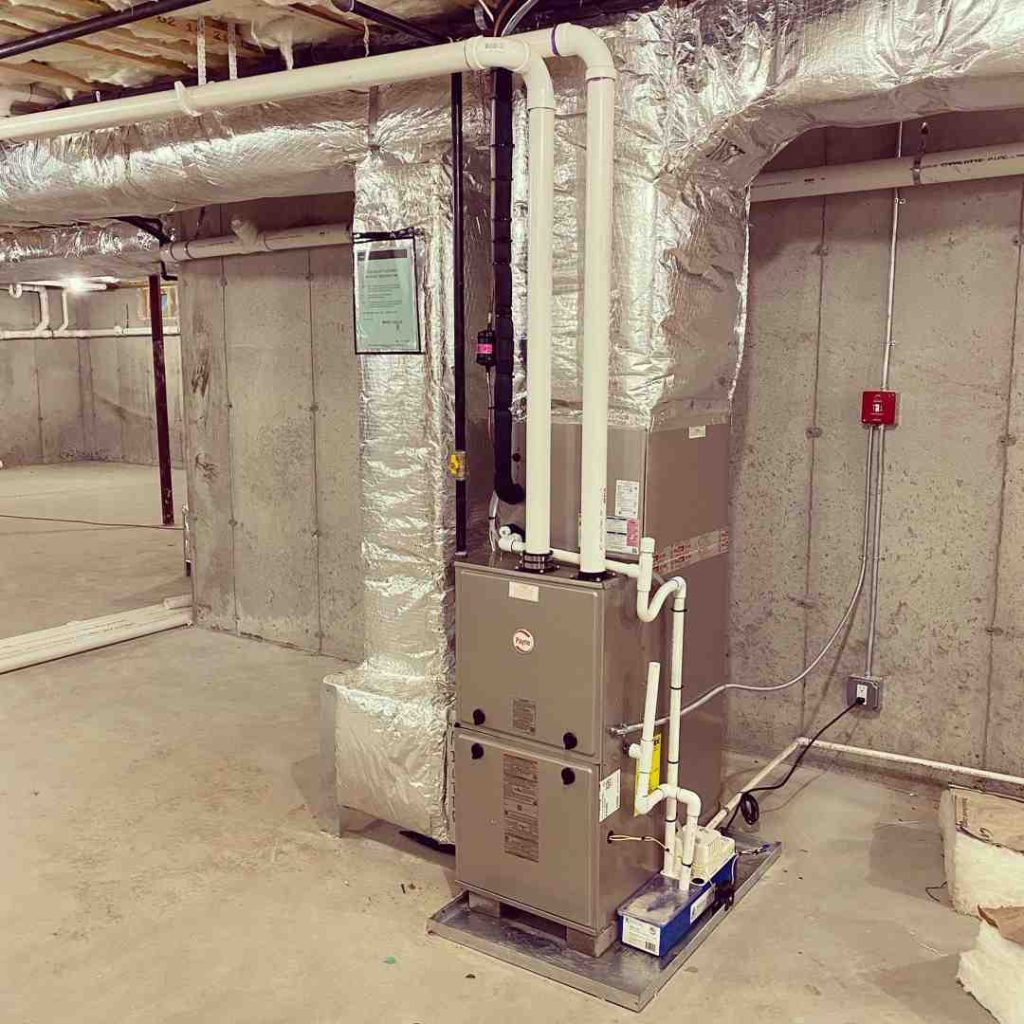
When Your Furnace Fails, Here Are Your Best Payment Options
Furnace financing options give homeowners a way to pay for a new heating system over time — instead of all at once. Here’s a quick look at the most common choices:
| Financing Type | Best For | Typical APR |
|---|---|---|
| Dealer/Manufacturer Financing | Fast approval, 0% promo offers | 0% intro, then up to 28.99% |
| Personal Loan | Flexible, no collateral needed | 6% – 36% |
| Home Equity Loan / HELOC | Large amounts, lower rates | Varies, often 5-10% |
| Credit Card (0% intro APR) | Smaller costs, short payoff | 0% intro, then 20%+ |
| FHA Title I Loan | Low credit, government-backed | Fixed, 5-10% |
| Utility On-Bill Financing | Energy-efficient upgrades | Low to 0% |
| Federal Tax Credits / Rebates | Reducing total cost | N/A (up to $600 savings) |
Your furnace doesn’t care about your budget when it breaks down. It just stops working — often in the middle of winter, when you need it most. For most New England homeowners, replacing a furnace is an unexpected and significant expense.
The good news? You don’t have to pay for it all upfront. A range of financing options can spread the cost into manageable monthly payments, so you can restore warmth to your home without draining your savings.
I’m Tyler Steiner, CEO and founder of Prime Heating & Cooling, and after years of helping Rhode Island and Massachusetts homeowners navigate emergency heating situations, I’ve seen how understanding your furnace financing options can make the difference between a stressful crisis and a smooth solution. In the sections below, I’ll walk you through everything you need to know to make the right call for your home and budget.
Glossary for furnace financing options:
Comparing the Best Furnace Financing Options in 2025
When we sit down with families in East Greenwich or Warwick, the first question is usually: “How are we going to pay for this?” In 2025, the landscape for home improvement lending has shifted. While interest rates have been a hot topic, the variety of furnace financing options has actually expanded, giving you more ways to customize your repayment.
Choosing a plan isn’t just about the lowest monthly payment; it’s about the total cost of ownership. According to Angi, a new HVAC system can cost anywhere from $5,000 to $12,500, with furnace-specific installations ranging from $2,800 to $10,000. In our experience across Rhode Island, a full replacement often lands between $4,500 and $9,500+ depending on the efficiency rating and fuel type.

Key Factors to Weigh
Before signing any paperwork, we recommend looking at three main pillars:
- The APR (Annual Percentage Rate): This includes the interest rate plus any fees. For example, a $7,000 loan at 11.10% APR over two years requires monthly payments of $327, costing you a total of $7,838.
- The Term Length: Short terms (12–24 months) save you interest but have higher monthly bites. Long terms (5–10 years) make the monthly cost tiny—like $167 for a $10,000 system—but you’ll pay more in the long run if there’s interest involved.
- Credit Requirements: Most standard lenders look for a score of at least 600. If you’re at 690 or higher, you’ll likely see those coveted 0% offers.
To help you decide, More info about personal loan options can provide a deeper dive into unsecured lending, while Understanding home equity loans and HELOCs is essential if you plan on using your house as collateral.
Comparison Table: Dealer vs. Bank vs. Home Equity
| Feature | Dealer Financing | Personal Loan | Home Equity (HELOC/Loan) |
|---|---|---|---|
| Speed | Instant (minutes) | Fast (1-3 days) | Slow (weeks) |
| Collateral | None (Unsecured) | None (Unsecured) | Your Home |
| Best APR | 0% (Introductory) | 6% – 10% | 5% – 9% |
| Max Term | Up to 10 years | Up to 7 years | Up to 20 years |
HVAC Dealer and Manufacturer Furnace Financing Options
This is often the “one-stop-shop” choice. We partner with major lenders to offer point-of-sale financing because we know that when your furnace dies in Johnston or Providence, you don’t want to spend three days at the bank.
The biggest draw here is the 0% APR promotional offer. These are fantastic if you have the cash flow to pay off the balance within the window (usually 6 to 60 months). For a $10,000 installation, 60 monthly payments of $167 at 0% APR is a dream for many household budgets.
However, we always tell our clients to watch out for “deferred interest.” If you don’t pay off the full amount by the time the promo ends, some lenders will charge you interest on the entire original amount starting from day one. It’s a common pitfall, which is why the FTC guide on credit and debt traps is such a valuable read. For more localized advice, check out The ultimate guide to HVAC financing.
Personal Loans and Home Equity Lines of Credit (HELOC)
If you prefer to keep your contractor and your lender separate, an unsecured personal loan is a solid route. These are great for “Conservative Savers” who want a fixed rate and a predictable end date without risking their home. Personal loan APRs typically range from 6% to 36%, and you can often get the funds in your account by the next business day.
For larger projects—say you’re upgrading to a high-efficiency system and adding central air at the same time—a Home Equity Loan or HELOC might be smarter. Since these are secured by your home, the rates are generally lower. Plus, the interest may be tax-deductible if the funds are used for “substantial home improvements” (always check with your tax pro!).
If your credit isn’t perfect, don’t lose hope. FHA Title I loans for home improvement are government-backed and can provide up to $7,500 unsecured or up to $25,000 with a property lien, often with more flexible credit requirements than a traditional bank.
Government Incentives and Utility Furnace Financing Options
In Rhode Island, we are lucky to have some of the best energy efficiency programs in the country. Before you borrow a single cent, we need to look at how we can shrink that loan balance using “free money.”
The Inflation Reduction Act (IRA) and 25C Tax Credits Under the 25C federal tax credit, you can claim up to 30% of the cost of qualifying high-efficiency equipment, capped at $600 for ENERGY STAR-certified electric furnaces. If you’re looking at heat pumps (which provide both heating and cooling), that credit jumps up to $2,000.
Local Rhode Island Incentives We work closely with programs like RISE Engineering and Rhode Island Energy (formerly National Grid). These organizations often offer:
- Rebates: Cash back ranging from $50 to over $2,000 depending on the unit’s efficiency.
- On-Bill Financing: Some programs allow you to pay for your energy-efficient furnace directly through your monthly utility bill, often at 0% interest for qualified residents.
You can check available programs in your specific ZIP code through the DSIRE database for local incentives or consult the ENERGY STAR 2025 federal tax credit guide.
How to Secure the Right Financing for Your Home
Securing a loan for a new furnace shouldn’t feel like a root canal. If you’re prepared, the process can be incredibly fast. Many of our customers in Smithfield and Lincoln get approved in the time it takes us to measure their ductwork.
Step 1: Check Your Credit
Your credit score is the biggest factor in determining which furnace financing options are open to you. Most lenders want to see a score of at least 600. If you’re unsure where you stand, you can Check your credit at AnnualCreditReport.com for free. If your score is on the edge, a small down payment can sometimes help tip the scales toward approval.
Step 2: Calculate Your Debt-to-Income (DTI) Ratio
Lenders want to know you can afford the new monthly payment. Ideally, your total monthly debt payments should be below 40% of your gross monthly income. If you’re planning a large upgrade, having your W-2s or recent pay stubs ready will speed up the income verification process.
Step 3: Get Multiple Quotes
We always recommend getting at least three quotes. But don’t just look at the bottom line—look at the financing terms offered. One company might have a lower price but a 15% interest rate, while another might be slightly higher but offer 0% interest. To understand the nuances of different loan structures, the Consumer Financial Protection Bureau guide on loan types is an excellent resource.
Understanding 0% APR and Deferred Interest Furnace Financing Options
We need to have a “real talk” moment about 0% APR. It is a fantastic tool, but it requires discipline. There are generally two types of “no interest” plans:
- Equal Payment Plans: You take the total cost, divide it by the number of months (e.g., 60), and that is your fixed payment. As long as you pay on time, you pay zero interest.
- Deferred Interest Plans: These often have lower minimum monthly payments, but the interest is “hiding” in the background. If you have a 12-month deferred interest plan and you pay it off in 12 months and one day, you could be hit with an interest charge for the entire year at a high rate (often 28.99%).
Pro-Tip: We suggest setting up auto-pay for an amount slightly higher than the minimum to ensure the balance hits zero well before the promotional period expires. This keeps your budget safe and your home warm.
Qualifying for Furnace Financing Options with Fair or Bad Credit
If your credit score has seen better days, don’t panic. You still have options to keep your family warm in North Providence or Coventry.
- Co-signers: Adding a family member with stronger credit can unlock lower rates and higher loan amounts.
- FHA Title I Loans: As mentioned earlier, these are specifically designed for home repairs and are much more lenient regarding credit scores because the government backs the loan.
- Rent-to-Own or Lease-to-Purchase: Some specialized providers offer “no credit check” options. While these usually have a higher total cost over time, they can be a lifesaver in an emergency. You can find more details on these specialized lenders in our guide on Who’s got your back with HVAC financing.
- Utility Programs: Some energy-efficiency loans are based on your history of paying your utility bill rather than your traditional credit score.
Maximizing Savings with Rebates and Tax Credits
At Prime Heating & Cooling, we believe the best financing plan is the one that involves borrowing the least amount of money possible. That’s why we help our Rhode Island neighbors “stack” their incentives.
Imagine this scenario:
- You choose a high-efficiency furnace that qualifies for a $600 federal tax credit.
- You qualify for a $500 rebate from your local utility.
- We find a manufacturer promotion for an additional $400 off.
Suddenly, you’ve knocked $1,500 off the price before you even look at a loan. By reducing the principal amount, your monthly payments become even more affordable. Plus, a high-efficiency unit can lower your energy bills by up to 20-30%, which effectively “pays back” a portion of your loan payment every month.
Whether you’re in the East Side of Providence or the woods of Scituate, we’re here to help you navigate these choices. We’ve been serving this community for 20 years, and we know that a new furnace is an investment in your home’s future.
Ready to see what you qualify for? Claim your HVAC discounts and deals and let’s get your home back to the perfect temperature.
Final Thoughts: Making Financing Work for You
Replacing a furnace is rarely “fun,” but it is an opportunity to upgrade your home’s comfort and efficiency. By comparing furnace financing options, checking for rebates, and understanding the fine print, you can turn a mid-winter emergency into a smart financial move.
Don’t let the “financial chill” keep you from a warm home. Reach out to us at Prime Heating & Cooling—we’ll help you find a plan that fits your budget as perfectly as our furnaces fit your home.