
Why Choosing Expert HVAC Technicians Matters for Your Home Comfort
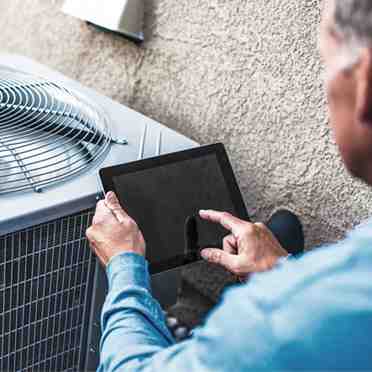
Expert HVAC technicians are the difference between a system that runs efficiently for years and one that breaks down at the worst possible moment. Heating and cooling accounts for roughly 52% of the average American home’s energy bill — making your HVAC system one of the most important (and expensive) investments in your home.
Here’s a quick checklist of what separates a truly expert HVAC technician from the rest:
- Licensed by their state to perform HVAC work
- NATE-certified (North American Technician Excellence) — the gold standard in the industry
- EPA 608 certified to legally handle refrigerants
- Insured with workers’ compensation and general liability coverage
- Experienced with your specific system type
- Transparent with written estimates, clear pricing, and documented work
A poorly qualified technician can do more harm than good. An NREL field study found that 72% of residential AC units had improper refrigerant charge and 67% had airflow below the recommended minimum — problems that drive up energy bills and shorten system life.
The right technician doesn’t just fix the immediate problem. They keep your system running safely, efficiently, and for as long as possible.
I’m Tyler Steiner, founder of Prime Heating & Cooling and a career HVAC professional with hands-on experience across hundreds of residential and commercial systems throughout New England — and helping homeowners find and work with expert HVAC technicians is something I care deeply about. In this guide, I’ll walk you through exactly what to look for, what to ask, and how to avoid costly mistakes.
What Defines Expert HVAC Technicians?
When we talk about expert HVAC technicians, we aren’t just referring to someone who knows how to use a wrench. True expertise in this field is a blend of rigorous mechanical training, electrical knowledge, and an understanding of thermodynamics. An expert sees your home as a complete ecosystem where airflow, insulation, and machinery must work in perfect harmony.
In Rhode Island, where our winters are biting and our summers are increasingly humid, the stakes are high. A technician must be able to perform precise system sizing—calculating exactly how much heating or cooling power your specific square footage requires. If a system is too large, it cycles on and off too frequently (short-cycling), wearing out parts. If it’s too small, it runs constantly, skyrocketing your energy bills.

Beyond the physical tools, expert HVAC technicians rely on advanced diagnostic equipment. They use digital manifolds to check refrigerant pressures, thermal imaging to find duct leaks, and carbon monoxide detectors to ensure your furnace is venting safely. This level of technical proficiency is what separates a “handyman” from a specialist. To learn more about what we look for in our team, you can browse our category on quality technicians.
Essential Certifications for Expert HVAC Technicians
Certifications are the “receipts” of the HVAC world—they prove that a technician has put in the work to master their craft. If a technician can’t produce these, it’s a major red flag.
- NATE (North American Technician Excellence): This is the most recognized national certification. It isn’t easy to get; technicians must pass rigorous exams covering “Core” knowledge and specific specialties like Air Conditioning, Air Distribution, or Heat Pumps. Research shows that NATE-certified technicians have better recall of technical standards and provide more reliable repairs.
- EPA 608 Universal Certification: Federal law requires anyone handling refrigerants to be EPA-certified. The “Universal” designation means the technician is qualified to work on all types of equipment, from small residential split systems to massive commercial chillers.
- State Licensing (Journeyman or Master): In Rhode Island, technicians must hold a valid state license. This ensures they have completed the required thousands of hours of on-the-job training and classroom education.
- Manufacturer-Specific Training: Top-tier technicians often attend “academies” hosted by brands like Bryant or Carrier. This specialized training ensures they know the “brain” of your specific unit, including proprietary circuit boards and variable-speed motors.
The Risks of DIY vs. Professional Expertise
We live in the era of YouTube tutorials, which is great for fixing a leaky faucet, but dangerous for HVAC systems. Attempting a DIY repair on a furnace or AC unit is one of the quickest ways to turn a small problem into a catastrophe.
First, there is the safety risk. HVAC systems involve high-voltage electricity and, in the case of furnaces, combustible gas. One wrong move can lead to electrical shock or a fire. Second, there are environmental risks. Handling refrigerant without the proper recovery equipment is illegal and harmful to the atmosphere.
Statistically, the DIY approach rarely pays off. As mentioned, studies show that improper refrigerant charge and low airflow plague the majority of residential systems. These are “invisible” problems that only an expert with the right sensors can detect. Furthermore, almost all manufacturer warranties are voided the moment an unlicensed individual opens the cabinet. Professional intervention isn’t just a luxury; it’s a protection policy for your equipment.
How to Hire and Evaluate Local Experts
Finding expert HVAC technicians in areas like Providence, Warwick, or Coventry requires a bit of detective work. You shouldn’t just call the first name that pops up on a search engine. You want a partner who will be there at 2 AM in January when your heater quits.
Start by looking at the company’s infrastructure. Do they offer 24/7 emergency service? This indicates a robust team with enough technicians to handle surges in demand. Do they offer membership plans? These plans usually provide priority scheduling and regular maintenance, which are signs that the company values long-term system health over one-time “quick fixes.”
Identifying Expert HVAC Technicians in Your Area
Your local community is your best resource. When evaluating a company in North Smithfield or Johnston, look for:
- Verified Online Testimonials: Don’t just look at the star rating. Read the comments. Are customers mentioning technicians by name? Are they praising the technician’s ability to explain the problem?
- BBB Ratings: An A+ rating with the Better Business Bureau shows a commitment to resolving customer disputes and maintaining ethical business practices.
- Community Reputation: A company that has served the East Side of Providence or Lincoln for decades has a “social contract” with its neighbors. They can’t afford to do bad work.
- Service Agreements: Ask if they provide a written service agreement. This should outline exactly what is covered during maintenance visits, ensuring you get the same high-quality inspection every time.
Common Problems and Service Costs
While we don’t list specific prices, it’s helpful to understand the range of common repairs. Generally, national data suggests homeowners might spend anywhere from $150 for a simple fix to $1,200 for more complex component replacements.
| Repair Type | Complexity | Typical Timeframe |
|---|---|---|
| Thermostat Malfunction | Low | 30 – 60 Minutes |
| Clogged Condensate Drain | Low | 1 Hour |
| Blower Motor Replacement | Medium | 2 – 3 Hours |
| Refrigerant Leak Repair | High | 3 – 5 Hours |
| Evaporator Coil Replacement | High | 4 – 8 Hours |
We are seeing a massive shift toward energy-efficient technology in Rhode Island. For example, heat pump adoption is soaring, with Americans purchasing 32% more air-source heat pumps than gas furnaces in 2024. Expert HVAC technicians must be specifically trained in these systems, as they operate differently than traditional furnaces.
Questions to Ask During a Consultation
Before you sign a contract, put on your “interrogator” hat. A true professional won’t mind answering these questions:
- “Can you provide proof of insurance and your RI state license?” Never take “yes” for an answer without seeing the paperwork.
- “Will you be using your own employees or subcontracting the work?” You want to know that the person in your home has been vetted by the company you hired.
- “Do you handle all necessary building permits?” In many Rhode Island towns, like Scituate or Smithfield, major HVAC work requires a permit and a post-job inspection.
- “Is there a ‘cooling-off’ period?” Federal law often allows you to cancel a contract within three days if it was signed in your home.
- “Can I get an itemized, written quote?” Avoid “ballpark” figures given over the phone. You need to see exactly what you are paying for.
Our team at Prime Heating & Cooling takes pride in being local HVAC experts who are always ready to show our credentials and explain our process in plain English.
Conclusion: Partnering with Prime Heating & Cooling
At the end of the day, your HVAC system is about more than just temperature—it’s about the safety and health of your family. Whether you are in East Greenwich, Warwick, or North Providence, you deserve expert HVAC technicians who treat your home with respect and provide solutions that actually save you money on your energy bills.
At Prime Heating & Cooling, we bring 20 years of New England experience to every job. We understand the unique challenges of Rhode Island weather and offer 24/7 availability to ensure you are never left in the cold (or the heat). From energy-efficient heat pump installations to precision furnace repairs, our customer-first approach ensures the job is done right the first time.
If you’re ready to experience the difference that true expertise makes, we invite you to learn more about our expert HVAC services in Smithfield and the surrounding areas. Don’t leave your comfort to chance—partner with the pros who know Rhode Island best.