
Why Plumbing Troubleshooting Questions Matter for Every Homeowner

Plumbing Troubleshooting Questions help homeowners quickly identify and solve common plumbing problems before they turn into expensive emergencies. Whether you’re dealing with a dripping faucet that wastes over 3,000 gallons per year, a toilet that wastes up to 200 gallons daily, or mysterious banging noises in your pipes, knowing how to diagnose the issue is the first step toward a fix.
Quick answers to the most common plumbing troubleshooting questions:
| Problem | Likely Cause | Quick Fix |
|---|---|---|
| Low water pressure | Mineral buildup, leaks, or valve issues | Check for visible leaks; standard pressure is 40-45 psi |
| Running toilet | Worn flapper or stuck float ball | Jiggle handle or replace flapper |
| Dripping faucet | Worn O-ring, washer, or valve seat | Replace worn components |
| Gurgling drains | Partial clog or inadequate venting | Use plunger or drain snake |
| No hot water | Sediment buildup or thermostat issue | Flush water heater or adjust thermostat to 120°F |
| Banging pipes | Water hammer from pressure changes | Add pipe straps or water hammer arrestors |
Every homeowner faces plumbing issues at some point. From low kitchen sink flow and discolored water to stuck shower valves and leaking supply lines, multiple problems can often point to a single root cause like corroded galvanized pipes or a failing pressure regulator.
The key is knowing what questions to ask and how to approach troubleshooting systematically. Past experiences with contractors often leave homeowners wishing they’d asked different questions or prioritized work differently. That’s especially true when you “don’t know what you don’t know” about plumbing.
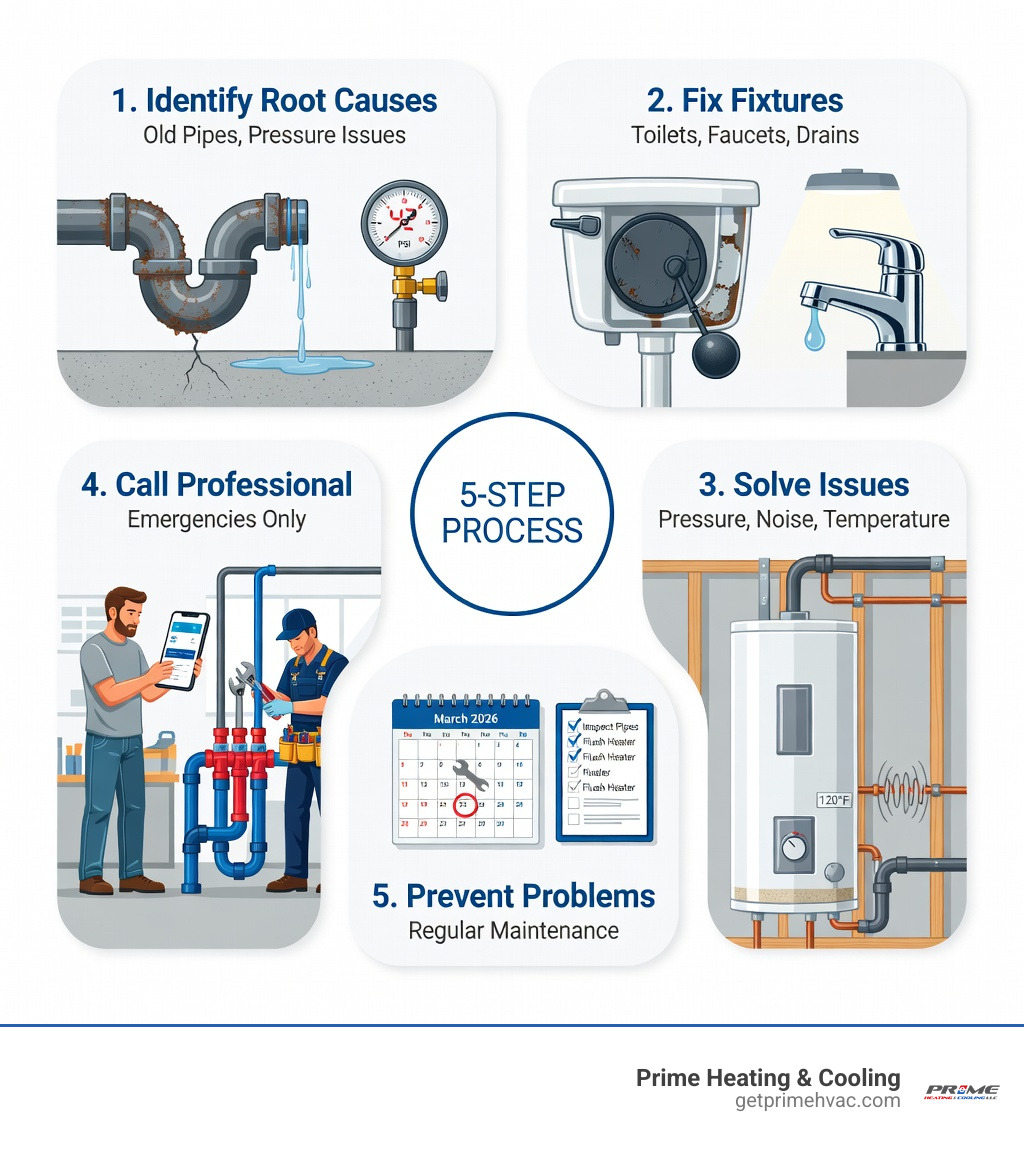
In this guide, we’ll walk through five simple steps to troubleshoot the most common plumbing problems in your New England home. You’ll learn when you can tackle a fix yourself and when it’s time to call a professional—potentially saving hundreds or even thousands of dollars in water waste and emergency repairs.
I’m Tyler Steiner, founder of Prime Heating & Cooling, and I’ve spent over two decades helping New England homeowners navigate Plumbing Troubleshooting Questions and solve complex mechanical system issues. This guide combines proven diagnostic methods with practical solutions that work in real homes across Rhode Island and Massachusetts.
Step 1: Identify the Root Cause of Your Plumbing Troubleshooting Questions
When you are faced with a “wall of text” level of plumbing problems—discolored water, low flow in the kitchen, and a shower valve that won’t budge—it is easy to feel overwhelmed. The first step is to stop playing “Whack-A-Mole” with individual symptoms and start looking for the source.
Systematic documentation is your best friend here. We recommend keeping a timeline of when issues started. Did the low pressure start after a cold snap? Did the discolored water appear after the city worked on the water mains? This history helps us (or you) determine if the problem is isolated to one fixture or is a systemic failure.
One often overlooked root cause is a failing pressure regulator switch. If your home’s pressure is fluctuating wildly, it can cause “strange issues” across every fixture in the house, from leaking appliances to banging pipes. Following 7 Plumbing Tips to Prevent Disasters in Rhode Island can help you stay ahead of these systemic failures.

Assessing Multiple Plumbing Problems
If every fixture in your home seems to have a problem, you aren’t just unlucky; you likely have a shared root cause. In older Rhode Island homes, common culprits include:
- Calcification: Hard water minerals build up inside valves and aerators, choking off flow.
- Sediment Buildup: Rust bits from old pipes or sediment from the city supply can clog the small screens in your faucets and fridge water dispensers.
- Corrosion: If you have a mix of different metals in your plumbing, a chemical reaction can accelerate the decay of your pipes.
To sort this out, start at the water meter and move inward. Check the main shut-off valve and the pressure regulator. If the pressure is fine there but low at the tap, the issue is likely in your internal distribution lines. For comprehensive help, our team provides Plumbing Installations & Repairs to modernize these aging systems. You can also explore 18 Common Plumbing Problems and How to Resolve Them for more specific diagnostic tips.
The Impact of Old Galvanized Pipes
Many historic homes in Providence and Warwick still have original galvanized steel pipes. While they were the standard decades ago, they have a “shelf life.” Over time, these pipes corrode from the inside out.
The zinc coating wears away, leading to rust that creates narrowed passages. This is why you might have “great pressure” for the first five seconds of a shower, only for it to drop to a trickle. Furthermore, this internal rust leads to discolored water and “rust bits” that ruin your appliances. If your galvanized lines are connected directly to newer copper pipes without a special fitting (dielectric union), the corrosion happens even faster. If you see “Quest” or polybutylene piping (common from the late 70s to mid-90s), be aware that these are also prone to sudden, catastrophic failure.
Step 2: Fix Common Fixture Issues (Toilets, Faucets, and Drains)
Once you’ve ruled out a whole-house disaster, it’s time to look at the fixtures. Fixture issues are the most common Plumbing Troubleshooting Questions we receive, and fortunately, many are DIY-friendly.
A dripping faucet might seem like a minor annoyance, but the EPA notes that a faucet dripping once per second can waste over 3,000 gallons of water a year. Most Leaky faucets are caused by worn-out internal components.
How to fix a dripping faucet:
- Shut off the water: Use the local valves under the sink.
- Disassemble the handle: You may need an Allen wrench or a screwdriver.
- Identify the culprit: Check the O-ring (a small rubber loop), the washer, or the valve seat.
- Replace and Reassemble: Take the old part to the hardware store to ensure an exact match.
Troubleshooting Running and Overflowing Toilets
Toilets are the biggest water consumers in your home, accounting for about 24% of indoor water use. If a toilet is constantly running, it can waste 200 gallons in a single day.
- The Running Toilet: This is usually an issue with the flapper valve (the rubber seal at the bottom of the tank) or the float ball. If the flapper doesn’t seal, water leaks into the bowl, and the fill valve keeps running to top up the tank. Sometimes, just jiggling the handle works because the chain is tangled.
- The Overflow: If you face Toilet overflows, stay calm. Reach behind the toilet and turn the silver shut-off valve clockwise to stop the water flow immediately. This prevents floor damage while you grab the plunger.
Effective Methods to Unclog Drains
Before reaching for harsh chemical cleaners—which can actually damage your pipes and heat up to dangerous temperatures—try mechanical methods.
- The Plunger: For sinks, use a flat-bottom plunger. For toilets, use a flange plunger (the one with the extra rubber sleeve). Ensure there is enough water to cover the head of the plunger to create a seal.
- The Drain Snake: A hand auger or “snake” is perfect for pulling out hair clogs in showers and bathtubs.
- Natural Cleaners: For monthly maintenance, pour half a cup of baking soda followed by half a cup of white vinegar down the drain. Let it fizz for 15 minutes, then flush with boiling water. This helps break down soap scum and light grease buildup.
Step 3: Solve Water Pressure, Noise, and Temperature Problems
If your fixtures are in good shape but the “experience” of using your plumbing is off, you’re likely dealing with pressure or temperature issues.
Standard household water pressure should be between 40 to 45 psi and should never exceed 60 psi. High pressure might feel great in the shower, but it’s a “silent killer” for your appliances and pipe joints, leading to premature leaks. Low pressure is often caused by mineral deposits in the aerator or a partially closed main shut-off valve.
Troubleshooting Hot Water and Sewer Smells
Nothing ruins a morning like a cold shower. If you have no hot water, check your water heater first. It might be a tripped breaker, a pilot light that went out, or a failing heating element.
One of our top tips for Hot Water Services RI is regular sediment flushing. Twice a year, you should drain a few gallons from the bottom of your tank to remove the “sludge” that insulates the heating element and causes popping noises. For more details on maintaining your system, see our guide on Understanding Water Heaters in Your Home.
If you smell “rotten eggs,” you might have a “dried trap.” Every drain has a P-trap that holds a small amount of water to block sewer gases. If a guest bathroom isn’t used for weeks, that water evaporates, letting the smell in. Simply running the water for 30 seconds usually fixes it. If the smell persists, you may have a blocked vent pipe on your roof—believe it or not, we’ve even found frogs blocking these vents!
When to Seek Professional Help for Plumbing Troubleshooting Questions
While we love a good DIY spirit, some things require a licensed expert. You should call us immediately if you encounter:
- Burst Pipes: Usually caused by freezing or extreme corrosion. Shut off the main water valve immediately!
- Sewage Backups: If water comes up into the tub when you flush the toilet, your main sewer line is likely blocked by tree roots or a major clog.
- Hidden Leaks: If you hear water running in the walls or see unexplained wet spots on the ceiling.
- Multiple Backed-up Fixtures: This indicates a problem in the main stack or septic system, not just a single drain.
For these high-stakes situations, visit our Plumbing Troubleshooting Hub to connect with a 24/7 technician.
Frequently Asked Questions about Plumbing Troubleshooting Questions
Addressing High Water Bills and Plumbing Troubleshooting Questions
Why is my water bill so high? An unexpected spike is almost always a sign of a hidden leak. Start by checking your water meter. Ensure no water is running in the house, then look at the meter’s leak indicator (usually a small spinning triangle). If it’s moving, you have a leak. Common culprits include “silent” toilet leaks, dripping irrigation systems, or a leaking underground supply line. We provide Expert Plumbing Services in Rhode Island | Prime Heating & Cooling to help locate and fix these invisible “money pits.”
What causes banging or rattling noises in my pipes?
This is known as “water hammer.” It happens when a valve closes quickly (like in a washing machine or dishwasher), and the rushing water has nowhere to go, causing the pipes to jerk and hit the wall studs. You can stop Rattling pipes by adding pipe straps to secure them or by installing water hammer arrestors, which act as small shock absorbers for your plumbing system.
Where is my main water shut-off valve and when should I use it?
You can usually find your main shut-off valve along the interior perimeter of your home, often in the basement or a crawlspace on the side of the house facing the street. You should use it:
- In an emergency: If a pipe bursts or a major leak occurs.
- For vacation prep: We recommend turning off the main water before any extended trip to prevent coming home to a flooded house.
- For major repairs: Whenever you are working on the main lines of the house.
Conclusion
Plumbing doesn’t have to be a mystery. By asking the right Plumbing Troubleshooting Questions and following a systematic approach, you can handle minor repairs and catch major issues before they cause “horrifically costly” damage. Remember the “dos and don’ts”: do use a plunger and drain snake; don’t rely on harsh chemicals. Do flush your water heater; don’t ignore a rattling pipe.
At Prime Heating & Cooling, we bring 20 years of experience to every job across Rhode Island, from Providence to East Greenwich. Whether you need a simple consultation or emergency 24/7 repair, we are here to ensure your home stays dry and your systems run efficiently.
Don’t wait for a small drip to become a big disaster. Schedule Expert Plumbing Installations & Repairs with our team today and get the peace of mind you deserve.