
Why Understanding Commercial Water Heater Installation Cost Matters for Your Business
Commercial water heater installation cost typically ranges from $2,500 to $4,500 for most business owners. However, your actual price depends on several factors:
- Type of heater: Tank-style ($600-$2,500), Tankless ($1,400-$3,900), or High-Efficiency models ($3,000+)
- Size and capacity: Larger units for high-demand businesses cost more
- Fuel source: Gas, propane, or electric systems have different infrastructure needs
- Labor and complexity: Installation runs $150-$2,500 depending on the work required
- Additional costs: Permits ($50-$300), venting ($500-$1,500), electrical upgrades, and disposal
Hot water isn’t optional for most businesses. Whether you’re running a restaurant, managing an apartment complex, operating a gym, or maintaining an office building, your water heater works around the clock. When it fails, you face unhappy customers, health code violations, and lost revenue.
Unlike residential units, commercial water heaters handle much higher demand. They’re built more durably, but that durability comes with a price tag—typically about $1,000 more than comparable residential models. The complexity doesn’t stop at the unit itself. Commercial installations often require specialized venting, upgraded electrical systems, larger gas lines, and strict compliance with local building codes.
Many business owners focus only on the sticker price of the unit. That’s a mistake. Labor costs can make up 50% or more of your total investment. Add in permits, code compliance, potential infrastructure upgrades, and the cost of downtime during installation, and the numbers climb quickly.
I’m Tyler Steiner, founder and CEO of Prime Heating & Cooling, where we’ve helped countless New England businesses steer commercial water heater installation cost decisions over the years. Through installations ranging from small offices to high-volume restaurants, I’ve seen how the right planning and expert guidance can save businesses thousands while ensuring reliable hot water for decades to come.
Breaking Down the Commercial Water Heater Installation Cost
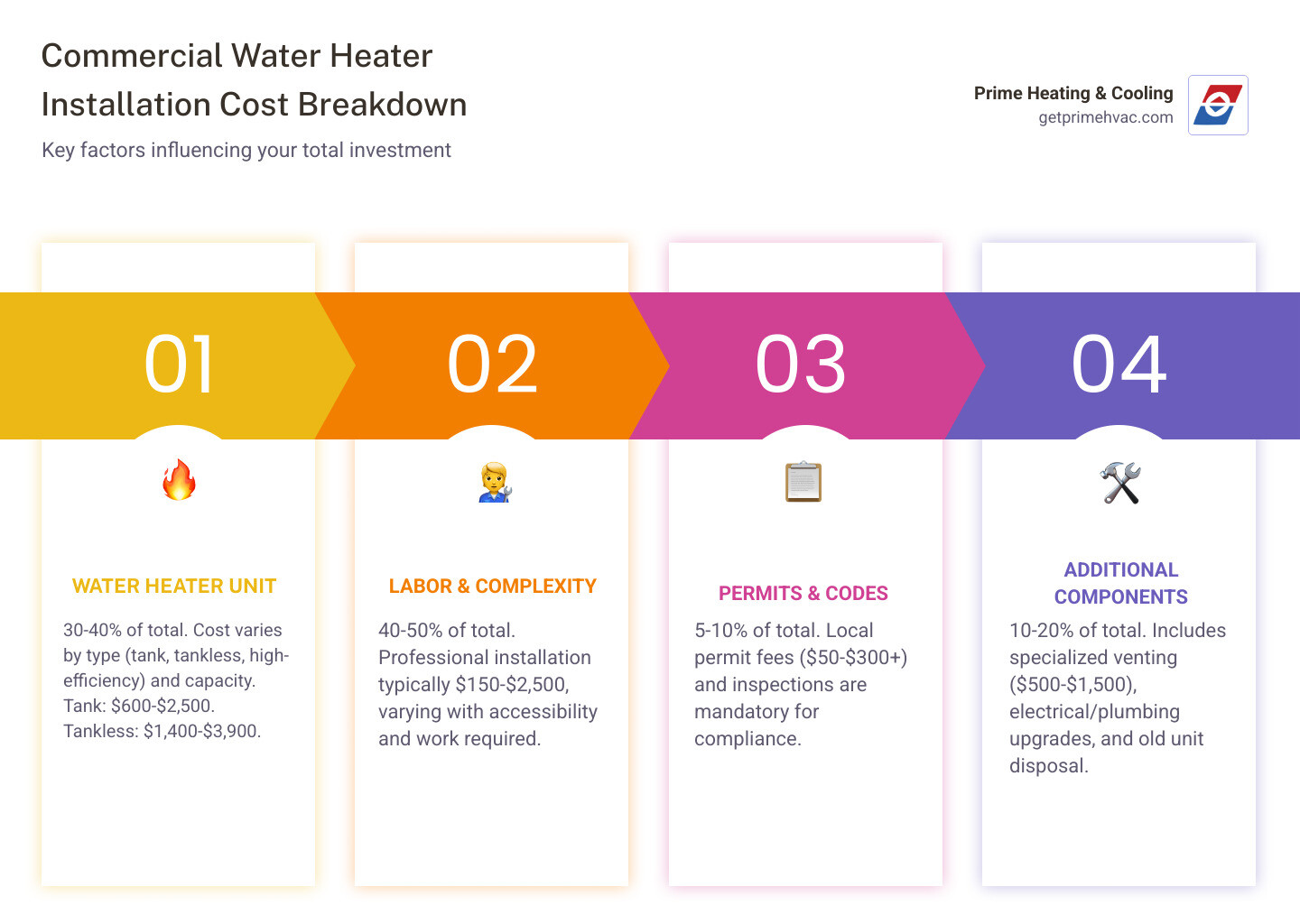
When we talk about the total commercial water heater installation cost, we’re not just looking at the price tag of the unit itself. It’s a blend of the equipment, the labor required for installation, and various additional expenses that can pop up. For business owners in Rhode Island and Massachusetts, understanding these components is crucial for accurate budgeting and avoiding unwelcome surprises.
Commercial water heaters are designed for heavy-duty performance, built to withstand constant use and provide hot water for numerous fixtures simultaneously. This means they are inherently more complex and robust than their residential counterparts. A light-duty commercial heater, for instance, costs about $1,000 more than a residential unit due to its improved durability and capacity. This fundamental difference is why commercial installations are typically more expensive, ranging from $2,500 to $4,500 for the unit plus installation, compared to residential installations that might fall between $960 and $3,910.
The purpose of a commercial water heater isn’t just to provide hot water; it’s to ensure your business runs smoothly and profitably. That’s why investing in professional plumbing services, like those we offer, is paramount. You can learn more about our comprehensive plumbing solutions, including water heater installations, on our website: More info about plumbing services.
Factor 1: Water Heater Type and Size
The type and size of the water heater you choose are arguably the biggest drivers of commercial water heater installation cost. Just like choosing a vehicle, different models come with different capabilities and price points.
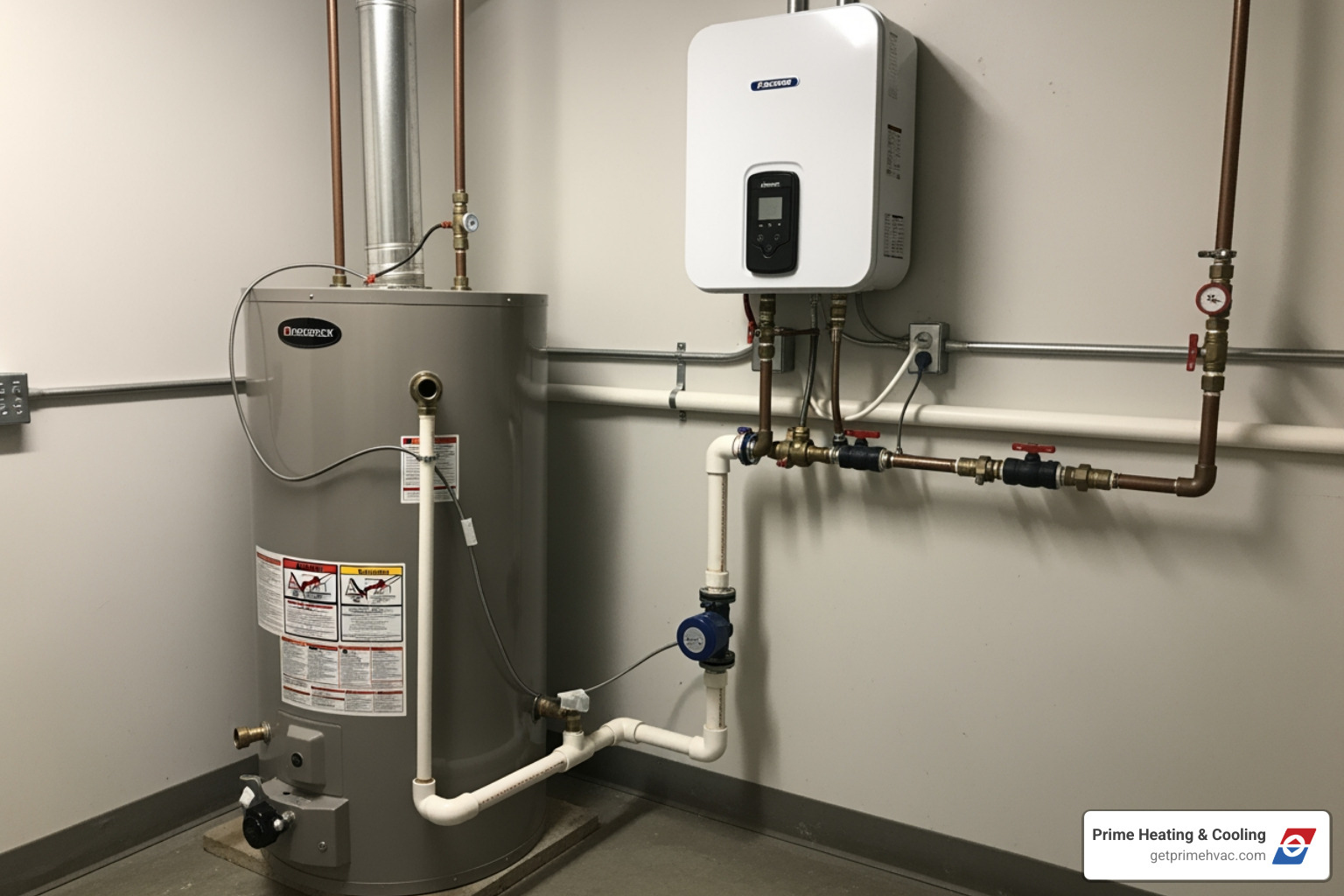
- Tank-Style Water Heaters: These are the traditional workhorses, storing a large volume of hot water ready for use. They are generally less expensive upfront but can have higher operating costs due to standby heat loss. Capacities for commercial tank heaters can range from 50 gallons to several hundred gallons, measured by their First Hour Rating (FHR) – how many gallons of hot water they can deliver in the first hour of operation.
- Tankless (On-Demand) Water Heaters: These compact units heat water only when needed, providing endless hot water and significant energy savings. Their cost is often higher, and installation can be more complex due to specialized venting and electrical requirements. Their capacity is measured in Gallons Per Minute (GPM), indicating how much hot water they can provide continuously.
- Hybrid Water Heaters (Heat Pump Water Heaters): These combine a traditional tank with a heat pump to draw warmth from the surrounding air, making them highly energy-efficient. They represent a significant upfront investment but offer substantial long-term savings.
Choosing the right size is critical. For a restaurant, you’ll need a high FHR or GPM to handle peak dishwashing times. An apartment complex might prioritize total storage capacity for multiple units. A gym needs a system that can recover quickly after a rush of showers. Oversizing leads to wasted energy, while undersizing means unhappy customers and potential operational disruptions. We work with businesses across Rhode Island and Massachusetts to accurately size units based on their specific needs, factoring in BTU/kW ratings, peak demand, and recovery rates.
Factor 2: Fuel Source
The fuel source for your commercial water heater plays a significant role in both the initial commercial water heater installation cost and your long-term operational expenses.
- Natural Gas: Often the most cost-effective option in terms of operating costs, natural gas heaters heat water quickly. However, if your commercial property in Providence, Warwick, or any other town in our service area doesn’t have an existing gas line, the cost of installing one can add substantially to the initial investment.
- Propane: A viable alternative for businesses in areas without natural gas access, such as some rural parts of Massachusetts or Rhode Island. Propane units typically cost a bit more than natural gas models, and you’ll need to factor in the cost of a storage tank and regular deliveries.
- Electric: Electric water heaters can have lower upfront installation costs, especially if your property already has the necessary electrical capacity. However, the cost of running electricity is generally higher than natural gas or propane in many areas. For larger commercial electric units, you might need significant electrical panel upgrades to handle the wattage.
When considering the fuel source, we help you weigh the upfront costs of infrastructure against the ongoing utility expenses to find the most economical solution for your business.
Factor 3: Labor and Installation Complexity
Labor is a substantial portion of the commercial water heater installation cost, often accounting for 50% or more of the total investment. Plumber hourly rates can range from $45 to $200, depending on the complexity of the job, the region, and the expertise required.
Commercial water heater installations are rarely a simple swap. Factors that increase labor costs include:
- Accessibility: If the water heater is located in a tight basement, a cramped utility closet, or on a roof, it takes more time and effort to maneuver the unit and tools.
- Relocating a Unit: Moving a water heater from one location to another involves extending or rerouting plumbing, gas, and electrical lines, adding significant time and cost.
- Upgrades and Modifications: If the new commercial water heater requires different venting than the old one, or if it needs a larger gas line or a dedicated electrical circuit, these modifications will add to the labor expense.
- Specialized Equipment: Commercial units are heavy. Moving and installing them often requires specialized lifting equipment, which impacts labor hours.
Our skilled technicians, serving all of Rhode Island and Massachusetts, are experts in navigating these complexities. We ensure a safe, efficient, and code-compliant installation, minimizing disruption to your business operations. For more insights into labor wages and costs, you can consult resources like the Occupational Employment and Wage Statistics from the U.S. Bureau of Labor Statistics.
Comparing Commercial Water Heater Types and Their Costs
Choosing the right type of commercial water heater is a critical decision that balances upfront expenses with long-term operational efficiency and reliability. Here’s a comparison to help you understand the cost implications:
| Water Heater Type | Upfront Installation Cost | Lifespan | Energy Efficiency | Best Use Case |
|---|---|---|---|---|
| Tank-Style | Lower ($2,500 – $4,000) | 6-15 years | Moderate | High-volume, simultaneous demand (e.g., restaurants, laundromats) |
| Tankless (On-Demand) | Higher ($3,500 – $7,000+) | 20+ years | High (24-34% savings) | Intermittent, continuous demand; space-constrained businesses |
| High-Efficiency/Hybrid | Highest ($5,000 – $10,000+) | 15-20 years | Very High (up to 60% savings) | Businesses prioritizing sustainability and lowest operating costs |
Tank-Style Water Heaters
Tank-style commercial water heaters are often the most economical choice for initial purchase and installation. Their design is straightforward: a large insulated tank that stores and heats water. This makes their installation generally simpler and quicker, reducing labor costs compared to more complex systems. They excel in scenarios where there’s a high, simultaneous demand for hot water, such as a restaurant’s busy kitchen or a laundromat.
However, tank-style units have a shorter lifespan, typically ranging from 6 to 15 years, depending on usage, maintenance, and water quality. They also suffer from standby heat loss, meaning they constantly use energy to keep the stored water hot, even when no hot water is being used. This can lead to higher operating costs over time. If you’re replacing an existing tank unit with a similar model, the commercial water heater installation cost might be on the lower end of the spectrum, around $2,500-$4,000.
Tankless (On-Demand) Water Heaters
Tankless commercial water heaters represent a higher upfront investment, with installation costs often starting around $3,500 and going upwards of $7,000 or more. This higher cost is due to several factors: the units themselves are more technologically advanced, and their installation frequently requires significant modifications. This could include upgrading gas lines to handle the higher BTU input, installing specialized venting systems (often stainless steel), and potentially upgrading electrical circuits.
Despite the higher initial commercial water heater installation cost, tankless units offer substantial benefits. They provide an endless supply of hot water on demand, eliminating the risk of running out during peak hours. They are also incredibly energy-efficient, capable of saving businesses 24% to 34% on energy costs compared to conventional tank heaters. With proper maintenance, tankless units boast a longer lifespan, often exceeding 20 years. Their compact, wall-mounted design also saves valuable floor space, a boon for many businesses in busy areas like Boston or Providence. If you’re considering a tankless system for your business in Rhode Island or Massachusetts, you can learn more about these efficient options on our site: Learn more about tankless options.
High-Efficiency and Hybrid Models
High-efficiency and hybrid commercial water heaters typically have the highest initial commercial water heater installation cost, often ranging from $5,000 to $10,000 or more. These units, which include heat pump water heaters, use advanced technology to maximize energy savings. Hybrid models, for example, combine traditional electric heating elements with a heat pump that extracts heat from the ambient air, making them up to 60% more energy-efficient than standard electric models.
While the upfront cost is higher, the long-term energy savings can be substantial, leading to a quicker return on investment (ROI). Installation can be complex, sometimes requiring more space for the heat pump component or specialized venting. These units are ideal for businesses in Smithfield, Lincoln, or other areas of Rhode Island and Massachusetts that are committed to sustainability, reducing their carbon footprint, and achieving the lowest possible operating expenses over the lifespan of the equipment.
Don’t Forget These Additional Installation Expenses
Beyond the unit and core labor, several additional costs can significantly impact your overall commercial water heater installation cost. These are often overlooked but are crucial for a complete and compliant installation. Always insist on a detailed quote that outlines all potential expenses.
Permits, Codes, and Inspections
Navigating local building codes and obtaining the necessary permits is a non-negotiable part of commercial water heater installation in Rhode Island and Massachusetts. Permit fees typically range from $50 to $300 or more, depending on your municipality (e.g., Providence, Boston, Warwick, or Springfield). These permits ensure that the installation adheres to safety standards and local regulations. An inspector will review the work to confirm compliance. Skipping permits might save a few dollars upfront, but it can lead to hefty fines, invalidate your insurance, or even force you to redo the entire installation if issues are finded later. We handle all necessary permitting to ensure your installation is fully compliant.
Venting System Requirements
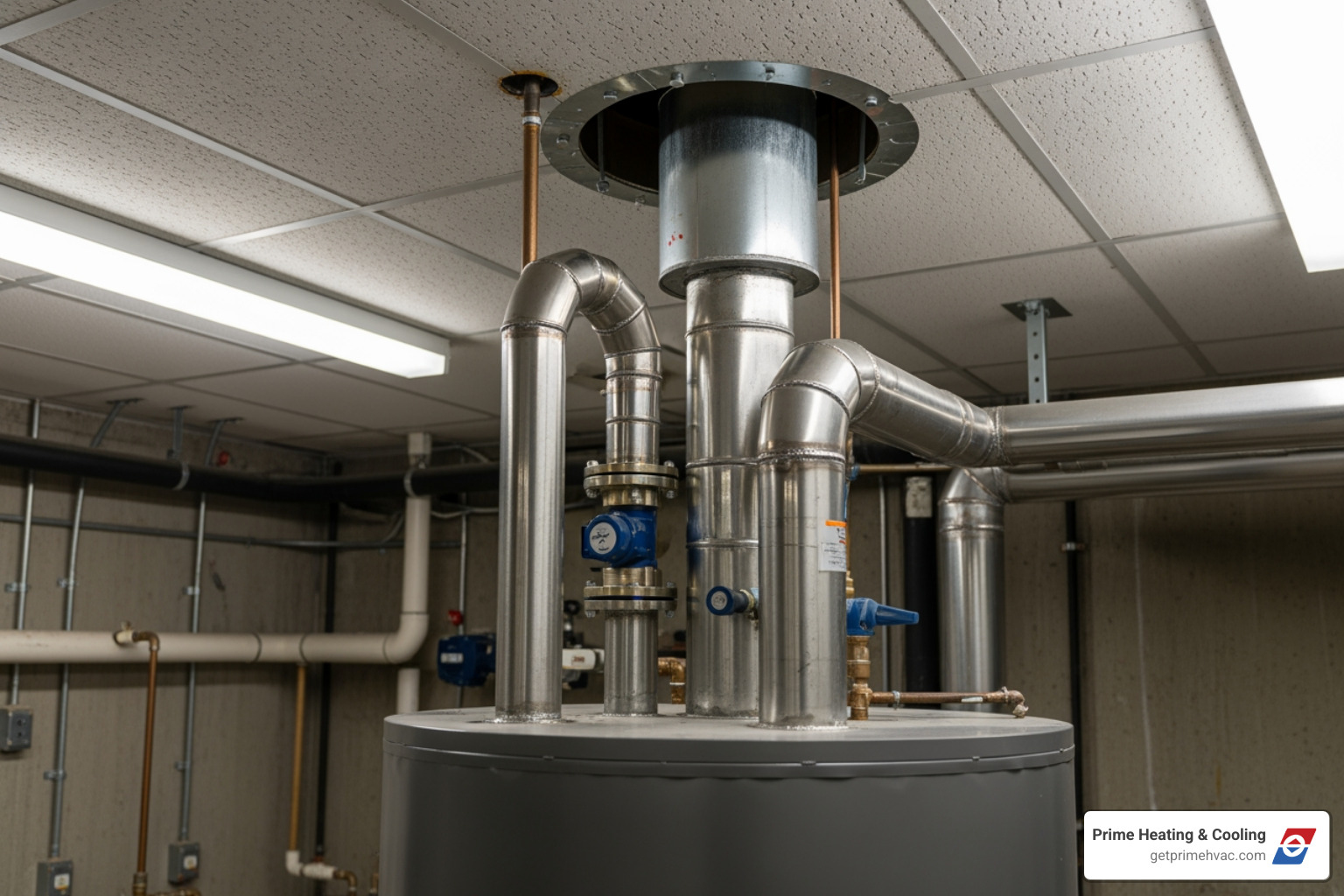
For gas or propane commercial water heaters, a proper venting system is essential to safely expel combustion byproducts like carbon monoxide. The type of venting required depends on the water heater model and fuel source:
- Direct-vent systems: Draw combustion air from outside and vent exhaust outside.
- Power-vent systems: Use an electric fan to force exhaust gases out, allowing for longer vent runs and more flexible placement. Power-vent units can add $500 to $1,500 to the installation cost due to the unit and additional electrical work ($300-$500) needed.
High-efficiency condensing water heaters often require specialized PVC or stainless steel venting, which can be more expensive than traditional metal flues. Ensuring the correct and safe venting system is paramount for the health and safety of your employees and customers.
Electrical and Plumbing Upgrades
Converting fuel types or installing a larger, more powerful commercial water heater often necessitates electrical and plumbing upgrades, contributing to the overall commercial water heater installation cost.
- Electrical Upgrades: For electric commercial water heaters, especially larger or tankless models, your existing electrical panel might need an upgrade to handle the increased load. This could involve installing a new dedicated circuit or even upgrading your main electrical service to 200 amps or more, which can cost $500 to $1,000 for a new line and sub-panel.
- Gas Line Modifications: If you’re switching from an electric to a gas unit, or if your new gas water heater requires a higher BTU input than your old one, a new or larger gas line will need to be run. This is a specialized job that adds to the cost.
- Water Line Modifications: New water heaters might have different connection points or require larger diameter pipes, necessitating modifications to your existing water lines.
- Expansion Tank Installation: Many commercial plumbing systems, especially in new construction or areas with varying water pressure, require an expansion tank. This device protects your water heater and plumbing system from excessive pressure, and its installation can cost between $90 and $350.
- Old Unit Removal and Disposal: Don’t forget the cost of safely removing and disposing of your old commercial water heater. This typically ranges from $100 to $500, depending on the size and weight of the unit and local disposal regulations.
We provide comprehensive assessments to identify any necessary upgrades during our initial consultation, giving you a clear picture of the total investment.
Long-Term Value: Lifespan, ROI, and Incentives
While the initial commercial water heater installation cost is a significant consideration, smart business owners think beyond the price tag. The total cost of ownership (TCO), including operational expenses, maintenance, and the unit’s lifespan, paints a more accurate financial picture. Calculating the return on investment (ROI) for energy-efficient models can reveal substantial long-term savings.
Expected Lifespan and Maintenance
The lifespan of your commercial water heater directly impacts its long-term value. Investing in a durable unit and maintaining it properly can postpone costly replacements. Here are typical lifespans for different commercial water heater types:
- Tank-Style Commercial Water Heaters: 6-15 years
- Tankless (On-Demand) Commercial Water Heaters: 20+ years
- High-Efficiency and Hybrid Commercial Water Heaters: 15-20 years
Regular maintenance is key to maximizing these lifespans. This includes annual flushing of tank-style heaters to remove sediment buildup, checking and replacing anode rods, and inspecting all connections and components. We offer comprehensive hot water services to keep your commercial water heater running efficiently and extend its life. You can learn more about the benefits of regular maintenance here: The benefits of regular hot water services.
Energy Efficiency Rebates and Tax Credits
To encourage energy conservation, various incentives are available that can help offset the higher commercial water heater installation cost for energy-efficient models.
- ENERGY STAR® Certified Models: Many high-efficiency commercial water heaters qualify for ENERGY STAR® certification, making them eligible for rebates and tax credits.
- Federal Tax Credits: The federal government occasionally offers tax credits for businesses that install certain energy-efficient equipment. It’s always wise to check current IRS guidelines or consult a tax professional.
- State and Local Utility Rebates: In Massachusetts, programs like Mass Save® offer significant rebates and low-interest financing for qualifying high-efficiency HVAC and water heating systems. Rhode Island also has various utility incentive programs that businesses can leverage. These programs can significantly reduce the net cost of your installation. For more general information on HVAC and plumbing, the The HUD PATH Rehab Guide Volume 8: HVAC/Plumbing provides valuable context.
These rebates and tax credits can make the initial investment in a more expensive, energy-efficient commercial water heater much more manageable, allowing your business to enjoy lower operating costs and a faster ROI.
Frequently Asked Questions about Commercial Water Heater Installation
We understand you likely have many questions when considering a new commercial water heater. Here are some of the most common inquiries we receive from businesses in Rhode Island and Massachusetts:
How long does a commercial water heater installation take?
The duration of a commercial water heater installation varies depending on the type of unit, the complexity of the job, and whether significant upgrades are needed.
- Standard Replacement (like-for-like tank unit): Typically takes 2-4 hours. This assumes the new unit fits the existing connections and venting without major modifications.
- Complex Conversion or Relocation: If you’re switching from a tank to a tankless system, converting fuel sources, or relocating the unit, the installation can take 4-8+ hours, sometimes even longer. Factors like running new gas lines, upgrading electrical panels, or installing specialized venting will extend the timeline.
Our team works efficiently to minimize downtime for your business, providing a clear estimated timeline after our initial assessment.
How do I choose the right size commercial water heater for my business?
Choosing the correct size for your commercial water heater is paramount to ensuring a reliable hot water supply without overspending. It’s not as simple as picking a larger tank. We consider several factors:
- Calculate Peak Demand: This is the most critical factor. For a restaurant, it’s the hot water needed during the busiest meal service. For a gym, it’s the demand during morning or evening rushes. We calculate the maximum amount of hot water your business uses within a specific timeframe.
- Consider Business Type: A small office building will have vastly different needs than a large hotel or a manufacturing facility in Lincoln or North Providence. We tailor our recommendations to your specific industry and operational demands.
- Flow Rate (GPM) and Temperature Rise: For tankless units, we focus on the required Gallons Per Minute (GPM) at a specific temperature rise (e.g., how many degrees the water needs to be heated).
- First Hour Rating (FHR): For tank-style units, the FHR indicates how much hot water the heater can deliver in the first hour of peak use.
- Consult a Professional: The most accurate way to size a commercial water heater is to have one of our experts conduct a thorough assessment of your property and usage patterns. We ensure your system is perfectly matched to your needs.
Is a more expensive, energy-efficient water heater worth it for a business?
For most businesses in our service areas of Rhode Island and Massachusetts, the answer is a resounding yes. While energy-efficient models (like tankless or hybrid units) often come with a higher initial commercial water heater installation cost, the long-term benefits typically outweigh this expense:
- Lower Monthly Utility Bills: Significant energy savings (24-60% for some models) translate directly to lower operating costs for your business month after month.
- Reduced Carbon Footprint: Many businesses prioritize sustainability. Energy-efficient water heaters contribute to a greener operation and can improve your public image.
- Longer Lifespan: These advanced units are often built with higher-quality components and more durable designs, leading to a longer operational life (20+ years for tankless).
- Potential for Higher Property Value: An energy-efficient, modern water heating system can be an attractive feature for potential buyers if you ever decide to sell your commercial property.
- Return on Investment (ROI): When you factor in energy savings, lower maintenance (due to newer tech), and potential rebates, the ROI for an energy-efficient unit can be quite favorable over its lifespan.
We help you analyze these factors to determine the best investment for your specific business goals.
Get a Professional Quote for Your Commercial Water Heater Installation
Understanding the various components of commercial water heater installation cost is the first step, but the next, and most crucial, is getting a professional assessment and quote. We’ve seen how factors like the water heater type, size, fuel source, labor complexity, and additional expenses like permits and venting can all add up. While the upfront cost is important, remember to balance it with the long-term savings and reliability that a high-quality, efficiently installed commercial water heater can provide.
Expert installation isn’t just about getting the job done; it’s about ensuring safety, efficiency, and longevity for your business’s hot water supply. Our skilled technicians at Prime Heating & Cooling bring over 20 years of experience to every job, providing reliable, energy-efficient solutions for businesses across Rhode Island and Massachusetts, including East Greenwich, Johnston, Scituate, Smithfield, Providence, Lincoln, Coventry, Warwick, North Smithfield, North Scituate, North Providence, Franklin, and the East Side of Providence. We’re here to help you make an informed decision that benefits your bottom line and keeps the hot water flowing.
Don’t let unexpected costs leave your business in the cold. Contact us today for a comprehensive assessment and a transparent quote custom to your commercial water heater installation needs. We’re available 24/7 and committed to a customer-first approach.
Contact us for professional plumbing installations and repairs


