

What Is an Evaporator Coil and Why Is It Leaking?
An evaporator coil leak fix typically requires professional replacement of the coil rather than repair, as temporary solutions like adding refrigerant or applying sealants are rarely effective long-term.
Your home’s evaporator coil is the heart of your air conditioning system. Located inside your air handler or furnace, this component circulates refrigerant that absorbs heat from your indoor air. When warm air passes over the cold coil, the refrigerant inside pulls the heat out, sending cool, dehumidified air back through your vents.
The cooling cycle depends on a sealed system. Your AC doesn’t “use up” refrigerant like a car uses gasoline. If you’re constantly adding refrigerant or noticing reduced cooling, you likely have a leak. Even small leaks can cause serious problems, from frozen coils to complete system failure.
Evaporator coil leaks happen for several reasons. Chemical reactions between volatile organic compounds (VOCs) from household cleaners and the copper piping can create corrosive acids. Normal wear and tear, physical damage, and vibration from the AC unit can also create holes. The challenge is that these coils sit in hard-to-reach places with countless curves and crevices, making leaks extremely difficult to locate and repair reliably.
I’m Tyler Steiner, and after years of diagnosing and repairing HVAC systems throughout New England, I’ve seen how evaporator coil leak fix decisions can make or break a homeowner’s comfort and budget. My team at Prime Heating & Cooling handles these situations daily, helping customers understand when repair makes sense and when replacement is the smarter investment.
Spotting the Signs: Is Your Evaporator Coil Leaking Refrigerant?
When your AC isn’t performing as it should, it’s often trying to tell you something. A leaking evaporator coil can show up in several noticeable ways, impacting your comfort and your wallet. Recognizing these signs early is crucial for a timely evaporator coil leak fix.
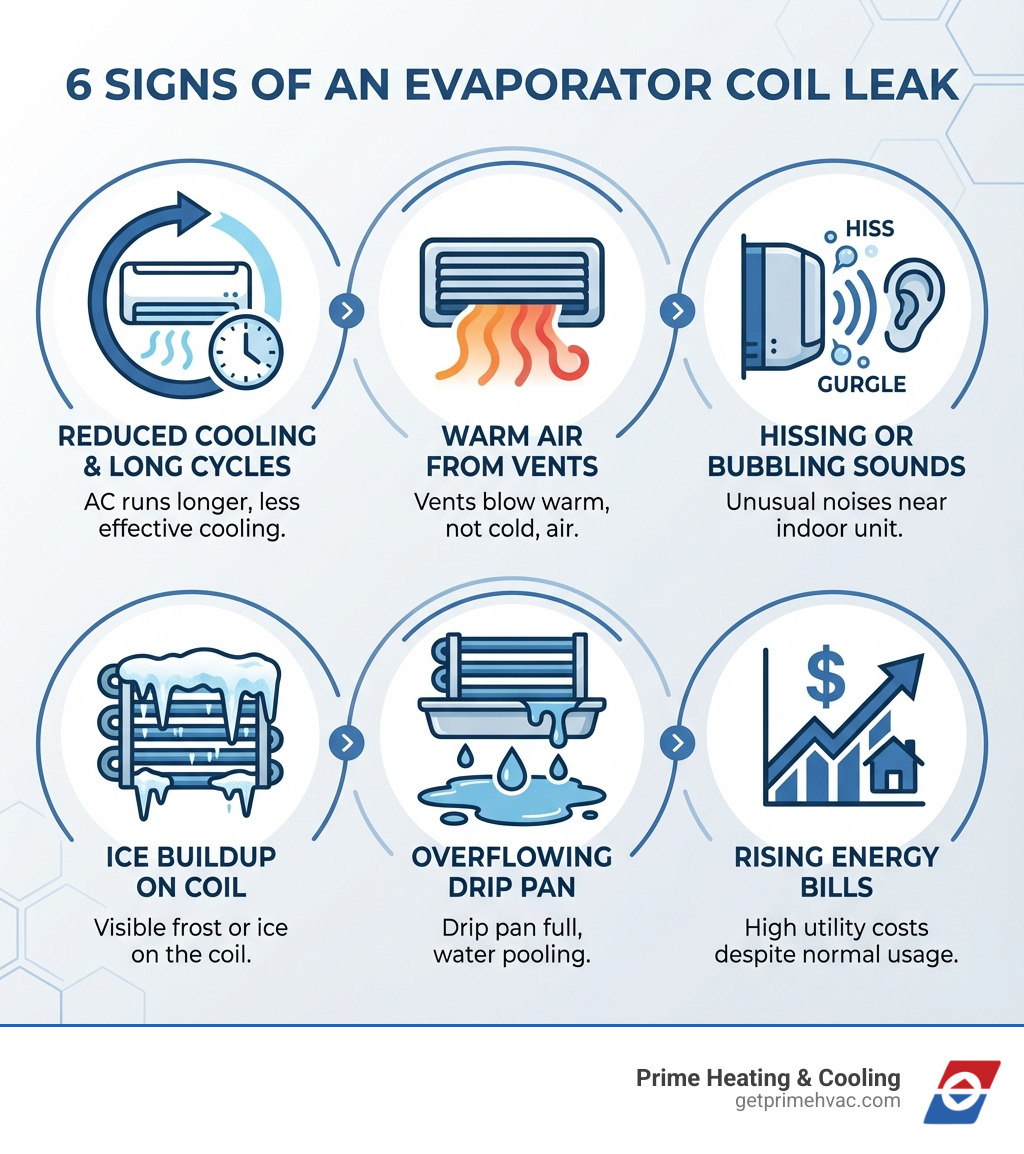
Here are the primary indicators that your evaporator coil might be leaking refrigerant:
- Reduced Cooling Efficiency: A system that runs longer to keep your home comfortable may have insufficient refrigerant, forcing it to work harder for less output.
- Warm Air from Vents: If you feel warm or lukewarm air blowing from your vents instead of cool air, your evaporator coil isn’t absorbing heat effectively.
- Hissing or Bubbling Sounds: A hissing sound often indicates refrigerant escaping a small crack, while a bubbling sound suggests a larger leak.
- Frozen Coils: When there isn’t enough refrigerant to absorb heat, moisture in the air can freeze onto the coil. Ice buildup on your indoor unit is a major red flag.
- Overflowing Drip Pan: A frozen coil can block drainage, causing the pan to overflow and potentially lead to water damage.
- Higher Energy Bills: A leaking system works harder and consumes more energy. Unexpected bill spikes can signal a problem.
- Chemical Smells: Refrigerant has a distinct, sweet or chemical odor. If you detect this smell from your vents, it’s a strong indication of a leak. A refrigerant leak is dangerous and inhaling it can cause nausea, dizziness, and confusion.
For more general signs that your AC might be in trouble, check out our guide on Signs Your Air Conditioner Needs Repair: Don’t Ignore These Red Flags.
What Causes the Telltale Signs?
These signs all point to low refrigerant. AC systems are designed to operate with a precise amount of refrigerant that doesn’t get “used up.” If your system is low, it means there’s a leak.
When refrigerant levels drop:
- Reduced Heat Absorption: The coil cannot absorb enough heat, leading to warmer air from your vents.
- System Overworking: Your AC runs longer to compensate, putting stress on the entire system.
- Compressor Strain: The compressor, a vital and expensive component, works harder under low refrigerant, leading to premature wear.
- Frozen Coils: The pressure drop from low refrigerant can lower the coil’s temperature below freezing, causing ice buildup that further hinders heat transfer.
Understanding the critical role of refrigerant is key to appreciating why a leak is so serious. Learn more in our article on Refrigerant Leak Repair: Why It’s Critical for Your AC System.
Consequences of Ignoring a Leak
Ignoring a leaking evaporator coil is like ignoring a small crack in your car’s windshield – it will only get worse.
The potential consequences of delaying an evaporator coil leak fix include:
- System Damage and Compressor Failure: Low refrigerant puts strain on your AC’s compressor, often the most expensive component to replace.
- Increased Repair Costs: A frozen coil can damage fan motors, and an overstressed compressor can fail, turning a small issue into a major expense.
- Poor Indoor Air Quality: Conditions that lead to coil corrosion (like VOCs) can contribute to poor indoor air quality. An inefficient system can also struggle to dehumidify, fostering mold growth.
- Health Risks: Refrigerant leaks can be dangerous, causing symptoms from dizziness to asphyxiation. Evacuate the area if you smell refrigerant and call professionals immediately.
- Shortened System Lifespan: Continual strain from a leaking coil can significantly shorten the overall lifespan of your entire HVAC system.
If your AC breaks down completely, our guide on Emergency AC Repair: What to Do When Your Cooling System Breaks Down can help.
The Root Causes: Why Do Evaporator Coils Fail?
Evaporator coils are designed to last, often for the entire lifespan of your AC unit (typically 10-15 years). So why do these crucial components sometimes spring a leak prematurely? The reasons range from microscopic chemical reactions to physical wear and tear.
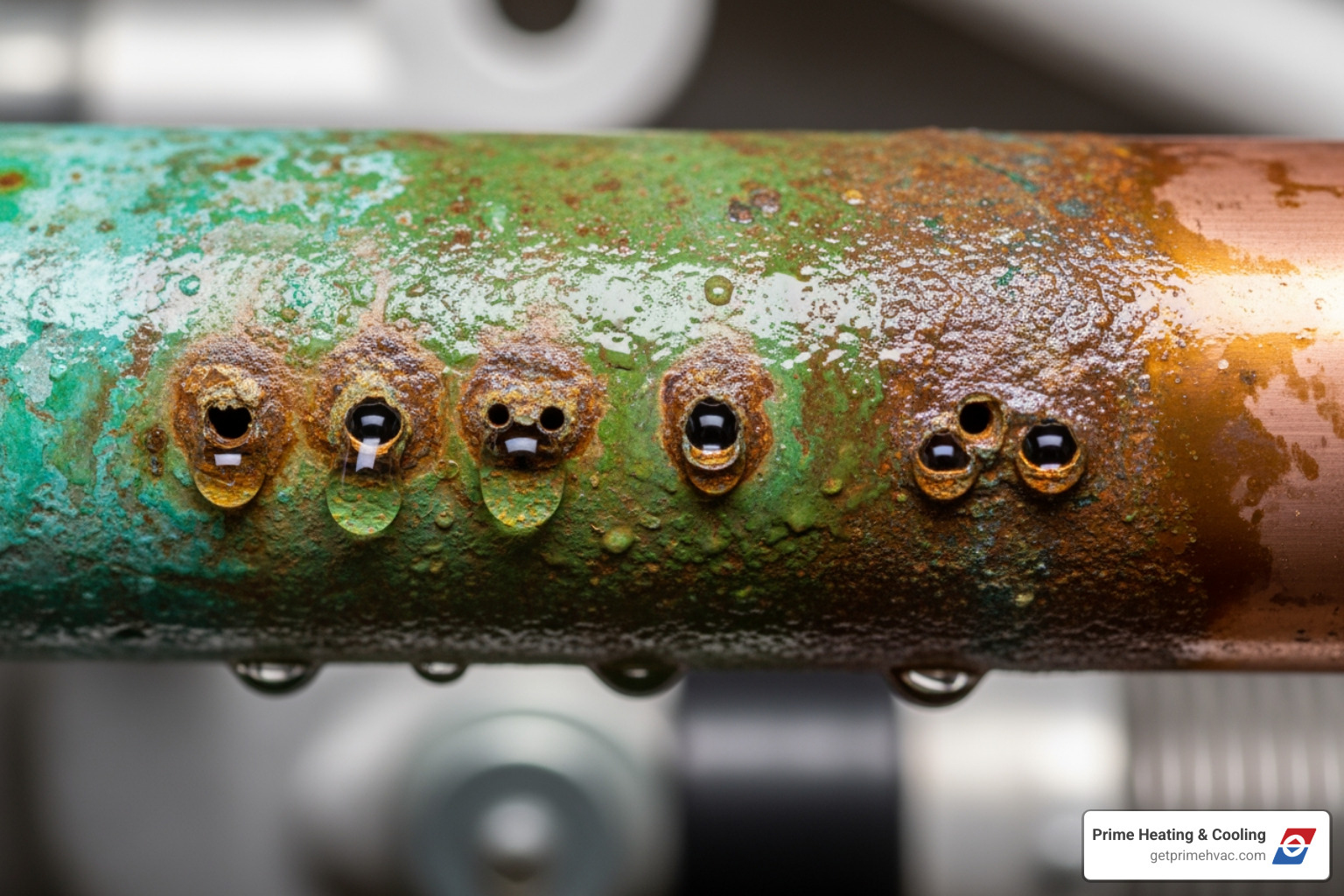
Common culprits behind evaporator coil leaks include:
- Formicary Corrosion: This process creates tiny, pinhole leaks in copper tubing that are incredibly difficult to detect. It’s caused by a chemical reaction between copper, water, and certain airborne contaminants.
- Normal Wear and Tear: Over years of constant operation, the materials in your evaporator coil can degrade, especially in older units where copper piping may become thinner and more brittle.
- Physical Damage: Debris from a dirty filter or improper handling during maintenance can cause dents or punctures.
- Vibration Damage: Your AC unit vibrates during operation. Over time, these vibrations can cause aluminum fins to rub against the copper tubing, creating small holes.
- Improper Installation: If the evaporator coil is not level, moisture can accumulate in certain areas, speeding up corrosion and eventual leaks.
Chemical Reactions and Corrosion
The most insidious cause of evaporator coil leaks is related to chemical reactions and corrosion.
Here’s how it happens:
- Volatile Organic Compounds (VOCs): Many common household products release invisible gases called volatile organic compounds (VOCs).
- Household Cleaners and Other Products: Chemicals in these products, particularly those with formic or acetic acids, are major contributors. When these VOCs interact with moisture on a cold evaporator coil and the copper material of the coil, they can form corrosive acids.
- Copper Pipe Erosion: These newly formed acids slowly eat away at the copper piping, creating microscopic pinholes – a phenomenon known as formicary corrosion.
- Acid Formation: The combination of humidity, VOCs, and copper creates a perfect storm for acid formation, leading to slow-motion corrosion that you can’t see until the leak becomes evident.
This environmental factor highlights why prevention is so important, as even seemingly harmless household items can contribute to the degradation of your AC system.
Your Guide to the Evaporator Coil Leak Fix: Repair vs. Replacement
When faced with a leaking evaporator coil, homeowners often wonder: can it be fixed, or does it need to be replaced? Our 20 years of experience serving Rhode Island and Massachusetts has taught us that replacement is often the most reliable evaporator coil leak fix.
Here’s a breakdown of the costs, longevity, and warranty considerations:
| Fix Option | Typical Cost (Estimated) | Longevity | Warranty Implications |
|---|---|---|---|
| Adding Refrigerant | $200-$700 per visit | Temporary (days to months) | None, often voids existing warranties if not done by pro |
| Sealant Application | Varies, plus labor | 50-50 success rate, temporary if successful | Can void manufacturer warranty, may damage other components |
| Coil Replacement | $1,300 (under warranty) | Long-term (restores system efficiency) | Typically 1 year on coil, new unit may have 10-year |
| $1,300-$3,000 (no warranty) | |||
| Full System Replacement | $3,900-$8,000 | Excellent (new system lifespan) | Full manufacturer warranty (e.g., 10 years on equipment) |
Temporary vs. Permanent Evaporator Coil Leak Fix Options
It’s tempting to look for a quick and cheap solution when your AC starts acting up. However, when it comes to an evaporator coil leak fix, temporary measures often lead to more problems and higher costs in the long run.
- Adding Refrigerant: This might restore cooling temporarily, but it only addresses the symptom, not the problem. Since refrigerant doesn’t get used up, adding more without fixing the leak means it will simply escape again, often damaging the compressor.
- Sealant Application: HVAC sealants circulate with the refrigerant to supposedly seal small leaks from within. Their success rate is about 50-50 for small leaks, and they can sometimes clog other parts of your AC system.
Many of these temporary solutions are among the Common Myths About Air Conditioning Repair: Debunking Misconceptions that we regularly address.
The Ultimate Evaporator Coil Leak Fix: When to Replace the Coil
For a lasting and reliable evaporator coil leak fix, replacement is almost always the recommended solution. While it’s a more significant investment upfront, it prevents recurring issues and restores your system’s efficiency.
- Cost of Replacement: If your evaporator coil is still under warranty, you might expect to pay around $1,300 for the replacement, covering labor and some parts. If the coil is out of warranty, the cost typically ranges from $1,300 to $3,000, depending on the specific AC unit, coil size, brand, and local labor rates.
- Long-Term Solution: A new evaporator coil eliminates the leak, ensuring your system maintains correct refrigerant levels and reducing strain on other components.
- Improved Efficiency: A new coil brings your AC system back to its optimal performance, which can lower energy bills.
When considering an evaporator coil leak fix, our team at Prime Heating & Cooling will always provide an honest assessment, guiding you toward the most cost-effective and reliable solution. For more insights into common coil issues, explore our article on Evaporator Coil Repair: Common Issues and Solutions.
When to Replace the Entire AC Unit
Sometimes, an evaporator coil leak is a sign that your entire AC system is nearing the end of its life. In these cases, a full AC unit replacement might be the smartest evaporator coil leak fix.
Consider these factors:
- System Age: Most AC units last 10 to 15 years. If your system is approaching this age and you’re facing a major repair like a coil replacement, it may be more economical to invest in a new, more efficient system.
- Refrigerant Type (R-22 vs. R-410A): If your AC uses R-22 refrigerant, which has been phased out, replacing just the coil is usually a bad investment. R-22 is scarce and expensive.
- Mismatched Systems: If only your indoor coil is replaced, but the outdoor unit (condenser) is old or uses a different refrigerant, you could end up with a mismatched system that runs less efficiently.
- Furnace Age: If your AC is paired with a furnace that is 15 years or older, consider replacing both simultaneously to save on labor costs.
Upgrading your entire system, especially to an Energy Star model, can significantly reduce your power bill and provide long-term comfort. Find the advantages in our article on the Benefits of Upgrading Your Cooling System: Improved Efficiency and Comfort.
Prevention is Key: How to Protect Your Evaporator Coil
The best evaporator coil leak fix is the one you never need. Proactive measures can extend the life of your evaporator coil and help prevent costly repairs.

Here are our top prevention tips:
- Regular HVAC Maintenance: Schedule professional tune-ups at least once a year. Technicians can identify potential issues early, clean your coils, and ensure your system is running optimally.
- Air Filter Changes: A dirty air filter restricts airflow, forcing your AC to work harder and potentially causing the evaporator coil to freeze. Change your air filter every 1-3 months, especially during peak usage seasons.
- Coil Cleaning: While professionals handle deep cleaning, keeping the area around your indoor unit clean helps reduce dust and debris on the coils.
- Managing Indoor Humidity: High humidity levels can contribute to the corrosive environment that damages coils. Consider using a whole-house dehumidifier during humid summers.
- Using Low-VOC Products: Volatile organic compounds from household items can corrode your coils. Opt for low-VOC or natural cleaning products, air fresheners, and paints when possible.
- Improve Air Circulation: Allowing fresh air into your home can help dilute VOCs. Energy Recovery Ventilators (ERVs) can also remove contaminants and improve air quality without wasting energy.
- Install UV Lights: For added protection against mold and bacteria growth on your coils, consider installing ultraviolet (UV) lights within your HVAC system.
The Role of Regular HVAC Maintenance
Regular professional HVAC maintenance is the cornerstone of preventing evaporator coil leaks and ensuring your system’s longevity.
Here’s how maintenance benefits your evaporator coil and entire system:
- Professional Inspections: Certified technicians carefully inspect your entire system, including the evaporator coil, looking for early signs of wear, corrosion, or potential leaks.
- Catching Issues Early: Identifying minor problems before they escalate into major breakdowns is key.
- Cleaning Coils: Specialized cleaning solutions remove dirt, grime, and corrosive buildup from your evaporator coil, helping maintain efficient heat transfer.
- Checking Refrigerant Levels: During a tune-up, refrigerant levels are verified. If they’re low, it’s a red flag indicating a leak that needs to be addressed.
- Ensuring Proper Airflow: Filters, ducts, and fan components are checked to ensure optimal airflow across the coil.
Investing in an annual maintenance plan is one of the smartest decisions you can make for your home comfort and budget. Find more benefits in our articles on The Importance of Regular AC Maintenance: Benefits and Tips and HVAC Maintenance: Every Homeowner Should Know.
Frequently Asked Questions about Evaporator Coil Leaks
We often get asked similar questions from homeowners across Rhode Island and Massachusetts concerning evaporator coil leaks. Here are some of the most common inquiries and our expert answers:
How much does it cost to fix a leaking evaporator coil?
The cost for an evaporator coil leak fix varies depending on whether you opt for a temporary repair or a full replacement, and if your system is under warranty.
- Temporary Repairs: Adding refrigerant can cost between $200-$700 per visit, but this is a recurring cost as the leak persists. Sealant applications can also vary in cost, with only a 50-50 success rate.
- Coil Replacement: If your evaporator coil is still under warranty, the replacement cost is likely around $1,300. If it’s out of warranty, expect to pay anywhere from $1,300 to $3,000. Factors affecting the price include the type of AC unit, coil size and brand, and local labor costs.
- Full System Replacement: If your system is old or uses R-22 refrigerant, replacing the entire AC unit (and potentially the furnace) might be more cost-effective in the long run, with costs ranging from $3,900 to $8,000.
Can I fix a leaking evaporator coil myself?
We strongly advise against attempting a DIY evaporator coil leak fix, especially if it involves handling refrigerant.
- Refrigerant Handling Laws: The U.S. Environmental Protection Agency (EPA) requires individuals to have Section 608 certification under the Clean Air Act to repair refrigerant leaks.
- Safety Hazards: Refrigerant is a hazardous chemical. Inhaling it can cause serious health issues, and direct contact can cause frostbite.
- Complexity of Repair: Evaporator coils are intricate, with tiny, often widespread leaks that are extremely difficult to locate and properly seal. DIY sealants rarely provide a lasting solution and can clog and damage other parts of your system.
- Voiding Warranties: Any unauthorized work on your AC system, particularly involving refrigerant, can void your manufacturer’s warranty.
For these reasons, professional help is essential for an effective and safe evaporator coil leak fix. Trying to tackle this complex issue yourself can lead to Common Mistakes to Avoid with DIY AC Repair: Expert Advice.
How long should an evaporator coil last?
Under ideal conditions and with proper maintenance, an evaporator coil should last for the entire lifespan of your AC system, typically 10 to 15 years.
However, several factors can affect its longevity:
- Maintenance Impact: A lack of regular professional maintenance is a primary culprit for premature coil failure.
- Environmental Factors: Exposure to VOCs, high indoor humidity, and constant chemical reactions can accelerate corrosion and lead to early leaks.
- Wear and Tear: Constant operation, especially in systems that are undersized or overworked, can contribute to the physical degradation of the coil materials.
- Material Quality: The quality of the copper or aluminum used in the coil also plays a role in its durability and resistance to corrosion.
Conclusion: Get Expert Help for Your Leaking AC Coil
Dealing with an evaporator coil leak can be a frustrating and potentially costly issue for any homeowner. From subtle signs like reduced cooling and rising energy bills to more alarming indicators like hissing sounds or frozen coils, ignoring these warnings can lead to significant system damage and even health risks. While temporary fixes might seem appealing, a professional evaporator coil leak fix through replacement is almost always the most reliable and cost-effective long-term solution.
At Prime Heating & Cooling, we understand the challenges faced by homeowners in Rhode Island and Massachusetts. With 20 years of experience, our skilled and certified technicians are experts in diagnosing evaporator coil leaks and recommending the best course of action for your specific system and budget. We prioritize reliable, energy-efficient solutions and a customer-first approach, ensuring your comfort and peace of mind.
Don’t let a leaking evaporator coil leave you in a hot mess. If you suspect your AC system has a leak, act promptly and trust the experts to provide a safe, effective, and lasting solution.
For expert AC repairs, installation, or maintenance in Rhode Island and Massachusetts, contact us today. We’re available 24/7 to ensure your home stays cool and comfortable. Contact us for expert AC repairs in RI & MA!