
Why Understanding Furnace Coil Replacement Costs Matters
The cost to replace furnace coil typically ranges from $1,000 to $3,500 for most homeowners, with the final price depending on factors like coil type, system size, labor rates, and refrigerant requirements. Here’s what you need to know:
Quick Cost Breakdown:
- Parts only: $600–$2,000
- Labor costs: $400–$1,500
- Total average cost: $1,350
Key cost factors:
- System size (measured in tons)
- Coil type (A-coil, N-coil, or slab)
- Refrigerant type (R-22 vs. R-410A)
- Accessibility of your unit
- Geographic location and local labor rates
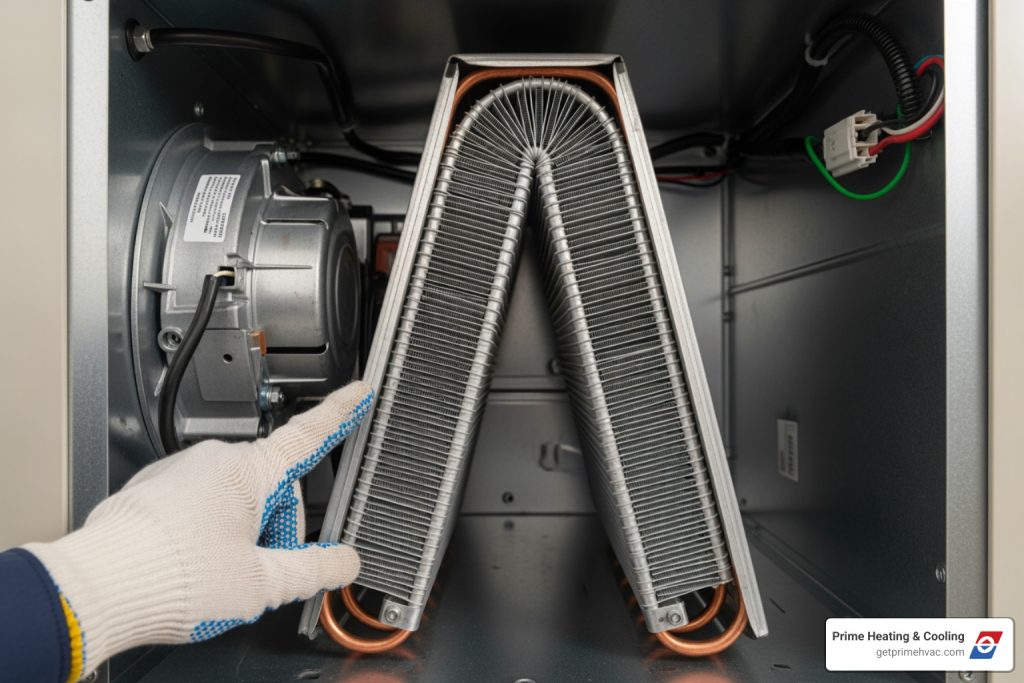
If your air conditioner isn’t cooling like it used to—or you’re seeing ice buildup on your indoor unit—there’s a good chance the evaporator coil could be the culprit. The evaporator coil is a critical component inside your furnace or air handler that absorbs heat from your home’s air, allowing your AC system to deliver cool, comfortable air throughout your space. When this coil fails, your entire heating and cooling system can struggle to maintain comfortable temperatures, leading to higher energy bills and potential system breakdowns.
Understanding what drives the cost of replacing a furnace coil helps you budget effectively and make informed decisions about whether to repair or replace your HVAC components. Many homeowners are surprised to learn that the coil itself is only part of the expense—labor, refrigerant handling, and system compatibility all play major roles in the final bill.
I’m Tyler Steiner, and after years of diagnosing and repairing HVAC systems across New England, I’ve helped countless homeowners steer the cost to replace furnace coil and make smart decisions about their comfort systems. At Prime Heating & Cooling, we believe in transparent pricing and expert guidance to help you understand exactly what you’re paying for—and why it matters.
Understanding the Average Cost to Replace a Furnace Coil
When your furnace’s evaporator coil fails, it’s natural to wonder about the financial impact. This component, housed in your indoor furnace or air handler, is crucial for cooling your home by absorbing heat. A failing coil can lead to discomfort and higher energy bills.
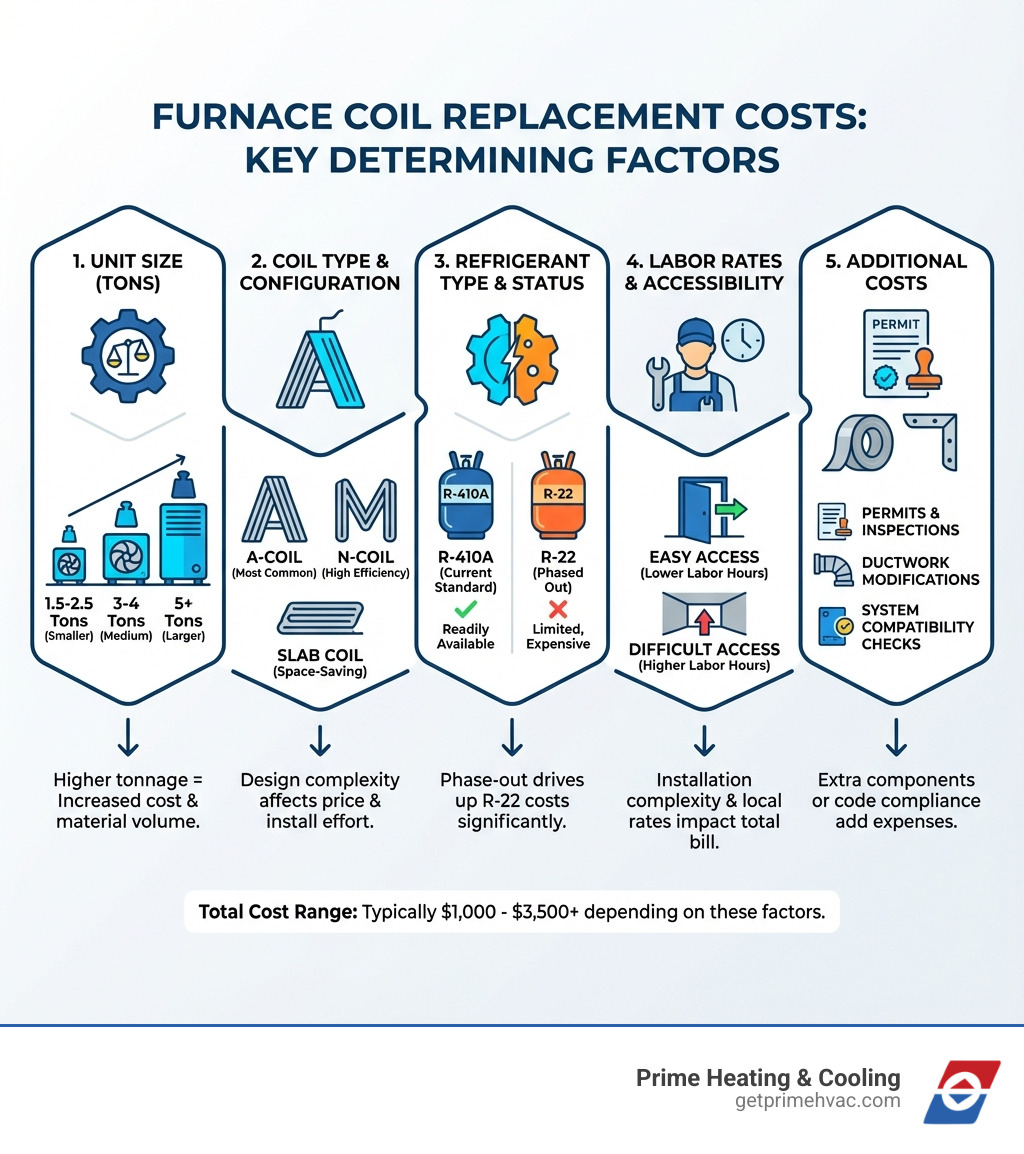
Based on industry averages, the total cost to replace furnace coil typically falls between $1,000 and $3,500. This range includes the new coil itself ($600 to $2,000) and professional labor ($400 to $1,500). The average homeowner often pays around $1,350 for this service.
These are general averages, and the specific cost for your home in Rhode Island or Massachusetts will depend on several factors. Understanding these variables helps you prepare for the investment and ensure you receive a fair quote. For a broader look at AC system issues, check out The Ultimate Guide to Air Conditioning Repair: Everything You Need to Know.

Factors That Influence the Cost of Evaporator Coil Replacement
Several key elements impact the cost to replace furnace coil, affecting both material and labor expenses.
- AC Unit Size (Tonnage): The size of your AC unit, measured in tons, correlates with the coil’s size and cost. Larger units for bigger homes require larger, more expensive coils. For example, a 3-ton coil replacement might range from $800 to $1,500, while a 5-ton coil could cost $1,200 to $2,000.
- Coil Type: Coils come in various configurations with different costs. A-coils are common and cost-effective (around $1,300), while N-coils are more efficient but pricier (around $1,550). Cased coils, which include housing, cost more than uncased coils.
- Brand Reputation: Premium HVAC brands may have higher upfront coil costs ($1,000 to $2,500) but often offer better warranties and a longer lifespan.
- System Accessibility: A unit in an easily accessible basement will incur lower labor charges than one in a cramped attic or crawl space, which requires more time and effort.
- Geographic Location: Labor rates for HVAC technicians vary by region. In areas like Rhode Island and Massachusetts, costs may be on the higher end of the national average.
For more insights on selecting the right system, visit Choosing the Right Air Conditioning Unit for Your Home: Factors to Consider.
How Refrigerant Types Impact the Cost to Replace a Furnace Coil
Your system’s refrigerant type significantly influences the cost to replace furnace coil due to environmental regulations.
- R-22 (Freon) vs. R-410A: R-22 (Freon) was the old standard but has been phased out due to its ozone-depleting properties. It is now scarce and expensive. Modern systems use R-410A, which is more environmentally friendly and affordable.
- R-22 Phase-Out: Since January 1, 2020, R-22 production and import have been banned in the U.S. The limited supply of recycled R-22 drives up its price, making any repair involving it costly.
- System Compatibility: You cannot use a new R-410A coil with an older R-22 outdoor condenser. The refrigerants are incompatible and mixing them will damage the system. In this scenario, a full system replacement (both indoor and outdoor units) is often necessary, which substantially increases the overall cost. This is a critical decision for homeowners with older systems.
Handling refrigerants requires EPA certification. Learn more at EPA Guidelines for Refrigerant Handling. If you suspect a leak, address it promptly. Our guide on Refrigerant Leak Repair: Why It’s Critical for Your AC System has more information.
Typical Labor Costs and Additional Expenses
Beyond the coil and refrigerant, other factors contribute to the final bill.
- HVAC Technician Hourly Rates: In Massachusetts, professional HVAC contractor rates can range from $75 to $150 per hour. The total labor cost depends on the job’s complexity and duration.
- Unit Accessibility: As mentioned, difficult-to-access units in attics or crawl spaces increase labor time and costs compared to easily accessible basement units.
- Refrigerant Recovery and Disposal: Legally, EPA-certified technicians must recover and dispose of old refrigerant, which adds to the labor time and may include a disposal fee.
- Permit Fees: Some municipalities in Rhode Island or Massachusetts require permits for major HVAC work, costing anywhere from $50 to $300 or more.
- Potential Ductwork Modifications: If the new coil is a different size or your ductwork is poorly configured, modifications may be needed to ensure proper airflow, adding $500 to $2,000 to the project. Learn more in our guide on Ductwork Repair and Replacement: Improving Airflow and Energy Efficiency.
Deciding Between Repair and Replacement
When a furnace coil fails, you must decide whether to repair it or replace the entire system. This decision depends on your HVAC system’s age, repair frequency, and energy efficiency. A long-term perspective can often save you money and headaches.
Signs That an Evaporator Coil Needs Replacement
Recognizing the symptoms of a failing evaporator coil early can prevent more extensive damage. Here are key indicators to watch for:
- Reduced Cooling or Heating: If your AC runs but the air isn’t cold, or the system struggles to reach the set temperature, the coil may be faulty.
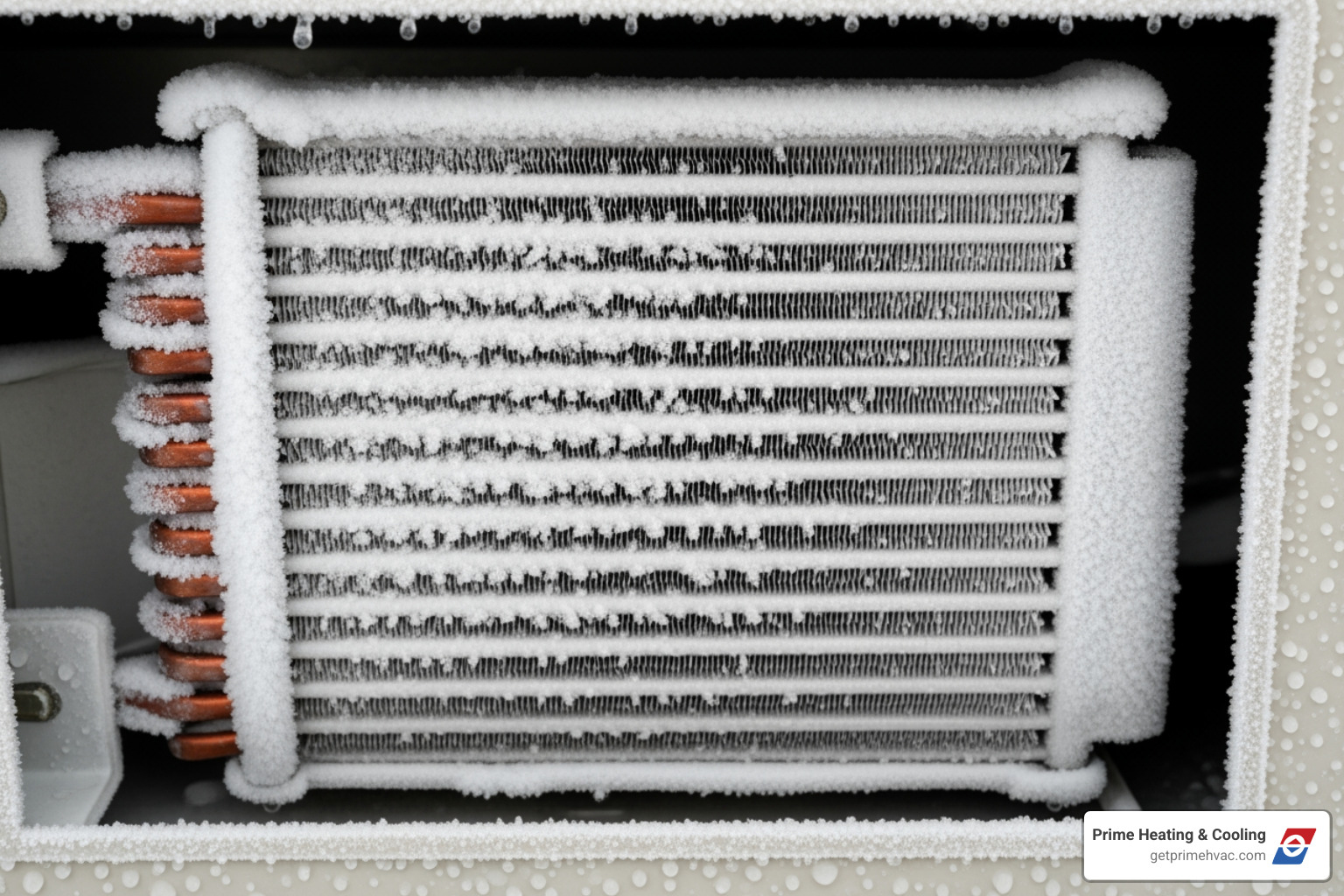
- Frozen Coil: Ice buildup on the indoor coil or refrigerant lines is a clear sign of a problem, often indicating restricted airflow or low refrigerant.
- Hissing or Bubbling Noises: These sounds often point to a refrigerant leak.
- Refrigerant Leaks: If a technician finds a significant leak, replacement is usually the most reliable solution, as coils can develop pinhole leaks from corrosion over time.
- Unexplained High Energy Bills: A struggling coil makes your AC system work harder, increasing energy consumption and your utility bills.
- Uneven Temperatures: Some rooms being warmer than others can indicate the coil isn’t performing optimally.
Ignoring these signs can lead to more expensive damage, like a failed compressor. For more on identifying AC problems, read our guide on Signs Your Air Conditioner Needs Repair: Don’t Ignore These Red Flags.
When to Repair vs. Replace the Furnace Coil
Deciding between repairing a leaking coil and replacing it involves several considerations:
- The 50% Rule: If a repair costs 50% or more than a new system, replacement is often more cost-effective.
- System Age: Evaporator coils last 10-15 years. If your system is old, replacing just the coil may be a short-term fix before other components fail.
- Mismatched System Risks: You cannot pair a new R-410A coil with an old R-22 condenser. This incompatibility requires a full system replacement to ensure proper function.
- Warranty Considerations: Check if your coil is under warranty, as this could cover the replacement and significantly reduce your cost.
- Future Repair Likelihood: If your system has a history of frequent breakdowns, investing in a new coil might just be delaying the inevitable. A new, reliable system could be a better investment.
For more guidance on when to consider a full AC replacement, see Is It Time for AC Replacement? Signs to Watch For.
Potential Savings and Long-Term Benefits of a New Coil
While the cost to replace furnace coil is a significant expense, it’s an investment with long-term benefits.
- Improved Energy Efficiency: A new coil can dramatically improve your HVAC system’s efficiency, reducing its workload and energy consumption. This can lower energy bills by 10-20%.
- Lower Utility Bills: Better efficiency leads directly to lower monthly utility bills, helping to offset the initial replacement cost over time.
- Improved Home Comfort: A new coil restores your system’s ability to cool your home evenly and control humidity, ensuring consistent comfort.
- Increased Property Value: A well-maintained, efficient HVAC system is an attractive feature for potential home buyers.
- Federal Tax Credits & Rebates: You may be eligible for federal tax credits (up to 30% or $2,000 for qualifying systems under the Inflation Reduction Act) and state/local rebates, like those from Mass Save® in Massachusetts. These incentives can significantly reduce your out-of-pocket costs.
Explore energy-efficient solutions at Energy Efficient HVAC Solutions: A Search Near You. You can also learn about efficient systems from ENERGY STAR.
The Replacement Process: Why Professional Installation is Crucial
Replacing an evaporator coil is a complex task that requires specialized knowledge, tools, and adherence to strict safety and environmental regulations. It is not a do-it-yourself project.
- DIY Risks & Safety Hazards: Improper installation can lead to refrigerant leaks, electrical hazards, and damage to your HVAC system. Refrigerants are harmful chemicals that require expert handling, and working with electrical components carries a risk of shock.
- Specialized Tools & Legal Requirements: Professionals use expensive, specialized tools like refrigerant recovery machines and vacuum pumps. Furthermore, the EPA legally requires that only certified technicians handle refrigerants to protect the environment. You can find more information at EPA certification.
- Voiding Warranties: Most manufacturers will void your warranty if repairs are not performed by a licensed professional, leaving you responsible for future repair costs.
For these reasons, professional installation is a necessity. Avoid common DIY mistakes by consulting our guide at Common Mistakes to Avoid with DIY AC Repair: Expert Advice.
What to Expect During a Professional Coil Replacement
When you call Prime Heating & Cooling, you can expect a thorough, professional process to restore your home’s comfort.
- System Diagnosis: We first confirm the coil is the problem using advanced diagnostic tools.
- Refrigerant Recovery: Our EPA-certified technicians safely recover all existing refrigerant from your system.
- Old Coil Removal: The faulty coil is carefully disconnected and removed.
- New Coil Installation: The new, compatible coil is installed and secured.
- System Vacuuming and Pressure Testing: We vacuum the refrigerant lines to remove air and moisture, then pressure test to ensure there are no leaks.
- Refrigerant Recharge: The system is recharged with the precise type and amount of new refrigerant.
- Performance Testing: We run the AC system to ensure it’s operating correctly and efficiently.
The process typically takes 2-3 hours but can last longer depending on system complexity and accessibility. Learn more about the importance of professional service at The Importance of Professional HVAC Installation and Maintenance Services.
How Warranties and Maintenance Extend Coil Life
Protect your investment and prolong your coil’s lifespan with warranties and regular maintenance.
- Warranties: New coils typically come with a 5- to 10-year manufacturer’s warranty covering parts. Reputable companies like Prime Heating & Cooling also offer a labor warranty. These warranties usually require professional installation and annual maintenance to remain valid. Without a valid warranty, you are responsible for the full cost of repairs.
Maintenance tasks to extend coil life:
Regular maintenance is key to a long-lasting, efficient HVAC system.
- Annual Tune-ups: Schedule professional tune-ups to have coils cleaned, refrigerant levels checked, and minor issues identified before they become major problems.
- Filter Changes: Change air filters every 1-3 months to prevent restricted airflow, which can cause the coil to freeze.
- Keep Outdoor Unit Clear: Ensure the outdoor unit is free of debris to maintain proper airflow.
- Seal Ductwork: Check for and seal air leaks in your ductwork to reduce strain on your system.
Regular maintenance ensures your entire HVAC system runs efficiently, saving you money and preventing unexpected breakdowns. Learn more in our guide: The Importance of Regular AC Maintenance: Benefits and Tips.
Frequently Asked Questions about the Cost to Replace a Furnace Coil
Here are answers to common questions about the cost to replace furnace coil.
How long does an evaporator coil typically last?
With proper maintenance, an evaporator coil typically lasts 10 to 15 years. Its lifespan is influenced by:
- Maintenance: Regular tune-ups and filter changes are crucial for longevity.
- Environmental Factors: High humidity and airborne contaminants can accelerate corrosion.
- Usage and Installation: Frequent use and the quality of the initial installation also affect how long a coil will last.
Regular inspections are the best way to monitor its condition. For more tips, check out How to Extend the Life of Your HVAC System.
What is the cost difference between replacing an evaporator coil and a condenser coil?
Both coils are critical, but their location and function affect replacement costs.
- Evaporator Coil (Indoor): Located inside your furnace or air handler, this coil absorbs heat from your home’s air. The part cost is generally higher ($600 to $2,000), and labor can be more intensive due to its indoor location.
- Condenser Coil (Outdoor): Part of your outdoor AC unit, this coil releases heat outside. The part cost is often lower (around $800), and labor may be simpler.
Evaporator coil replacement tends to be more expensive due to higher material costs and more complex labor. For more on the outdoor unit, read our guide on Condenser Coil Repair: Restoring Efficiency of Your Air Conditioner.
Can a leaking evaporator coil be repaired instead of replaced?
Repairing a leaking coil is sometimes possible, but it’s often a temporary, less cost-effective solution.
- Repair Feasibility: A small, single leak might be patchable. However, widespread corrosion or multiple leaks usually require a full replacement, as repairs on aluminum coils are difficult and often unreliable.
- Long-Term Reliability: Patched coils are prone to future leaks. The cost of a repair that only lasts a short time may not be worth it compared to investing in a new coil with a warranty.
- Professional Recommendation: A professional technician should assess the damage to determine if a repair is a durable and economical solution for your system.
For more insights, refer to Evaporator Coil Repair: Common Issues and Solutions.
Get an Expert Assessment for Your Furnace Coil
Understanding the cost to replace furnace coil is a significant step in managing your home’s comfort system. While the initial investment might seem daunting, a new, efficient evaporator coil is a crucial component that contributes to lower energy bills, improved indoor comfort, and the overall longevity of your HVAC system. It’s an investment in your home’s efficiency and your family’s well-being.
The complexities of refrigerant handling, system compatibility, and the specialized tools required make professional installation not just a convenience, but a necessity. Attempting DIY repairs can lead to greater costs, safety risks, and voided warranties.
At Prime Heating & Cooling, we pride ourselves on providing transparent pricing and expert diagnosis for all our customers in Rhode Island and Massachusetts, including Smithfield, Johnston, Smithfield, Providence, Warwick, and surrounding areas. Our skilled technicians are ready to assess your system, explain your options clearly, and deliver a solution that ensures your home remains a comfortable haven.
For a transparent quote and expert diagnosis for your system in Rhode Island, trust our team to restore your comfort. Schedule your AC repair service today.