
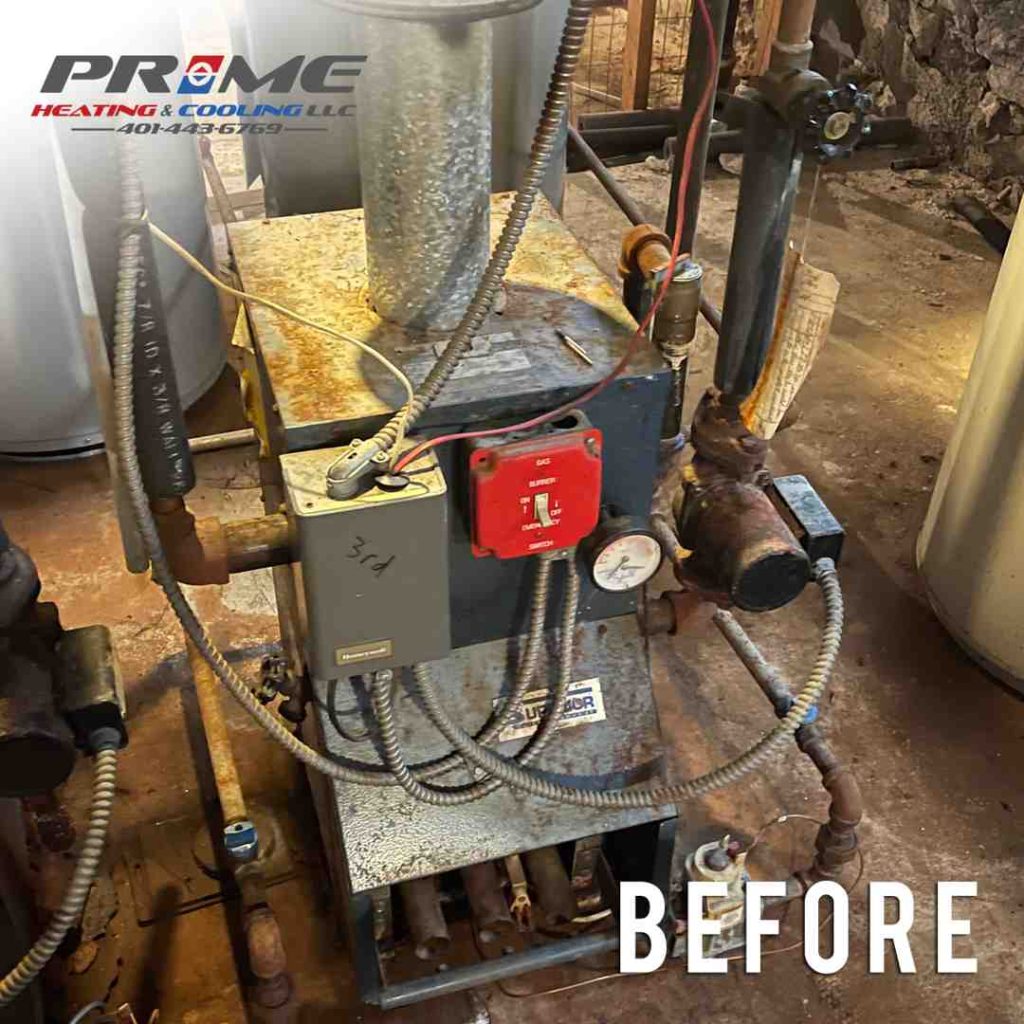
What to Do When Your Furnace Is Not Igniting
A furnace not igniting is almost always caused by one of a handful of common problems. Here’s a quick look at the most likely culprits:
| Cause | What You’ll Notice |
|---|---|
| Dirty or faulty flame sensor | Furnace lights briefly, then shuts off within seconds |
| Bad hot surface igniter | No glow, no flame — just clicking or silence |
| Thermostat issue | Furnace doesn’t respond at all |
| Tripped breaker or power issue | No sounds, no lights, nothing happens |
| Dirty air filter | Furnace starts then overheats and shuts down |
| Gas supply problem | Clicking but no ignition, no flame |
| Pressure or limit switch fault | Furnace tries to start but cuts out before lighting |
About 80% of no-light situations come down to just a few overlooked issues — and many can be checked safely without any tools.
This guide walks you through each cause, what to look for, and when to stop DIYing and call a pro.
When the temperature drops outside — and in New England, it drops fast — a furnace that won’t light goes from annoying to urgent in a hurry. You might hear clicking. You might see the blower run. You might even catch a brief flash of flame, then nothing. It’s stressful, especially at night or on a weekend.
The good news? Most ignition failures aren’t mysterious. They follow predictable patterns, and with a little guidance, you can usually figure out what’s wrong — and whether it’s something you can fix yourself or something that needs a licensed technician.
I’m Tyler Steiner, founder of Prime Heating & Cooling and a New England HVAC professional with years of hands-on experience diagnosing and repairing furnaces that won’t ignite across Rhode Island and Massachusetts. I’ve put this guide together to give homeowners a clear, safe path from “my furnace won’t start” to “heat is back on.”
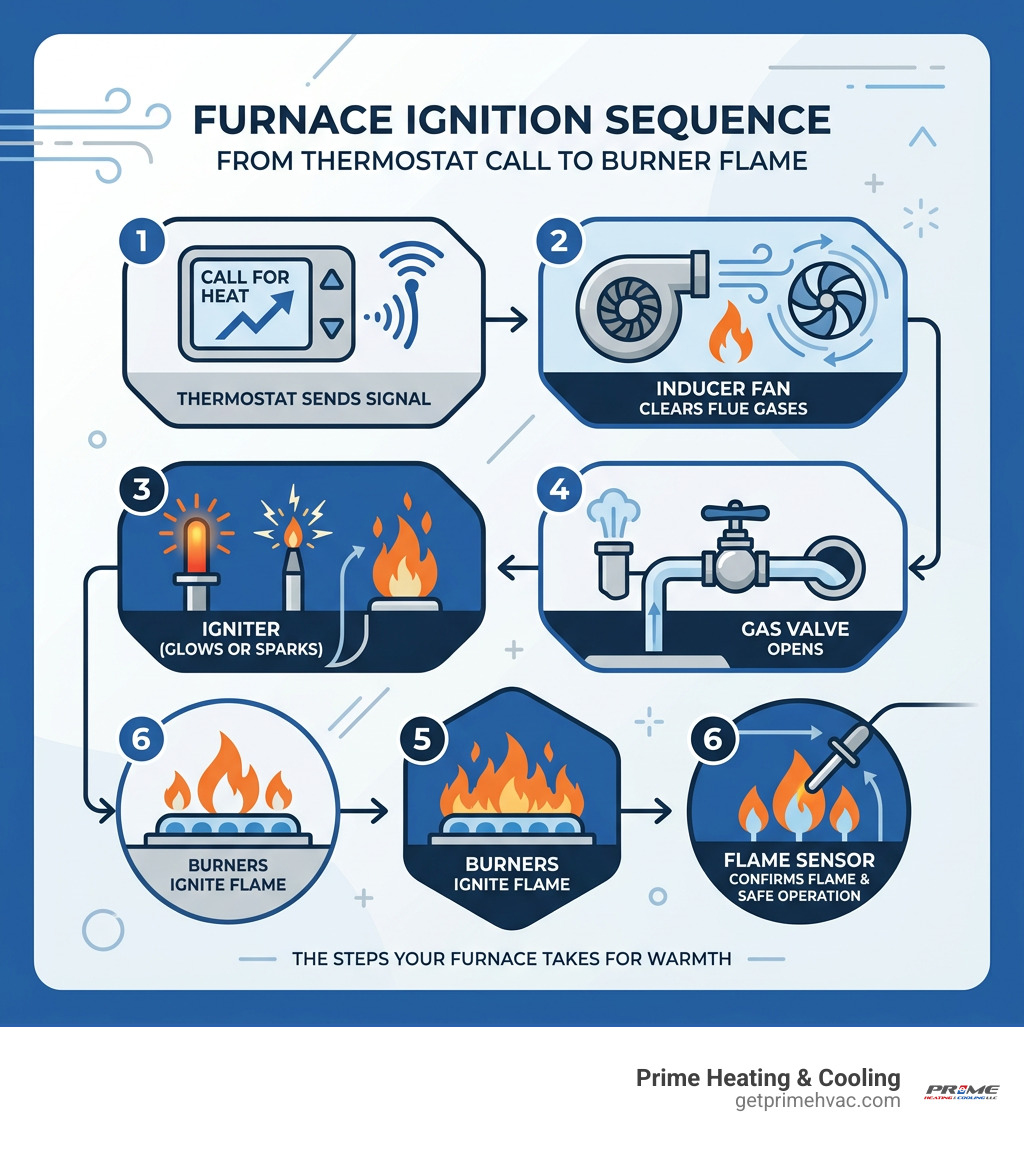
Common Reasons for a Furnace Not Igniting
In our 20 years of experience serving Rhode Island, from Woonsocket down to Coventry, we’ve found that a furnace not igniting usually stems from a breakdown in the communication between your thermostat and the burners. Modern furnaces are highly sophisticated machines with multiple safety checks. If just one sensor detects an “unsafe” condition, the whole system locks down to protect your home.
One of the most frequent (and frustrating) culprits is a dirty air filter. It sounds too simple to be true, but a clogged filter restricts airflow so severely that the internal temperature of the furnace skyrockets. This trips the “high-limit switch,” a safety device that kills the ignition process to prevent the heat exchanger from cracking.
Electronic Ignition vs. Standing Pilot
If you have an older home in Providence or East Greenwich, you might still have a furnace with a “standing pilot light”—a small flame that stays lit 24/7. However, most units manufactured after 2010 use electronic ignition. Understanding which one you have is the first step in troubleshooting.
| Feature | Standing Pilot (Older) | Electronic Ignition (Modern) |
|---|---|---|
| Ignition Source | Constant small flame | Hot Surface Igniter (glows) or Spark |
| Efficiency | Lower (wastes gas) | Higher (only uses gas when heating) |
| Common Failure | Pilot blows out or thermocouple dies | Igniter cracks or flame sensor gets dirty |
| Safety | Uses a thermocouple to sense heat | Uses a flame sensor rod to detect ions |
Beyond the hardware, don’t overlook the basics. We often see service calls where the gas valve was accidentally bumped into the “off” position during summer storage, or a circuit breaker tripped during a winter storm. For more complex mechanical failures, you may need to explore furnace repair services to get your system back in peak condition.
Troubleshooting a Furnace Not Igniting: The Basics
Before you start unscrewing panels, let’s run through the “Quick Fix” checklist. These are the things we check first when we arrive at a home in Johnston or Smithfield.
- Check the Thermostat: It sounds silly, but ensure it is set to “HEAT” and the temperature is at least 5 degrees higher than the current room temp. If the screen is blank, replace the batteries!
- Verify Power: Look for a switch near the furnace that looks like a light switch. Ensure it’s “ON.” Then, check your electrical panel for a tripped breaker labeled “HVAC” or “Furnace.”
- Inspect the Gas Valve: Ensure the handle is parallel to the gas pipe (ON). If it’s perpendicular, the gas is cut off.
- Reset the System: Sometimes the control board just needs a “reboot.” Turn the power off at the furnace switch, wait 60 seconds, and turn it back on. This can clear a temporary “lockout” code.
If your unit is making noise but nothing is happening, you might be dealing with The Silent Furnace: What to Do When Your Heater Won’t Light.
Identifying a Faulty Flame Sensor or Igniter
If your furnace clicks or the inducer motor (the small fan) starts running, but you never see a glow or a flame, the Hot Surface Igniter (HSI) is likely the problem. These components are made of silicon carbide or silicon nitride and are incredibly fragile. They typically last 3 to 5 years. Over time, the constant heating and cooling causes them to develop microscopic cracks. If you look at the igniter and see a small black “smudge” or a visible break, it needs replacement.
On the other hand, if the furnace ignites briefly then shuts off within 3 to 10 seconds, you are likely looking at a dirty flame sensor. This is the #1 service call in the HVAC industry. The flame sensor is a thin metal rod that sits in the path of the flame. As it burns, it develops a thin layer of carbon “soot” or oxidation. This prevents the sensor from detecting the flame, and for safety, the control board shuts the gas valve off immediately.
You can sometimes clean a flame sensor yourself using a piece of fine steel wool or even a clean dollar bill (the abrasive texture of the paper can rub off light oxidation). However, be extremely careful—if you break the ceramic insulator, the whole part must be replaced. For a visual guide on this process, check out this video: Furnace Not Igniting – How to Check and Replace Ignitor.
Why Your Furnace Not Igniting May Be a Safety Issue
Sometimes, a furnace not igniting is a sign that the system’s safety features are working exactly as intended.
- Pressure Switch Issues: Before the igniter even glows, a small fan called the inducer motor must clear the exhaust vents. A pressure switch checks to make sure this is happening. If your chimney is blocked by a bird’s nest or if there is ice buildup on your PVC vent pipes outside your Warwick home, the pressure switch won’t close, and the furnace will never light.
- Limit Switch Trips: As mentioned, a dirty filter causes overheating. If the limit switch trips too many times, the furnace may enter a “hard lockout,” requiring a professional reset.
- Gas Leaks: If you smell “rotten eggs,” stop immediately. Do not flip any light switches or try to ignite the furnace. Evacuate the house and call 911 or your gas company.
Safety is our priority at Prime Heating & Cooling. If your system is blowing cold air or acting erratically, read more about Don’t Get Left in the Cold: Fixing Your Furnace’s Chilly Blast.
When to Call a Professional for Furnace Repair
While we love empowering homeowners with DIY tips, there comes a point where “poking around” can become dangerous or lead to more expensive repairs. If you’ve checked the filter, the thermostat, and the power, and your furnace is still not igniting, it’s time to call in the experts.
In Rhode Island, we experience some of the harshest winter humidity and salt air, which can take a toll on electrical components. Our technicians in North Smithfield and Lincoln are trained to handle high-voltage electrical testing and gas pressure adjustments that require specialized tools like manometers and multimeters. If you are in the middle of a “no heat” emergency, our Heating Repair RI team is available to help.
Understanding Furnace Error Codes and Blinking Lights
Modern furnaces have a “brain” called the integrated furnace control (IFC). Most of these boards have a small LED light that blinks in specific patterns when something goes wrong. This is your furnace’s way of talking to you.
- Rapid Flashing: Often indicates a reversed polarity or a grounding issue.
- 3 Flashes: Usually points to a pressure switch failure (check those vents!).
- 1 Flash or Steady Light: Could mean the system is in a temporary lockout because it tried to light too many times and failed.
You can usually find the “legend” for these codes on the back of the furnace’s removable access panel. Knowing this code when you call us can help our technicians arrive prepared with the right parts. For more on what to look for, see our Ultimate Checklist for Heating Repair Service.
The Cost of Fixing Ignition Problems
We understand that an unexpected repair can be stressful. While we don’t provide specific quotes without seeing the unit, we can tell you that the cost varies based on the part and the complexity of the labor.
- Inexpensive Fixes: Cleaning a flame sensor or replacing a standard air filter.
- Moderate Fixes: Replacing a hot surface igniter or a pressure switch.
- Advanced Fixes: Replacing the gas valve, the inducer motor, or the main control board.
Trying to “hack” a repair by using the wrong part can void your manufacturer warranty. It’s often more cost-effective to have it done right the first time. For those considering an upgrade instead of a repair, check our Step-by-Step Guide to Hiring Furnace Installers.
Preventive Maintenance to Avoid Future Failures
The best way to deal with a furnace not igniting is to prevent it from happening in the first place. Statistics show that 80% of furnace failures could have been prevented with regular maintenance.
We recommend an annual tune-up every autumn before the first frost hits North Providence or Scituate. During a tune-up, we:
- Clean the flame sensor and burners.
- Test the igniter’s electrical resistance to see if it’s nearing the end of its life.
- Clear the condensate drains (especially important for high-efficiency units).
- Check for cracks in the heat exchanger (a major safety hazard).
A furnace that is well-maintained won’t experience the frequent “on and off” struggles common with aging units. If your system is currently short-cycling or turning on and off, it’s a sign that a major ignition failure is right around the corner.
At Prime Heating & Cooling, we’ve spent two decades keeping our neighbors warm. Whether you’re in the East Side of Providence or the quiet woods of North Scituate, we’re here to ensure your home stays a sanctuary against the New England cold. If your troubleshooting hasn’t brought the heat back, don’t wait until the pipes freeze—give us a call. For more information, explore our full range of HVAC services in RI.