
When Your Heater Quits at 2 AM: What to Do Right Now
If you need an emergency HVAC contractor fast, here’s what to do immediately:
- Check your thermostat – Make sure it’s set correctly and has working batteries
- Check your circuit breaker – Reset any tripped breakers
- Look for warning signs – Gas smells, burning odors, or sparking mean evacuate and call 911 first
- Turn off your system – If you notice anything alarming, shut it down at the breaker
- Call a 24/7 HVAC contractor – Don’t wait until morning if it’s extreme weather or you smell gas
It’s 2 AM. The house is getting cold fast. Your furnace just quit — and you have no idea what to do next.
This happens all the time in New England. HVAC systems have a frustrating habit of failing at the worst possible moment: during a February cold snap, on a holiday weekend, or in the middle of a heat wave.
The good news? Knowing exactly what to do in the first few minutes can protect your family, prevent costly damage, and get your system back up and running faster.
This guide walks you through every step — from the moment your system fails to getting a certified technician at your door.
I’m Tyler Steiner, CEO and founder of Prime Heating & Cooling. I’ve spent my career responding to HVAC emergencies across Rhode Island and Massachusetts, and I’ve seen how quickly a broken system can go from uncomfortable to genuinely dangerous. As someone who built a company around 24/7 emergency HVAC contractor response, I know what works — and I’ll share it all here.

Emergency HVAC contractor vocab to learn:
Identifying an HVAC Emergency and When to Call an Emergency HVAC Contractor
Not every HVAC hiccup requires a technician to speed through the night to your driveway. However, knowing the difference between a “Monday morning” problem and a “Right now” crisis is vital for your safety and your wallet.
An HVAC emergency is generally defined as any failure that compromises the safety of your family, the integrity of your property, or the basic habitability of your home. In Rhode Island, where we see everything from sub-zero winters to humid 90-degree summers, the weather often dictates the urgency.
When Is It Truly an Emergency?
- Extreme Temperatures: If it is below freezing outside and your heat fails, or if the heat index is soaring above 90°F and your AC quits, you are in an emergency zone. According to CDC’s Heat & Health Tracker, thousands of people are hospitalized annually due to heat exhaustion and stroke. When the heat index hits 103°F, the risk of heat stroke skyrockets.
- Vulnerable Residents: If your household includes infants, elderly family members, or individuals with chronic medical conditions, a loss of climate control is always an emergency. Their bodies cannot regulate temperature as effectively as healthy adults.
- Safety Hazards: If you smell gas (a “rotten egg” odor), see sparks, or smell electrical burning, this is a life-safety issue.
- Property Risk: A furnace failure in the dead of winter doesn’t just make you cold; it puts your plumbing at risk. Frozen pipes can burst, leading to thousands of dollars in water damage.
Emergency Indicators Checklist
- Total loss of heat during a freeze.
- Total loss of cooling during a heatwave (90°F+).
- Strong smell of gas or burning plastic.
- Rapidly pooling water around the indoor unit.
- Loud, metallic screeching or banging sounds.
- Frequent circuit breaker trips when the unit tries to start.
For more detailed information on extreme heat safety, you can visit HEAT.gov, which highlights how nighttime temperatures staying above 75°F can prevent the body from cooling down, posing significant health risks.
Common Signs You Need an Emergency HVAC Contractor
Sometimes the signs are subtle before they become catastrophic. Being proactive can save you from a total system meltdown.
Burning Smells and Electrical Odors
If you smell something like burning gunpowder or melting plastic, shut the system off immediately at the breaker. This often indicates a compromised motor, fried wiring, or a failing circuit board. Delaying a call to an emergency HVAC contractor in this scenario could lead to a house fire.
Hissing and Screaming Noises
A high-pitched screaming sound often points to high internal pressure in your compressor, which is extremely dangerous. Hissing might indicate a significant refrigerant leak. Refrigerant isn’t just bad for the environment; it can be toxic in high concentrations within a home.
Short-Cycling
If your unit turns on and off every few minutes without ever reaching the desired temperature, it’s “short-cycling.” This places immense strain on the compressor or heat exchanger. If left unaddressed during extreme weather, the component will eventually burn out entirely. You can find more info about emergency AC solutions to understand how these cycles impact your system’s lifespan.
Ice Buildup and Frozen Coils
It might seem strange to see ice on an AC unit when it’s 95°F outside, but frozen evaporator coils are a common emergency. This usually happens due to restricted airflow (like a filthy filter) or low refrigerant. If you see ice, turn the system off to let it thaw before the technician arrives; running it will only damage the compressor.
Carbon Monoxide Risks
For those with gas furnaces, a cracked heat exchanger can leak carbon monoxide (CO) into your home. This is a “silent killer” because it is odorless and colorless. If your CO detector goes off, evacuate immediately and call for help.
Safety First: DIY Checks Before Calling an Emergency HVAC Contractor
Before you pay for an emergency dispatch fee, there are a few “sanity checks” you should perform. We always want to help, but we also don’t want you to spend money if the solution is a flipped switch.
- The Thermostat Test: It sounds simple, but check the batteries. If the screen is blank or fading, the thermostat can’t tell the furnace to turn on. Also, ensure it hasn’t been accidentally bumped to “Cool” when you need “Heat.”
- The Circuit Breaker: Check your home’s electrical panel. HVAC systems pull a lot of power, especially during the first and last cold snaps of the year. If the breaker is tripped, flip it back once. If it trips again immediately, do not flip it a second time—call us.
- The Air Filter: A completely clogged filter can cause a furnace to overheat and shut down as a safety precaution (this is called “tripping the high limit switch”). It can also cause AC coils to freeze. Replace the filter and see if the system resets.
- The Power Switch: Most furnaces have a switch nearby that looks like a standard light switch. Sometimes these are accidentally toggled off by someone moving boxes or looking for a light.
When dealing with these issues, it is important to remember the emergency-hvac-rhode-island-5-rules-you-must-follow to ensure you stay within local safety guidelines and regulations.
The Risks of Delaying Urgent Repairs
“I’ll just wait until Monday” is a phrase that has cost homeowners thousands of dollars. In HVAC, a small problem rarely stays small—especially under the pressure of extreme weather.
Structural and Secondary Damage
A leaking AC unit or a frozen coil that thaws can dump gallons of water into your home’s structure. This leads to warped floorboards, ruined drywall, and the rapid growth of mold. Mold can begin to form in as little as 24 to 48 hours in damp conditions.
Health Hazards
In the winter, a lack of heat leads to more than just discomfort. For those in Johnston or North Providence, a frozen pipe that bursts can lead to a flooded basement and a lack of potable water. In the summer, heat exhaustion can set in quickly, particularly in the “East Side” or urban areas where brick buildings retain heat.
Total System Failure
An HVAC system is a collection of interconnected parts. If a blower motor is struggling but still “limping along,” it can cause the heat exchanger to crack or the compressor to overheat. What could have been a simple part replacement becomes a multi-thousand-dollar system replacement.
Business owners face even higher stakes. A server room without cooling or a retail space without heat can lead to equipment failure and lost revenue. You can find more info about commercial HVAC emergencies to see how we handle these high-pressure situations.
What to Expect and How to Choose a Reliable Service
When you call an emergency HVAC contractor, you shouldn’t feel like you’re being taken advantage of just because you’re in a tough spot. A reputable company will have a clear, professional process.
The Dispatch Process
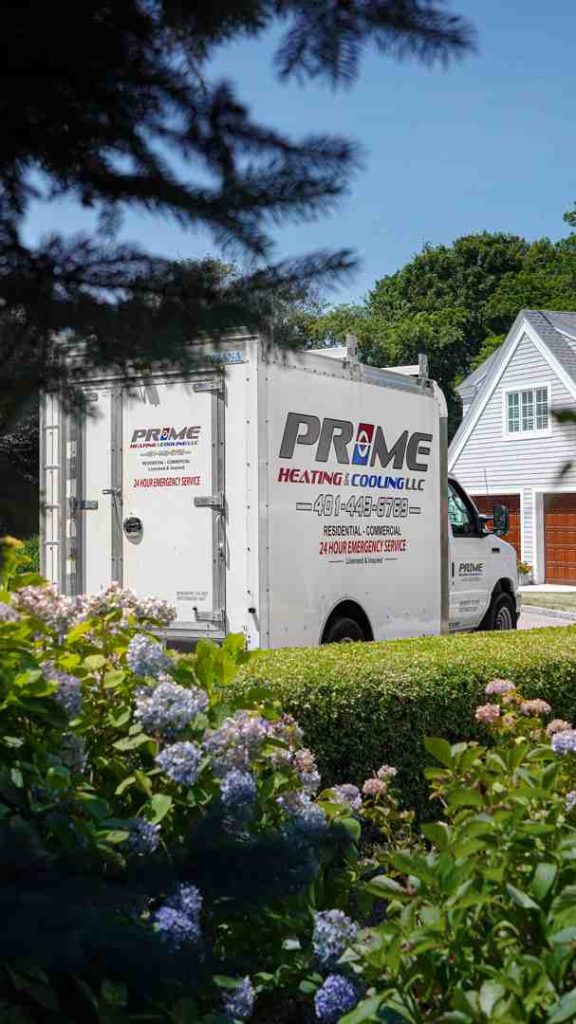
When you call Prime Heating & Cooling at 2 AM, you aren’t just leaving a message for a machine. You are initiating a rapid-response sequence. We aim for the fastest possible arrival times across Rhode Island, from Warwick to Lincoln. Our technicians arrive in “mobile warehouses”—vans stocked with the most common capacitors, igniters, motors, and contactors to ensure we can fix the problem on the first visit.
Upfront Pricing and Transparency
You should always receive a diagnostic explanation and a price for the repair before the work begins. Even in an emergency, there should be no “mystery fees.”
Service Comparison: Emergency vs. Routine
| Feature | Routine Service | Emergency Service |
|---|---|---|
| Response Time | Scheduled (Days/Weeks) | Immediate (1-4 Hours) |
| Availability | Business Hours | 24/7/365 |
| Primary Goal | Efficiency & Longevity | Safety & Comfort Restoration |
| Technician | Maintenance Tech | Senior Repair Specialist |
| Parts | Ordered if needed | Stocked on truck |
Why 24/7 Availability Matters During Extreme Weather
In New England, the weather is our biggest adversary. 24/7 availability isn’t a luxury; it’s a necessity for community safety.
During a heatwave, the “urban heat island” effect in places like Providence can keep indoor temperatures dangerously high even at night. Without a functioning AC, the body never gets a chance to recover from the day’s heat. This is where we see the highest rates of heat-related illness.
Conversely, our Rhode Island winters are unforgiving. If your heat fails at midnight on a Saturday, you cannot wait until Monday morning. By then, your indoor temperature could be in the 40s, and your pipes could be on the verge of bursting. We provide emergency AC repair and heating solutions specifically because we know that “normal business hours” don’t apply to the weather.
The Benefits of Certified and Factory-Authorized Technicians
When you’re in a crisis, you might be tempted to call the first “handyman” who answers the phone. This is a mistake. HVAC systems are complex, involving high-voltage electricity, combustible gases, and pressurized refrigerants.
Why Certification Matters
- NATE Certification: This is the gold standard in our industry. It ensures the technician has the rigorous training required to diagnose problems accurately the first time.
- Warranty Protection: If your system is still under manufacturer warranty, having an uncertified person work on it can void that warranty instantly. Reputable contractors like us honor factory warranties and use OEM (Original Equipment Manufacturer) parts.
- Safety: Certified technicians are trained in gas leak detection and carbon monoxide testing. We don’t just get the air moving; we make sure it’s safe to breathe.
If you are looking for same-day AC solutions, always verify that the company employs technicians who are licensed and insured in the state of Rhode Island.
Conclusion: Restoring Comfort with Prime Heating & Cooling
Facing an HVAC failure in the middle of the night is stressful, but you don’t have to face it alone. At Prime Heating & Cooling, we’ve spent the last 20 years building a reputation for being the emergency HVAC contractor Rhode Island trusts when things go wrong.
From our home base, we serve East Greenwich, Johnston, Scituate, Smithfield, Providence, Lincoln, Coventry, Warwick, and the surrounding areas. We treat every emergency call with the urgency it deserves—as if it were our own family sitting in the cold.
Our commitment to you includes:
- 24/7 Availability: We are ready when you are, holidays and weekends included.
- Skilled Technicians: Our team brings decades of experience to every driveway.
- Energy-Efficient Solutions: We don’t just patch the problem; we look for ways to make your system run better and cheaper.
- Customer-First Approach: We provide clear explanations and honest pricing every time.
Don’t wait for a small noise to become a big bill. If your system is acting up, or if you’re currently sitting in a house that’s too hot or too cold, give us a call. We also offer comprehensive maintenance plans to help you avoid these 2 AM surprises in the future.
For immediate help or to schedule a preventative tune-up, reach out to your local experts for HVAC services in Smithfield, RI and throughout the state. We’re here to keep your home comfortable, safe, and efficient—no matter what time the clock says.


