What to Do During an HVAC Emergency in Rhode Island
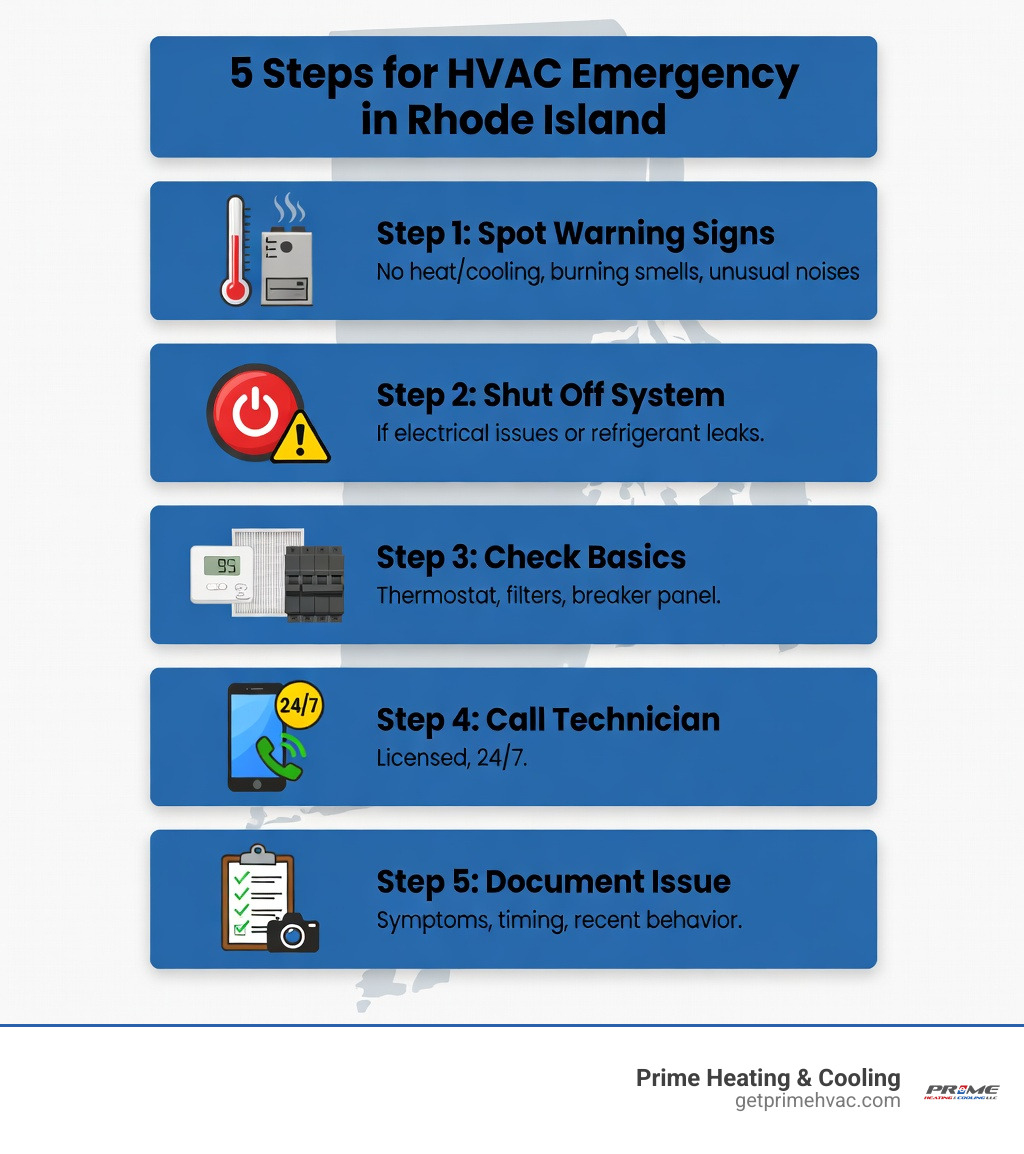
Emergency HVAC Rhode Island situations demand fast action — here are the 5 rules every homeowner must follow:
- Identify the warning signs — no heat, no cooling, strange noises, burning smells, or tripped breakers
- Turn off the system if you suspect an electrical issue, refrigerant leak, or burning odor
- Check the basics first — thermostat settings, air filters, and circuit breakers before calling
- Call a licensed 24/7 HVAC technician immediately — don’t wait, especially in extreme RI weather
- Document the problem — note when it started, any sounds or smells, and recent system behavior
Rhode Island winters can drop well below freezing. Summers bring stretches of humid, sweltering heat. When your HVAC system fails in either season, it’s not just uncomfortable — it can be dangerous.
The problem? Most homeowners don’t know what to do in those first critical minutes. They wait. They try DIY fixes. Or they call the wrong company and wait days for a response.
That delay can turn a $200 repair into a full system replacement.
HVAC emergencies rarely give you a warning. A furnace that was running fine yesterday can leave your home without heat overnight. An AC unit can freeze up during the hottest week of the year. And when that happens, every hour matters.
I’m Tyler Steiner, CEO and founder of Prime Heating & Cooling. With hands-on experience servicing heating and cooling systems across Rhode Island and Massachusetts, I’ve responded to hundreds of Emergency HVAC Rhode Island calls — from frozen coils in January to complete system failures in August. In this guide, I’ll walk you through exactly what to do.
Rule 1: Identify the Signs of an Emergency HVAC Rhode Island Crisis
Knowing the difference between a minor annoyance and a true emergency is the first step in protecting your home. In Rhode Island, where the weather can swing from a Nor’easter to a humid heatwave in a matter of months, your HVAC system is under constant pressure. When it begins to fail, it usually leaves a trail of breadcrumbs.
One of the most visual signs of a crisis is the sight of frozen evaporator coils. If you see ice forming on your indoor unit or the copper refrigerant lines outside, your system is in distress. This isn’t just a “cold” system working well; it’s a sign that airflow is restricted or refrigerant is low. Ignoring this can lead to a dead compressor—the “heart” of your AC unit.

Other red flags include short-cycling, where the unit turns on and off every few minutes without ever reaching the desired temperature. This puts immense strain on electrical components and can lead to a total burnout. You should also keep an ear out for unusual noises—banging, screeching, or buzzing. These often indicate a mechanical failure, such as a loose belt or a dying motor.
Perhaps the most urgent sign is a burning odor. If your vents are blowing air that smells like ozone or burning plastic, it could indicate an electrical fire hazard within the air handler or furnace. In these cases, you must shut the system down at the breaker immediately. For more detailed insights, check out this guide on emergency AC repair.
Common Red Flags and Immediate Troubleshooting
Before you panic, there are a few things you can check that might save you a service call. If you have no heating or no cooling, start at the thermostat. It sounds simple, but a dead battery or a bumped setting is a common culprit. If the screen is blank, replace the batteries first.
Next, check your circuit breakers. HVAC systems pull a lot of power, especially during a Providence heatwave or a cold snap in Smithfield. If the blower motor is overworked because of a dirty filter, it can trip the breaker. If you reset the breaker and it trips again immediately, do not try a third time—this is a clear sign of a short circuit that needs professional attention.
If you’re in the Smithfield area, we’ve documented specific regional issues in our guide on Smithfield repairs. Whether it’s an old steam boiler in a historic home or a modern central air system, knowing the signs of repair can prevent a total system collapse.
Root Causes of Emergency HVAC Rhode Island Failures
Why do systems fail when we need them most? It usually comes down to three main culprits:
- Refrigerant Leaks: Your system doesn’t “consume” refrigerant. If it’s low, there is a leak. Low levels cause the pressure to drop, which leads to frozen coils and an overworked compressor.
- Clogged Drain Lines: As your AC removes humidity, it creates condensation. If the drain line is clogged with algae or debris, the water backs up. Modern systems have float switches that shut the unit down to prevent flooding, but older systems might just leak into your ceiling.
- Faulty Wiring: Over time, vibrations can loosen electrical connections. Corroded or loose wires can lead to “pitting” in contactors or even electrical fires.
For business owners, these issues are amplified. A breakdown in a commercial space doesn’t just mean discomfort; it means lost revenue. We cover these specific high-stakes scenarios in our guide to emergency commercial HVAC.
Rule 2: Act Fast to Protect Your Home and Budget
In Rhode Island, time is your enemy during an HVAC failure. If your heat goes out during a January freeze in Scituate or North Smithfield, your pipes can begin to freeze within hours. Conversely, extreme summer humidity in Warwick or East Greenwich can lead to rapid mold growth if your AC isn’t pulling moisture out of the air.
A rapid response isn’t just about comfort; it’s about safety. Malfunctioning furnaces, especially older gas or oil models, can leak carbon monoxide (CO). This colorless, odorless gas is lethal. If your CO detector goes off, or if you feel dizzy and nauseous while the heat is running, evacuate the home immediately and call for emergency service.
Beyond safety, acting fast protects your budget. A small refrigerant leak is a relatively simple fix. However, if you let the system run while low on refrigerant, the compressor will eventually overheat and fail. Replacing a compressor is one of the most expensive repairs in the industry—often leading homeowners to choose a full system replacement instead. You can find more about our local reach in our RI service area overview.
The Importance of 24/7 Emergency HVAC Rhode Island Response
We understand that furnaces don’t wait for 9:00 AM on a Monday to break down. They usually quit at 2:00 AM on a Sunday when it’s five degrees outside. That is why 24/7 availability is a non-negotiable requirement for a reliable HVAC partner.
When you call for emergency service, you should expect a technician who arrives with a fully stocked truck. Our goal is always same-day service. We carry common capacitors, contactors, motors, and thermostats so we can get your system back online in a single visit. In the extreme heat of a Rhode Island summer, this isn’t a luxury—it’s a necessity for the health and safety of seniors, children, and pets. Learn more about our full range of HVAC services.
Service Coverage Across Rhode Island Towns
Whether you are in the heart of Providence, the coastal neighborhoods of Warwick, or the suburban streets of Johnston, you deserve access to expert care. Our technicians are not just skilled; they are background-checked and licensed to work in the specific climate conditions of Southern New England.
We serve a wide range of locations, including:
- Providence & the East Side of Providence
- Warwick & Coventry
- Smithfield & Johnston
- Smithfield & North Smithfield
- Scituate & North Scituate
- Lincoln & North Providence
- East Greenwich
Each of these areas has unique housing stock, from 100-year-old multi-families in Providence to new builds in East Greenwich. Our 20 years of experience means we understand the quirks of RI’s diverse architecture. Explore our Rhode Island services to see how we tailor solutions to your specific town.
Understanding Repair Costs vs. System Replacement
One of the most common questions we get during an emergency call is: “Is it worth fixing, or should I replace it?”
While we provide transparent, upfront estimates before any work begins, a good rule of thumb is the 15-year rule. If your system is over 15 years old and the repair cost is significant, it might be time to consider an upgrade. Modern systems are significantly more energy-efficient, often paying for themselves in utility savings over a few years.
Note: Typical AC and heating repairs in Rhode Island can range from $150 to $600 depending on the parts required. If a repair exceeds 50% of the cost of a new unit, replacement is usually the smarter financial move.
We know that a sudden system replacement isn’t always in the budget. That’s why we offer Financing Available – Get Pre-Qualified options to help you get your home back to a safe temperature without the financial stress. For specific information on boiler or furnace issues, visit our page on heating repair.
Maintenance: The Key to Avoiding Future Emergencies
At Prime Heating & Cooling, we love seeing our customers—but we’d rather see you for a scheduled tune-up than a midnight emergency. Regular HVAC maintenance is the single best way to prevent the “no heat” or “no AC” calls that disrupt your life.
During an annual tune-up, we do more than just change a filter. We:
- Clean the coils: Dirty coils force the system to work harder, increasing energy bills and the risk of failure.
- Check refrigerant levels: Catching a tiny leak early prevents compressor damage.
- Inspect electrical connections: Tightening a loose wire today prevents a short circuit tomorrow.
- Test safety controls: We ensure your system will shut down safely if a problem occurs.
Investing in maintenance extends the life of your system and ensures it’s ready for the first day of a Rhode Island winter. If you haven’t had your system checked recently, discover how to get quick and reliable HVAC repairs or Book Emergency HVAC Rhode Island Services Now to stay ahead of the weather.
Final Thoughts from Prime Heating & Cooling
An HVAC emergency is stressful, but it doesn’t have to be a disaster. By following these rules—identifying the signs early, acting quickly to protect your home, and choosing a licensed 24/7 partner—you can navigate any Rhode Island weather extreme with confidence.
We’ve spent two decades serving our neighbors in Providence, Warwick, and across the state. We’ve seen every type of failure imaginable, and we know exactly how to fix them. If you’re facing a system breakdown right now, don’t wait for the temperature to drop or the humidity to rise. Give us a call, and let’s get your home back to the comfort level you deserve.