

When Your Furnace Starts Acting Like an Air Conditioner
Furnace blowing cold air is one of the most frustrating problems you can face during a New England winter. When you’re expecting warm, cozy heat and instead get a blast of cold air from your vents, something’s gone wrong with your heating system.
Quick Answer: Common Causes & First Fixes
| Problem | Quick Check | What to Do |
|---|---|---|
| Wrong thermostat setting | Fan set to “On” instead of “Auto” | Switch fan to “Auto” mode |
| Dirty air filter | Filter clogged with dust/debris | Replace filter immediately |
| Pilot light out | No flame visible (older furnaces) | Relight following manufacturer instructions |
| Blocked vents | Furniture or objects blocking airflow | Clear all supply vents and registers |
| Gas supply issue | Gas valve closed or interrupted | Check valve position, call gas company if needed |
Most furnace cold air issues fall into one of three categories: simple thermostat or filter problems you can fix yourself in minutes, component failures that need professional repair, or dangerous situations requiring immediate shutdown and expert help.
Throughout the winter, your furnace runs nonstop to keep you and everyone in your household warm as the outside temperature drops. It’s safe to say that your everyday routine could be significantly disrupted if your furnace is running but only producing cold air.
I’m Tyler Steiner, founder of Prime Heating & Cooling, and I’ve spent over a decade diagnosing and repairing furnace blowing cold air issues across Rhode Island and Massachusetts. After countless emergency calls during brutal New England winters, I’ve seen how quickly a simple problem can escalate—and how many issues homeowners can actually resolve themselves with the right guidance.

First Steps: Simple DIY Fixes for a Cold Furnace
Before you panic and call in the cavalry (that’s us!), there are several straightforward checks you can perform. Many times, a furnace blowing cold air can be traced back to a minor issue that’s easy to fix without special tools or expertise. Let’s walk through these initial troubleshooting steps.
Check Your Thermostat Settings
This might sound obvious, but an incorrect thermostat setting is a surprisingly common culprit when your furnace is blowing cold air. We’ve all been there – maybe a curious child fiddled with it, or you accidentally bumped it while cleaning.
First, ensure your thermostat is set to “Heat” mode, not “Cool” or “Off.” If it’s on “Cool,” your system will act like an air conditioner, which is definitely not what you want in a Rhode Island winter!
Next, check the fan setting. Many thermostats have an “Auto” and an “On” setting for the fan. If your fan is set to “On,” it will run continuously, even when the furnace isn’t actively heating. This means it will circulate warm air during a heating cycle, but in between cycles, it will simply blow unheated, ambient air through your vents, making it feel like your furnace is blowing cold air. Switching the fan to “Auto” ensures the fan only runs when the furnace is producing heat.
Also, verify that the temperature setting is higher than the current room temperature. If your home is already at or above the set temperature, your furnace won’t kick on to provide more heat.
Finally, if you have a battery-powered thermostat, check its batteries. Low or dead batteries can cause your thermostat to malfunction, sending incorrect signals (or no signals at all) to your furnace. If you have a programmable thermostat, double-check its schedule, especially if you’ve recently experienced a power outage or a daylight saving time change, as these can sometimes reset or disrupt programmed settings.
For more information on keeping your home warm, explore our heating services.
Inspect and Replace the Air Filter
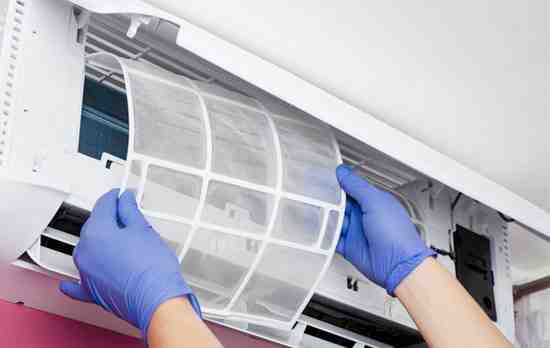
A dirty air filter is one of the most frequent causes of a furnace blowing cold air. Think of your furnace filter as the lungs of your HVAC system. Its job is to capture dust, dirt, pet dander, and other airborne particles, preventing them from entering your furnace’s internal components and circulating throughout your home.
When this filter becomes excessively clogged, it restricts the airflow into your furnace. This restriction forces your furnace to work harder, which can lead to overheating. Modern furnaces are equipped with safety mechanisms, like a high-limit switch, that detect when the furnace is getting too hot. To prevent damage to the heat exchanger and other components, this switch will automatically shut down the burners, but the fan might continue to run, circulating unheated air. The result? Your furnace is blowing cold air.
We recommend checking your furnace filter monthly and replacing it every 1 to 3 months, or more frequently if you have pets or allergies. A clean filter not only prevents your furnace from blowing cold air but also improves your indoor air quality and the overall efficiency of your heating system. For a deeper dive into maintaining your system, check out A guide to furnace maintenance.
Clear All Vents and Registers
Just like a dirty filter, blocked vents and registers can significantly impede proper airflow and cause your furnace to blow cold air. If warm air can’t flow freely into your rooms, your furnace might overheat and shut down prematurely, or simply struggle to adequately heat your home.
Take a stroll around your home in Smithfield, Warwick, or any of our Rhode Island service areas and ensure that all heating vents and registers are completely open and unobstructed. It’s common for furniture, rugs, curtains, or even children’s toys to accidentally block these crucial pathways for warm air. If you have closed vents in unused rooms, consider opening them. While it might seem logical to close vents to save energy, doing so can actually create pressure imbalances in your ductwork, making your furnace work harder and less efficiently. This can lead to uneven heating, making some rooms feel perpetually chilly.
Why Is My Furnace Blowing Cold Air? Deeper Diagnostic Checks
If the simple DIY fixes haven’t solved the mystery of your furnace blowing cold air, it’s time to dig a little deeper. These next issues often involve internal components and might require a bit more comfort with your furnace’s mechanics, or even professional assistance.

Issues with the Pilot Light or Flame Sensor
The pilot light and flame sensor are critical components responsible for igniting the gas and ensuring safe operation in gas furnaces. Their malfunction is a common reason for a furnace blowing cold air.
Older Furnaces (Pilot Light): Many older gas furnaces, typically manufactured before the 1990s, use a standing pilot light. This is a small, continuous flame that ignites the main burners when the thermostat calls for heat. If this pilot light goes out, the burners won’t ignite, and your furnace will only blow cold air. You might be able to relight it yourself by following the instructions usually found on a label inside your furnace’s access panel. However, if it frequently goes out, there might be an underlying issue with the thermocouple (a safety device that senses the pilot flame) or gas supply, which warrants professional attention.
Modern Furnaces (Electronic Ignition & Flame Sensor): Most modern furnaces use an electronic ignition system instead of a standing pilot light. When the thermostat calls for heat, an igniter (either a hot surface igniter or an intermittent pilot) sparks to light the burners. A flame sensor then detects the presence of this flame. The flame sensor is a crucial safety device; if it doesn’t sense a flame after ignition, it will shut off the gas supply to prevent a dangerous buildup of uncombusted gas.
A common issue in modern furnaces is a dirty flame sensor. Over time, soot and carbon buildup can accumulate on the sensor, insulating it and preventing it from accurately detecting the flame. When this happens, the furnace will attempt to ignite, the igniter will glow or spark, but the flame sensor will fail to confirm a flame, causing the furnace to shut down almost immediately. The blower might then continue to run, distributing cold air.
Here are some signs that you might have a bad or dirty flame sensor:
- Your furnace ignites, runs for a few seconds or minutes, then shuts off.
- The furnace tries to ignite multiple times (usually three attempts) and then locks out, with the blower continuing to run.
- The blower runs constantly, but no heat is produced.
- You hear clicking sounds of the igniter, but no sustained flame.
While you might be able to gently clean a dirty flame sensor with fine-grit emery cloth, we recommend caution. These components are delicate, and improper handling can lead to further issues or safety risks.
Clogged Condensate Lines in High-Efficiency Furnaces
If you have a high-efficiency gas furnace, a clogged condensate line could be the reason your furnace is blowing cold air. Unlike older, less efficient furnaces that vent most of their combustion byproducts directly, high-efficiency models extract more heat from these gases. This process creates a byproduct: acidic water, or condensate. This condensate needs to drain out of your furnace through a PVC pipe, known as the condensate line.
Over time, algae, mold, or debris can build up in this line, causing a clog. When the condensate line is blocked, the water backs up. High-efficiency furnaces are equipped with a safety float switch that detects this backup. To prevent water damage and ensure safe operation, this switch will automatically shut down the furnace’s burners. The blower, however, might continue to run, pushing out unheated air. You might also notice water pooling around the base of your furnace.
Clearing a clogged condensate line can sometimes be a DIY task involving flushing it with a vinegar solution or gently clearing obstructions. However, if you’re uncomfortable, or if the clog is stubborn, it’s best to call a professional.
Leaky or Damaged Ductwork
Your furnace might be working perfectly, producing plenty of warm air, but if your ductwork is compromised, you could still end up with a furnace blowing cold air sensation. Ductwork is the system of channels that distributes heated air from your furnace throughout your home. In Rhode Island, where winters can be harsh, maintaining efficient ductwork is crucial.
Leaky or damaged ducts can cause two major problems:
- Heat Loss: Warm air produced by your furnace can escape through cracks, gaps, or poorly sealed joints in the ductwork before it ever reaches your living spaces. This means less warm air makes it to your vents, leading to cold spots and a feeling that your furnace isn’t doing its job.
- Cold Air Infiltration: Conversely, if your ductwork runs through unheated areas like attics, crawl spaces, or basements, these leaks can draw cold air into the system. This cold air mixes with the warm air from your furnace, lowering its temperature before it exits your vents.
The result is wasted energy, higher utility bills, and a constantly chilly home. We often see this issue in older homes in Providence, East Greenwich, or Johnston, where ductwork may have deteriorated over time. Inspect your visible ducts for any gaps or damage. Minor leaks can sometimes be sealed with mastic sealant or specialized foil tape (never use duct tape for this!). Properly insulated ducts not only keep the warm air in but also improve the overall efficiency of your heating system. For more information on sealing ducts, you can refer to resources like Minimizing energy losses in ducts.
If you suspect significant ductwork issues or need a professional assessment, our team at Prime Heating & Cooling is ready to help. Need a furnace repair in RI?
Safety First: When a Cold Furnace Signals Danger
While many furnace blowing cold air issues are minor inconveniences, some can signal serious safety hazards. It’s crucial to know the difference and to prioritize your safety and the safety of your family. When in doubt, always err on the side of caution and contact a professional.
Foul Smells and What They Mean
A strange odor emanating from your furnace, especially when it’s blowing cold air, can be a critical indicator of a problem.
- Rotten Egg Smell (Gas Leak): This is the most dangerous smell. If you detect an odor similar to rotten eggs, it indicates a natural gas leak. Natural gas is odorless, but utility companies add mercaptan to give it this distinct, warning smell. If you smell gas, evacuate your home immediately. Do not use light switches, phones, or any electrical devices, as a spark could trigger an explosion. Once you are safely outside, call 911 and your gas company. Do not re-enter your home until emergency services declare it safe.
- Burning Dust: When your furnace kicks on for the first time after a long period of inactivity (like at the start of winter), it’s normal to smell a faint burning dust odor. This is simply accumulated dust burning off the heat exchanger. This smell should dissipate within a few hours. If it persists or is very strong, it could indicate a very dirty filter or other issues.
- Burning Plastic or Electrical: A sharp, acrid smell like burning plastic or melting wire is a serious warning sign. It could indicate an electrical problem, such as overheating wires or components. If you detect this smell, immediately turn off your furnace at the thermostat and the circuit breaker. Then, contact us for emergency service. Using a furnace with electrical issues can pose risks of fire or further damage.
- Musty or Moldy Odors: A damp, musty smell often points to mold or mildew growth within your furnace or ductwork. This can happen due to excess moisture, especially if you have a high-efficiency furnace with a clogged condensate line or if your ductwork is in a damp environment. While not immediately dangerous, mold can negatively impact indoor air quality and trigger allergies or respiratory issues. Professional duct cleaning and addressing moisture sources are usually required.
The Dangers of a Cracked Heat Exchanger
A cracked heat exchanger is one of the most serious and potentially life-threatening problems that can cause your furnace to blow cold air. The heat exchanger is a crucial component within your furnace where the combustion gases (from burning natural gas or propane) transfer heat to the air circulating through your home. The key is that these combustion gases, which include highly toxic carbon monoxide (CO), are meant to remain separate from your breathable indoor air.
If the heat exchanger develops a crack, these dangerous combustion gases can leak into your home’s air supply. Carbon monoxide is particularly insidious because it’s colorless, odorless, and tasteless, making it impossible to detect without a CO detector. Symptoms of CO poisoning can mimic the flu, including headaches, nausea, dizziness, and fatigue, but prolonged exposure can be fatal.
A cracked heat exchanger can lead to your furnace blowing cold air because the crack can disrupt the combustion process, causing the furnace to short cycle or shut down prematurely due to safety sensors. Signs of a cracked heat exchanger include a strong, unusual odor near the furnace, soot buildup, a yellow or flickering burner flame (it should be blue), and physical damage to the heat exchanger itself. Furnaces typically last around 15 years, and older units are more prone to developing cracks. We strongly recommend having your furnace inspected annually, especially if it’s nearing the end of its lifespan. This preventative measure is vital for detecting such dangerous issues early.
Considering an upgrade for an older, potentially dangerous furnace? Fall is an excellent time for this in Rhode Island to ensure you’re ready for winter. Learn more about Why Fall is the Best Time to Upgrade Your Heating System in Rhode Island.
What to Do if Your Furnace is Blowing Cold Air with a Foul Smell
Your immediate actions depend on the type of foul smell.
- If you smell rotten eggs (gas leak):
- Evacuate immediately. Get everyone, including pets, out of the house.
- Do NOT use light switches, open or close windows, use your phone inside, or operate any electrical appliance. A spark could ignite the gas.
- Once safely away from the house, call 911 and your natural gas provider (e.g., National Grid in Rhode Island).
- Do not return to your home until emergency personnel have confirmed it is safe.
- If you smell burning plastic or electrical components:
- Immediately turn off your furnace at the thermostat.
- Go to your electrical panel and turn off the circuit breaker that controls your furnace.
- Once the power is off, contact Prime Heating & Cooling for emergency service. Do not attempt to operate the furnace again until it has been professionally inspected.
- For other persistent foul smells (musty, strong burning dust after initial use):
- Turn off the furnace at the thermostat.
- Contact Prime Heating & Cooling for a professional inspection. While not immediate emergencies like gas leaks or electrical fires, these smells indicate underlying issues that need to be addressed for comfort, air quality, and system longevity.
Your safety is our top priority. We offer comprehensive Furnace Installation & Repair Services to address these critical issues.
Frequently Asked Questions about a Furnace Blowing Cold Air
We hear a lot of questions from homeowners across Lincoln, Coventry, and Warwick about their furnaces. Here are some of the most common ones concerning a furnace blowing cold air.
Should I turn off my furnace if it’s blowing cold air?
Yes, absolutely. If your furnace is blowing cold air and you’ve gone through the basic troubleshooting steps without a resolution, you should turn it off. There are several important reasons for this:
- Safety: Depending on the underlying cause (e.g., a gas leak, electrical issue, or cracked heat exchanger), continuing to operate the furnace could pose serious safety risks to you and your family.
- Prevent Further Damage: Running a malfunctioning furnace can exacerbate the problem, potentially leading to more extensive and costly repairs. For instance, if a component is failing, forcing the system to run could cause a cascade failure of other parts.
- Avoid Wasted Energy: A furnace that’s actively blowing cold air is consuming energy (electricity for the fan, potentially gas trying to ignite) without providing any heat. Turning it off prevents this unnecessary energy waste and keeps your utility bills from skyrocketing.
Once the furnace is off, it’s time to call in the professionals. For reliable HVAC repair in Rhode Island, we’re here to help diagnose and fix the issue safely and efficiently.
How long does it typically take for a furnace to start blowing warm air after a repair?
After a professional repair, or even after you’ve fixed a simple issue like replacing a dirty filter, it typically takes a furnace around 5 to 15 minutes to start blowing warm air through your vents. In some cases, especially after a system has been completely off or reset, it might take up to 30 seconds for the furnace to kick on and then another minute or two for the air to feel truly warm.
This timeframe is normal. Most furnaces have a “blower delay” feature, meaning the blower fan doesn’t kick on immediately when the burners ignite. This allows the heat exchanger to warm up sufficiently before air is pushed over it. This prevents the initial blast of cool air from the ducts from being pushed into your living space. So, if you’ve just had a repair, give your furnace a little time to get into its rhythm before you start expecting cozy warmth.
What’s the difference between a pilot light furnace and a modern furnace regarding cold air issues?
The fundamental difference lies in their ignition systems, which in turn affects how they might experience and signal furnace blowing cold air problems.
- Pilot Light Furnaces (Older Models): These furnaces use a small, continuous flame (the pilot light) to ignite the main burners.
- Cold Air Issues: If the pilot light goes out, the main burners won’t ignite, and the furnace will blow cold air. This can be due to a draft, a dirty pilot orifice, or a malfunctioning thermocouple (a safety device that senses the pilot flame and keeps the gas valve open).
- Troubleshooting: Often involves manually relighting the pilot light. If it repeatedly goes out, the thermocouple or gas pressure might be the issue.
- Modern Furnaces (Electronic Ignition): These furnaces do not have a continuously burning pilot light. Instead, they use an electronic ignition system (either a hot surface igniter or an intermittent pilot) to ignite the burners when heat is called for.
- Cold Air Issues: Problems typically involve the electronic igniter failing to heat up or spark, or a dirty/faulty flame sensor failing to detect the flame after ignition. If the flame sensor doesn’t confirm a flame, the gas valve will close for safety, leading to cold air.
- Troubleshooting: These furnaces often have onboard diagnostics and might display error codes (flashing LED lights) that can help pinpoint the exact problem. While a dirty flame sensor can sometimes be cleaned, issues with the igniter or control board usually require professional intervention.
Older furnaces often have mechanical issues related to the pilot light, while modern furnaces tend to have more electronic or sensor-related problems leading to a furnace blowing cold air. Both types prioritize safety by shutting down heat production when an ignition problem occurs.
Your Warm Home Solution
When your furnace is blowing cold air, it’s more than just an inconvenience – it disrupts your comfort and can signal a serious problem. We hope this guide has empowered you with the knowledge to troubleshoot some of the simpler issues yourself and, more importantly, to recognize when it’s time to call in the experts.
Remember these key takeaways: always start with the simple checks like your thermostat settings and air filter. Prioritize safety, especially when dealing with foul smells like rotten eggs or burning plastic. And never hesitate to turn off your furnace if you suspect a serious problem.
Regular furnace maintenance is your best defense against unexpected breakdowns and that unwelcome blast of cold air. Just like your car needs an oil change, your furnace benefits from an annual tune-up to ensure it’s running efficiently and safely. This is especially true given the demands of Rhode Island winters. Learn more about The Importance of HVAC Tune-Ups for Rhode Island Winters.
For reliable furnace repair, installation, and maintenance in Rhode Island, trust the experts at Prime Heating & Cooling. We’re committed to keeping your home warm and safe.


