
Essential Commercial HVAC Troubleshooting Questions for Facility Managers
When a rooftop unit stops humming or the office starts feeling like a sauna, the first instinct for many facility managers is to panic. We understand that pressure. In a commercial setting, HVAC failure isn’t just about discomfort; it’s about protecting inventory, maintaining employee productivity, and keeping customers through the door. Before you pick up the phone, there are several Commercial HVAC Troubleshooting Questions you can answer yourself to determine if the fix is a simple flip of a switch or a job for our team.
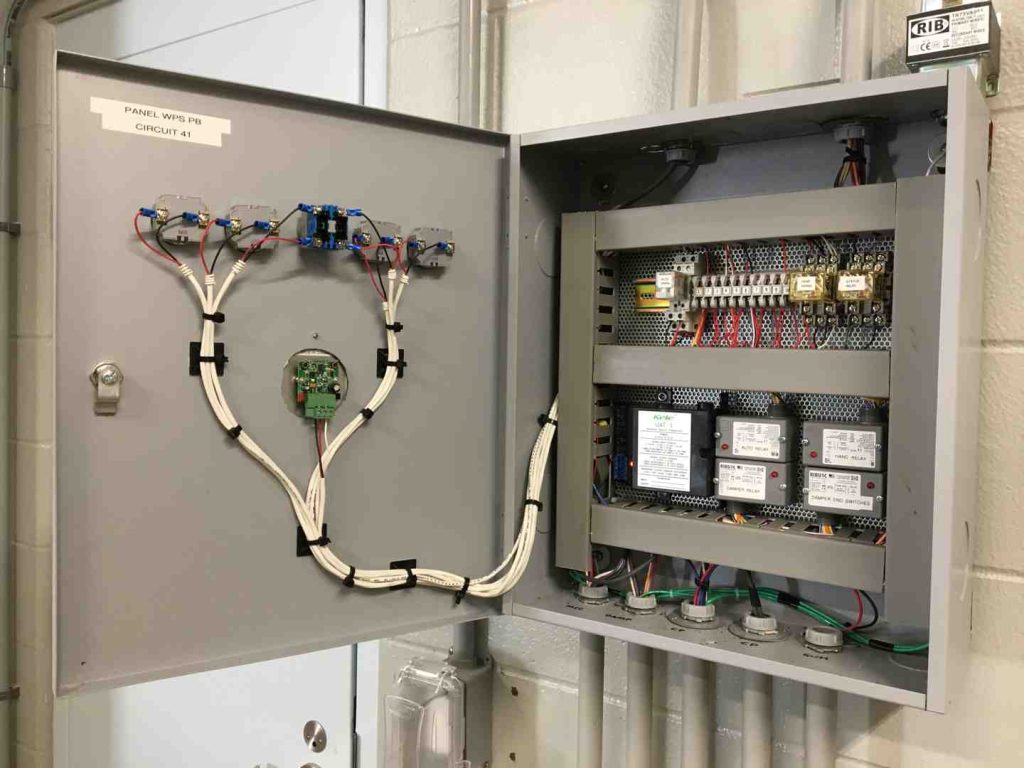
The very first step in any diagnostic process is power verification. It sounds basic, but you would be surprised how often a “dead” system is simply a victim of a tripped circuit breaker or an accidentally bumped disconnect switch. Commercial systems pull a lot of juice, and a sudden surge or a motor working too hard can easily pop a breaker.

Check your electrical panel for any switches that aren’t aligned with the rest. If you find a tripped breaker, flip it completely off and then back to the “on” position. However, a word of caution: if it trips again immediately, do not reset it a second time. This indicates a serious electrical fault, such as a short circuit or a failing compressor, and continuing to provide power could cause a fire or permanent equipment damage.
Next, look at your thermostat. Is the screen blank? It might just need new batteries. Is it set to “Cool” in the summer and “Heat” in the winter? Sometimes, during the shoulder seasons in Rhode Island, a system can get stuck in the wrong mode. Also, ensure the setpoint is actually lower (for cooling) or higher (for heating) than the current room temperature.
For those looking to go deeper into the technical side of things, the EPA Section 608 Technician Certification is the industry standard for handling refrigerants and understanding high-pressure systems. While you don’t need this to check a breaker, it highlights the complexity of the machines keeping your building comfortable. If these basic checks don’t get the air moving, you might be facing a more urgent situation. For more guidance, check out our more info about emergency commercial HVAC to see how we handle high-stakes repairs.
Why is my system short cycling or making unusual noises?
Short cycling is when your HVAC system turns on and off every few minutes without ever completing a full cooling or heating cycle. This is one of the most destructive behaviors an HVAC unit can exhibit because the “startup” phase is when the most wear and tear occurs on the compressor. Think of it like a car in stop-and-go traffic versus highway driving; the constant stopping and starting will burn out the engine much faster.
Common culprits for short cycling include:
- Oversized Units: If a unit is too powerful for the space, it cools the air so quickly that the thermostat satisfied before the humidity is removed, causing it to shut down and restart shortly after.
- Dirty Air Filters: Restricted airflow causes the internal temperature of the unit to spike or the coils to freeze, triggering a safety shut-off.
- Low Refrigerant: If the “lifeblood” of the system is low, the pressure switches will kill the power to protect the compressor.
Then there are the noises. We often tell our clients that if your HVAC system starts sounding like a “plane launching” or a “grandfather groaning,” it’s trying to tell you something. Unlike your grandfather, these noises aren’t natural!
| Noise Type | Likely Mechanical Cause |
|---|---|
| Banging/Clunking | Loose blower wheel, broken connecting rod, or loose motor mount |
| Squealing/Screeching | Worn-out fan belt, failing motor bearings, or dry bearings |
| Hissing | Refrigerant leak (gas escaping under pressure) |
| Clicking | Failing electrical relay or a capacitor struggling to start the motor |
| Buzzing | Loose wiring, contactor “chatter,” or an aging transformer |
How to resolve poor airflow and uneven temperature distribution?
If you have one office that is an ice box and another that feels like a tropical rainforest, you’re dealing with uneven temperature distribution. This is one of the most frequent Commercial HVAC Troubleshooting Questions we hear in larger facilities in Providence and Warwick.
The first thing to check is the airflow. Is it weak coming out of the registers? Start with the simplest fix: the air filter. A clogged filter is responsible for a staggering amount of system strain. In a commercial environment, we recommend checking filters monthly and replacing them every 1 to 3 months.
When choosing a filter, pay attention to the MERV rating guide. While a higher MERV rating means better filtration, if it’s too high for your specific blower motor, it can actually restrict airflow and cause the very problems you’re trying to solve.
If the filters are clean, the issue might be hidden in the ductwork. Leaking ducts can lose 20% to 30% of conditioned air before it ever reaches the rooms. In older buildings in places like Scituate or Johnston, ducts can become disconnected or crushed over time. We also see many cases where supply or return vents have been blocked by furniture or filing cabinets, which throws off the “air balance” of the entire zone.
Diagnosing refrigerant leaks and frozen evaporator coils
A common myth is that HVAC systems “consume” refrigerant like a car consumes gas. In reality, an HVAC system is a closed loop. If you are low on refrigerant, you have a leak. Period.
Signs of a refrigerant leak include:
- Hissing or bubbling sounds near the refrigerant lines.
- Oily residue on the coils or joints (refrigerant carries oil with it).
- Ice buildup on the evaporator coil or the copper lines outside.
- A gradual decline in cooling performance over several weeks.
When the refrigerant level drops, the pressure in the system falls, causing the evaporator coil to get much colder than it should. Moisture from the air then freezes onto the coil, creating a block of ice that prevents any heat transfer. If you see ice, turn the system off immediately! Running a system with a frozen coil can lead to liquid refrigerant “slugging” back into the compressor, which is a death sentence for the motor.
Water leaks are another red flag. Commercial units produce a lot of condensation. If the drain line is clogged with algae or debris, that water has nowhere to go but into your ceiling tiles. Regular maintenance ensures these lines stay clear. If you’re tired of worrying about these “hidden” issues, you might find peace of mind in our more info about maintenance agreements, which covers these checks automatically.
Interpreting error codes and electrical failures
Modern commercial HVAC equipment is smarter than ever. Most rooftop units (RTUs) and high-efficiency furnaces have control boards equipped with LED lights that flash in specific sequences to tell you what’s wrong.
If you remove the access panel and see a blinking red or green light, look at the back of the panel door. There is usually a “legend” that explains the codes. For example, three fast blinks might mean “High Limit Switch Open,” while a steady light might mean “Internal Control Failure.”
Electrical failures are often linked to three main components:
- Capacitors: These act like large batteries that give the motors the “kick” they need to start. If they bulge or leak oil, they are dead.
- Contactors: These are essentially heavy-duty switches that pull in to send power to the compressor. If you hear a loud “chattering” or buzzing sound, the contactor is likely failing.
- Fuses: Many commercial air handlers have small 3-amp or 5-amp automotive-style fuses on the control board. If the thermostat is blank and the breaker isn’t tripped, check this fuse.
Key Commercial HVAC Troubleshooting Questions: Residential vs. Commercial Differences
While the basic principles of refrigeration are the same, troubleshooting a commercial system is a different beast than a residential one.
- Three-Phase Power: Most commercial buildings in Rhode Island use three-phase power, which is more efficient for large motors but requires specialized knowledge to test safely.
- Economizers: These are common on commercial rooftop units. They use outdoor air to cool the building when the weather is nice. If the dampers get stuck open, you’ll be pulling in freezing air in the winter or humid air in the summer, causing massive energy spikes.
- VAV Boxes and Multi-Zone Systems: Commercial buildings often use Variable Air Volume (VAV) boxes to control different zones. A failure in one “zone” doesn’t mean the whole system is broken, but it requires tracing the issue back to a specific actuator or sensor.
- Modular Design: Commercial units are often modular, meaning parts like the heat exchanger or blower assembly can be pulled out and replaced without replacing the entire unit.
What tools are essential for basic Commercial HVAC Troubleshooting Questions?
If you’re a facility manager in Smithfield or Lincoln, keeping a small “HVAC kit” on hand can save you a lot of time. You don’t need a full technician’s van, but these basics are invaluable:
- Infrared (IR) Thermometer: Great for checking the temperature of the air coming out of vents to see if the “split” (the difference between return and supply air) is correct.
- Nut Drivers (5/16″ and 1/4″): These are the most common sizes for the screws on HVAC access panels.
- Replacement Filters: Keep a stock of the correct sizes on hand so you can swap them the moment you notice a restriction.
- Multimeter: If you are comfortable with electricity, a multimeter is essential for checking if a capacitor is within spec or if a fuse has continuity.
- Coil Cleaner: A simple “no-rinse” spray can help keep the indoor coils clean between professional visits.
- Safety PPE: Always wear gloves and safety glasses when working around high-voltage equipment and moving belts.
When to Call a Professional and How Prime Heating & Cooling Prevents Failures
There is a fine line between DIY troubleshooting and a dangerous situation. We always tell our clients: if you smell burning plastic, hear loud metal-on-metal grinding, or if a breaker keeps tripping, stop what you’re doing and call us. Handling refrigerants also requires specialized equipment to recover the gas safely without venting it into the atmosphere, which is a violation of federal law.
At Prime Heating & Cooling, we believe in the “3-Strike Rule.” If a specific component has been repaired three times in 12 months, or if the repair cost exceeds 50% of the cost of a new unit, it’s time to talk about replacement.

The difference between a clean coil and a dirty one can be a 30% reduction in heat transfer. That means your system has to work 30% harder just to achieve the same result. By staying on top of preventive maintenance, we’ve helped businesses across Rhode Island reduce their total HVAC costs by up to 50% and extend the life of their equipment to 15 or 20 years.
With over 20 years of experience serving East Greenwich, North Providence, and the surrounding areas, we’ve seen every possible failure. We offer 24/7 availability because we know that a walk-in cooler or an office server room doesn’t wait for business hours to break down.
Don’t let a minor issue escalate into a $4,000 emergency. If you’ve run through these Commercial HVAC Troubleshooting Questions and still can’t get your system to behave, we’re here to help. For a deeper look at what we can do for your facility, check out our more info about commercial services and let’s get your building back to peak efficiency.