Why Your Business Can’t Afford HVAC Downtime
When your commercial heating or cooling system fails, it threatens employee comfort, customer satisfaction, and business operations. Emergency commercial HVAC service is the critical solution. Here’s what you need to know right away:
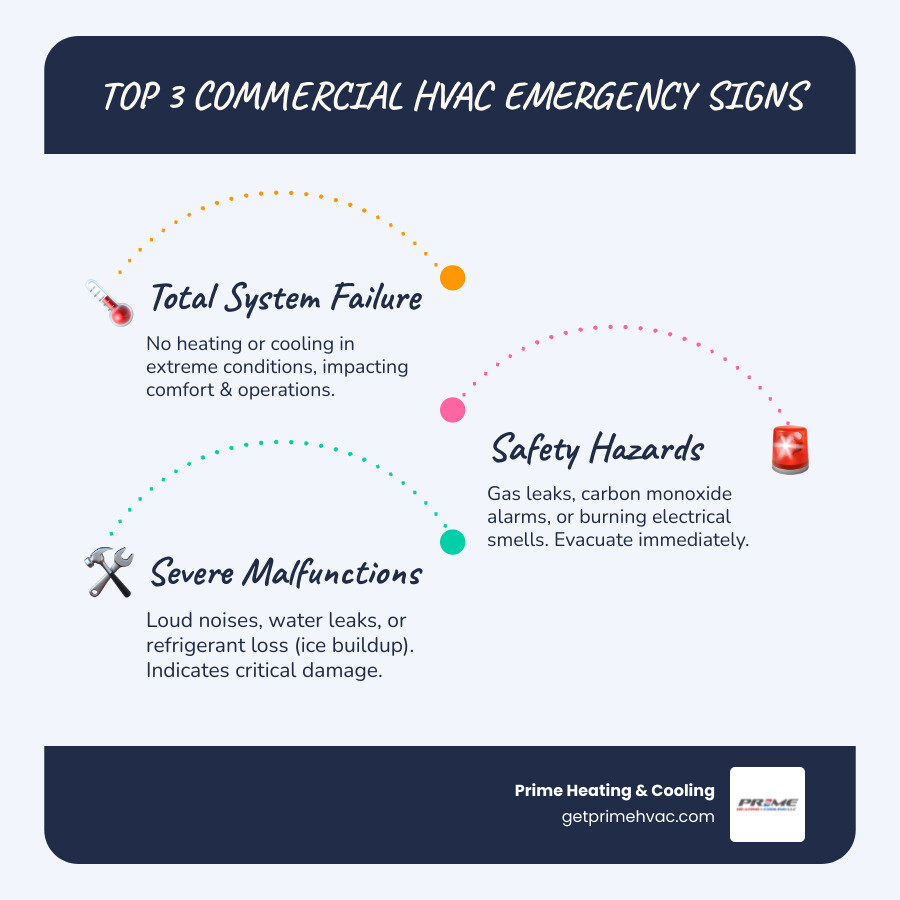
What Qualifies as a Commercial HVAC Emergency:
- Complete system failure during extreme weather (no heating in winter, no cooling in summer)
- Gas leaks (rotten egg smell) requiring immediate evacuation
- Electrical problems (burning smells, sparks, tripping breakers)
- Carbon monoxide alarms going off
- Refrigerant leaks (ice buildup, hissing sounds)
- Water damage from leaking units
Immediate Steps to Take:
- Evacuate and call 911 for gas leaks or CO alarms
- Shut off power at the breaker for electrical issues
- Check thermostat settings and air filters
- Call a 24/7 emergency HVAC service provider
- Document the issue for your technician
When your furnace or AC fails during extreme weather, the impact goes beyond discomfort. Since HVAC systems account for 40-70% of a commercial building’s energy usage, they are the engine of your facility. A breakdown can halt productivity, drive away customers, and cost thousands in lost revenue for every hour of downtime.
Most commercial HVAC emergencies happen at the worst possible time. A Rhode Island business owner noted, “Losing air conditioning in the dead of summer can be stressful,” as customers leave and employees struggle to focus in the oppressive heat.
I’m Tyler Steiner, founder of Prime Heating & Cooling, and over my years in the HVAC industry—from my technical training at the New England Institute of Technology to leading complex commercial installations—I’ve seen how critical rapid emergency commercial HVAC service response is for businesses. At Prime, we’ve built our 24/7 emergency service specifically to minimize your downtime and protect your bottom line.
What Constitutes a Commercial HVAC Emergency?
An HVAC emergency is more than an inconvenience; it’s a situation that risks safety, property, or business operations and demands immediate professional attention. At Prime Heating & Cooling, we understand the pressure Rhode Island businesses face when a system fails.

Critical System Failures and Safety Hazards
A true emergency commercial HVAC service call is for severe issues that cannot wait. They require immediate intervention to prevent damage or danger.
- Complete System Breakdown: A total system failure during extreme weather is an emergency. A failed heater in a Johnston winter or broken AC during a Providence summer can make a space uninhabitable. The CDC’s Heat & Health Tracker shows heat-related risks climb above 90°F, and freezing temperatures can damage pipes.
- Gas Leaks: A “rotten egg” smell indicates a natural gas leak. Utility companies add this odorant for detection. This is a critical safety hazard requiring immediate evacuation and professional help.
- Electrical Issues: Signs like burning smells, visible sparks, or frequently tripping circuit breakers near your HVAC unit are serious. Electrical problems can lead to fires or severe system damage if ignored.
- Carbon Monoxide Alarms: Carbon monoxide (CO) is an odorless, colorless, and deadly gas. If your commercial CO detector goes off, it signals a life-threatening emergency.
- Refrigerant Leaks: Ice on AC coils or a hissing sound suggests a refrigerant leak. This impacts cooling and can cause compressor burnout if not fixed urgently, leading to a costly replacement instead of a simple repair.
- Water Damage: Pooling water near your HVAC unit may mean a clogged drain line or melted ice from a frozen coil. Unaddressed, this can cause significant property damage, mold, and structural issues.
Telltale Warning Signs Your System is in Distress
Some emergencies develop over time. Recognizing these warning signs helps you call for emergency commercial HVAC service before a complete breakdown, saving time and money.
- Loud or Unusual Noises: Grinding, banging, squealing, or rattling noises often indicate a mechanical failure, such as a failing motor or loose parts. These sounds are a clear signal that something is seriously wrong.
- Inconsistent Cooling or Heating: If some areas are too hot while others are too cold, or if the system struggles to maintain a set temperature, it’s a sign of an impending issue like refrigerant problems or a failing compressor.
- Poor Airflow: Weak airflow from vents suggests blockages, fan issues, or problems with the blower motor, which reduces effectiveness and strains components.
- Short-Cycling: If your HVAC system turns on and off frequently without completing a full cycle, it’s “short-cycling.” This leads to inefficiency, increased wear, and higher energy bills.
- Unexplained Spike in Energy Bills: A sudden increase in utility bills often points to a malfunctioning HVAC system working harder than it should.
For more insights on recognizing when your system needs professional help, we encourage you to review our guide on Top Signs You Need HVAC Repair Services in Smithfield. Timely detection is your first line of defense against a full-blown emergency.
Your Immediate Action Plan When Disaster Strikes
When an HVAC emergency hits your Rhode Island business, a clear action plan is key to mitigating damage and ensuring safety. Prime Heating & Cooling wants you to be prepared.
Safety First: Critical Steps for Hazardous Situations
Your safety and that of your employees and customers is the top priority. Certain hazards require immediate responses before calling for emergency commercial HVAC service.
- Evacuate for Gas Leaks: If you smell “rotten eggs,” evacuate immediately. Leave doors open to ventilate. Do not use any electrical devices, as a spark could ignite the gas. From a safe distance, call 911 and your gas company.
- Shut Off Power for Electrical Faults: For sparks, burning smells, or electrical buzzing, shut off the HVAC unit’s power at the circuit breaker immediately to prevent fire and damage. Don’t use the system until a technician inspects it.
- Ventilate the Area: For unusual smells (other than gas), open windows and doors to ventilate the space and improve air quality while you wait for help.
- Call 911 for Gas or CO Alarms: If a carbon monoxide detector sounds, evacuate to fresh air immediately and call 911. Never re-enter until emergency services declare it safe.
Safety Do’s and Don’ts:
- DO prioritize evacuation for gas leaks or CO alarms.
- DO shut off power at the breaker for electrical issues.
- DO call 911 from a safe distance for gas or CO emergencies.
- DON’T use electrical devices if you suspect a gas leak.
- DON’T try to fix complex electrical or gas-related issues yourself.
- DON’T re-enter a building after a gas or CO alarm until cleared by professionals.
Basic Troubleshooting for Business Owners
While complex repairs need our technicians, some basic checks might resolve minor issues or help us diagnose the problem faster when we arrive for your emergency commercial HVAC service.
- Check Thermostat Settings: Ensure it’s on the correct mode (heat/cool) and temperature. Check batteries if applicable.
- Inspect for Clogged Air Filters: A dirty filter restricts airflow and can cause overheating. Check and replace if dirty.
- Reset Tripped Circuit Breaker (Once): Check your electrical panel for a tripped breaker. Reset it once. If it trips again, a professional is needed.
- Ensure Vents Are Unblocked: Make sure all supply and return vents are open and clear of obstructions.
- Clear Debris from Outdoor Units: Keep the area around outdoor units clear of leaves, dirt, and debris to prevent strain.
- Confirm Service Switch Position: Check that the service switch near the unit hasn’t been accidentally turned off.
These steps can sometimes restore your system or provide valuable information to our technicians. For more AC-specific advice, see our guide on Emergency AC Repair: What to Do When Your Cooling System Breaks Down.
The High Cost of Waiting: Consequences of Delayed Emergency Commercial HVAC Service
In Rhode Island’s business environment, time is money. When your HVAC system fails, delaying emergency commercial HVAC service can lead to negative consequences that impact your bottom line.
Business Impacts and Financial Consequences
Delaying critical HVAC repairs can turn a manageable problem into a costly crisis, affecting daily operations for businesses in Lincoln, East Greenwich, and beyond.
- Operational Downtime and Lost Revenue: A malfunctioning HVAC system can halt operations. Uncomfortable temperatures drive away customers and plummet employee productivity. Every hour of downtime translates directly into lost revenue.
- Decreased Employee Productivity and Morale: Extreme temperatures or poor air quality create an uncomfortable work environment. This leads to decreased productivity, more errors, and lower morale, impacting team performance and retention.
- Damage to Inventory or Equipment: For many businesses, climate control is vital. A prolonged HVAC failure can spoil goods, damage electronics, or ruin materials, leading to significant financial losses. Water leaks can also damage walls and floors.
- Negative Customer Experience: Customer comfort is paramount. A hot restaurant or freezing waiting room can deter customers, damage your brand’s reputation, and lead to poor online reviews.
- Potential Legal Liability: In some cases, prolonged exposure to extreme temperatures or unsafe air quality could lead to health and safety violations or legal action.
Comparing Emergency Repair Costs to Routine Maintenance
Skipping preventative maintenance to save money is a common mistake. In reality, it often leads to more frequent and expensive emergency commercial HVAC service calls.
| Feature | Routine Maintenance | Emergency Repair |
|---|---|---|
| Cost | Lower, predictable, often part of a service contract | Significantly higher, unpredictable |
| Scheduling | Scheduled at your convenience | Unscheduled, reactive, often outside business hours (nights, weekends, holidays) |
| Scope | Proactive inspection, cleaning, tune-ups, minor adjustments | Reactive diagnosis and repair of a specific, critical failure |
| Labor Rates | Standard rates | Higher “after-hours” or “emergency” rates to cover technician availability |
| Parts | Ordered as needed, often at standard prices | May require rush delivery, specialized parts, or temporary fixes, potentially increasing costs and wait times |
| Downtime | Minimal to none, planned during off-peak hours | Unplanned, potentially significant operational downtime |
| System Impact | Optimizes efficiency, extends lifespan, prevents breakdowns | Restores basic functionality, may not address underlying issues without further maintenance |
Emergency service fees are higher because they cover the cost of having technicians available on nights, weekends, and holidays. As we often say, “the best emergency commercial HVAC service is the one that never happens.” Regular maintenance is your insurance policy against sudden breakdowns.
For businesses in Smithfield, understanding these cost differences is key. Learn more about how to find Affordable HVAC Services in Smithfield: What to Look For that prioritize prevention.
Choosing the Right Partner: What to Look for in an Emergency HVAC Provider
When a commercial HVAC emergency strikes, you don’t just need any technician; you need the right partner who can respond quickly, diagnose accurately, and repair effectively. For businesses throughout Rhode Island, from Scituate to North Smithfield, choosing your emergency commercial HVAC service provider wisely can make all the difference.
Key Factors for Selecting a Reliable Emergency Commercial HVAC Service
We believe that a truly reliable emergency HVAC provider should excel in several key areas:
- 24/7/365 Availability: An emergency doesn’t care about business hours. Your chosen provider must offer true 24/7 availability, meaning a real person answers the phone and dispatches technicians at any hour, any day of the year, including holidays. This ensures that whether your system breaks down on a Tuesday afternoon or Christmas Eve, help is on the way.
- Guaranteed Response Times: While an exact time can vary based on the nature of the emergency and your location in Rhode Island, a reputable provider should be able to give you a clear estimated time of arrival (ETA) and prioritize urgent situations. We pride ourselves on rapid response to minimize your downtime.
- Proper Licensing and Insurance: Always ensure that any HVAC service provider you consider is fully licensed, bonded, and insured. This protects your business from liability in case of accidents or errors during service.
- Experience with Commercial Systems: Commercial HVAC systems are far more complex than residential units. Look for a provider with extensive experience specifically in commercial HVAC, as they understand the unique demands, scale, and various types of equipment used in business settings.
- Positive Reviews and Testimonials: Check online reviews and ask for testimonials. A history of satisfied commercial clients indicates reliability, professionalism, and effective service.
- Expertise Across Various Brands: Commercial properties often use a wide array of HVAC equipment from different manufacturers. A versatile provider will have technicians educated and certified to service various brands and models, from rooftop units and chillers to boilers and advanced control systems. This ensures they can handle whatever equipment your facility has.
For more guidance on making this crucial decision, we recommend reading our advice on Tips for Choosing the Right HVAC Repair Company: Quality and Reliability.
Services Typically Included in an Emergency Call
When you call Prime Heating & Cooling for emergency commercial HVAC service in Rhode Island, here’s what you can generally expect:
- System Diagnostics: Our certified technicians arrive equipped with the latest tools and technology to quickly diagnose the root cause of the problem. This involves a thorough inspection of your system, identifying the specific component or issue leading to the emergency.
- Component Repair or Replacement: Once the problem is identified, our goal is to repair the faulty component efficiently. We often carry common replacement parts on our service vehicles to facilitate quick fixes. If a component is beyond repair or replacement is more cost-effective, we’ll provide clear recommendations.
- Refrigerant Leak Detection and Recharge: For AC emergencies involving refrigerant leaks, our technicians are skilled in precisely locating the leak, repairing it, and then recharging the system to the manufacturer’s specifications. This ensures optimal cooling performance and prevents further damage to the compressor.
- Electrical Repairs: If the emergency stems from an electrical issue, our experts can safely address wiring problems, replace faulty electrical components, or resolve issues with circuit breakers directly related to your HVAC unit.
- Restoring System Functionality: Our primary objective is to restore your system to safe and functional operation as quickly as possible, minimizing disruption to your business. This might involve troubleshooting controls, addressing airflow issues, or getting your heating or cooling back online.
We handle a comprehensive range of commercial HVAC needs, ensuring that whatever your emergency, our team is prepared. You can learn more about our general Commercial Services to understand the breadth of our expertise.
From Reactive to Proactive: How to Prevent Future HVAC Crises
While we’re always ready to respond to your emergency commercial HVAC service needs in Rhode Island, our ultimate goal is to help you avoid them. Shifting from a reactive to a proactive approach is the most effective strategy for business owners.
The Power of Preventative Maintenance
Regular preventative maintenance is a smart investment that pays dividends in energy savings, extended equipment life, and peace of mind.
- Energy Savings (15-20%): Regular maintenance can lower your building’s energy usage by 15-20%. A well-maintained system runs more efficiently, reducing your utility bills.
- Extended Equipment Lifespan: Like a car, regular tune-ups extend the life of your HVAC equipment. Professional servicing detects and corrects issues before they become major defects, preventing premature wear and delaying costly replacements.
- Improved Air Quality: Clean filters ensure your HVAC unit isn’t circulating dust, allergens, and pollutants, improving indoor air quality for employees and customers.
- Fewer Breakdowns: The best way to avoid emergency repairs is to prioritize regular maintenance. Annual inspections can address potential problems before they escalate into major breakdowns.
Essential Maintenance Tasks Include:
- Regular filter changes
- Coil cleaning
- Inspecting electrical connections
- Checking refrigerant levels
- Lubricating moving parts
- Calibrating thermostats
- Checking condensate drains
Learn more about The Importance of Professional HVAC Installation and Maintenance Services and how they can benefit your business.
Creating a Commercial HVAC Preparedness Plan
A preparedness plan builds a resilient strategy for your business’s climate control.
- Regularly Scheduled Maintenance Contracts: Establish a maintenance contract with a trusted provider like Prime Heating & Cooling. These contracts ensure your system receives seasonal tune-ups, catching small issues before they become emergencies.
- Keeping a Log of Repairs: Maintain a detailed log of all HVAC repairs and services. This history is invaluable for technicians during future service calls.
- Training Staff on Basic Troubleshooting: Empower key staff with basic HVAC knowledge. They can check thermostats, filters, or breakers, potentially resolving minor issues or providing critical information to our technicians.
- Establishing a Relationship with a Trusted HVAC Provider: Don’t wait for a crisis to find an emergency commercial HVAC service provider. By establishing a relationship with us beforehand, you ensure that when an emergency happens, you have a trusted team ready to respond quickly and efficiently.
We are dedicated to helping businesses across Rhode Island proactively manage their HVAC systems. Explore our specific Commercial HVAC Services in Rhode Island to see how we can partner with you.
Frequently Asked Questions about Emergency Commercial HVAC
How does emergency HVAC repair differ from routine maintenance?
Emergency commercial HVAC service is reactive and unscheduled, addressing immediate failures at a higher cost due to urgency and after-hours labor. Routine maintenance is proactive and scheduled, aiming to optimize efficiency and prevent breakdowns. This preventative approach is more affordable and saves money long-term by avoiding costly emergencies.
How quickly should I expect a technician to arrive for an emergency call?
For a true emergency commercial HVAC service call, expect a rapid response. A reliable provider like Prime Heating & Cooling aims to have a technician on-site within a few hours. The exact time depends on the emergency’s severity, your Rhode Island location, and the time of the call, but a reputable company will give you a clear ETA and prioritize your situation to minimize downtime.
Is it better to repair or replace my commercial HVAC unit during an emergency?
The decision depends on several factors:
- System Age: If your unit is over 15 years old, replacement is often more cost-effective long-term.
- Repair Cost: If a repair costs more than 50% of a new system’s price, replacement is generally wiser.
- Frequency of Breakdowns: If your system needs constant repairs, a new, reliable unit is a better investment.
- Energy Efficiency: A new, energy-efficient system can lead to substantial long-term savings on utility bills.
- Refrigerant Type: If your older unit uses the phased-out R-22 refrigerant, repairs can be very expensive, making replacement more practical.
Our technicians provide an honest assessment of both options to help you make the best decision for your business.
Secure Your Business with a Reliable HVAC Partner
An HVAC emergency can threaten your operations, but with preparation and a trusted partner, it doesn’t have to be a crisis. By understanding the warning signs, acting quickly, and investing in preventative maintenance, you protect your assets, employees, and customers. For businesses in Rhode Island, Prime Heating & Cooling offers 24/7 expert service to ensure you’re never left in the cold (or heat). Don’t wait for disaster to strike—secure your peace of mind with our expert commercial HVAC services.