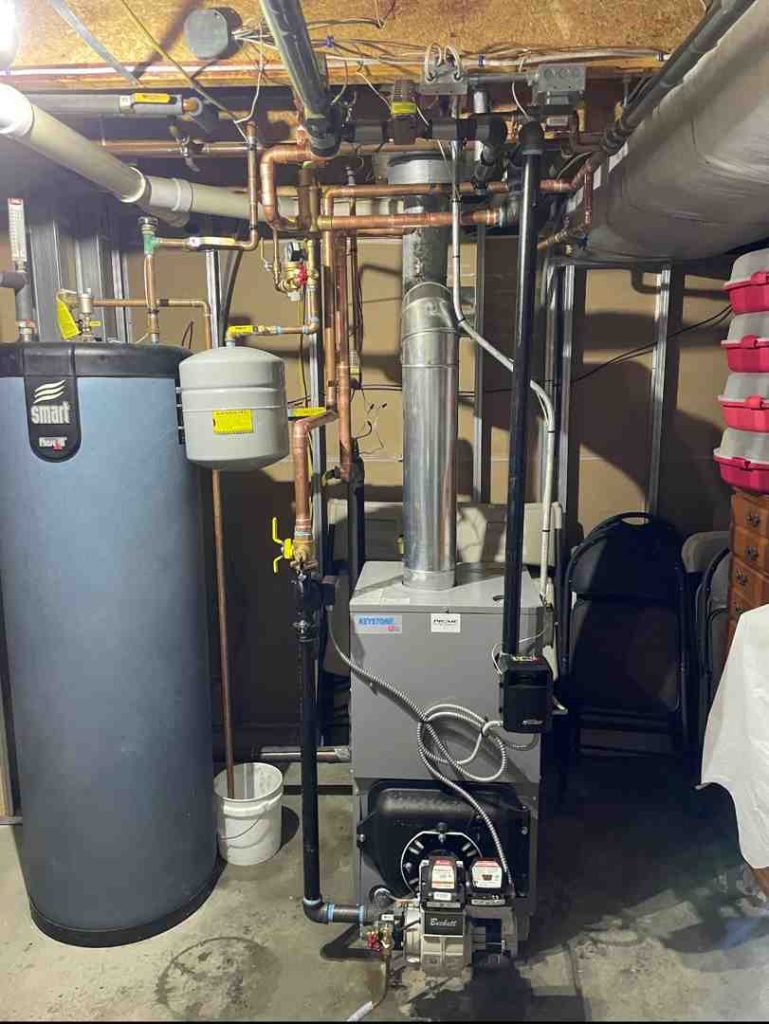
Why Boiler Repair Matters for New England Homeowners
Boiler repair is essential when your heating system stops working efficiently or fails completely—especially during New England’s harsh winters. Here’s what you need to know:
Quick Answer: Getting Your Boiler Repaired
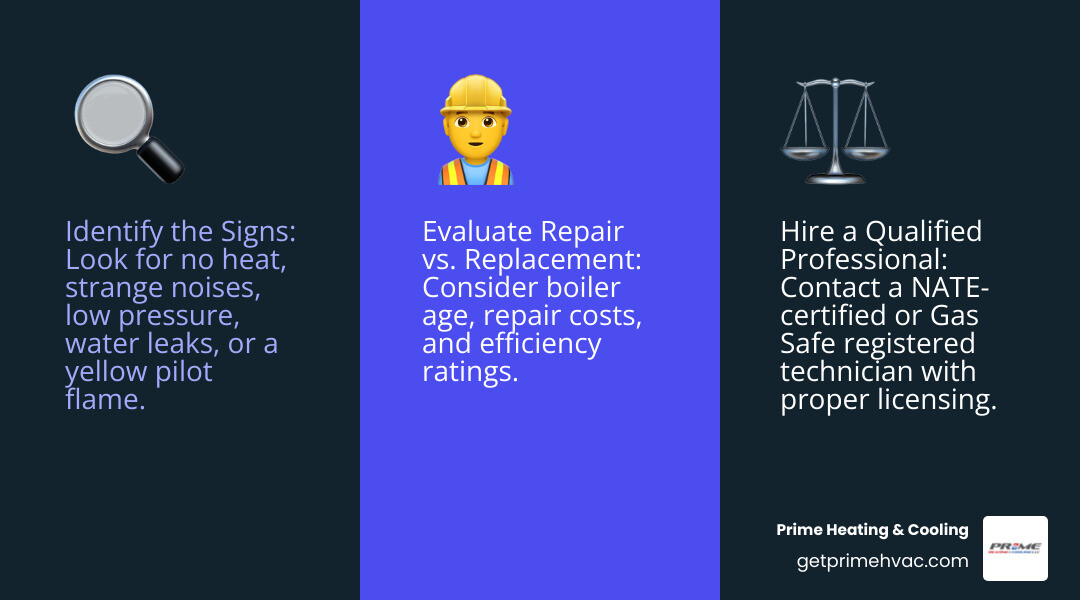
- Identify the problem – Look for signs like no heat, strange noises, low pressure, or water leaks
- Hire a qualified professional – Contact a Gas Safe registered or NATE-certified technician (never attempt gas boiler repairs yourself)
- Evaluate repair vs. replacement – Consider the boiler’s age, repair costs, and efficiency ratings
Common repair costs typically range from $100-$500, depending on the issue. Emergency repairs are available within 24 hours from most providers. If your boiler is over 15 years old or requires frequent repairs, replacement may be more cost-effective.
Boilers are responsible for about 60% of home energy use, so keeping yours in good working order isn’t just about comfort—it’s about safety and efficiency. A malfunctioning boiler can leak carbon monoxide (a lethal, odorless gas), waste energy, and leave you without heat when you need it most. According to Which? research, around half of homeowners skip annual boiler servicing, which often leads to preventable breakdowns and voided warranties.
I’m Tyler Steiner, and I’ve spent years helping New England families steer boiler repair decisions through my work at Prime Heating & Cooling. Whether you’re dealing with a frozen condensate pipe or deciding if your aging system needs replacement, I’ll walk you through the exact steps to get reliable boiler repair without the guesswork.
Step 1: Identify the Signs and Common Boiler Problems
When your home feels colder than usual, your boiler is often the culprit. Recognizing early warning signs can save you from a complete breakdown and costly emergency boiler repair. Our experience serving Rhode Island homes, from Smithfield to Lincoln, shows that many common problems manifest through clear indicators.

One of the most immediate issues is no heat or no hot water. This could be due to low boiler pressure, a faulty thermostat, or a problem with the diverter valve. Beyond a lack of heat, listen for strange noises. A whistling noise, or “kettling,” often indicates limescale buildup in the heat exchanger, while banging or gurgling might suggest trapped air or pump issues.
Low pressure is another frequent problem. Your gauge should read between 1 and 2 bar; if it drops, your system may have a leak or a faulty relief valve. For older boilers, pilot light issues are common. A healthy flame should be blue; a yellow or orange flame indicates incomplete combustion and potential carbon monoxide production. Finally, a frozen condensate pipe is a major issue during Rhode Island winters, often causing the system to shut down to prevent damage. For a detailed look at these issues, refer to Common boiler problems and repair costs.
Recognizing When You Need a Boiler Repair
Several subtle signs also indicate your boiler needs attention. Uneven heating suggests the system isn’t distributing heat efficiently, often due to sludge buildup or a malfunctioning zone valve. Similarly, rising energy bills without increased usage indicate your boiler is working harder than it should.
A yellow pilot flame is a critical safety hazard, signaling carbon monoxide risks. Faulty boilers can leak CO, which is lethal and odorless. Symptoms of poisoning include headaches and dizziness. We recommend installing detectors and reading our guide on Top Signs You Need HVAC Repair Services. Additionally, water leaks require immediate action to prevent internal corrosion and property damage.
Minor Fixes vs. Professional Intervention
Homeowners can attempt a few minor fixes. Bleeding radiators can resolve cold spots caused by trapped air. If a condensate pipe is frozen, thawing external pipes with hot water bottles (never boiling water) can help. You can also repressurize the system using the filling loop if the gauge is below 1 bar.
However, the risks of DIY boiler repairs for complex issues are significant. Boilers involve high temperatures, gas, and electricity. Attempting internal repairs can lead to gas leaks or explosions. Never remove the boiler casing or tamper with gas components. For any suspected gas leaks or internal failures, call a professional immediately. Our team at Prime Heating & Cooling is ready to ensure your safety and comfort.
Step 2: Hire a Qualified Expert for Your Boiler Repair
Once you’ve identified a problem, engaging a qualified expert is crucial for safety and reliability. An emergency boiler repair is necessary for immediate threats like gas leaks or a total loss of heat during severe weather. Many providers, including Prime Heating & Cooling, offer 24/7 availability for these urgent needs. A one-off repair covers non-urgent issues like minor leaks or strange noises, which should still be addressed promptly to prevent escalation. For more on choosing a professional, see our guide: What is a Heating Contractor?.
Essential Qualifications and Questions to Ask
In Rhode Island, prioritize technicians with NATE certification, which proves their knowledge in complex HVAC systems. For gas boilers, ensure your engineer is a Master Gas Fitter. Always verify their licensing and insurance to protect yourself from liability. Experience and positive customer reviews are also key indicators of quality workmanship.
When hiring, ask these questions:
- “Are you NATE-certified or a Master Gas Fitter?”
- “Are you licensed and insured in Rhode Island?”
- “Do you have experience with my specific boiler type?”
- “Do you offer a guarantee on work and parts?”
- “What are your diagnostic fees and estimated timeframe?”
Asking these questions ensures you hire a trustworthy professional. For more advice, see Tips for Hiring a Heating Contractor.
Step 3: Evaluate Costs and the Repair vs. Replace Decision
After diagnosis, you must decide whether to repair or replace. This depends on the boiler’s age, repair cost, and efficiency.
| Repair Type | Estimated Cost Range | New Boiler Installation (Combi) | Estimated Cost Range |
|---|---|---|---|
| Minor fixes | $0 – $100 | ||
| Condensate pipe thaw | $100 – $200 | ||
| Pump or Fan replacement | $100 – $300 | ||
| Diverter/Zone valve | $150 – $350 | ||
| PCB or Heat Exchanger | $150 – $500+ | ||
| Average Repair Cost | $100 – $500 | New Combi Boiler | $2,500 – $5,000+ |
Boiler age is a major factor; systems over 15 years old often require frequent, expensive repairs. Modern boilers have efficiency ratings (AFUE) of 90%+, while older units may operate at 60-70%. Replacing an old unit can save hundreds annually on energy bills. Prime Heating & Cooling can help evaluate your system’s condition. See more at Energy Saving Trust boiler advice.
Understanding Boiler Repair Costs and Warranties
Boiler repair costs consist of parts and labor. Labor in Providence or Warwick typically ranges from $50-$85 per hour. Common repairs include PCB replacement ($150-$500+), pump failure ($100-$300), and diverter valves ($150-$350). A cracked heat exchanger is more serious and can cost $500+, sometimes making replacement a better option. For gas valve specifics, see Boiler Gas Valve Replacement Costs.
Boiler warranties usually cover parts for 1-10 years but require an annual boiler service to remain valid. Neglecting maintenance can void your coverage. Some homeowners choose boiler cover plans for peace of mind, but always check the small print for exclusions and waiting periods.
Preventing Future Breakdowns Through Maintenance
Regular maintenance is essential for safety and efficiency. An annual boiler service is the best way to prevent major breakdowns. During a service, a technician cleans burners, checks the flue, and inspects safety devices. This proactive approach is often required for warranty validation.
Maintenance extends your system’s longevity and includes combustion analysis to ensure fuel is burning cleanly without producing carbon monoxide. Cleaning burners removes debris that reduces efficiency. Between services, Rhode Island homeowners should check pressure regularly, bleed radiators annually, and keep the area around the boiler clear. For more on system life, see How an HVAC Tune-Up Can Extend System Life. Technicians also use tools like the Weil-McLain Parts Selector to ensure the right components are used for every repair.
Frequently Asked Questions about Boiler Repair
How long does a typical boiler repair take?
Minor issues like repressurizing take 30-60 minutes. Standard fixes like replacing a pump or gas valve usually take 2-4 hours once diagnosed. However, diagnostic time can take 1-2 hours, and if parts aren’t in stock, the repair could take a few days. We prioritize prompt service in North Providence and Smithfield to minimize downtime.
What are the safety risks of a faulty boiler?
The primary risk is carbon monoxide (CO) poisoning. CO is odorless and can be lethal; ensure you have working CO detectors. Another risk is explosive leaks. If you smell gas (rotten eggs), evacuate immediately and call emergency services. Always use a technician with proper professional certification, like a Master Gas Fitter, to mitigate these risks.
Does my home insurance cover boiler repairs?
Standard policies usually cover damage from fire or floods but not wear and tear or lack of maintenance. Specialized boiler cover or service plans are separate policies that handle breakdowns. Check your policy small print for exclusions, excess fees, and age limits. If you are a tenant, your landlord is responsible for boiler maintenance.
Conclusion
Navigating boiler repair can seem daunting, but by following these three easy steps—identifying the problem, hiring a qualified expert, and making an informed repair-versus-replace decision—you can restore comfort and safety to your Rhode Island home. From the busy streets of Providence to the quiet neighborhoods of North Scituate, our commitment remains the same: to provide reliable, energy-efficient solutions with a customer-first approach.
At Prime Heating & Cooling, we pride ourselves on our 20 years of experience in delivering top-tier heating and cooling services across Rhode Island. Our skilled technicians are NATE-certified and experienced Master Gas Fitters, equipped to handle everything from routine maintenance to complex boiler repair and new installations. We understand that a functional heating system isn’t just a luxury; it’s a necessity, especially during our harsh New England winters. That’s why we offer 24/7 emergency support, ensuring you’re never left in the cold.
Don’t let a malfunctioning boiler disrupt your peace of mind. Whether you need a quick diagnostic, a crucial repair, or are considering an upgrade to a more energy-efficient system, our team is ready to help. Reach out to us today for expert advice and reliable service.
For all your boiler needs, trust the local experts at Prime Heating & Cooling. Learn more about our comprehensive offerings on our Boiler Installation & Repair Services page.