
What to Do When Your Drain Cleaner Is Not Working
If your drain cleaner is not working, here’s what to do right now:
- Stop adding more chemical — a second dose rarely helps and can damage your pipes
- Neutralize standing chemical with a baking soda and cool water solution before doing anything else
- Try a plunger or drain snake for clogs within a few feet of the drain opening
- Clean the P-trap under the sink if plunging fails
- Call a licensed plumber if multiple drains are backing up, you smell sewage, or three DIY methods have failed
You poured the drain cleaner in. You waited. You flushed with hot water. And the sink is still full of standing water.
It’s a frustrating situation — and a surprisingly common one. Chemical drain cleaners like Drano fail to clear clogs in roughly 60–70% of cases where the blockage sits deeper than about one meter into the pipe. That means the product you bought may never have had a chance of reaching the problem in the first place.
The good news: there are safer, more effective steps you can take right now — without making things worse.
I’m Tyler Steiner, CEO and founder of Prime Heating & Cooling, serving Rhode Island and Massachusetts. Through years of responding to plumbing service calls across the region — including many where a drain cleaner is not working and has been sitting in the pipe for hours — I’ve seen what works, what doesn’t, and what can turn a simple clog into a costly repair. Let’s walk through exactly what to do next.
Drain cleaner not working terms simplified:
The Science Behind a Chemical Drain Cleaner Not Working
To understand why your liquid plumber-in-a-bottle didn’t do the trick, we have to look at what is happening inside your plumbing system. When you pour a product like Drano down the sink, you aren’t just pouring soapy water; you are initiating a highly aggressive chemical reaction.

Most commercial liquid cleaners rely heavily on lye (sodium hydroxide) or sodium hypochlorite. These alkaline chemicals are designed to decompose organic matter by generating intense exothermic heat—meaning they literally create heat near boiling temperatures inside your pipes to melt away grease and hair.
However, when you have a drain cleaner not working, that chemical slurry sits in one spot. Instead of flowing through and washing away the obstruction, it sits directly on your pipes, continuing to generate heat and eating away at the pipe walls and joints. For a deeper look at these issues, you can read What’s Wrong with Drano? A Homeowner Troubleshooting Guide.
Why Is Your Chemical Drain Cleaner Not Working?
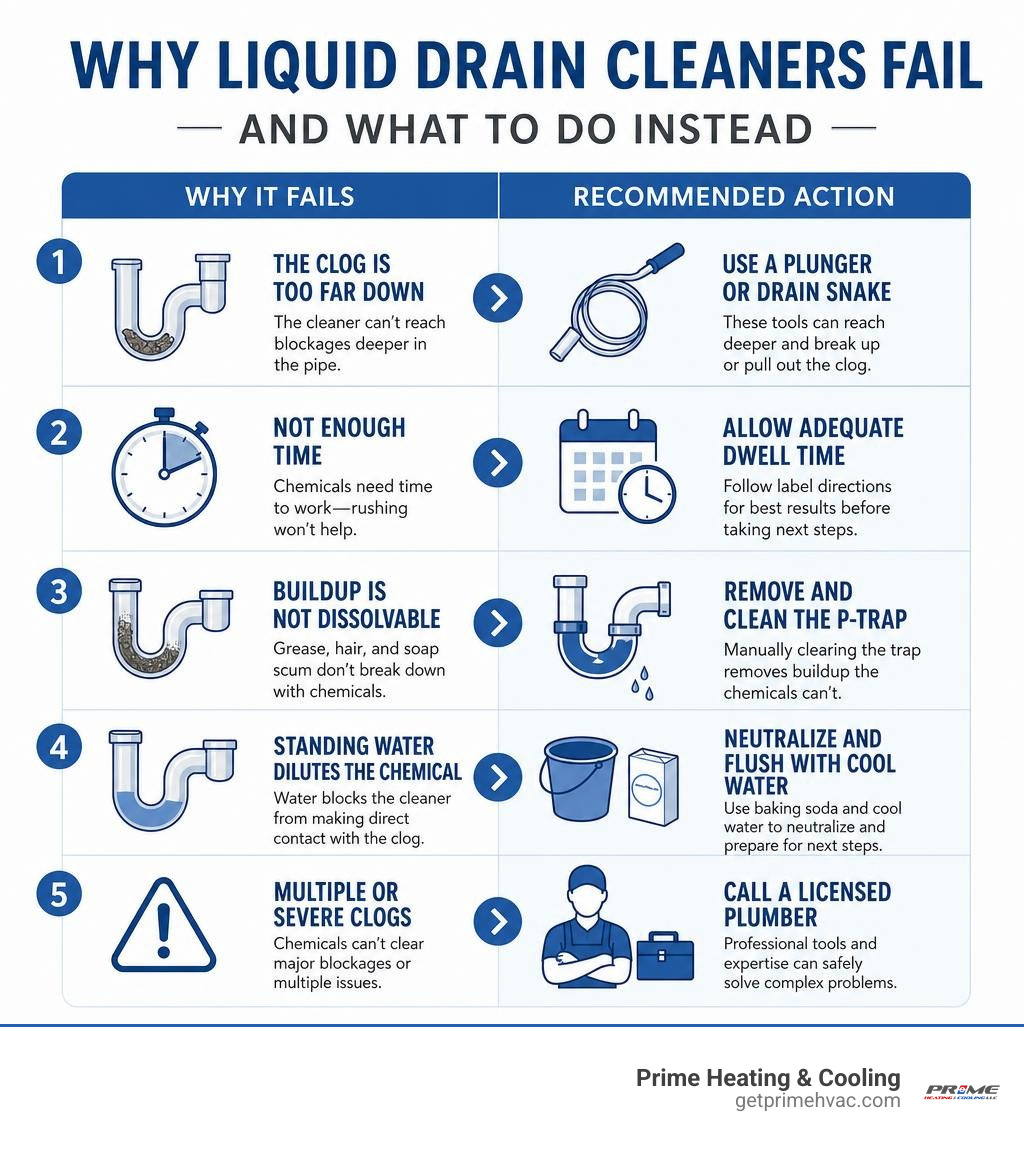
The primary reason chemical cleaners fail is that they are only effective on specific types of organic material—like light hair clogs or soft grease buildup—located very close to the drain opening.
If your blockage is caused by mineral scale, plastic bottle caps, dental floss, wet wipes, or tree roots, chemical cleaners will do absolutely nothing to dissolve them. Furthermore, consumer-grade drain cleaners are generally only effective within the first meter of the drain. If your clog is deeper in the waste line, the chemical will become too diluted by standing water to perform its job.
If you are dealing with a stubborn clog, it helps to understand how your system operates. Read our guide on How to Troubleshoot Plumbing Issues in 5 Simple Steps to narrow down the problem and find the right solution.
Risks of Leaving a Failed Chemical Cleaner in Your Pipes
Leaving standing chemical cleaner in your plumbing is a recipe for disaster. Repeated use of chemical drain cleaners causes pipe damage in up to 25% of cases. PVC pipes are particularly vulnerable to the sustained high temperatures generated by the chemical reaction, which can soften the plastic, deform the pipes, and break down the industrial glue holding your fittings together.
If you are using sulfuric acid-based cleaners, the risks are even higher. Sulfuric acid is an extremely powerful desiccant that can corrode metal pipes, eat through older lead solder, and crack porcelain toilet bowls. Homeowners who attempt multiple applications of chemical drain cleaners after an initial failure increase their risk of severe pipe damage by 50% compared to those who switch to manual methods. If you are struggling with acid-based products, refer to the Sulfuric Acid Drain Cleaner Not Working? [Safety Fix Guide] – EngineerSkill.blog for safety tips.
How to Safely Neutralize and Remove Standing Chemical Cleaners
If you have a pool of toxic, caustic water sitting in your sink, you must handle it with extreme care. Never plunge a drain that contains active chemical cleaners, as this can cause dangerous splashback into your eyes or onto your skin.
Here is how to safely neutralize and extract the chemicals:
| Step | Method | Purpose |
|---|---|---|
| 1. Neutralize | Mix 1 cup of baking soda with 1 gallon of cool water and pour very slowly into the drain. | Stabilizes pH and stops the exothermic heat reaction. |
| 2. Extract | Use a wet/dry shop vacuum equipped with a HEPA filter to suck out the standing liquid. | Safely removes the chemical water from the basin. |
| 3. Manual Bailing | If no vacuum is available, wear heavy-duty nitrile gloves and safety goggles to bail the water into a bucket. | Clears the sink so you can access the drain safely. |
Safe DIY Alternatives and Professional Rhode Island Plumbing Solutions
Once the dangerous chemicals have been neutralized and cleared out of the sink basin, you can safely pivot to mechanical and natural alternatives.
At Prime Heating & Cooling, we always recommend mechanical clearing over chemical applications. If you want to explore our full range of residential options, visit our Category: Plumbing Services page.
Step-by-Step Mechanical Alternatives When Your Drain Cleaner Is Not Working
If you want to clear the blockage yourself, skip the commercial chemicals and use these mechanical methods:
- The Plunger Technique: Ensure there is about an inch of water in the basin to create a seal. If you are working on a double kitchen sink, plug the neighboring drain with a wet rag to direct the pressure toward the clog. Plunge firmly up and down for at least 3 to 5 minutes.
- The Baking Soda and Vinegar Flush: This classic home remedy is safer for your pipes. Pour 1 cup of baking soda down the dry drain, followed by 1 cup of white vinegar. Let it foam for 30 minutes to break down grease, then flush with warm water.
- Use a Hand Snake or Hair Clog Tool: A simple plastic zip-it tool or a hand-cranked plumbing snake can reach 3 to 4 feet down the line to pull out hair and soap scum. Do not force a snake further than 3 or 4 feet to prevent it from getting stuck. For a visual demonstration, watch this How to Unclog a Drain | How To Anything – YouTube video.
- Remove the P-Trap: Place a bucket beneath the curved pipe under your sink. Loosen the slip nuts by hand or with a wrench, remove the trap, and clean out any physical blockages.
For a complete walkthrough of these steps, read our guide on How to Unclog Toilet Sink Bathtub Drains in 5 Easy Steps and review additional tips in Drano Not Working? How to Remove Clogs When Drano Fails – Prudent Reviews.
Diagnosing Deep Main Line Clogs vs. Local Blockages
How do you know if your clog is a simple hairball in the sink trap or something much worse?
If only one sink is draining slowly, the clog is local. However, if multiple fixtures are backing up simultaneously—for example, if running your washing machine causes water to bubble up in your bathtub—you are dealing with a main sewer line blockage.
Tree root intrusion is incredibly common in older Rhode Island neighborhoods and accounts for approximately 30% of main sewer line blockages. Chemical drain cleaners cannot dissolve tree roots or repair collapsed pipes. If you have tried a plunger, chemical cleaner, and a hand snake without success, the problem is deep in your main line.
When to Stop DIY and Call a Rhode Island Plumber
If you have tried multiple DIY methods and your drain is still backed up, it is time to put down the tools. Professional plumbers report that 40% of their drain cleaning service calls involve homeowners who have already tried chemical cleaners without success.
Continuing to struggle with a stubborn clog can lead to cracked pipes, broken fixtures, or flooded floors. At Prime Heating & Cooling, we provide expert drain clearing, sewer camera inspections, and pipe repairs across Rhode Island—including South Kingstown, Newport, Narragansett, East Greenwich, Johnston, and Providence.
If you live in East Greenwich, Providence, or surrounding areas, professional drain cleaning services are essential to clear deep blockages without damaging your plumbing system.
To protect your home from future plumbing emergencies, check out our 7 Plumbing Tips to Prevent Disasters in Rhode Island. When you are ready to hand the job over to the professionals, visit our Plumbing Installations Repairs page to schedule a service with our experienced team. We are here to get your drains flowing freely and safely!