Start Here: Why a Furnace Check Up Matters Before Rhode Island Winter
A furnace check up is one of the most important things you can do before New England temperatures drop — and if you’re in Rhode Island, you already know winters don’t wait.
Quick answer: What is a furnace check up?
A furnace check up is an annual professional inspection where a certified HVAC technician inspects, cleans, and tests your heating system. Here’s what it typically covers:
- Safety checks — carbon monoxide testing, heat exchanger inspection, gas leak detection
- Cleaning — burners, blower assembly, flame sensor, combustion chamber
- Testing — ignition system, thermostat calibration, electrical connections, gas pressure
- Filter service — inspection and replacement
- Performance report — written summary of findings and recommendations
How often: Once a year, ideally in early fall (September or October) before heating season begins.
How long it takes: 1 to 2 hours for most residential systems.
Why it matters:
- Prevents up to 85% of furnace breakdowns
- Can improve energy efficiency by up to 15%
- Helps extend furnace lifespan to 20 years or more
- Keeps manufacturer warranties valid
For Rhode Island homeowners — especially in areas like South Kingstown, Newport, and Narragansett — furnaces typically run hard from late October through April. That’s a long season for a system that hasn’t been serviced.
I’m Tyler Steiner, CEO and founder of Prime Heating & Cooling, and I’ve spent my career helping New England homeowners stay ahead of exactly this kind of problem with regular furnace check up service. In the guide below, I’ll walk you through a simple 30-day plan to get your furnace inspected, serviced, and ready before the cold hits.
Furnace check up vocab explained:
What a furnace check up includes
When we arrive at your home in Johnston or Scituate for a furnace check up, we don’t just kick the tires. A professional inspection is a comprehensive 16-step process designed to ensure every moving part is ready for the 24/7 demands of a Rhode Island winter.
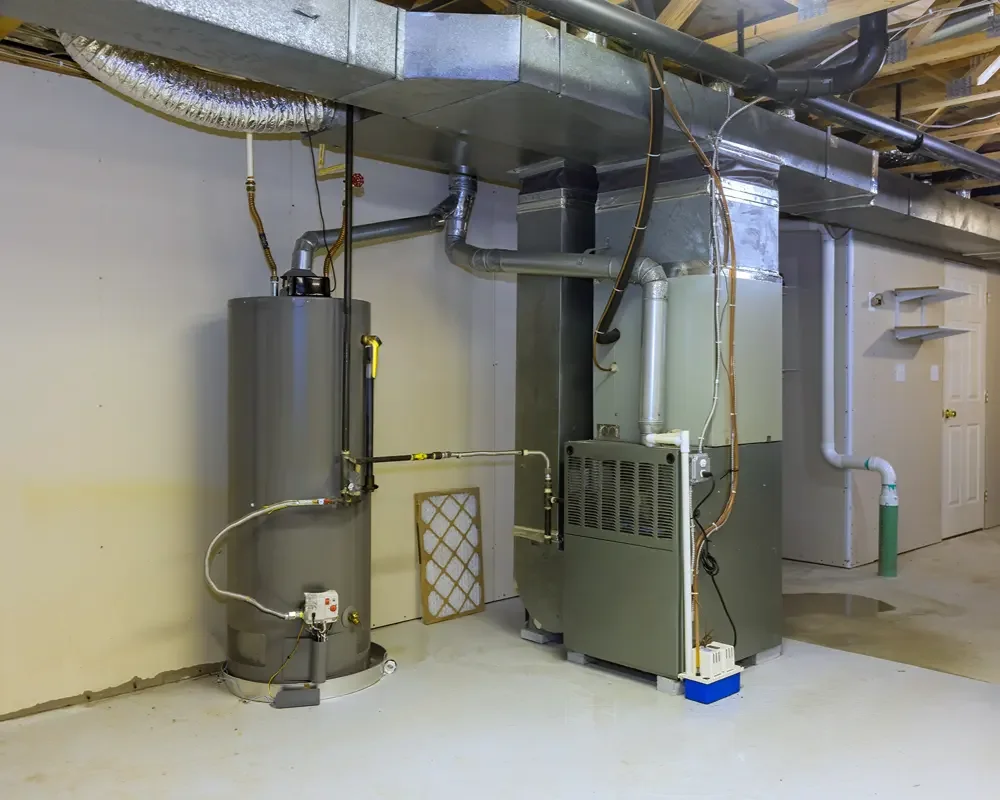
Our technicians perform a deep dive into the “heart” of your system. This includes inspecting the heat exchanger for hairline cracks—which is vital for preventing carbon monoxide from leaking into your living space—and cleaning the burners to ensure efficient fuel combustion. We also test the blower motor’s amp draw, calibrate your thermostat, and tighten every electrical connection that might have loosened during the previous season’s vibrations. From checking the venting system for obstructions to performing a full combustion analysis, this 1-to-2-hour service is the ultimate insurance policy for your home comfort.

When to schedule a furnace check up in Rhode Island
Timing is everything. In coastal areas like Newport and Narragansett, the salt air and high humidity can be tough on mechanical components. We highly recommend scheduling your furnace check up during the “shoulder season”—specifically September or October.
By booking early, you avoid the frantic “no-heat” rush that happens during the first cold snap in November. It also gives us plenty of time to order parts if we find a component nearing the end of its life. Regular heating maintenance RI ensures you aren’t stuck waiting for a technician when the temperatures in Smithfield or Coventry hit freezing.
The 30-Day Plan to Book the Right Furnace Check Up
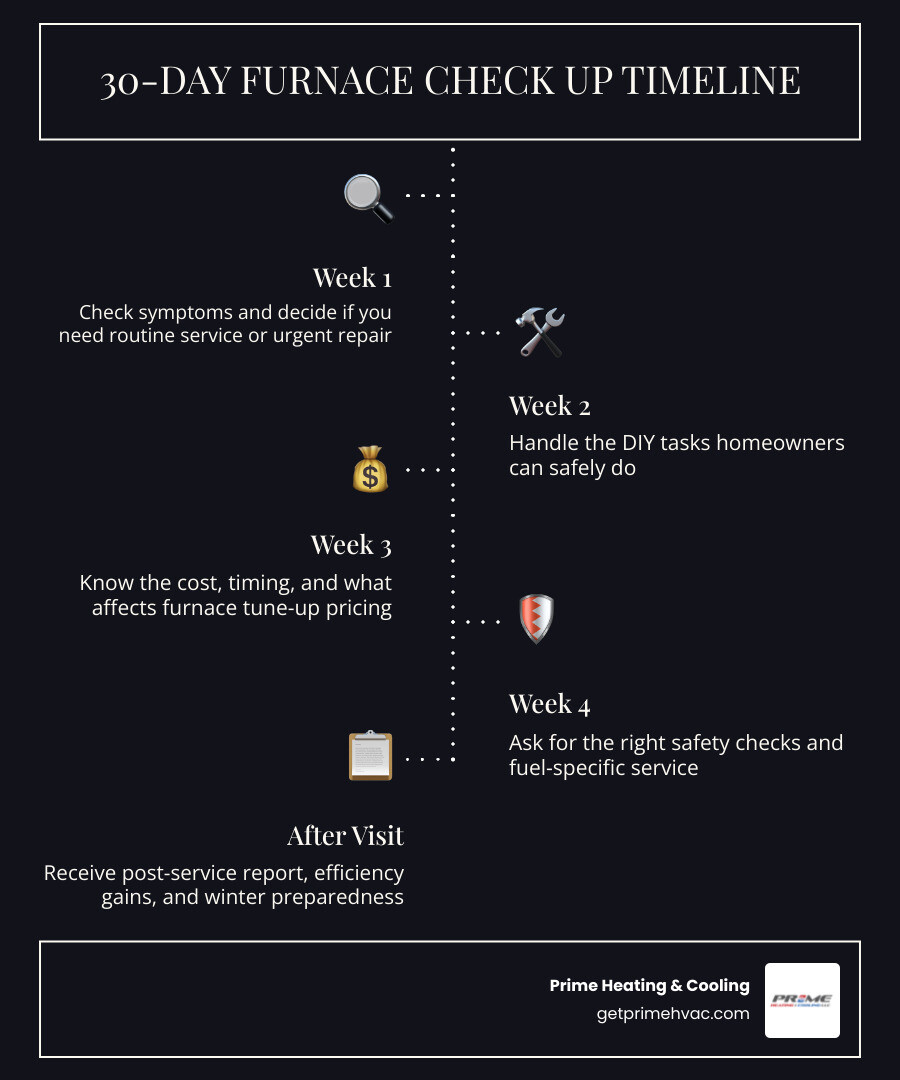
Planning your maintenance doesn’t have to be a chore. If you follow this 30-day roadmap, you’ll go from “I think the heater works” to “I know my family is safe and warm” by next month.
| Feature | DIY Homeowner Tasks | Professional Furnace Check Up |
|---|---|---|
| Primary Focus | General cleanliness & filters | Mechanical safety & efficiency |
| Tools Used | Vacuum, screwdriver, new filter | Combustion analyzer, amp meter, manometers |
| Safety Testing | Testing CO detector batteries | Testing for gas leaks & heat exchanger cracks |
| Warranty | Does not satisfy warranty terms | Provides documentation for manufacturer |
| Technical Depth | Visual only | Internal component testing & cleaning |
Week 1: Check symptoms and decide if you need routine service or urgent repair
Before you call us, take ten minutes to “listen” to your furnace. Does it sound like a jet engine taking off, or is there a strange banging noise? These are often signs of furnace heating issues that might require a repair rather than just a simple tune-up.
Look for these “red flags”:
- Short cycling: The furnace turns on and off every few minutes.
- Rising energy bills: Your gas or electric bill is significantly higher than last May 2025.
- Strange odors: A dusty smell is normal for the first start-up, but a “rotten egg” (gas) or burning plastic smell is an emergency.
- Flame color: If you can see the burner flame, it should be a crisp blue. A yellow or flickering flame indicates incomplete combustion.
If your system is showing these symptoms, don’t wait for a routine window—call for professional help immediately.
Week 2: Handle the DIY tasks homeowners can safely do
While you wait for your scheduled furnace check up, there are several tasks you can handle to make our job easier and keep your system running smoothly.
Your DIY Checklist:
- Filter Replacement: This is the #1 thing you can do. A dirty filter can reduce airflow by 20% and is a leading cause of system overheating.
- Clear the Area: Ensure there is at least a 3-foot clearance around your furnace. Don’t store holiday decorations, paint thinner, or old newspapers near the unit.
- Check the Vents: Make sure return air vents in your North Providence or Warwick home aren’t blocked by furniture or rugs.
- Detector Testing: Test your smoke and carbon monoxide alarms. Since furnaces are a combustion source, having working CO detectors is non-negotiable for safety.
- Draft Check: Look for drafts around windows and doors. Improving your home’s “envelope” helps your furnace work less.
For more on what you can handle versus what we should do, check out The Complete Guide to Heating and Air Conditioning Tune-Ups.
Week 3: Know the cost, timing, and what affects furnace tune-up pricing
We believe in transparency. Nationally, a furnace check up typically stays within the $75 to $150 range, though local Rhode Island labor rates and the complexity of your system (gas vs. oil) can push that between $70 and $200.
Several factors influence the final investment:
- Fuel Type: Oil furnaces often require more intensive cleaning (soot removal) and part replacements like nozzles and oil filters compared to gas units.
- System Age: Older units in East Greenwich or Lincoln may require more diagnostic time to ensure parts aren’t brittle.
- Accessibility: If your furnace is tucked in a tight crawlspace or attic, it may take longer to service.
- Maintenance History: Skipping annual service can lead to homeowners spending 3x more on emergency repairs later.
Investing in a maintenance plan is often the smartest move, as it usually includes annual reminders and priority scheduling. This is a key part of how to extend the life of your HVAC system.
Week 4: Ask for the right safety checks and fuel-specific service
When the technician arrives, don’t be afraid to ask questions. A high-quality furnace check up must include specific safety benchmarks.
For gas furnaces, ensure they are checking the manifold gas pressure and the flame sensor. A dirty flame sensor is one of the most common reasons for a furnace to shut down in the middle of a cold night. They should also perform a Gas Furnace Inspection Checklist that includes a combustion analysis. This measures the levels of oxygen and CO in your flue gases to ensure the unit isn’t producing dangerous amounts of carbon monoxide.
If you have an oil furnace, the technician needs to clean the combustion chamber, replace the oil filter, and check the burner nozzle. These systems are “dirtier” than gas and require that extra attention to prevent soot buildup from killing your efficiency.
What to Expect After the Visit and When to Call Right Away
Once our technician finishes, you should receive a detailed post-service report. This isn’t just a receipt; it’s a health chart for your home. You’ll likely see improvements in air quality and can rest easy knowing that annual maintenance prevents 85% of furnace breakdowns.
Regularly serviced units can last up to 20 years, whereas neglected systems often fail around the 10-to-12-year mark. Plus, you’ll have the documentation required to keep your manufacturer’s warranty in good standing.
Signs your furnace needs immediate professional attention
Even with a recent furnace check up, keep an eye out for these “call us now” symptoms during the peak of winter:
- The Smell of Gas: If you smell sulfur or rotten eggs, leave the house and call us (and the gas company) immediately.
- CO Alarm: If your carbon monoxide detector sounds, get everyone outside.
- Blower Won’t Stop: If the fan runs nonstop but only blows cold air, something is wrong with the limit switch or thermostat.
- Loud Banging: This could indicate delayed ignition, which can damage the heat exchanger.
- Water Leaks: For high-efficiency furnaces, water around the base usually means a clogged condensate drain.
Stay prepared by reviewing our winter HVAC checklist in Rhode Island.
Schedule your furnace check up with a local Rhode Island team
At Prime Heating & Cooling, we’ve spent 20 years keeping our neighbors in Smithfield, South Kingstown, and across the East Side of Providence warm. We pride ourselves on a customer-first approach and 24/7 availability because we know furnaces don’t always wait for business hours to act up.
Don’t wait until the first blizzard hits the Newport coast to find out your heater is struggling. A quick, professional furnace check up today can save you hundreds in emergency repairs and thousands in premature replacement costs.
Ready to get your home winter-ready? Learn more about our HVAC services in Smithfield RI and schedule your inspection today. We’ll take care of the technical stuff so you can get back to enjoying a cozy Rhode Island winter.