Why Snowstorm HVAC Prep Can’t Wait Until the Storm Hits
Snowstorm HVAC prep is one of the most important things a New England homeowner can do before winter weather strikes. Here’s a quick summary of what it involves:
- Check filters and test your heating system before the storm arrives
- Clear snow and debris from outdoor units to maintain safe airflow
- Seal windows, doors, and air leaks to reduce heat loss
- Plan for power outages with backup generators or heaters
- Monitor your system during the storm for early warning signs of failure
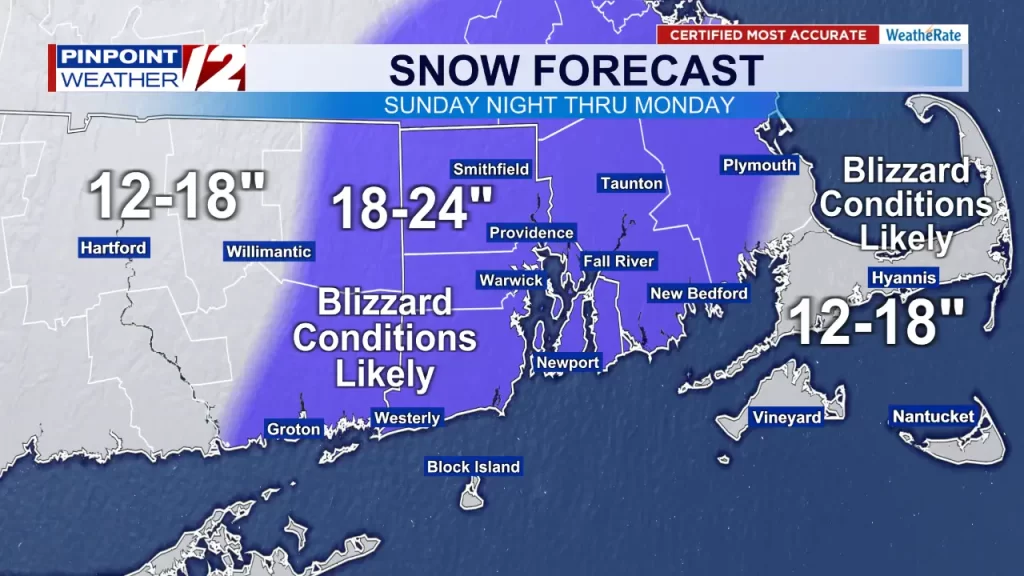
Heavy snow can knock out your heating system at the worst possible moment. And in Rhode Island and Massachusetts, Nor’easters don’t give you much warning. By the time a storm watch hits the news, it may already be too late to get a technician out to your home.
The good news? A little preparation goes a long way. Most heating failures during storms are preventable — with the right steps taken in advance.
I’m Tyler Steiner, founder of Prime Heating & Cooling, and after years of responding to emergency heating calls across Rhode Island during snowstorms, I’ve seen how proper snowstorm HVAC prep separates homes that stay warm from those that don’t. The five steps in this guide are exactly what I recommend to every homeowner before winter hits.
Must-know Snowstorm Hvac Prep terms:
Essential Snowstorm Hvac Prep for Rhode Island Homeowners
Living in the Ocean State means we are no strangers to the “Milk and Bread” rush whenever a Nor’easter is mentioned. But while your pantry might be stocked, your mechanical room often gets ignored. In places like East Greenwich, Johnston, and Smithfield, a heavy snowstorm puts incredible strain on your heating system. When the mercury drops and the wind howls, your HVAC unit has to work overtime just to maintain a baseline of comfort.

The key to surviving a Rhode Island winter isn’t just a good shovel; it’s preventive maintenance. We always recommend that homeowners keep a National Oceanic and Atmospheric Administration (NOAA) Weather Radio on hand. These radios provide life-saving information when the internet goes down, and they are the first step in knowing when to trigger your 72-hour Snowstorm Hvac Prep checklist.
For those of us in the Providence and Warwick areas, the humidity from the coast can lead to heavy, wet snow that clings to everything. This isn’t just a nuisance; it’s a mechanical hazard. By following winter-ready HVAC tips, you ensure that your system is efficient enough to handle the sudden demand. A system that is already struggling with a dirty coil or a worn belt is the first one to fail when the temperature hits zero.
Step 1: Initial Snowstorm Hvac Prep and Maintenance
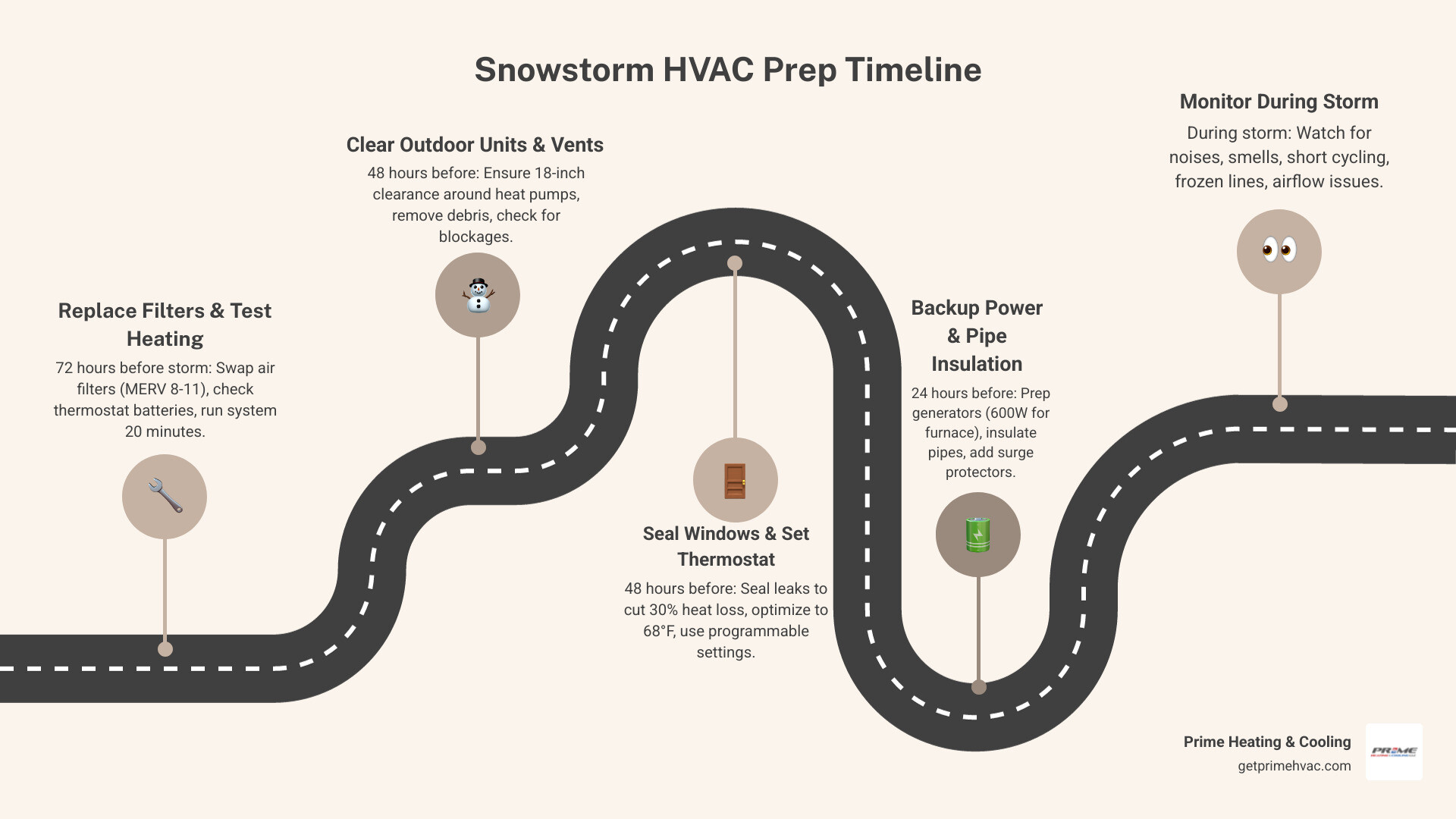
The first step in your Snowstorm Hvac Prep should happen at least 72 hours before the first snowflake falls. Think of this as the “pre-flight check” for your home’s comfort.
Check and Replace Air Filters
In winter, your furnace or heat pump runs almost constantly. This means air filters clog up much faster than they do in the spring. If your filter is gray, dusty, or hasn’t been changed in three months, swap it out immediately. For the best balance of air quality and system protection, we recommend filters with a MERV 8-11 rating. Anything higher can actually restrict airflow too much during periods of high demand, making your system work harder than necessary.
The 20-Minute Trial Run
Don’t wait for the storm to see if your heater works. Turn your thermostat up to 75 degrees and let the system run for a full 20 minutes. Listen for unusual banging, whistling, or grinding noises. If you smell a faint “burning dust” scent, don’t panic—that’s usually just the dust on the heat exchanger burning off. However, if that smell persists or smells like electrical burning, you need a professional.
Thermostat Calibration and Batteries
It sounds simple, but a dead battery in a thermostat is one of the most common reasons for “no heat” calls in North Providence and Lincoln. Replace the batteries 72 hours before a storm, even if the “low battery” light isn’t on yet. Cold weather can cause batteries to lose voltage faster.
Scheduling professional tune-ups is the most cost-effective way to avoid emergency repair bills. During a professional inspection, we check electrical switches, calibrate the system, and ensure that all safety sensors are functioning, which is critical for preventing fires and carbon monoxide leaks.
Step 2: Protecting Outdoor Units and Vents
If you have a heat pump or a high-efficiency furnace, the “battle” is often fought outside. In Rhode Island towns like Scituate and Coventry, where snowdrifts can pile up quickly, your outdoor equipment is at risk.
Maintain the 18-Inch Rule
Your outdoor unit (the condenser) needs to “breathe” to move heat. If snow blocks the sides or top, the system will lose efficiency or shut down entirely. We recommend maintaining at least 18 to 24 inches of clear space all the way around the unit. Use a broom—not a shovel—to gently clear snow from the top and sides. Shovels can bend the delicate aluminum fins on the coils.
Snow Legs and Elevation
If you find that your heat pump is constantly getting buried, you might want to consider snow legs. These are risers that boost the unit above the average snowfall height for our area. This keeps the unit out of the “splash zone” where ice can form at the base.
To Cover or Not to Cover?
This is a common question. For standard AC-only units, you should consider covering your AC unit to protect it from falling icicles. However, never use a plastic tarp. Tarps trap moisture, which leads to rust and mold. Instead, use a breathable mesh-style cover that keeps leaves and heavy debris out but allows moisture to escape. Crucial Note: If you have a heat pump that provides your winter heat, never cover it while it is in use. It needs constant airflow to function.
Vent Safety and Carbon Monoxide
High-efficiency furnaces vent through white PVC pipes on the side of your house. If these get blocked by a snowdrift, the furnace will shut down for safety. Worse, if the blockage is partial, carbon monoxide can back up into your home. Check these vents every few hours during a heavy storm to ensure they are clear.
Step 3: Insulation and Thermostat Optimization
Your HVAC system is only as good as the “envelope” it’s heating. If your home is leaking air, your furnace is essentially trying to heat the entire neighborhood.
Thermal Window Treatments
Windows are the biggest source of heat loss in Rhode Island homes. Without proper treatments, you can lose up to 30% of your home’s heat through the glass.
| Treatment Type | Estimated Heat Loss Reduction |
|---|---|
| Standard Blinds | 10-15% |
| Cellular (Honeycomb) Shades | 20-25% |
| Thermal Drapes (Closed) | 30% |
| Plastic Window Film | 15-20% |
The Incense Stick Trick
Want to find air leaks? Light an incense stick and walk around your windows and doors. If the smoke wavers or blows sideways, you’ve found a draft. Use weather stripping or temporary caulk to seal these gaps. This small step can lower your heating bills significantly during a cold snap.
Thermostat Strategy
During a storm, consistency is key. We recommend setting your thermostat to 68°F during the day. If you’re worried about the bill, lowering the temp by just one degree can save up to 10% on energy consumption. Avoid “cranking” the heat up and down; this causes the system to cycle more frequently, which increases the chance of a mechanical failure.
Zone Heating
If you have a large home in North Scituate or Smithfield, consider “zone heating.” Close the vents and doors to unused guest rooms or storage areas. By focusing the heat in the rooms you actually use, you can cut heating costs by 20-40%.
Step 4: Power Outage and Backup Planning
According to the U.S. Energy Information Administration, electricity customers lose power for several hours a year, but a major Rhode Island Nor’easter can stretch that into days.
Pre-Heating Your “Battery”
Think of your home like a thermal battery. If a major outage is predicted, “over-heat” your home to 72 or 74 degrees a few hours before the storm hits. If the power goes out, your home will stay at a safe temperature for much longer than if you started at 68 degrees.
Generator Sizing
If you are considering a backup generator, you need to know your system’s “surge” requirements.
- Gas Furnaces: These are surprisingly efficient, often requiring less than 600 watts to run the blower motor and electronics. A small portable generator can often handle this.
- Heat Pumps: These are power hogs. They require significantly higher wattage and usually need a whole-home standby generator to function.
Protecting the Electronics
Power surges are common when the grid flickers during a storm. Install a surge protector on your HVAC’s electrical panel to protect the expensive circuit boards inside your furnace or air handler. This is a vital part of preparing for a Nor’easter.
Pipe Protection
If the heat goes out, your pipes are at risk. Insulate exposed pipes in your basement or attic with foam sleeves. If the temperature in the house drops below 55°F, open your faucets to a slow drip to keep water moving and prevent freezing.
Step 5: Monitoring Your Snowstorm Hvac Prep Success
Once the storm is in full swing, your job is to be the “eyes and ears” of your home. You don’t need to be a mechanic to spot a problem.
Listen for the “Thump”
If your outdoor heat pump starts making a loud, rhythmic thumping noise, it might be “iced up.” Heat pumps have a built-in Defrost Mode that melts ice automatically. You might see steam rising from the unit—this is normal! However, if the unit is encased in a solid block of ice and the fan isn’t moving, switch your thermostat to Emergency Heat (EM Heat) and call for service.
Watch for Short Cycling
If your furnace turns on and off every few minutes without reaching the set temperature, it’s “short cycling.” This is often caused by a clogged filter or a blocked exhaust vent. It puts massive strain on the system and can lead to a total motor failure.
The “Sniff Test”
Any smell of rotten eggs (natural gas) or ozone (electrical burning) should be treated as an emergency. Shut the system off at the breaker and contact us immediately. Keeping your system in top shape through regular tune-ups reduces the likelihood of these scary moments.
Conclusion: Staying Warm After the Storm
Once the wind dies down and the sun comes out over the East Side of Providence, your Snowstorm Hvac Prep isn’t quite finished. You need to perform a post-storm assessment to ensure no hidden damage occurred.
The 30-Minute Restart Rule
If your power was out, don’t just flip the heat back on the second the lights flicker. Wait about 30 minutes. This allows the electrical grid to stabilize and prevents a “brownout” from damaging your HVAC’s compressor or blower motor.
Document for Insurance
If you notice any damage—such as a crushed outdoor unit from a fallen branch or water damage from a frozen pipe—take photos immediately. This documentation is essential for insurance claims.
Professional Post-Storm Check
Sometimes a storm causes “invisible” damage, like a shifted refrigerant line or a cracked heat exchanger. If your system seems to be running louder than usual or your energy bills spike after the storm, it’s time for a professional look.
At Prime Heating & Cooling, we’ve spent 20 years helping our neighbors in Rhode Island stay warm through the toughest winters. Whether you’re in Smithfield, Lincoln, or Coventry, we are here with 24/7 availability to ensure your family stays safe and comfortable.
Don’t wait for the next blizzard to find out if your heater can handle the pressure. If you’re unsure about your system’s readiness, contact us for expert heating repair and maintenance in RI. Stay warm, stay safe, and let’s get through this winter together!