

Your Essential Guide to Furnace Installation
A proper furnace installation is crucial for your home’s warmth, safety, and energy efficiency. It’s a long-term investment in your comfort.
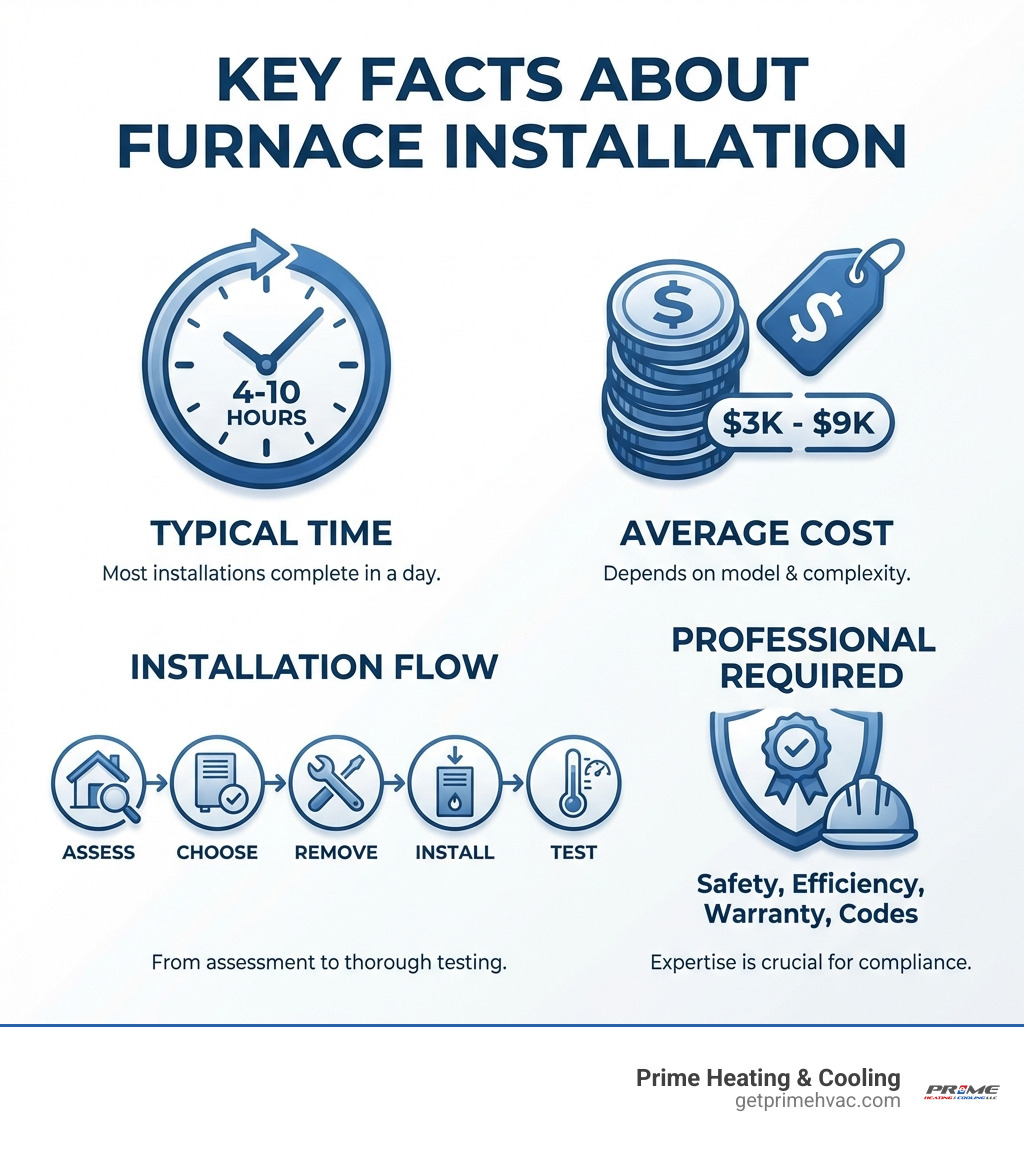
Here’s what you should know right away:
- Time: Most installations take 4 to 10 hours to complete.
- Cost: Average costs range from $3,000 to $9,000, depending on the model and job complexity.
- Process: It involves a home assessment, choosing the right furnace, removing the old unit, and installing and testing the new system.
- Expertise: Professional installation is always required for safety, efficiency, and warranty compliance.
This guide covers everything from when to replace your furnace to the installation process and costs, helping you choose the best heating solution for your home.
I’m Tyler Steiner, CEO and Founder of Prime Heating & Cooling. With experience in complex mechanical systems, my team and I are committed to providing reliable, energy-efficient climate comfort, including expert furnace installation.
Let’s start with the essential facts about furnace installation:
Recognizing the Need: Is It Time for a New Furnace?
Knowing the signs that your furnace is failing can save you from an emergency breakdown on a cold Rhode Island night. Here are the key indicators that it might be time for a replacement:
- Furnace Age: A gas furnace lasts 15-20 years, while electric models can last up to 30. If yours is over 15 years old, it’s likely inefficient and nearing the end of its lifespan.
- Rising Energy Bills: A sudden or steady increase in your heating bills often means your furnace is losing efficiency and working harder to heat your home.
- Strange Noises: Banging, rattling, or squealing noises indicate mechanical problems like loose parts or a failing motor.
- Uneven Heating: An old furnace may struggle to distribute heat evenly, leaving some rooms cold. This points to issues with its heating or airflow capacity.
- Frequent Repairs: If repair costs are mounting and you need service frequently, replacement is often the more economical choice.
- Furnace Keeps Turning On and Off: If your furnace turns on and off rapidly without fully heating your home, it’s “short-cycling.” This is inefficient and causes excessive wear. Learn more about this issue on our page about a Furnace Keeps Turning On and Off.
If you notice these signs, it’s time to consider a new furnace installation.
Why Professional Installation is Non-Negotiable
For a furnace installation in Rhode Island, we strongly advise against a DIY approach for several critical safety and performance reasons.
DIY Risks:
- Safety Hazards: Improperly connected gas lines or electrical wiring can lead to gas leaks, carbon monoxide exposure, fires, or electrical shock.
- Code Compliance: Professional installers ensure your system meets all local building codes, avoiding fines and ensuring safety.
- Voided Warranties: A DIY installation will void most manufacturer warranties, leaving you without coverage.
- Incorrect Sizing and Efficiency: An improperly sized furnace will operate inefficiently, short-cycle, or fail to heat your home, leading to higher bills and premature wear.
Professional Benefits:
A professional installation from our team ensures:
- Expertise: Our 20 years of experience guarantee a correct and seamless installation.
- Proper Sizing: We use detailed load calculations to perfectly match the furnace to your home’s needs.
- Efficiency: A correct installation ensures your furnace operates at peak efficiency, saving you money.
- Safety: We follow strict safety protocols for all gas, electrical, and venting connections.
- Warranty Protection: We protect your investment by ensuring your manufacturer’s warranty remains valid.
Learn more about what makes a good contractor on our page: What is a Heating Contractor?
Furnace Lifespan and When to Replace
Understanding your furnace’s lifespan helps you plan for a replacement instead of facing an emergency.
- Average Lifespan: Gas furnaces in Rhode Island last 15 to 20 years, while electric furnaces can reach 20 to 30 years.
- Factors Affecting Longevity: Key factors include the quality of the initial installation, regularity of maintenance, and local climate demands. A well-maintained system can significantly exceed the average lifespan.
As your furnace ages, it becomes less efficient and more prone to breakdowns and safety risks, like a cracked heat exchanger. It’s wise to consider replacement before it fails. Regular tune-ups are the best way to extend your furnace’s life. Find out more in our guide: The Secret to a Warm Home: A Comprehensive Guide to Heating System Tune-Ups.
The Best Time of Year for Installation
Smart scheduling for your furnace installation can save you stress and money.
- Off-Season Advantages: The best time to buy is before you need it. Scheduling during the shoulder seasons (spring and fall) helps you avoid winter emergencies when demand is highest.
- Fall: This is an ideal time to install a new furnace before the cold arrives. Learn more at Why Fall is the Best Time to Upgrade Your Heating System in Rhode Island.
- Spring: As demand is lower, spring often offers more flexible scheduling and potential savings.
- Avoiding Winter Emergencies: Waiting for a winter breakdown can lead to longer wait times and higher emergency service costs. Planning ahead ensures a smoother, more convenient experience.
Choosing Your New Heating System: A Homeowner’s Checklist

Selecting a new heating system is about finding the right fit for your home, budget, and comfort needs. We’re here to guide you through the options to ensure you make an informed choice for your Rhode Island home.
For a deeper dive, check out The Ultimate Guide to Choosing a Heating Replacement System.
Comparing Furnace Types: Gas, Electric, Oil, and Propane
Your furnace choice depends on available fuel, budget, and efficiency goals. Here’s a comparison:
| Furnace Type | Installation Cost | Operating Cost (RI) | Efficiency | Maintenance |
|---|---|---|---|---|
| Gas | Moderate | Low to Moderate | High (80-98% AFUE) | Moderate |
| Electric | Low | High | High (100% AFUE) | Low |
| Propane | Moderate | High | High (80-98% AFUE) | Moderate |
| Oil | Moderate to High | High | Moderate (80-89% AFUE) | High |
- Gas Furnaces: A popular choice where natural gas is available. Pros: Cost-effective to run, provides strong heat, and high-efficiency models are available. Cons: Requires access to a natural gas line.
- Electric Furnaces: A simple option for homes without gas access. Pros: Low installation cost, simple installation, and 100% efficient. Cons: High operating cost in cold climates with high electricity rates.
- Oil Furnaces: A reliable option common in older homes. Pros: Delivers powerful heat, ideal for very cold areas. Cons: Higher operating costs and maintenance than gas; requires a storage tank.
- Propane Furnaces: An alternative where natural gas is unavailable. Pros: Clean-burning and efficient, with on-site fuel storage. Cons: Propane is often more expensive than natural gas.
For more insights, visit Fall Home Comfort: Choosing the Right Heating.
How to Choose the Right Size Furnace
Proper furnace sizing is critical for efficiency and comfort; bigger is not better. An incorrectly sized furnace leads to wasted energy and discomfort.
- Manual J Load Calculation: We use a “Manual J” load calculation, the industry standard, to determine your home’s precise heating needs. It considers square footage, insulation, windows, climate, and more.
- BTU (British Thermal Units): Furnaces are sized in BTUs. The Manual J calculation ensures we match the right BTU output to your home.
- Risks of Oversized Units: An oversized furnace will “short-cycle” (turn on and off too frequently), wasting energy, causing uneven temperatures, and increasing wear and tear.
- Risks of Undersized Units: An undersized furnace will run constantly without reaching the desired temperature, leading to discomfort and premature failure.
Our experts always conduct a thorough assessment to ensure your new furnace is perfectly sized. You can read more about this on Bryant’s Furnace Installation: Expert Tips and Process page.
Understanding AFUE and High-Efficiency Furnaces
AFUE is the key metric for furnace efficiency.
- AFUE Definition: AFUE (Annual Fuel Utilization Efficiency) measures how efficiently a furnace converts fuel into heat over a full season.
- Efficiency Ratings Explained: A 90% AFUE rating means 90% of the fuel becomes heat, while 10% is lost. Standard-efficiency furnaces are around 80% AFUE, while high-efficiency models are 90%+, with some reaching over 98.5%.
- Benefits of High-Efficiency Furnaces:
- Lower Utility Bills: They use less fuel, which directly lowers your monthly heating bills.
- Environmental Impact: Reduced fuel use means a smaller carbon footprint.
- Long-Term Savings: The upfront cost is higher, but energy savings over the furnace’s life make it a wise long-term investment.
- Improved Comfort: They often include features like variable-speed blowers for more consistent temperatures and quieter operation.
We recommend ENERGY STAR®-rated high-efficiency furnaces for superior savings. Explore more on our Energy Efficient Heating and Cooling Systems page.
The Professional Furnace Installation Process Explained
Understanding the professional installation process can provide peace of mind. At Prime Heating & Cooling, we ensure the process is seamless and transparent for our Rhode Island customers.
Gain further insights from Navien’s guide on How new furnace installation works from start to finish and our own Expert Tips for Choosing the Right Heating Installation Service for Your Home.
Key Steps in a Professional Furnace Installation
Our detailed furnace installation process includes:
- Initial Consultation & Home Assessment: We discuss your needs and perform a Manual J load calculation to determine the perfect furnace for your home.
- Removing the Old Furnace: We safely disconnect power and fuel, then remove and properly dispose of your old unit.
- Preparing the Site: We ensure the area is clean, level, and ready for the new furnace.
- Installing the New Unit: The new furnace is carefully positioned and secured.
- Connecting Ductwork: We connect the furnace to your ductwork, sealing all connections to prevent air leaks and maximize efficiency.
- Electrical & Fuel Line Hookup: Our licensed technicians safely connect electrical and fuel lines, performing rigorous leak tests.
- Venting Installation: We install the correct venting system to safely exhaust combustion gases, meeting all codes.
- System Testing: We thoroughly test the entire system, including airflow, ignition, and safety features, to ensure optimal performance.
- Thermostat Calibration: We connect and calibrate your thermostat for effective communication with the new furnace.
- Final Walkthrough & Customer Education: We walk you through your new system, explain its operation and maintenance, and answer all your questions.
- Cleanup: We leave your home as clean as we found it.
New Install vs. Replacement: What’s the Difference?
The process differs slightly between replacing an old unit and a brand-new furnace installation.
- Replacement Process: This is most common and uses existing infrastructure like ductwork and wiring, which streamlines the process. We ensure the new furnace is compatible and recommend any necessary ductwork improvements.
- New Installation Process: This applies to new construction or homes without central heat. It involves designing and installing all-new ductwork, wiring, and venting. While more complex, it allows for a perfectly optimized system.
Whether it’s a replacement or a new setup, our expert technicians are equipped for the job. For more on heating installation in our area, visit Heating Installation RI.
Preparing for Installation Day
A few simple steps can help ensure a smooth and efficient furnace installation.
Homeowner Checklist:
- Clear the Work Area: Please clear any items around your old furnace and the path leading to it.
- Ensure Access Path: Make sure there’s an unobstructed path from your home’s entrance to the furnace location.
- Secure Pets and Children: For their safety, please keep pets and children away from the work area.
- Protect Valuables: Move or cover any delicate items near the installation zone.
- Anticipate Temporary Shut-offs: Be aware that we may need to temporarily shut off your home’s gas and/or electricity.
- Be Available for Questions: Being available by phone or in person can help keep the process moving smoothly.
Installation Timeline:
A standard replacement typically takes 4 to 10 hours. The duration can vary based on job complexity, ductwork modifications, and site accessibility. As research notes, a typical installation…should take about eight hours from start to finish.
Costs, Warranties, and Post-Installation Care
A new furnace installation is an investment in your home’s comfort. Understanding the costs, warranties, and care required will ensure you get the most long-term value. Our goal is to help you Stay Warm This Winter With Our Heating Installation.
Factors Influencing the Cost of Furnace Installation
Several factors influence the final price of a furnace installation:
- Unit Price: The cost of the furnace itself, which varies by efficiency (AFUE rating), brand, and features like variable-speed blowers.
- Labor Costs: The cost for our licensed technicians to remove the old unit, install the new one, and perform all testing.
- Installation Complexity: Factors like ductwork repairs, venting upgrades (e.g., switching to a high-efficiency model), or difficult site access can add to the cost.
- Additional Components: The cost of any new thermostats, humidifiers, or air purifiers.
- Permits: Permit fees required by your municipality, which we handle for you.
Average Cost Range:
Based on industry data, the average price for a new furnace and installation ranges from $3,000 to $9,000. More complex professional installations can range from $2,000 to $14,200 or more.
We can help you find a system that fits your budget and lowers your heating bills. Find out more on our page: How Can I Lower My Heating Bills During a Rhode Island Winter.
Post-Installation Maintenance and Safety
Proper ongoing care is essential for your new furnace’s longevity, efficiency, and safety.
Required Maintenance:
- Change Air Filters Regularly: This is the most important homeowner task. A dirty filter restricts airflow, forcing your furnace to work harder. Replace 1-2 inch filters every 1-3 months, and thicker media filters every 6-12 months.
- Schedule Annual Professional Tune-Ups: A yearly check-up is crucial. Our technicians perform a full safety inspection, clean key components, check electrical connections, and calibrate the system for peak efficiency.
Safety Checks & Ensuring Safe Operation:
- Install CO Detectors: Have working carbon monoxide (CO) detectors on every level of your home, especially near bedrooms.
- Keep the Area Clear: Don’t store flammable materials or clutter around your furnace.
- Don’t Block Vents: Ensure all air vents are unobstructed for proper airflow.
Explore our services at Heating Maintenance RI and learn about The Importance of HVAC Tune-Ups for Rhode Island Winters.
Warranties, Rebates, and Tax Credits
You can make your investment more affordable through warranties and incentives.
- Manufacturer Warranty: Most furnaces come with a 10-year limited parts warranty and often a longer warranty on the heat exchanger. You must register your unit after our professional installation to activate it.
- Labor Warranty: We provide a labor warranty to cover the cost of service calls for a period after installation.
- ENERGY STAR® Rebates: Utility companies in Rhode Island often offer rebates for installing high-efficiency, ENERGY STAR® certified furnaces.
- Federal Tax Credits (Inflation Reduction Act): The federal government offers tax credits for qualifying energy-efficient home improvements, potentially saving you up to 30% on a new furnace system. Consult a tax advisor for details.
Your local Carrier expert can often provide details on these programs. You can find general information on Carrier’s Gas Furnace Installation Guide .
Frequently Asked Questions about Furnaces
Here are answers to some common questions we receive from our customers in Rhode Island.
How long does a furnace last?
A gas furnace typically lasts 15 to 20 years, while an electric model can last 20 to 30 years. The most significant factor in its lifespan is consistent, professional maintenance. A well-cared-for furnace can easily exceed these averages and run more efficiently. Our Heating Services cover everything you need to keep your system in top shape.
Is it cheaper to replace a furnace and air conditioner at the same time?
If both systems are over 10-15 years old, replacing them together is often more cost-effective. You can save on labor costs, and a new “matched system” where the furnace and AC are designed to work together ensures optimal efficiency and performance. The furnace’s blower motor is used by both systems, so a matched set is ideal. Our HVAC Services RI team can help you weigh the options for your home.
What maintenance is required after a new furnace is installed?
To keep your new furnace installation running perfectly, follow these maintenance steps:
- Homeowner Tasks (Do-It-Yourself):
- Regular Filter Replacement: Check your filter monthly and replace it based on its type (every 1-3 months for 1-2 inch filters, or every 6-12 months for 4-6 inch filters).
- Keeping Vents Clear: Ensure all air vents throughout your home are unobstructed.
- Clear Around the Unit: Keep the area around your furnace clear of clutter.
- Professional Tasks (Annual Tune-Up):
- Annual Tune-Up: Schedule a professional tune-up every fall. Our technicians will perform a comprehensive safety inspection, clean critical components, check all connections, and ensure the system is calibrated for the winter.
These steps are vital for maximizing your furnace’s lifespan and efficiency. For more tips, check out Winter Ready HVAC Tips for Smithfield RI Homeowners.
Conclusion: Ensure Your Home’s Comfort with an Expert Installation
Choosing and installing a new furnace is a major decision. By understanding when to replace your system, selecting the right model, and relying on professional furnace installation, you ensure your home remains warm, safe, and energy-efficient.
At Prime Heating & Cooling, we bring 20 years of experience to every job in Rhode Island, including East Greenwich, Johnston, Scituate, Smithfield, Providence, Lincoln, Coventry, Warwick, North Smithfield, North Scituate, North Providence, and the East Side of Providence. We understand our local climate and deliver reliable, customer-focused solutions.
Our skilled technicians, 24/7 emergency availability, and commitment to excellence mean you’re not just getting a new furnace—you’re getting a partner dedicated to your comfort and safety.
Don’t wait for a winter breakdown. Invest in your peace of mind with an expert furnace installation that will operate safely and efficiently for years.
Ready to upgrade your home’s comfort? Learn some Tips for Hiring a Heating Contractor and then Contact us for expert Furnace Installation & Repair Services. We look forward to bringing optimal warmth to your home.


