
What You Need to Know About AC Condenser Replacement
AC condenser replacement is one of the most significant home repair expenses you’ll face as a homeowner. Here’s a quick summary before we dive in:
Quick Answer: AC Condenser Replacement at a Glance
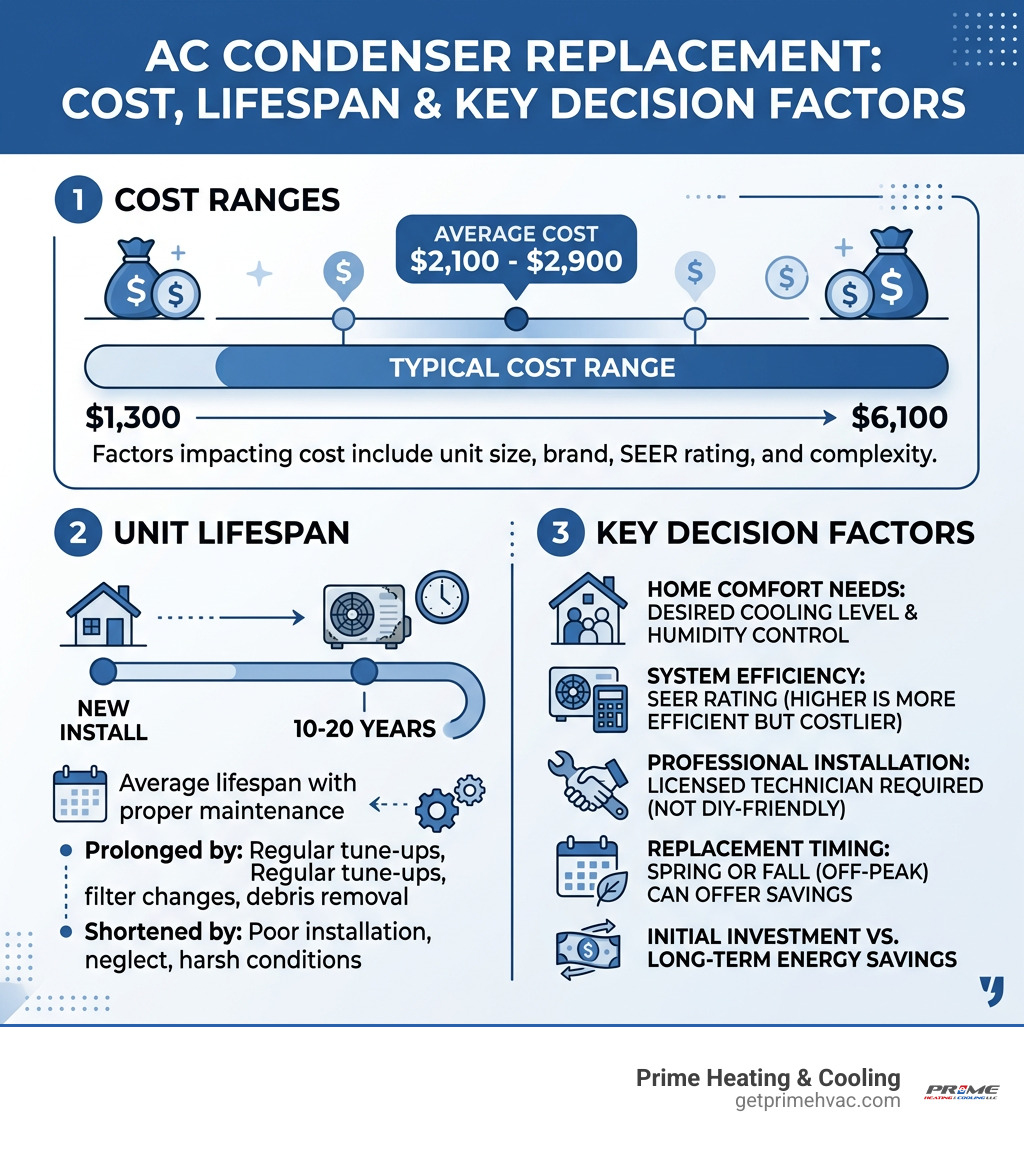
| Topic | Key Facts |
|---|---|
| Average cost | $2,100–$2,900 |
| Typical cost range | $1,300–$6,100 |
| Unit lifespan | 10–20 years |
| Replacement time | 3–5 hours |
| DIY-friendly? | No — requires licensed professional |
| Best time to replace | Spring or fall (off-peak) |
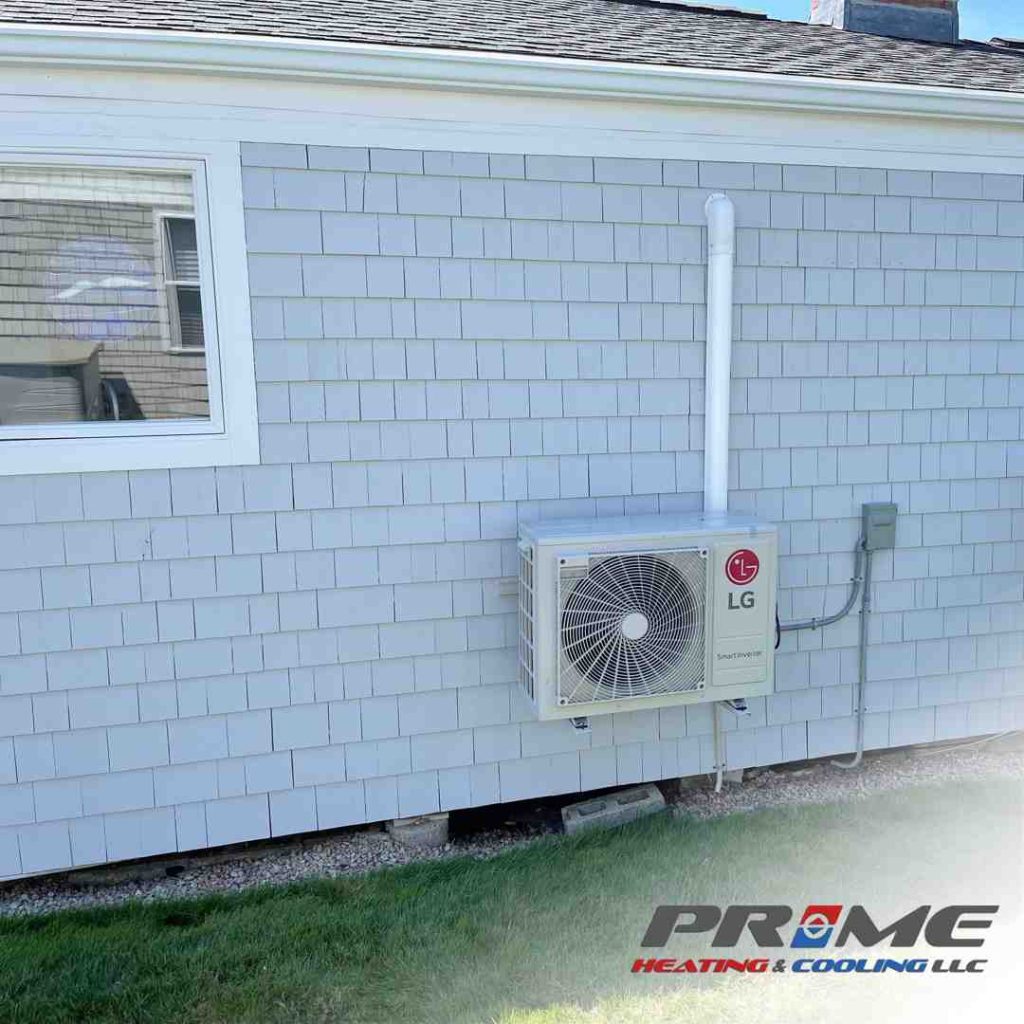
Your AC condenser is the outdoor unit that releases heat from your home. When it fails, your entire cooling system stops working. And in New England, where summers can be brutally humid, that’s a serious problem.
Most homeowners don’t think about their condenser — until it breaks down on the hottest day of the year. By then, you’re facing emergency service rates and a decision you haven’t had time to research.
This guide gives you the clear, honest cost breakdown you need to make a smart decision — without the pressure.
I’m Tyler Steiner, CEO and founder of Prime Heating & Cooling, and I’ve overseen hundreds of AC condenser replacement jobs across Rhode Island and Massachusetts. That hands-on experience with everything from sizing and refrigerant handling to matched system installs shapes every recommendation in this guide.
Understanding the Cost of AC Condenser Replacement

When we talk about the cost of an AC condenser replacement, we aren’t just looking at the price tag of a metal box sitting in your yard. The condenser is the heart of your outdoor cooling system. It houses the compressor (the “engine”), the condenser coils, and the fan motor. Because these components work under high pressure and intense heat, replacing them requires precision, specialized tools, and certified expertise.
In our experience serving neighbors from Warwick to North Smithfield, we’ve seen that the total investment varies significantly based on the specific needs of the home. Nationally, homeowners see a wide range of prices, but the most common projects fall into a middle ground that balances quality with value.
Unit Tonnage and Capacity
The “size” of an AC unit isn’t measured in inches, but in tons. This refers to the unit’s ability to remove heat from your home. A 1.5-ton unit is typically sufficient for a small home or apartment, while a 5-ton unit is required for large multi-story residences. Getting the size right is critical; a unit that is too small will run constantly and fail prematurely, while one that is too large will “short cycle,” leading to humidity issues and uneven temperatures.
SEER2 Ratings and Efficiency
Efficiency is measured by the Seasonal Energy Efficiency Ratio (SEER2). Higher SEER2 ratings mean the unit uses less electricity to provide the same amount of cooling. While high-efficiency units have a higher upfront cost, they often pay for themselves through lower monthly utility bills—especially during those muggy Rhode Island Julys.
Labor and Local Expertise
Labor usually accounts for a significant portion of the total bill. A standard AC condenser replacement takes a professional crew between three and five hours. This includes recovering the old refrigerant (which is legally required and environmentally critical), removing the old unit, brazing the new connections, and vacuum-testing the system. If your unit is in a difficult-to-reach spot, such as a rooftop or a cramped crawlspace, labor costs will naturally trend higher.
Factors Influencing Your AC Condenser Replacement Quote
Beyond the basic size of the unit, several variables can shift your final estimate. Understanding these helps you compare quotes more effectively.
- Brand Quality: Just like cars, some HVAC brands are built for longevity and whisper-quiet operation, while others are budget-friendly. Premium brands often offer better internal components and more robust cabinets to withstand New England winters.
- Coil Types: Most modern units use finned-tube coils, but some high-efficiency models utilize micro-channel coils. Micro-channel coils are smaller and use up to 50% less refrigerant, but they can be more specialized to repair if a leak occurs.
- Accessibility: Is your unit located on a steep hill in Scituate or tucked behind a narrow alley in the East Side of Providence? Accessibility impacts how many technicians are needed and how long the job takes.
- Refrigerant Transitions: This is a major factor right now. The industry is transitioning away from R-410A toward newer, more environmentally friendly refrigerants like R-32. Older systems using R-22 are increasingly expensive to service because that refrigerant is no longer produced. If your system is old enough to use R-22, a full AC condenser replacement is almost always the most logical financial move.
- Permits: In many Rhode Island municipalities, a mechanical permit is required to ensure the installation meets local safety codes. These permits typically involve a small fee and an inspection.
For a deeper dive into current national trends, you can explore this guide on AC condenser replacement costs.
Repair vs. AC Condenser Replacement: Making the Right Choice
One of the most common questions we get in Johnston and Coventry is: “Can’t you just fix it?” Sometimes, the answer is yes. If you have a blown capacitor or a faulty fan motor, a repair is a quick and affordable way to get back to cooling.
However, if the “sealed system” is compromised—meaning the compressor has failed or the coils have developed significant leaks—the math changes. Replacing a compressor can be incredibly labor-intensive and expensive. We often recommend the “50% Rule”: if the cost of the repair is more than 50% of the cost of a new unit, and the system is over 10 years old, replacement is the wiser investment.
You should also look for signs that it is time for AC replacement, such as:
- Age: If the unit is 12–15 years old, it is nearing the end of its reliable lifespan.
- Frequent Breakdowns: If we’re seeing you more than once a season for repairs, those costs are adding up to a new unit anyway.
- Sky-High Energy Bills: An aging condenser loses efficiency, forcing it to work harder for less cooling.
- Loud Noises: Grinding or squealing sounds often indicate a failing compressor or motor.
If you are dealing with a leak, you might consider condenser coil repair to restore efficiency, but always weigh that cost against the long-term reliability of a brand-new unit.
The Professional Installation Process
Replacing a condenser isn’t as simple as unplugging a toaster. It is a complex mechanical and chemical process. Here is what we do during a professional installation:
- Refrigerant Recovery: We use a specialized machine to safely pump out the old refrigerant. It is illegal and harmful to the environment to simply vent this into the air.
- Disconnection: We disconnect the electrical high-voltage lines and the copper refrigerant lines.
- Placement: The new unit is set on a level pad. We often install a new pad to ensure the unit stays level, preventing oil from pooling in the compressor.
- Brazing: We weld (braze) the copper lines to the new unit using a nitrogen purge to prevent internal oxidation.
- Vacuum Testing: We use a vacuum pump to remove all air and moisture from the lines. A deep vacuum ensures the system is leak-free and that the refrigerant will perform at peak efficiency.
- Charging: We weigh in the exact amount of refrigerant specified by the manufacturer.
- System Calibration: We test the pressures, temperatures, and airflow to ensure everything is running perfectly.
For a comprehensive look at what goes into a high-quality job, check out our ultimate guide to air conditioning repair. You can also see a general overview of the mechanical steps involved in condenser replacement to understand why this is a job for the pros.
Maximizing Efficiency and Longevity
Once your new AC condenser replacement is complete, you want it to last as long as possible. The average unit lasts 10 to 20 years, but that range depends heavily on how you treat it. In the salt air of coastal Rhode Island or the pollen-heavy springs of North Scituate, maintenance is your best friend.
Preventative Maintenance
Think of maintenance as an oil change for your home. By scheduling regular AC maintenance, you ensure that small issues—like a loose wire or a slightly dirty coil—don’t turn into a catastrophic compressor failure.
Airflow Clearance
Your condenser needs to “breathe.” It works by pulling air through the coils to release heat. If it’s surrounded by overgrown bushes, tall grass, or stacked firewood, it can’t shed heat efficiently. We recommend maintaining at least 24 inches of clear space on all sides of the unit.
Seasonal Timing
If you know your unit is on its last legs, don’t wait for a 95-degree day in July to replace it. HVAC companies are busiest during the peak of summer and winter. By scheduling your replacement in the spring or fall, you may find better availability and occasionally seasonal promotions that can save you money.
Why Matched Systems Matter
One of the biggest mistakes homeowners make is replacing the outdoor condenser while leaving an ancient indoor evaporator coil in place. This is what we call a “mismatched system.”
Modern condensers are designed to work in tandem with specific indoor components. If you pair a high-efficiency 16-SEER2 condenser with an old 10-SEER indoor coil, you won’t actually get 16-SEER2 performance. In fact, you might shorten the life of the new compressor because the pressures and oil types won’t match perfectly.
Mismatched systems often lead to:
- Reduced cooling capacity.
- Higher energy consumption.
- Voided manufacturer warranties.
- Premature common AC problems.
When we provide a quote for AC condenser replacement, we always evaluate the indoor coil to ensure your investment is protected.
Maintenance Tips to Prevent Premature Failure
You don’t need a toolbox to help your AC unit live a long life. Here are a few simple steps every homeowner in Providence or Smithfield can take:
- Debris Removal: After a storm, check the unit for sticks, leaves, or “helicopter” seeds that can clog the fins.
- Filter Changes: It sounds simple, but a clogged indoor filter restricts airflow, which puts immense strain on the outdoor condenser. Regular AC filter replacement is the easiest way to prevent a breakdown.
- Annual Inspections: Have a pro look at the electrical contacts and refrigerant levels once a year.
- Watch for Red Flags: Don’t ignore signs your air conditioner needs repair. A small refrigerant leak is much cheaper to fix than a burnt-out motor caused by low pressure.
- Coil Cleaning: Gently rinse the outdoor coils with a garden hose (not a pressure washer!) once a year to remove dust and pollen.
Conclusion: Expert Cooling Solutions in Rhode Island
At Prime Heating & Cooling, we know that an AC condenser replacement is a big decision. It’s about more than just money; it’s about the comfort and safety of your family. With over 20 years of experience serving the Rhode Island community—from the historic streets of the East Side to the quiet neighborhoods of Lincoln—we pride ourselves on delivering honest advice and energy-efficient solutions.
We don’t believe in high-pressure sales. Our goal is to provide you with the facts, the best equipment for your budget, and the skilled installation required to make that equipment last for decades. Whether you need an emergency repair or a completely new system, our team is available 24/7 to keep you cool.
If you’re worried about your AC’s performance or just want to know your options, we’re here to help. Explore more about our HVAC services in Rhode Island and let us help you find the cold, hard truth about the best cooling solution for your home.