
Why Your Home’s Plumbing System Matters More Than You Think
Plumbing System Replacement is the process of removing and replacing all or most of the pipes in your home with new, modern materials. Here’s what you need to know:
When Replacement Is Needed:
- Frequent leaks throughout the house
- Discolored or rusty water from taps
- Low water pressure in multiple fixtures
- Visible pipe corrosion or damage
- Homes built before 1986 (potential lead pipes)
- Properties with polybutylene or galvanized steel pipes
Typical Costs and Timeline:
- Cost Range: $3,000 to $16,000 for a 2,000 sq ft home
- Duration: 2-5 days of active work
- Materials: Copper ($4-$12/linear foot), PEX ($0.50-$2/linear foot), or CPVC ($0.50-$3/linear foot)
Key Benefits:
- Improved water pressure and quality
- Elimination of contamination risks
- Increased property value
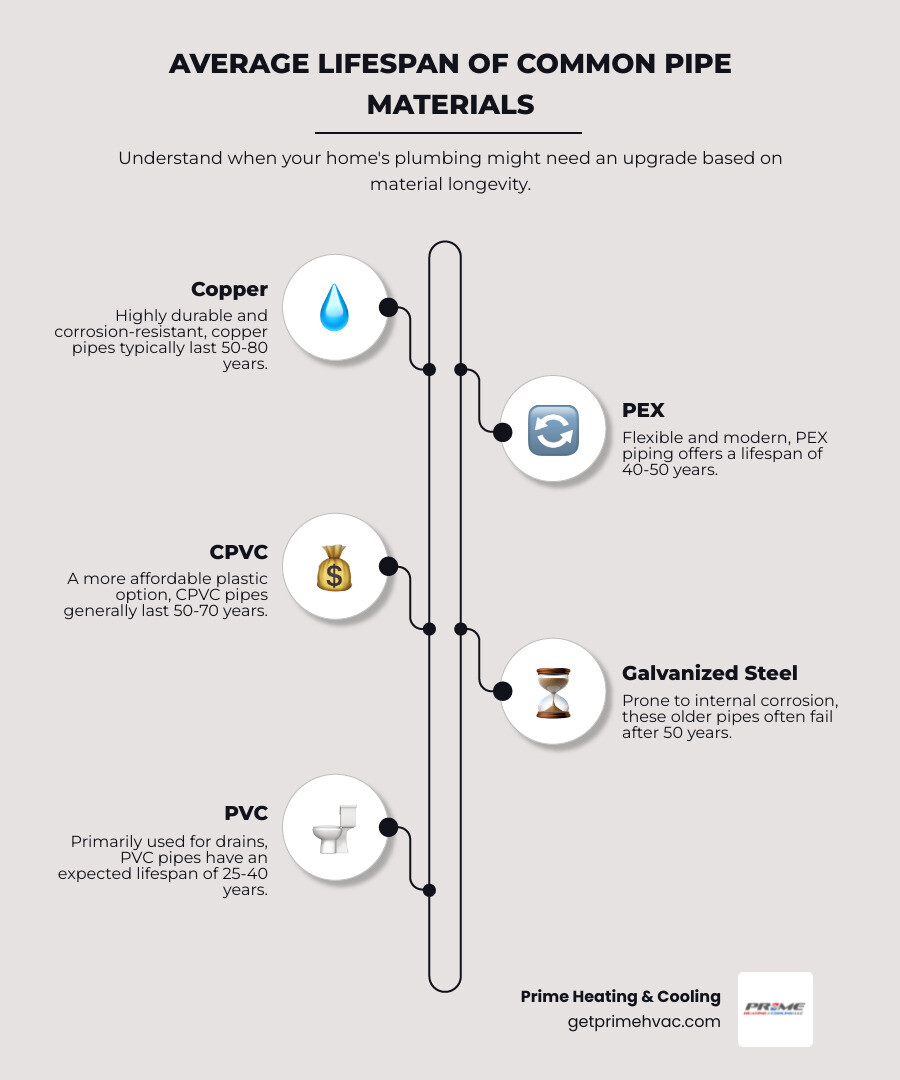
- 40-80+ year lifespan depending on materials
Your home’s plumbing system is like its circulatory system—when it fails, everything stops working. Unlike a dripping faucet you can ignore for a few weeks, a failing pipe network demands immediate attention.
Most plumbing systems weren’t designed to last beyond 50 years. If your home was built in the 1970s or earlier, you’re likely living with galvanized steel or even lead pipes that are well past their prime. These aging materials don’t just reduce water pressure—they can contaminate your drinking water and cause thousands of dollars in hidden water damage.
The good news? Modern pipe materials like PEX and copper can last 40 to 80 years with minimal maintenance. They resist corrosion, handle freeze-thaw cycles, and provide consistent water pressure throughout your home.
I’m Tyler Steiner, CEO of Prime Heating & Cooling, and I’ve spent over a decade helping New England homeowners steer complex infrastructure upgrades including Plumbing System Replacement. Through hundreds of repiping projects, I’ve seen how proactive replacement prevents catastrophic failures and protects long-term home value.
Signs and Materials for a Successful Repipe
Ignoring subtle plumbing warnings can lead to costly repairs. For homeowners in Providence, Johnston, or Warwick, knowing when to opt for a Plumbing System Replacement is essential. Most systems aren’t designed to last beyond 50 years. If your home was built in the 1960s or 70s, it likely contains galvanized steel pipes that are now corroding from the inside out.

Low water pressure is a common sign of mineral buildup and rust. Another symptom is discolored water; if your tap water appears rusty or brown, it indicates internal corrosion affecting your water quality. Frequent leaks are also a major red flag. Constant patching of pinhole leaks or damp spots suggests the entire system is deteriorating. These issues can lead to mold growth and high water bills.
Outdated materials like polybutylene pipes (used in the 70s-90s) are prone to premature failure. Additionally, homes built before 1986 may contain lead pipes, posing serious health hazards. Replacing these materials is vital for your family’s safety and your home’s marketability. While hard water can accelerate scale buildup, the decision between a repair and a full replacement depends on the extent of the damage. For widespread symptoms, a full repipe is the most cost-effective long-term solution. Our team provides comprehensive Plumbing Services RI to address these needs.
Choosing Modern Pipe Materials
When repiping your home in North Providence, Lincoln, or Coventry, choosing the right material is crucial for longevity and performance.
Copper Pipes:
- Pros: Highly durable, lasts up to 80 years, bacteria-resistant, and non-toxic. Handles extreme temperatures well.
- Cons: Most expensive ($4-$12/linear foot) and labor-intensive to install.
- Our Take: A premium choice for water supply lines where purity is paramount.
PEX (Cross-linked Polyethylene):
- Pros: Flexible, fewer connections (less leak risk), resistant to corrosion and freezing. Affordable ($0.50-$2/linear foot).
- Cons: 40-50 year lifespan; sensitive to UV light.
- Our Take: Excellent for New England homes due to freeze resistance and easy installation.
CPVC (Chlorinated Polyvinyl Chloride):
- Pros: Affordable ($0.50-$1/linear foot), chemical-resistant, and lasts 50-70 years.
- Cons: Less flexible than PEX and can crack under extreme impact.
- Our Take: A solid, budget-friendly option for supply lines.
ABS (Acrylonitrile Butadiene Styrene):
- Pros: Durable, lightweight, and resistant to chemical corrosion. Ideal for waste lines.
- Cons: Not for potable water; can become brittle in extreme cold.
- Our Take: Our top recommendation for drain lines to replace old cast iron.
We consider your budget and local building codes in North Scituate and the East Side of Providence to provide the best solution. For more advice, see our 7 Plumbing Tips to Prevent Disasters in Rhode Island.
The Step-by-Step Process of Whole-House Repiping
A Plumbing System Replacement is a manageable project with the right team. At Prime Heating & Cooling, we follow a meticulous approach for Rhode Island homes:
- Professional Inspection: We assess your current pipes, water quality, and pressure to provide an accurate estimate custom to your home.
- Permit Acquisition: We handle all paperwork to ensure compliance with local Rhode Island codes.
- Strategic Wall Access: We make precise, discreet openings in walls and ceilings to reach hidden plumbing lines.
- Old Pipe Removal: We carefully remove degraded materials, including hazardous lead or corroded steel.
- New Pipe Installation: Our plumbers install PEX, copper, or CPVC, routing lines for optimal pressure and minimal connections.
- System Testing: We perform pressure tests and leak detection before closing any walls.
- Cleanup: We tidy the work area and can coordinate with contractors for drywall restoration.
This investment pays dividends in comfort and safety. We are dedicated to providing Plumbing Installations & Repairs with maximum efficiency.
Preparing for Your Plumbing System Replacement
Preparation can reduce stress during the project. The most significant disruption is the temporary water shut-off, which can last from a few hours to a full day. We recommend keeping bottled water on hand. Expect some noise and dust; we suggest covering furniture and valuables in work areas. While you can stay in your home, some families choose temporary relocation to avoid the construction zone. A typical 2,000 sq ft home takes 2-5 days of active labor.
Post-Installation Testing and Maintenance
After installation, we perform:
- Pressure Testing: Ensuring the system is airtight and watertight.
- Leak Verification: Visually inspecting every joint while running fixtures.
- Fixture Efficiency: Verifying consistent water pressure throughout your home.
Preventative maintenance, like flushing your water heater, extends the life of your new system. Learn more in our guide on Understanding Water Heaters in Your Home.
The Financial Impact of Plumbing System Replacement
A Plumbing System Replacement is a significant investment. In Rhode Island, most projects range from $3,000 to $16,000 for a 2,000 sq ft home. While a single repair costs around $250, frequent issues with an aging system quickly add up. Proactive replacement is often more cost-effective than continuous patching.
Cost Factors:
- Labor: Accounts for ~70% of the cost ($45-$200/hour). Complexity and accessibility impact total hours.
- Materials: PEX and CPVC are budget-friendly ($0.50-$2/ft), while copper is premium ($4-$12/ft).
- Permits & Disposal: Permits range from $50-$500, and disposing of old heavy pipes can add $1,000-$5,000.
- Restoration: Drywall repair and painting are typically separate costs.
While repiping doesn’t “add” value like a kitchen remodel, it protects your property value. Reliable plumbing is an expectation for buyers; old pipes can force price reductions. Professional financial advice can also help manage large home investments. Scientific research on the value of professional financial advice for home equity suggests it can optimize your overall financial picture.
Budgeting for Your Plumbing System Replacement
- Linear Foot Costs: Choose materials based on your budget. PEX is the most cost-effective for supply lines.
- Accessibility: Clearing areas under sinks or in basements can reduce labor time.
- Partial Repiping: If only certain sections are failing, a partial repipe may be a viable, lower-cost strategy.
- Financing: Options include personal loans, home equity loans, or a HELOC. A HELOC offers a revolving credit line using your home equity. More info about home equity lines of credit for financing can help you decide.
Frequently Asked Questions about Repiping
How long does a typical repiping project take?
For a 2,000 square foot home, expect two to three days of active labor. If external lines (like the main water line) need replacement, it may take up to a week. We provide a detailed timeline before starting.
Can I stay in my home during the replacement?
Yes, but be prepared for water shut-offs and construction noise. Many homeowners stay with friends or plan the project during a vacation to avoid the inconvenience of being without running water.
Does repiping increase my home’s resale value?
It protects your value rather than increasing it. Functioning plumbing is a buyer expectation. Proactive replacement prevents price drops during inspections and demonstrates the home is well-maintained, ensuring a smoother sale.
Conclusion
A comprehensive Plumbing System Replacement is more than just a repair; it’s a long-term investment in the health, safety, and value of your home. From addressing persistent leaks and low water pressure to eliminating the risks associated with outdated and corroded pipes, a repipe ensures your home’s most vital system functions flawlessly for decades to come.
We’ve walked through the signs that indicate a need for replacement, explored the benefits of modern pipe materials like PEX and copper, and demystified the step-by-step process. We understand the financial considerations and the temporary disruptions involved, and we’re committed to making the experience as smooth and beneficial as possible for our neighbors across Rhode Island, from Providence to Smithfield, and all points in between.
At Prime Heating & Cooling, we bring over 20 years of experience to every project. Our skilled technicians are experts in plumbing installations and repairs, offering reliable, energy-efficient solutions with a customer-first approach. We’re available 24/7 for emergencies, because we know plumbing issues don’t keep office hours. When you choose us, you’re choosing professional peace of mind and a plumbing system built to last.
Don’t let an aging plumbing system compromise your home or your family’s comfort. Take the proactive step towards a more reliable, efficient, and safer home. Schedule your plumbing system consultation today and let us help you secure your home’s future.