
Why Heating System Installation Matters for Rhode Island Homeowners
Heating system installation is a significant investment that impacts your home’s comfort, energy bills, and safety for years to come. Here’s what you need to know:
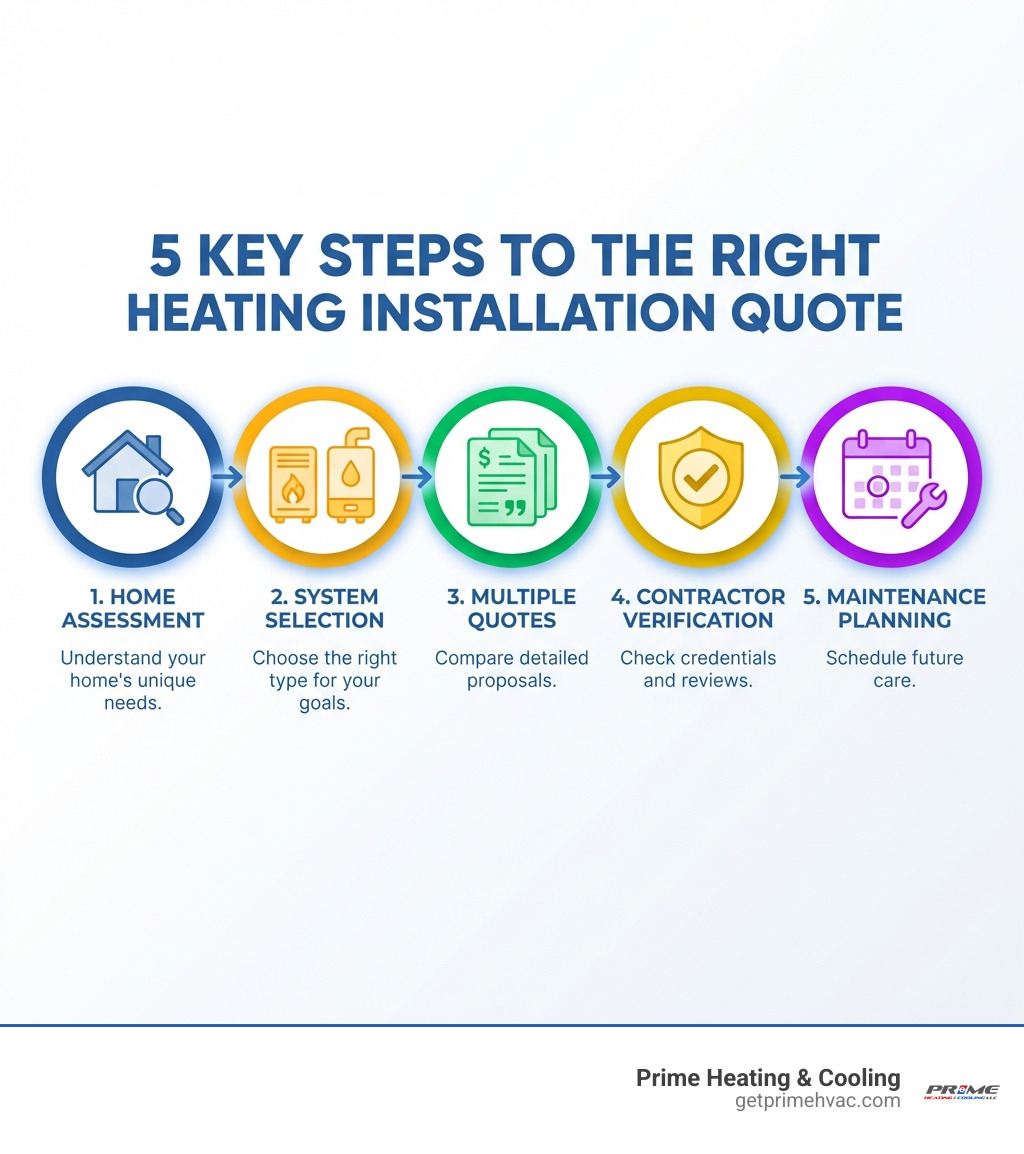
Key Steps for Getting the Right Heating Installation Quote:
- Assess Your Home’s Needs – Understand your home size, insulation, existing ductwork, and fuel type options before requesting quotes
- Choose the Right System Type – Select from furnaces, boilers, or heat pumps based on your climate, budget, and efficiency goals
- Get Multiple Professional Quotes – Compare detailed quotes that include equipment specs, labor costs, permits, and warranty coverage
- Verify Contractor Credentials – Check licensing, insurance, certifications, and local reviews before hiring
- Plan for Post-Installation Care – Register warranties and schedule regular maintenance to protect your investment
When the cold winter months hit Rhode Island, there’s nothing quite as crucial as having a reliable heating system. Yet many homeowners find themselves overwhelmed when it’s time to replace or install new heating equipment.
The difference between a heating system that keeps your family comfortable for 15-20 years and one that breaks down repeatedly often comes down to two things: choosing the right system and getting it installed properly. This checklist will walk you through exactly what to look for in installation quotes, how to compare contractors, and what questions to ask before signing any contracts.
I’m Tyler Steiner, founder of Prime Heating & Cooling, and I’ve overseen hundreds of heating system installations across Rhode Island and Massachusetts. After graduating from the New England Institute of Technology with advanced HVAC training, I’ve seen how proper planning and professional installation make all the difference in system performance and longevity.
Step 1: Pre-Quote Homework – Know Your Needs
Before you even think about getting quotes for a heating system installation, the most important step is to understand your own home’s specific needs. This isn’t just about picking the flashiest new model; it’s about making an informed decision that will bring comfort and efficiency for years. We encourage our Rhode Island neighbors to do a little homework first. Understanding your home’s unique characteristics will empower you during the consultation process and ensure you get a system perfectly custom for you.
When considering a new heating system, it’s wise to think beyond the initial purchase price. We’re talking about long-term savings on energy bills, consistent comfort, and avoiding costly repairs down the line. A thorough home assessment, combined with a clear budget, will guide you toward the best solution. For more detailed insights into making this crucial decision, we recommend exploring our guides on The Ultimate Guide to Choosing the Right Heating Replacement System and Fall Home Comfort: Choosing the Right Heating.

Understanding Your Heating System Options
Rhode Island homeowners have several excellent options for heating their homes, each with its own benefits. We’ll help you steer the choices:
- Furnaces: The most common systems, furnaces heat air and distribute it via ducts. They can run on natural gas, oil, or electricity, with gas being a popular, cost-effective choice. Look for a high AFUE (Annual Fuel Utilization Efficiency) rating for better energy savings. We offer comprehensive Furnace Installation, Repair Services for all types.
- Boilers: Boilers use hot water or steam to provide consistent, radiant heat through radiators or in-floor tubing, making them ideal for Rhode Island’s cold climate. They are also great for zoning, which allows for independent temperature control in different areas. We specialize in Boiler Installation, Repair Services.
- Heat Pumps: These all-in-one systems provide both heating and cooling. In winter, they move heat from the outside air indoors, and in summer, they reverse the process. Modern cold-climate models are efficient even in freezing temperatures, making them a great year-round solution for Rhode Island. Efficiency is measured by SEER2 (cooling) and HSPF2 (heating). We provide expert Heat Pump Installation services.
Key Factors for Your Home’s Heating Needs
Choosing the right heating system isn’t a one-size-fits-all decision. Several critical factors about your home will influence which system is best for you:
- Home Size & Layout: A larger home naturally requires a more powerful system. But it’s not just square footage; ceiling height, the number of rooms, and the overall layout all play a role.
- Insulation Levels: A well-insulated home retains heat better, meaning a smaller system might suffice, leading to lower energy consumption. Poor insulation means more heat loss and a higher demand on your system.
- Existing Ductwork Condition: If you’re considering a forced-air system (like a furnace or central heat pump), the condition of existing ducts is crucial. Leaks or damage can lead to poor heating and higher HVAC bills.
- Local Climate: While all of Rhode Island experiences cold winters, the specific system choice can be optimized for our climate. Heat pumps, for instance, are increasingly viable thanks to technological advancements.
- Fuel Type Availability: The availability and cost of natural gas, oil, or electricity will heavily influence your decision. We also assist with oil-to-natural gas conversions.
For more information on these considerations, check out our HVAC Installation Guide.
The Importance of Sizing and Energy Efficiency
Getting the right size of heating system is paramount for comfort, efficiency, and longevity.
- Manual J Load Calculation: This is the industry standard for correctly sizing heating and cooling equipment. A professional performs a detailed calculation based on your home’s square footage, insulation, windows, and local climate to match the system to your home’s heating load.
- BTUs: British Thermal Units (BTUs) measure heating capacity. The higher the BTU, the more heat a system can produce. But bigger isn’t always better!
- AFUE Ratings: For furnaces and boilers, the AFUE (Annual Fuel Utilization Efficiency) rating indicates how efficiently fuel is converted into heat. A 90% AFUE rating means 90 cents of every dollar spent on fuel heats your home.
- SEER2 & HSPF2 Ratings: For heat pumps, SEER2 (cooling efficiency) and HSPF2 (heating efficiency) ratings indicate greater energy efficiency and lower utility bills.
- ENERGY STAR®: Look for systems with the ENERGY STAR® label. These products meet strict energy efficiency guidelines set by the U.S. Environmental Protection Agency, ensuring they use less energy and save you money.
- Short Cycling Risk: An oversized system will “short cycle” (turn on and off too frequently), causing wear and tear, wasting energy, and creating uneven temperatures. An undersized system will run constantly without adequately heating your home. Proper sizing is crucial to prevent these issues, extend your system’s lifespan, and optimize performance.
Investing in an energy-efficient heating system for your Rhode Island home is one of the smartest decisions you can make. It not only reduces your carbon footprint but also significantly lowers your monthly energy bills. Learn more about your options for Energy Efficient Heating and Cooling Systems on our website.
Step 2: The Professional Heating System Installation Process
Once you’ve done your homework and have a good idea of what your home needs, the next step is the actual heating system installation. This is where expertise truly matters. A professional installation ensures your system operates safely, efficiently, and reliably for its entire lifespan. We take pride in our meticulous approach to every installation, treating your home with the care it deserves.
From the initial consultation to the final walkthrough, our process is designed to be as smooth and transparent as possible. It involves careful site preparation, the safe removal of your old system, precise placement of the new unit, and expert connection of all necessary components. For a deeper dive into what goes into a furnace installation, our Furnace Install Guide: What To Know About Furnace Installation provides valuable insights.

What to Expect on Installation Day
A typical heating system installation takes one to two days. Complex projects involving ductwork modifications or fuel type conversions may take longer. We work efficiently and keep you informed throughout the process.
Here’s a general overview of what to expect:
- Protecting Your Home: Our team uses drop cloths and shoe covers to keep your home clean.
- Disconnecting and Removing the Old Unit: We safely disconnect and remove your old system, handling all electrical, gas, and refrigerant lines according to regulations.
- New vs. Replacement Differences: A new installation in a home without existing infrastructure requires more work (new gas lines, ductwork) than a replacement that uses existing connections.
- Placement of the New Unit: The new unit is carefully positioned for optimal performance and maintenance access. Outdoor units are liftd to prevent water issues and improve airflow.
- Connecting Electrical, Gas, and Venting: Our experts safely connect all electrical, fuel, and venting components, adhering strictly to local building codes and permit requirements.
- Testing and Calibration: After installation, we conduct rigorous tests for leaks, airflow, and proper ignition, and calibrate the thermostat to ensure optimal performance.
For specific details on heat pump installations, our Heat Pump Installation page offers more information.
Your Role in a Successful Heating System Installation
While our technicians handle the heavy lifting, a little preparation on your part can make the installation process even smoother:
- Clearing the Work Area: Please clear any obstacles around where the heating system will be installed and along pathways our team will use.
- Securing Pets: For everyone’s safety, please keep pets in a separate, secure area away from the installation zone.
- Asking Questions: We encourage you to ask any questions you have. Our technicians are happy to explain what they’re doing.
- Final Walkthrough and System Operation Overview: At completion, our technician will walk you through your new system’s operation, thermostat use, and basic maintenance like changing filters. We want you to feel confident with your new heating system.
Post-Installation: Warranty and Maintenance Expectations
Once your new heating system is installed, our commitment to your comfort continues. Understanding your warranty and planning for regular maintenance are key to protecting your investment.
- Warranty Registration: Most new systems come with a manufacturer’s limited parts warranty (often 10 years), which must be registered to be activated. We will guide you through this.
- Parts and Labor Coverage: Manufacturer warranties cover parts; labor warranties are typically provided by the installer. We stand behind our work with our own labor warranty.
- Manufacturer vs. Installer Warranty: The manufacturer covers equipment defects, while the installer’s warranty covers workmanship. Improper installation can void a manufacturer’s warranty, which is why professional installation is crucial.
- Maintenance Plans: Regular maintenance is essential for peak efficiency and longevity. We recommend professional service at least once a year. According to Forbes, full HVAC systems benefit from twice-yearly maintenance (fall for heating, spring for cooling). Tune-ups prevent breakdowns, boost efficiency, extend system life, and catch minor issues before they become expensive repairs.
We offer comprehensive Heating Maintenance RI plans to keep your system in top shape. You can also read more about The Importance of HVAC Tune-Ups for Rhode Island Winters.
Step 3: Decoding Quotes and Choosing Your Contractor
You’ve done your research, you know your home’s needs, and you understand the installation process. Now it’s time to gather quotes. This is a critical stage where comparing apples to apples can be tricky, but we’re here to help you steer it. The cheapest quote isn’t always the best value. We always encourage our customers to look beyond the price tag and focus on the overall value, reliability, and expertise offered.
For more guidance on selecting the right service, check out our Expert Tips for Choosing the Right Heating Installation Service for Your Home.
Essential Line Items in a Heating System Installation Quote
A detailed quote for a heating system installation should be transparent and break down all costs. Here’s what you should expect to see:
- Equipment Cost: The price of the unit itself (furnace, boiler, or heat pump), clearly stating the make, model, size (BTUs), and efficiency ratings (AFUE, SEER2/HSPF2).
- Labor Costs: This covers the technician’s time and expertise. The average labor cost to install a furnace can range from $50 – $100 per hour. The quote should provide a clear breakdown or a flat rate.
- Permit Fees: Most areas in Rhode Island require a permit for HVAC installations to ensure work meets safety codes. Your contractor should handle this and include the fee.
- Ductwork Modifications/Installation: Any costs for repairing, modifying, or installing new ductwork should be itemized.
- Warranty Details: The quote should clearly outline both the manufacturer’s parts warranty and the installer’s labor warranty.
- Removal and Disposal Fees: The cost for safely removing and properly disposing of your old equipment should be included.
- Additional Components: This might include new thermostats, air filters, gas lines, or electrical upgrades.
- Total Cost: The final, all-inclusive price.
The total cost of furnace installation can range from $3,800 to $12,000 or more, while a full HVAC system typically costs between $7,000 and $20,000. Always get a detailed quote to avoid surprises.
How to Find and Vet a Qualified HVAC Technician
Choosing the right HVAC contractor is just as important as choosing the right system. In Rhode Island, we know that reputation and trust are built over time. Here’s what to look for:
- Licensing and Insurance: Ensure the contractor is licensed to perform HVAC work in Rhode Island and carries adequate liability insurance. This is non-negotiable and protects you from liability.
- Certification: Look for technicians with certifications like NATE (North American Technician Excellence). NATE certification signifies that technicians have proven, up-to-date knowledge and follow industry best practices.
- Years of Experience: Experience matters. Our team at Prime Heating & Cooling brings 20 years of experience to every job, ensuring we’ve expertly handled every type of installation.
- Local Reputation: Check online reviews and ask for local references. A company with a strong, positive local reputation is a good sign.
- Clear Communication: A good contractor will explain your options, answer your questions, and provide a clear, detailed quote.
For more information on what to look for, visit our pages on What is a Heating Contractor? and Tips for Hiring a Heating Contractor.
DIY vs. Professional Installation: Risks and Rewards
While installing a new heating system might seem like a tempting DIY project to save money, we cannot stress enough that it is absolutely not recommended. The risks far outweigh any perceived rewards.
| Feature | DIY Installation | Professional Installation |
|---|---|---|
| Safety | High risk of gas leaks, carbon monoxide poisoning, electrical fires. | Ensures compliance with safety codes, proper connections, and ventilation. |
| Cost | Apparent upfront savings, but high risk of costly repairs, inefficiency, or full system replacement due to errors. | Higher upfront cost, but long-term savings from efficiency, fewer repairs, and extended lifespan. |
| Efficiency | Often leads to inefficient operation, higher energy bills, and inconsistent heating. | Optimal performance and energy efficiency from correct sizing, installation, and calibration. |
| Warranty | Most manufacturer warranties are voided by DIY installation. | Manufacturer and labor warranties are maintained, protecting your investment. |
| Code Compliance | High risk of violating local building codes, leading to fines and safety hazards. | Ensures all work meets local permits, inspections, and code requirements. |
Heating system installation is a complex job involving gas lines, high-voltage electricity, and ventilation. Attempting a DIY installation is extremely risky and can lead to:
- Serious Safety Hazards: Gas leaks, carbon monoxide poisoning, and electrical fires are life-threatening risks of improper installation.
- Voided Warranties: Most manufacturers void warranties if the system isn’t installed by a licensed professional.
- Higher Long-Term Costs: An incorrect installation leads to inefficiency, higher energy bills, and frequent, costly repairs, often requiring a complete re-installation.
- Code Violations: DIY work often fails to meet local building codes, resulting in fines and safety hazards.
For your safety, comfort, and financial protection, always leave heating system installation to licensed, insured professionals.
Frequently Asked Questions about Heating System Installation
We often get a lot of questions from homeowners in Rhode Island about their heating systems. Here are some of the most common ones we hear:
How much does a new heating system installation cost?
The cost of a new heating system installation varies based on the system type (furnace, boiler, heat pump), home size, efficiency rating, and any necessary ductwork or electrical modifications.
Based on industry averages, you can expect:
- Gas Furnace Installation: From $3,800 to $12,000 or more.
- Oil Furnace Installation: From $2,500 to $10,000.
- Full HVAC System (Heating and Cooling): Typically between $7,000 and $20,000.
These figures include the unit and professional labor. Getting a detailed, itemized quote is crucial to understand exactly what you’re paying for.
How long does the installation take?
A typical heating system installation usually takes one to two days. This can be longer for more complex projects, such as those requiring new ductwork (which can add a day or two) or converting from one fuel type to another. Installing a system in a home for the first time will also take longer than a simple replacement.
We always provide an estimated timeline during your consultation. Many homeowners choose to upgrade their heating system in the fall to be ready for winter. This is often the best time to upgrade, as detailed in our guide Why Fall is the Best Time to Upgrade Your Heating System in Rhode Island.
What are the benefits of a properly installed heating system?
A properly installed heating system offers numerous benefits for your Rhode Island home:
- Energy Efficiency & Lower Bills: A correctly sized and installed system runs at peak efficiency, using less energy and lowering your utility bills.
- Improved Comfort and Air Quality: Enjoy consistent, even heating without cold spots. Modern systems also improve indoor air quality with better filtration.
- Increased Property Value: A new, efficient heating system is an attractive feature for potential homebuyers, signaling reliability and lower energy costs.
- System Longevity and Fewer Repairs: Professional installation reduces wear and tear, extending the system’s lifespan and minimizing the need for costly repairs.
- Peace of Mind: Rest easy knowing your system is installed safely, runs efficiently, and is covered by warranties.
- Health Benefits: A consistently warm home provides a healthier environment, particularly for children, the elderly, and those with health concerns.
Your Partner for a Warm and Comfortable Home
Navigating heating system installation can feel daunting, but with this checklist, you’re well-equipped to make informed decisions. Preparation is key, and professional installation is paramount for your home’s comfort, safety, and long-term efficiency.
At Prime Heating & Cooling, we are dedicated to providing our Rhode Island community with reliable, energy-efficient heating solutions. With 20 years of experience, our skilled technicians prioritize a customer-first approach, ensuring every installation meets the highest standards. We’re here to help you stay warm this winter and for many years to come.
For expert advice and a comprehensive quote for your Rhode Island home, contact us today for your Heating Installation RI. Let us help you Stay Warm This Winter With Our Heating Installation.