Is It Time for an Air Conditioning System Upgrade?
An air conditioning system upgrade could be one of the smartest investments you make in your home’s comfort and efficiency. Here’s a quick look at what it involves:
When to upgrade your AC system:
- Your unit is 10–15 years old or older
- Energy bills are climbing without a clear reason
- You’re dealing with frequent, costly repairs
- Some rooms are too hot while others are fine
- Your system makes strange noises or can’t control humidity
What upgrading gets you:
- 20–40% reduction in energy costs with a high-efficiency system
- Quieter, more consistent comfort throughout your home
- Better indoor air quality
- Fewer breakdowns and lower repair bills
Your home’s heating and cooling system is likely the single biggest energy user in your home — and over a third of all energy consumed in the U.S. goes toward heating and cooling buildings. When an aging system starts losing efficiency, the costs add up fast — on your energy bill, in repair calls, and in daily comfort.
Most AC systems last between 10 and 15 years. After that, even a well-maintained unit starts working harder to deliver less. The good news? Modern high-efficiency systems can cut your cooling costs significantly compared to older equipment — and the upgrade process is more straightforward than most homeowners expect.
I’m Tyler Steiner, CEO and founder of Prime Heating & Cooling, and I’ve spent my career helping New England homeowners navigate every aspect of an air conditioning system upgrade — from choosing the right equipment to ensuring a clean, code-compliant installation. In the sections below, I’ll walk you through everything you need to know to make a confident decision.
Essential Guide to an Air conditioning system upgrade
Deciding to move forward with an air conditioning system upgrade isn’t just about replacing a metal box in your yard; it’s about reimagining your home’s climate. In Rhode Island, from the historic streets of Providence to the coastal breezes of Warwick, our homes face unique challenges—humid summers and freezing winters. When your current system starts to falter, it affects your quality of life.
Recognizing the Signs for Replacement
Knowing when to pull the trigger on a replacement can save you from a “cooling emergency” in the middle of a July heatwave. We often see homeowners waiting until the system completely dies, but there are several warning signs that appear long before the final “clunk.”
- System Age: If your unit has been cooling your home since the early 2010s, it’s likely nearing the end of its functional life. HVAC systems generally last between 10 and 15 years. Beyond this point, mechanical parts wear down, and the technology becomes obsolete.
- The “Repair or Replace” Math: Are you on a first-name basis with your repair technician? If you’ve had two or more major repairs in the last two years, you’re likely throwing good money after bad.
- Skyrocketing Utility Bills: If your electricity usage is jumping but your habits haven’t changed, your AC is likely running longer and harder to achieve the same results. New high-efficiency HVAC systems can reduce energy costs by 20 to 40 percent compared to older equipment.
- Poor Indoor Air Quality: An aging system struggles to filter out dust and manage humidity. If your home feels “sticky” or you notice excessive dust buildup, it’s a sign the system is failing.
For a deeper dive into these red flags, check out our guide on Is It Time for AC Replacement? Signs to Watch For.
It’s also important to look at the “envelope” of your home. Did you know that 30% of heating energy in a house is lost through windows? If your windows are drafty, even the best air conditioning system upgrade will have to work overtime. We always recommend checking your insulation and window seals alongside a system upgrade to ensure you aren’t literally throwing cool air out the window.
Recognizing the Signs for Replacement
Beyond the obvious mechanical failures, your home will often “tell” you when it’s time for a change through subtle (and not-so-subtle) discomforts.
Uneven Cooling Do you have a “hot room”? If your bedroom feels like a sauna while the living room is a walk-in freezer, your system or your ductwork is failing to distribute air properly. This is often a sign of an undersized unit or a blower motor that has lost its strength.
Strange Noises and Odors Your AC should be a background hum, not a heavy metal concert. Banging, squealing, or grinding noises indicate loose parts or a failing compressor. Similarly, musty smells can point to mold growth within the system, while burning smells suggest electrical issues that need immediate attention.
Humidity Issues In Rhode Island, humidity is the real enemy. A properly functioning AC unit doesn’t just cool the air; it dehumidifies it. If your skin feels clammy or you notice moisture on your windows, your system is no longer doing its job. Upgrading to a modern unit ensures a dry, crisp indoor environment.
The Benefits of Upgrading Your Cooling System: Improved Efficiency and Comfort go far beyond just a lower bill; they include peace of mind and a healthier living environment for your family.
Choosing Between Central AC, Ductless, and Heat Pumps
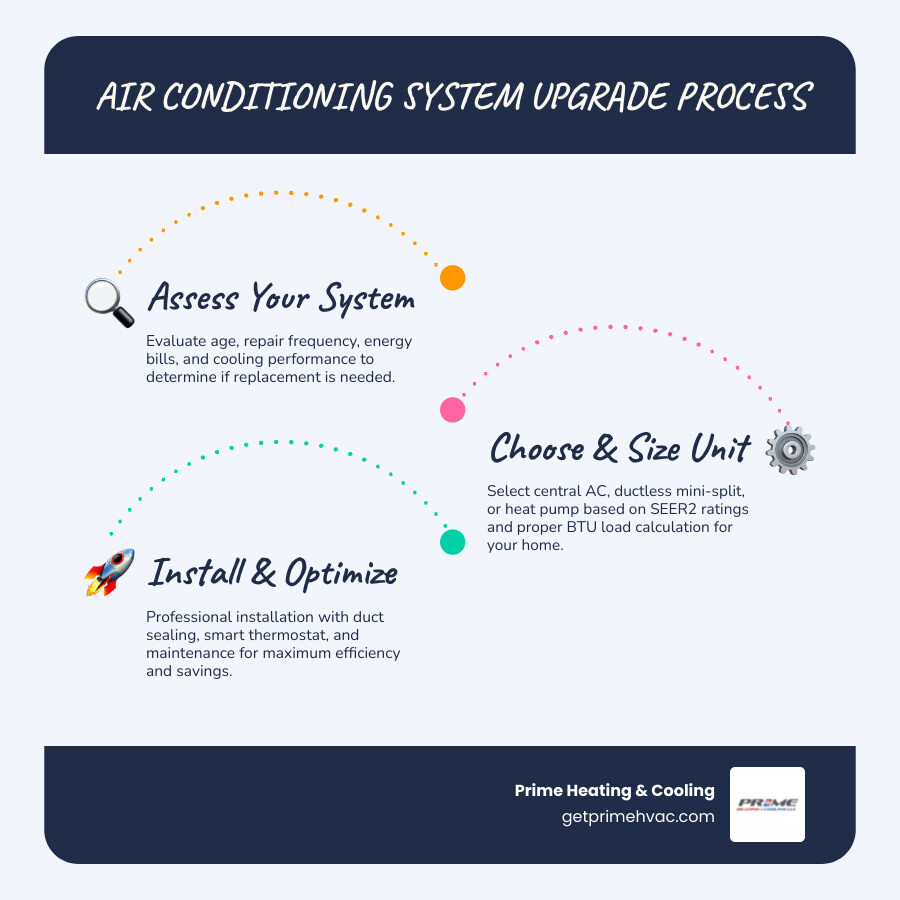
When you decide on an air conditioning system upgrade, you aren’t restricted to the same type of system you had before. Technology has evolved, offering more flexible options for different home layouts.
- Central Air Conditioning (Split Systems): This is the traditional setup with an indoor evaporator coil and an outdoor condenser. It utilizes your home’s existing ductwork to distribute air. It’s a great choice if your ducts are in good shape and you want uniform cooling throughout the house.
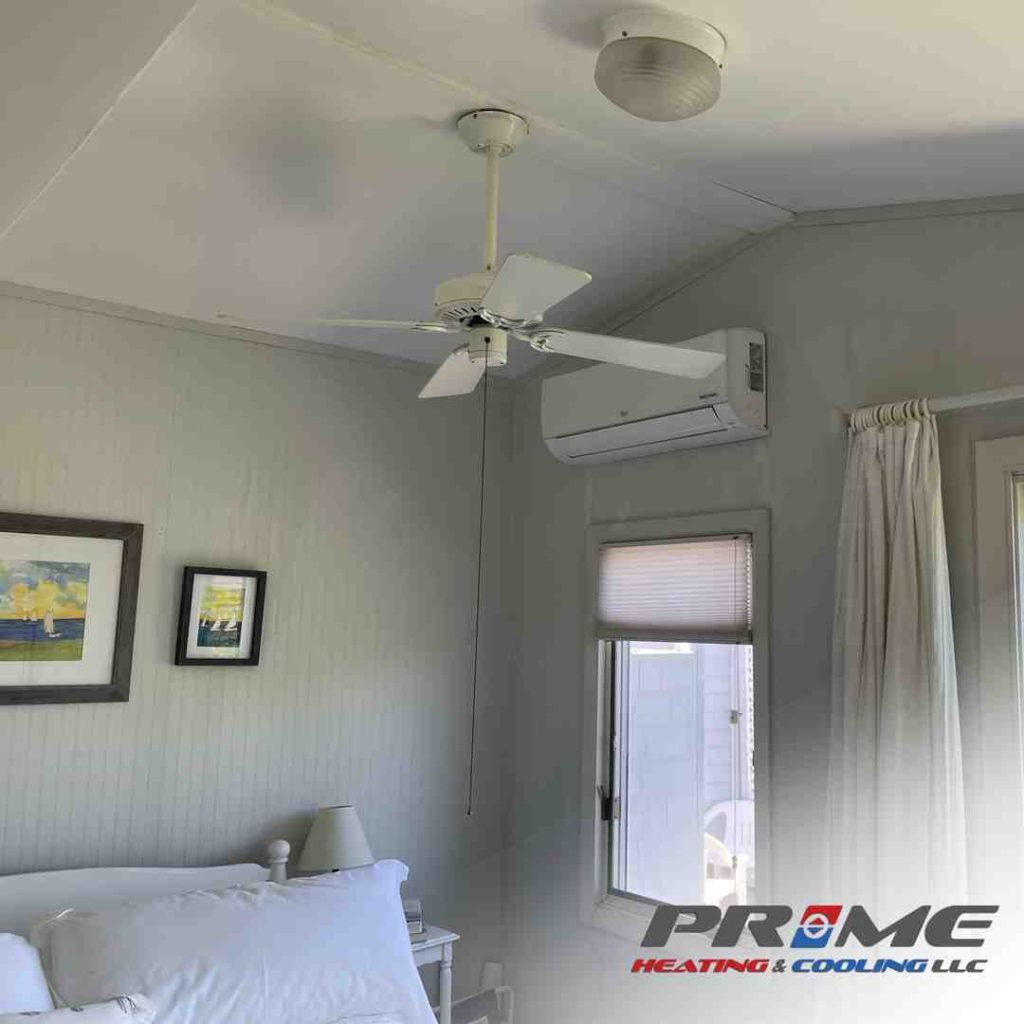
- Ductless Mini-Splits: These are a fantastic trend we’re seeing across the state. They consist of an outdoor unit connected to one or more indoor air handlers mounted on the wall or ceiling. They are perfect for older Rhode Island homes that don’t have room for bulky ductwork. You can learn more about why Ductless AC Systems are a Trend in Rhode Island here.
- Heat Pumps: These are the “Swiss Army Knives” of the HVAC world. Heat pumps serve as both heating and cooling systems. In the summer, they pull heat out of your home. In the winter, they reverse the process to bring heat in. Modern “cold-climate” heat pumps are now efficient enough to handle our chilly New England winters, often serving as a primary heat source.
- Hybrid (Dual-Fuel) Systems: These combine an electric heat pump with a gas furnace. The system automatically switches to the furnace when temperatures drop below a certain point, ensuring maximum efficiency and comfort regardless of the weather.
Understanding SEER2 and Sizing for Your Air conditioning system upgrade
Getting the right “size” for your AC is critical. In the HVAC world, size isn’t about physical dimensions; it’s about cooling capacity, measured in BTUs (British Thermal Units).
The Goldilocks Principle of Sizing
- Too Small: The unit will run constantly, never reaching your desired temperature, leading to high bills and a shortened lifespan.
- Too Large: The unit will “short-cycle,” turning on and off rapidly. This prevents it from properly dehumidifying the air, leaving your home feeling cold but clammy. It also puts immense strain on the compressor.
We use a “Manual J” load calculation to determine the perfect size for your home, considering square footage, ceiling height, insulation quality, and even the direction your windows face.
SEER2 Ratings Explained You’ll see the term “SEER2” frequently during your air conditioning system upgrade. SEER stands for Seasonal Energy Efficiency Ratio. As of 2023, new regulations (SEER2) updated how these systems are tested to better reflect real-world conditions.
- Standard units usually start around 13.4 to 14.3 SEER2.
- High-efficiency units can reach 18, 20, or even 25+ SEER2.
Moving from an old 8-SEER unit to a 16-SEER2 unit can potentially save you 30-40% on your cooling costs. For a deeper breakdown, read our article Understanding SEER Ratings and Their Impact on Your Air Conditioner.
Maximizing Your Investment and Next Steps
An air conditioning system upgrade is a significant investment, but when viewed over 15 years, the return on investment (ROI) is substantial. Not only do you save on monthly utilities, but a modern HVAC system also increases your home’s resale value.
The Installation Process: What to Expect
A typical AC replacement usually takes one full day, though complex multi-zone or ductless installations might take two. Here is the general flow:
- Home Assessment: We inspect your current setup, ductwork, and electrical panel.
- Selection: We help you choose a unit that fits your budget and cooling needs.
- Removal: The old refrigerant is safely recovered, and the old unit is hauled away.
- Preparation: We may install a new pad for the outdoor unit or modify indoor piping.
- Installation: The new indoor and outdoor components are connected.
- Testing: We vacuum the lines, charge the system with refrigerant, and run a full cycle to ensure everything is perfect.
While we can’t give specific numbers here, you can find a detailed breakdown of The Cost of AC Installation in Smithfield: What to Expect to help you budget.
Smart Add-ons and Ductwork Maintenance
While the AC unit is the heart of the system, the “veins” (ductwork) and the “brain” (thermostat) are just as important.
Smart Thermostats
Installing a smart thermostat can save you 10% to 12% on heating and up to 15% on cooling. These devices learn your schedule and can be controlled from your phone, ensuring you aren’t cooling an empty house.
Zoning Systems A zoning system uses dampers in your ductwork to direct air only where it’s needed. This is ideal for two-story homes where the upstairs is always warmer. It allows you to set different temperatures for different areas, significantly improving comfort and efficiency.
Ductwork Health If your ducts are leaky, you could be losing 20-30% of your cooled air to your attic or basement. During an air conditioning system upgrade, it is the perfect time to seal or repair ductwork. In some cases, if the ducts are undersized for a new high-efficiency blower, they may need to be replaced entirely to prevent “static pressure” issues that can damage your new motor.
Check out our guide on Choosing the Right Air Conditioning Unit for Your Home for more tips on these essential add-ons.
Financing and Rebates for Your Air conditioning system upgrade
We know that a sudden system failure can be a shock to the wallet. That’s why we emphasize planning and taking advantage of every available incentive.
- Utility Rebates: Many local utility providers in Rhode Island offer prescriptive rebates for installing high-efficiency equipment like heat pumps or high-SEER AC units. These can often shave hundreds or even thousands of dollars off the total cost.
- Federal Tax Credits: Under current legislation, homeowners can often claim tax credits for energy-efficient home improvements.
- Financing: We offer flexible monthly payment plans to help you get the comfort you need now without the upfront stress. Exploring The Ultimate Guide to HVAC Financing can help you understand your options.
Choosing a Reliable Contractor in Rhode Island
The most important component of your air conditioning system upgrade isn’t the brand of the unit—it’s the quality of the installation. A high-end unit installed poorly will perform worse than a budget unit installed correctly.
At Prime Heating & Cooling, we bring 20 years of experience to every job site. We aren’t just installers; we are your neighbors. We serve communities across Rhode Island, including:
- Providence & East Side
- Warwick & Coventry
- East Greenwich & North Kingstown
- Smithfield, Lincoln, & North Providence
- Scituate & Johnston
We pride ourselves on 24/7 availability because we know that AC units never break down at a “convenient” time. Our approach is customer-first, focusing on energy-efficient solutions that make sense for your specific home and budget.
When you’re ready to start, we recommend reading our Expert Tips for AC Installation Success and learning more about our specific AC Installation services in RI.
Common Mistakes to Avoid
Before you sign a contract, make sure you aren’t falling into these common traps:
- Ignoring the “Why”: If your old system died prematurely, find out why. Was it sized wrong? Was the ductwork restricted? Simply swapping the unit without fixing the underlying issue will lead to the same problem in a few years.
- Skipping the Warranty Registration: Most manufacturers offer a 5-year parts warranty that extends to 10 years only if you register the product within 60-90 days of installation. Don’t leave those extra 5 years of protection on the table!
- Selecting the Lowest Bid: If a quote is significantly lower than others, ask why. Are they pulling permits? Are they licensed and insured? Are they replacing the “line set” (the copper pipes) or just reusing old, potentially contaminated ones?
Maintenance: Protecting Your New Investment
Once your air conditioning system upgrade is complete, the goal is to make it last as long as possible.
- Change Filters: Every 1-3 months. This is the single easiest thing you can do to prevent breakdowns.
- Clear the Area: Keep at least two feet of clearance around your outdoor condenser. Trim back bushes and clear away fallen leaves.
- Annual Tune-ups: Just like a car, your AC needs a professional check-up once a year to clean the coils, check refrigerant levels, and ensure electrical connections are tight.
Upgrading your air conditioning is about more than just staying cool; it’s about taking control of your home’s environment and your financial future. Whether you’re in a classic colonial in North Scituate or a modern condo in Providence, we’re here to ensure your next system is your best one yet. Give us a call at Prime Heating & Cooling, and let’s get your home ready for whatever the Rhode Island summer throws our way!