
Understanding What You’ll Pay for a 2 Ton Mini Split
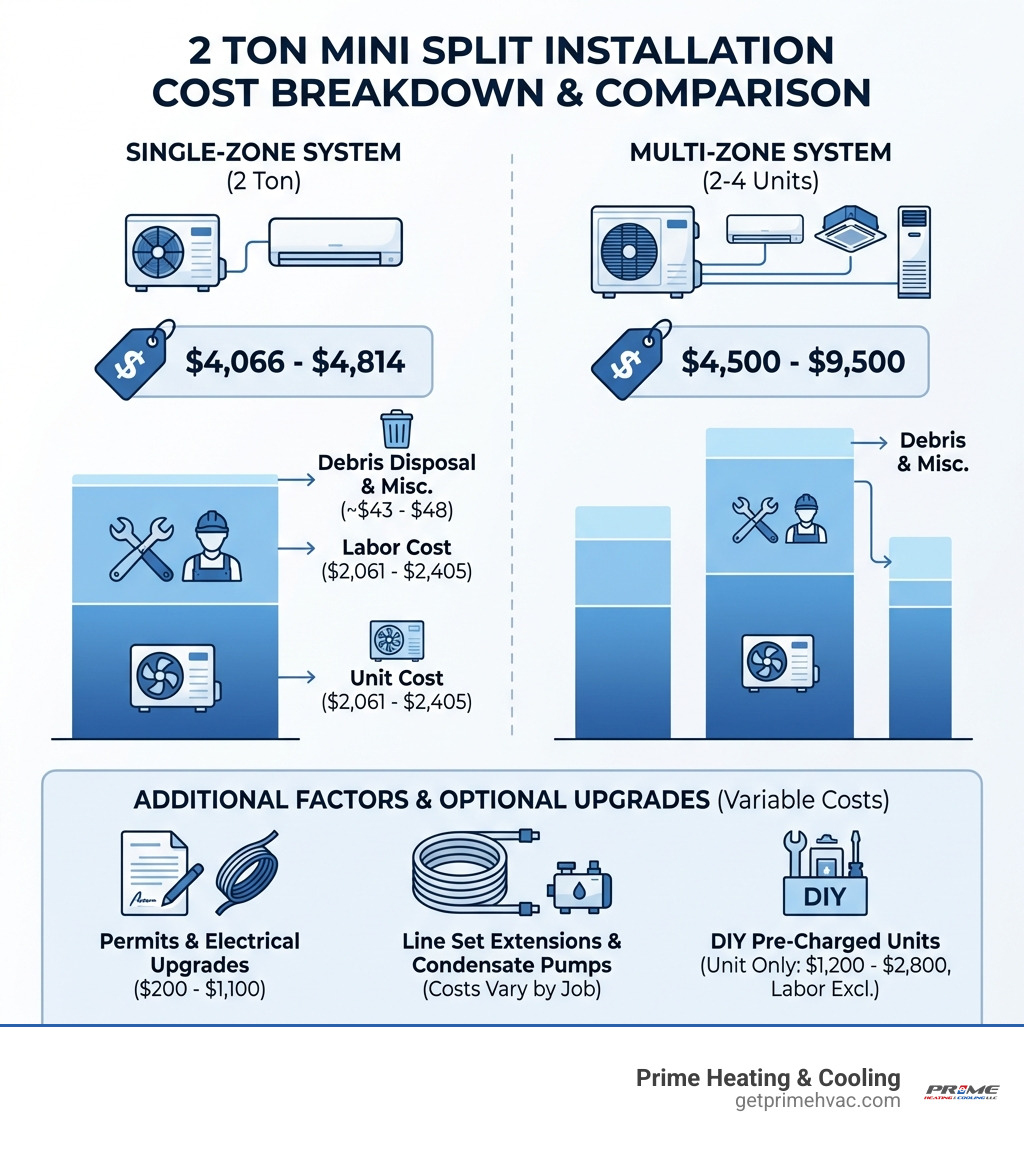
The 2 ton mini split installation cost typically ranges from $4,066 to $4,814 for a single-zone system, according to the most recent industry data. Here’s what you need to know:
Quick Cost Breakdown:
- Unit Cost: $2,061 – $2,405
- Labor Cost: $2,061 – $2,405
- Supplies & Hardware: Included in estimates
- Debris Disposal: $43 – $48
- Total Range: $4,066 – $4,814 per unit
Important Notes:
- Multi-zone systems (2-4 indoor units) cost $4,500 – $9,500
- Permits, electrical upgrades, and complex installations add $200 – $1,100
- DIY pre-charged units start at $1,200 – $2,800 (labor not included)
If you’re looking at mini split systems, you’re probably tired of window units or dealing with a home without ductwork. Maybe you’re adding space to your house, or you just want better control over temperatures in different rooms. Whatever the reason, understanding the real cost matters—not just for budgeting, but for avoiding surprises when the installer shows up.
The price you’ll pay depends on more than just the unit itself. Installation complexity, your home’s electrical setup, local labor rates, and even the time of year all play a role. Some homeowners report quotes as low as $2,300 for simple installs, while others see numbers closer to $9,500 for the same size system in high-cost areas like San Diego.
I’m Tyler Steiner, and over the past two decades, I’ve overseen hundreds of mini split installations across New England, giving me insight into the factors that drive 2 ton mini split installation cost in real-world scenarios. My team at Prime Heating & Cooling has worked with homeowners just like you to steer these costs and find the right balance between upfront investment and long-term value.
Explore more about 2 ton mini split installation cost:
Understanding the 2 Ton Mini Split Installation Cost
When we talk about a “2 ton mini split,” we’re referring to a system with a cooling capacity of 24,000 BTUs (British Thermal Units). For context, one ton of cooling is equivalent to 12,000 BTUs. So, a 2-ton system is designed to handle a larger space than, say, a 1-ton unit, making it a popular choice for open-concept living areas, larger bedrooms, or even small apartments without existing ductwork right here in Rhode Island.

Based on industry estimates for July 2025, the average cost to install a 2 Ton 16 SEER mini-split heat pump system, which often includes a 9,000 BTU indoor air handler (though a 2-ton outdoor unit can support multiple smaller indoor units or one larger one), starts around $4,066 and can go up to $4,814 per unit. This figure encompasses more than just the equipment; it’s a comprehensive estimate that helps you understand the total investment.
We find that using a transparent approach, like the Unit Cost Method for estimates, provides our customers in places like Smithfield, Johnston, and Warwick with a clear breakdown of what they’re paying for. This method helps us communicate openly about the components of your 2 ton mini split installation cost.
Let’s dissect that average cost:
- Split AC Unit Cost: The non-discounted retail price for a 2 Ton 16 SEER mini-split heat pump system can range from $2,060.80 to $2,404.91. This is for the equipment itself – the outdoor condenser unit and the indoor air handler(s).
- Split System Air Conditioner Installation Labor, Basic: This is where our skilled technicians come in. The basic labor cost for installing a split system, including setting up a new 240V 25A circuit (which is often required for a 2-ton unit), typically falls between $2,060.80 and $2,404.91. This covers the expertise, time, and effort required to ensure a flawless installation.
- Split System Air Conditioner Installation Job Supplies: Beyond the main unit, there are essential job supplies like fittings, fasteners, mounting hardware, and the refrigerant lines themselves. These components can add between $2,060.80 and $2,404.91 to the total. While the numbers might seem high in some generic estimates, we ensure that every component used for your installation in Providence or East Greenwich is of the highest quality.
- Debris Disposal: Don’t forget the cleanup! Removing old units, packaging, and installation waste typically costs between $42.525 and $48.375. We believe in leaving your home as clean as we found it.
Many modern 2-ton mini-split systems are heat pumps, meaning they provide both efficient cooling in the summer and effective heating in the colder months, a huge benefit for Rhode Island’s varied climate. These systems typically use R410a refrigerant, which is an industry standard.
When we provide an estimate, we’re not just throwing numbers at you. We’re carefully considering all these elements to give you a realistic and transparent 2 ton mini split installation cost that reflects the quality of our service and equipment. Our goal is to ensure you understand every aspect of your investment, so there are no surprises down the road.
1 Ton vs. 2 Ton Systems: Capacity and Pricing
Choosing the right size mini-split system is crucial for both efficiency and comfort. It’s not just about what fits your budget, but what genuinely meets your home’s heating and cooling demands. A system that’s too small will struggle to keep up, running constantly and inefficiently, while one that’s too large will cycle on and off frequently, leading to uneven temperatures and wasted energy.
Let’s compare the typical capacities and unit prices for 1-ton (12,000 BTU) and 2-ton (24,000 BTU) systems, keeping in mind that these are general ranges and actual costs can vary based on brand, features, and efficiency ratings.
| Feature | 1 Ton (12,000 BTU) System | 2 Ton (24,000 BTU) System |
|---|---|---|
| Typical Coverage | 400-600 sq ft | 800-1,200 sq ft |
| Unit Price Range | $500 – $2,500 (unit only, before installation) | $2,060 – $4,000+ (unit only, before installation) |
| Primary Use | Small rooms, single bedrooms, offices | Larger rooms, open-concept areas, small apartments |
| Cooling/Heating Load | Moderate | Significant |
| Electrical Needs | Often 120V or 240V, lower amperage | Typically 240V, higher amperage (e.g., 25A) |
For homes in North Providence or Lincoln, selecting the correct tonnage is a science. We always recommend a professional load calculation to determine the precise cooling and heating capacity needed for your space. Factors like ceiling height, insulation levels, window efficiency, sun exposure, and even the number of occupants significantly impact the required BTU output. For instance, a sunny room with poor insulation will need a larger unit than a well-shaded, insulated room of the same size. This is why tools and resources like How to Size HVAC Systems Correctly are so important.
While the unit price for a 2-ton system is generally higher than a 1-ton unit, the overall 2 ton mini split installation cost can vary proportionally. The labor involved in installing a 2-ton system is often similar to a 1-ton system, assuming comparable complexity, but the unit itself and the associated electrical upgrades (like a dedicated 240V, 25A circuit) might push the initial investment up.
However, for the right space, a 2-ton system offers superior comfort and efficiency. It can handle the cooling load of a larger area more effectively, preventing the unit from overworking and ultimately extending its lifespan. In our experience across Rhode Island, getting the sizing right from the start is paramount to maximizing your investment and enjoying consistent comfort for years to come.
Key Factors Influencing Your Installation Price
Understanding the average 2 ton mini split installation cost is a great starting point, but it’s just that—a starting point. Many variables can cause your specific quote to be higher or lower. We’ve seen it all, from straightforward installations in newly built additions to intricate setups in historic homes in Providence.
When our technicians come to your home in Smithfield or Scituate, they assess several key factors that directly influence the installation complexity and, by extension, the final price. These include the distance between the indoor and outdoor units, the materials of your home’s exterior, the ease of running refrigerant lines and electrical conduits, and the type of mounting hardware required. A longer line set, for example, means more materials and labor. Difficult access points, like a second-story installation with no easy ground access, can also increase labor time.
Let’s dig into the major factors that shape your 2 ton mini split installation cost.
Average 2 ton mini split installation cost by Zone
One of the biggest differentiators in mini-split costs is whether you opt for a single-zone or multi-zone system.
- Single-Zone 2-Ton Mini Split: This setup involves one outdoor condenser unit connected to one indoor air handler, effectively conditioning a single area. For a 2-ton system, this is ideal for a large living room, a master suite, or a spacious studio. The installation cost for a single-zone mini-split (9,000–12,000 BTU, though a 2-ton unit is 24,000 BTU) typically ranges from $1,500 to $3,500. For a dedicated 2-ton system, the unit cost alone is higher, pushing the total into the $4,066 – $4,814 range we discussed earlier.
- Multi-Zone 2-Ton Mini Split: If you need to heat and cool multiple rooms independently, a multi-zone system is the answer. A single 2-ton outdoor condenser can often support two, three, or even up to five smaller indoor units (e.g., two 12,000 BTU units, or three 8,000 BTU units). This provides incredible flexibility for zoned temperature control across different areas of your home in Coventry or North Smithfield. The installation cost for a multi-zone mini-split (2–4 indoor units) typically ranges from $4,500 to $9,500. The total cost depends heavily on the number of indoor units and the overall condenser capacity needed to power them. While a 2-ton outdoor unit can power multiple indoor units, if you need more collective BTUs than 24,000 across several rooms, you’d need a larger outdoor unit, which would increase the overall cost.
The primary benefit of a multi-zone system is the ability to customize temperature settings for each zone, preventing energy waste in unused rooms and ensuring maximum comfort where it’s needed most. This advanced temperature control is a huge draw for many homeowners we work with.
How SEER2 Ratings Affect 2 ton mini split installation cost
Energy efficiency is a hot topic, and for good reason! It impacts your monthly utility bills and the environmental footprint of your home. Mini-splits are known for their efficiency, but not all are created equal. This is where SEER2, EER2, and HSPF2 ratings come into play.
- SEER2 (Seasonal Energy Efficiency Ratio 2): This rating measures the cooling efficiency of an air conditioner or heat pump over an entire cooling season. A higher SEER2 number means greater efficiency and lower operating costs.
- EER2 (Energy Efficiency Ratio 2): This measures cooling efficiency at a specific outdoor temperature (95°F), giving you an idea of how the unit performs under peak load conditions.
- HSPF2 (Heating Seasonal Performance Factor 2): For heat pumps, this rating measures heating efficiency over an entire heating season. A higher HSPF2 means more efficient heating, which is particularly valuable in Rhode Island winters.
Systems with higher SEER2, EER2, and HSPF2 ratings typically come with a higher upfront unit cost. For instance, a 2-ton mini-split with a 20+ SEER2 rating will be more expensive than a 16 SEER2 unit. However, this increased upfront 2 ton mini split installation cost is often offset by significant long-term savings on your energy bills. These highly efficient units often feature inverter technology, which allows the compressor to run at varying speeds rather than just on or off, leading to more precise temperature control and reduced energy consumption.
For our customers in the East Side of Providence and beyond, investing in a high-efficiency 2-ton mini-split means enjoying comfortable temperatures without dreading the utility bill. Over the lifespan of the unit, the operational costs can be substantially lower, making a higher SEER2 unit a smart financial decision in the long run.
Mounting Styles and Installation Complexity
The physical location and type of indoor units you choose also impact the 2 ton mini split installation cost. While wall-mounted units are the most common and often the easiest to install, there are other options that offer different aesthetic and functional benefits.
- Wall-Mounted Units: These are the most popular choice, known for their ease of installation and efficient cooling. They are typically mounted high on a wall, distributing air effectively. Unit costs for single indoor wall-mounted units can range from $500 to $9,200 (before installation), depending on brand and features. Their straightforward installation usually means lower labor costs.
- Ceiling Cassette Units: For a more discreet look, ceiling cassette units are recessed into the ceiling, with only a grille visible. They distribute air in multiple directions, offering excellent coverage. Unit costs for a single indoor ceiling cassette system range from $1,300 to $9,100. Installation is more complex, often requiring more extensive work in the ceiling, potentially involving drywall, and necessitating a condensate pump to drain water, all of which add to the 2 ton mini split installation cost.
- Floor-Mounted Units: These units sit low on the wall, similar to a radiator, and are a good option for spaces with limited wall space or for those who prefer heating at floor level. Unit costs typically range from $1,300 to $3,800. Installation complexity is usually moderate, often similar to wall-mounted units but sometimes requiring different electrical routing.
Beyond the unit type, installation complexity can be influenced by:
- Line Set Extensions: If the outdoor unit needs to be placed far from the indoor unit(s), requiring longer refrigerant lines, this adds to the material and labor cost. Line set extensions can cost $15–$25 per foot.
- Condensate Pumps: While some indoor units can gravity drain condensate, others (especially ceiling cassettes or units in basements) require a condensate pump to move water to a drain. These can add $100–$250 to the cost.
- Accessibility: Installing units on a second or third floor, or in tight crawl spaces, increases labor time and complexity compared to a ground-level, easily accessible installation.
Our team at Prime Heating & Cooling takes all these factors into account when designing and quoting your 2-ton mini-split system. We ensure that the chosen mounting style not only meets your aesthetic preferences but also integrates seamlessly with your home’s structure and budget.
Beyond the Unit: Labor, Permits, and Electrical
When you’re budgeting for your 2 ton mini split installation cost, it’s crucial to look beyond just the price tag of the unit itself. There are several other significant expenses that contribute to the overall project. We often tell our customers that a mini-split installation is a symphony of skilled labor, precise electrical work, and adherence to local regulations.
The basic labor to install a split system air conditioner, including the setup of a new 240V 25A circuit, is a substantial part of the total cost, estimated between $2,060 and $2,404. Our technicians are not just installing equipment; they are ensuring your system is perfectly sized, safely wired, and carefully connected. This labor cost covers everything from preparing the worksite and protecting your existing structures to the intricate process of connecting and insulating the lines between the condenser and air handler. We also perform crucial steps like charging the condenser with the appropriate amount of R410a refrigerant and conducting thorough system tests.
A key component often overlooked is the electrical work. A 2-ton mini-split typically requires a dedicated 240V circuit with a 25A breaker. If your home in East Greenwich or Johnston doesn’t have the capacity for this, an electrical panel upgrade or running new wiring might be necessary. This can add an additional $200–$800 to your total cost. We always ensure that all electrical work adheres to local codes and safety standards, as electrical upgrades are not something to cut corners on.
Permits and inspections are another non-negotiable aspect of a professional installation. Depending on your specific town within Rhode Island, permit fees can range from $50–$300. These permits ensure that the installation meets local building and safety codes, and inspections verify that the work was done correctly and safely. While it’s an added expense, it provides peace of mind and can be crucial for insurance purposes and when selling your home. We handle all the necessary paperwork to ensure your installation is fully compliant.
Finally, while often a smaller component, debris disposal is part of a complete service. We remove all packaging, old equipment (if it’s a replacement), and installation waste, ensuring your property is left tidy. This typically adds $42.525–$48.375 to the cost.
Our team comprises highly skilled and EPA-certified HVAC-R technicians. This certification means they are trained in handling refrigerants responsibly and have the expertise to install complex systems correctly. Choosing us means you’re investing in a professional, safe, and efficient installation that will stand the test of time, giving you the best return on your 2 ton mini split installation cost.
Frequently Asked Questions about 2-Ton Mini Splits
We get a lot of great questions from homeowners in Rhode Island about mini-split systems. Here are some of the most common ones we hear, especially when they’re considering a 2-ton unit for their home.
How long does a 2-ton mini split installation take?
The installation time for a 2-ton mini-split system can vary depending on its configuration (single-zone vs. multi-zone) and the complexity of your home’s layout.
- Single-Zone 2-Ton Mini Split: For a straightforward single-zone installation, our team can typically complete the job in about 4–8 hours. This includes site preparation, mounting the indoor and outdoor units, running the refrigerant lines, electrical connections, vacuuming the lines (a critical step to remove moisture and air), pressure testing, and finally, system commissioning to ensure everything is running perfectly.
- Multi-Zone 2-Ton Mini Split: If your 2-ton outdoor unit is connected to multiple indoor air handlers, the installation will naturally take longer. A multi-zone system can take anywhere from 1–2 days, depending on the number of indoor units and how complex the routing of lines and electrical connections is. Factors like having to run lines through multiple walls or floors, or difficult access points, can extend this timeline.
We pride ourselves on efficient yet meticulous work. While we aim to complete installations promptly, we never rush. Our priority is a safe, effective, and long-lasting installation for your home in Warwick or North Scituate.
Can I save money with a DIY 2-ton mini split?
The idea of saving on 2 ton mini split installation cost by doing it yourself is tempting, and indeed, there are “DIY-friendly” pre-charged mini-split units on the market, such as some Mr. Cool models. These units are designed with quick-connect lines that don’t require specialized vacuum pumps or refrigerant charging by an EPA-certified technician. The unit cost for these DIY pre-charged systems typically ranges from $1,200 to $2,800.
However, we strongly advise caution. While you might save on labor costs, there are several significant drawbacks and risks:
- EPA Regulations: Handling refrigerants is governed by EPA regulations. While pre-charged units simplify this, any leaks or issues still fall under these rules.
- Warranty Voiding: Many manufacturers will void the warranty if the system isn’t installed by a licensed HVAC professional. This means if something goes wrong, you could be on the hook for expensive repairs.
- Proper Sizing: Without professional assessment, you risk installing an improperly sized unit, leading to inefficiency and discomfort.
- Electrical Work: Even DIY units require proper electrical connections, which can be dangerous if not done correctly.
- Complexities: While advertised as simple, routing lines through walls, ensuring proper drainage, and securing units can be more challenging than it appears, especially in older Rhode Island homes.
- Long-Term Performance: A professionally installed system ensures optimal performance, efficiency, and longevity. A DIY installation, even of a pre-charged unit, might not achieve the same level of performance or last as long.
While a DIY route might seem like a way to significantly reduce your 2 ton mini split installation cost, for most homeowners, the peace of mind, warranty protection, and guaranteed performance that come with professional installation are well worth the investment. We offer professional assessments to ensure you get the right system installed correctly.
Are there tax credits for 2-ton mini split systems?
Absolutely! Investing in a new, energy-efficient 2-ton mini-split system can often qualify you for various financial incentives, helping to offset your initial 2 ton mini split installation cost.
- Federal Tax Credits: The federal government frequently offers tax credits for homeowners who install high-efficiency HVAC equipment, including certain mini-split heat pumps. These credits are often tied to specific efficiency ratings (like high SEER2, EER2, or HSPF2) and Energy Star certification. We always recommend checking the latest information on energystar.gov or consulting with a tax professional to see if your chosen system qualifies.
- Utility Rebates: Many local utility companies in Rhode Island offer rebates for upgrading to energy-efficient heating and cooling systems. These programs are designed to encourage energy conservation and can provide a direct rebate check or credit on your utility bill. We encourage our customers in Smithfield, Lincoln, and surrounding areas to check with their specific utility provider (e.g., National Grid in Rhode Island) for current offerings.
- Off-Season Discounts: While not a tax credit or rebate, strategic timing can also lead to cost savings. Scheduling your installation during the off-peak seasons (typically spring or fall) when HVAC technicians are less busy can sometimes result in more competitive pricing or special promotions from installers and manufacturers.
We stay informed about available incentives and can help guide you toward systems that are likely to qualify. Taking advantage of these programs can significantly reduce your net 2 ton mini split installation cost and make your investment even more rewarding.
Conclusion
Navigating the landscape of 2 ton mini split installation cost might seem daunting at first glance, but as we’ve explored, understanding the various components and influencing factors empowers you to make informed decisions for your home. From the initial unit cost to labor, electrical upgrades, permits, and even the choice between a single-zone or multi-zone setup, each element plays a crucial role in the final price.
At Prime Heating & Cooling, we believe in transparency and expertise. With 20 years of experience serving homeowners across Rhode Island—from East Greenwich to Smithfield, Providence to Warwick—we’ve built a reputation for delivering reliable, energy-efficient solutions. Our skilled technicians are not just installers; they’re problem-solvers dedicated to ensuring your ultimate home comfort. We understand the unique climate challenges of New England and provide custom solutions that stand the test of time.
Choosing a 2-ton mini-split is a smart investment in your home’s comfort and energy efficiency. While the upfront cost is a consideration, the long-term savings on utility bills, improved comfort, and zoned control often make it a worthwhile upgrade. We’re here to guide you through every step, from selecting the perfect system to ensuring a flawless installation.
Ready to experience the Prime Heating & Cooling difference? Schedule your ductless mini split heat pump installation in Smithfield, RI and let us bring unparalleled comfort to your home.