
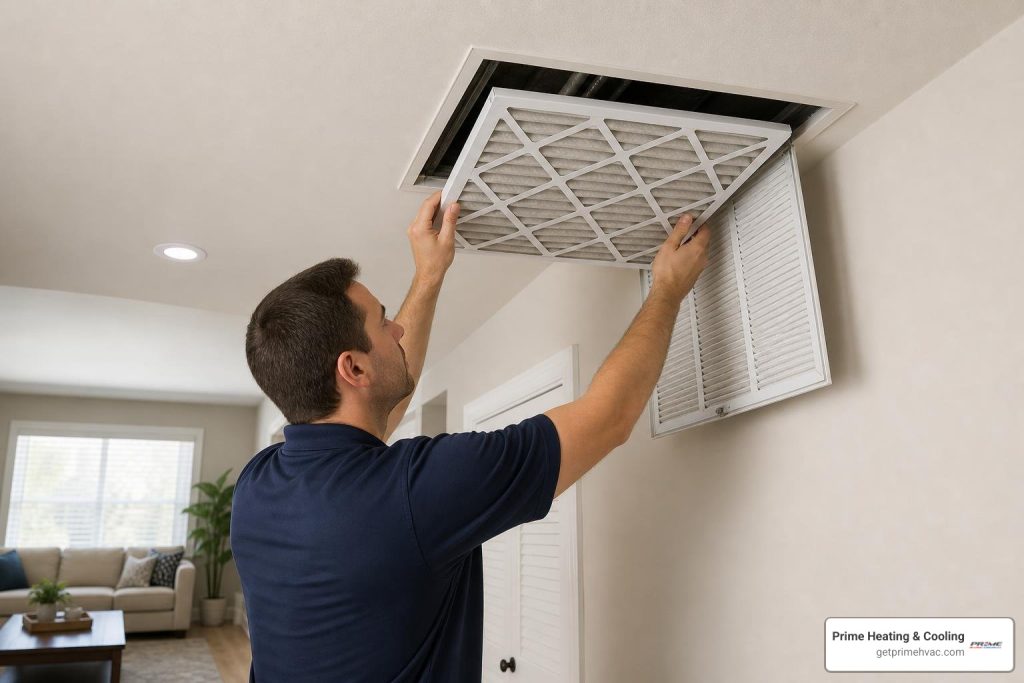
A Dirty AC Filter Is Costing You More Than You Think
Central AC filter cleaning is one of the simplest maintenance tasks a homeowner can do — and one of the most overlooked. Here’s the quick answer if you need it fast:
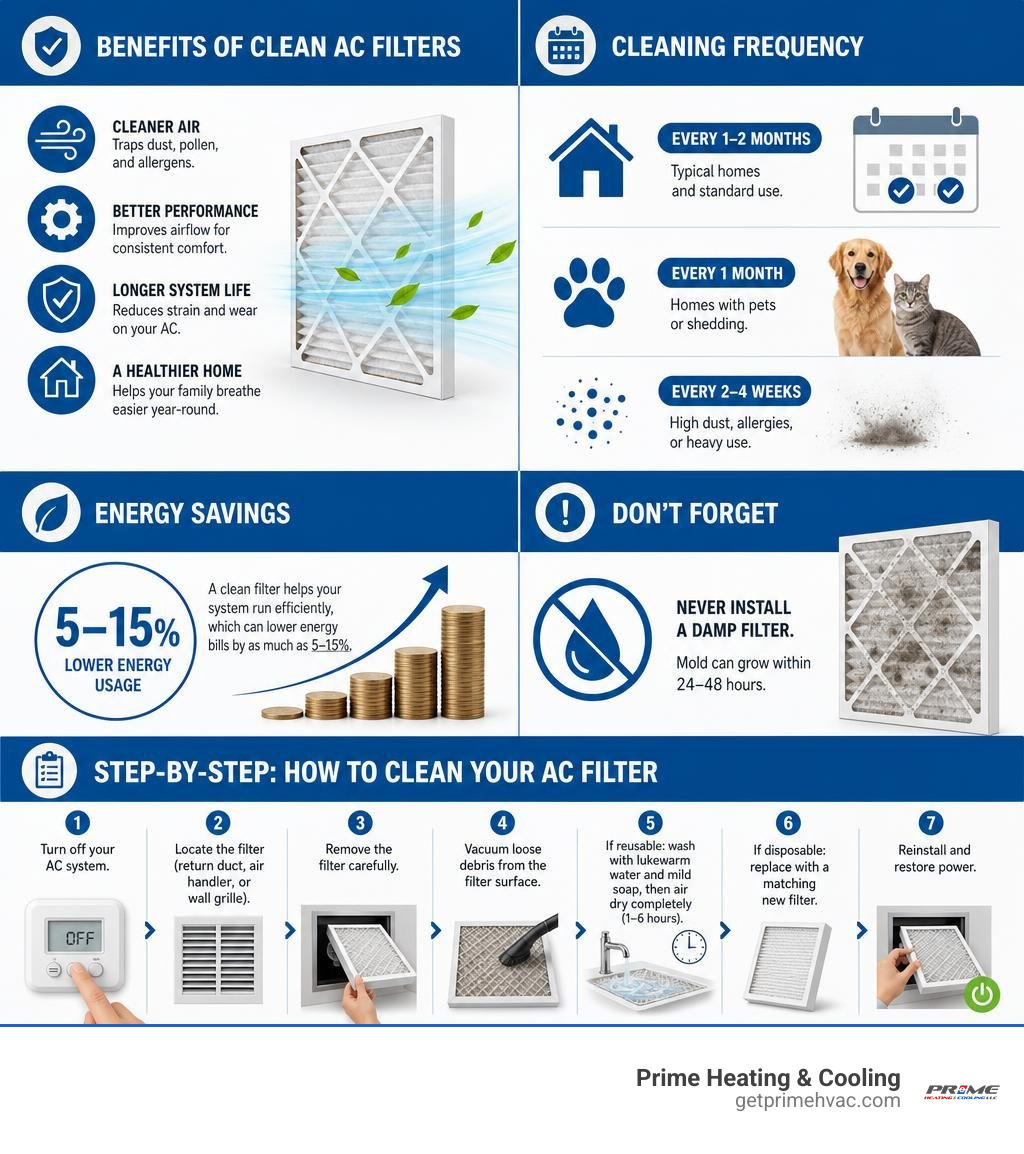
How to clean a central AC filter (quick steps):
- Turn off your AC system at the thermostat
- Locate the filter (return duct, air handler, or wall grille)
- Remove the filter carefully
- Vacuum loose debris from the filter surface
- If reusable: wash with lukewarm water and mild soap, then air dry completely (1-6 hours)
- If disposable: replace with a matching new filter
- Reinstall and restore power
Important: Never reinstall a damp filter. Mold can grow within 24-48 hours.
A clogged filter forces your system to work harder, driving up energy bills by as much as 5-15%. It also lets dust bypass into the evaporator coil, which can cause expensive damage over time. For Rhode Island homeowners running their systems through humid summers — especially in coastal communities like Newport, Narragansett, and South Kingstown — a dirty filter isn’t just inefficient, it’s a real risk to your system’s lifespan.
The good news? Cleaning or replacing your filter takes less than an hour and costs almost nothing.
I’m Tyler Steiner, founder of Prime Heating & Cooling, and after years of servicing HVAC systems across Rhode Island and Massachusetts, central AC filter cleaning is the single most common maintenance gap I see in homes. In this guide, I’ll walk you through exactly how to do it right.
Central ac filter cleaning word guide:
Step-by-Step Guide to Central AC Filter Cleaning

Taking control of your home’s cooling system starts with establishing a solid maintenance routine. When we ignore our filters, we restrict the essential airflow our air conditioners need to regulate temperature. Over time, restricted airflow places immense strain on the blower motor and compressor, leading to premature system wear or even a complete system shutdown.
By dedicating just a little time to this chore, we ensure our systems run at peak performance while keeping our indoor air clean and healthy.
Why Central AC Filter Cleaning Matters for Rhode Island Homes
In Rhode Island, our coastal climate brings unique challenges. High summer humidity in Newport, Narragansett, and South Kingstown doesn’t just make the outdoor air feel heavy—it also means our indoor cooling systems have to work double-time to dehumidify our living spaces. When dust, pet hair, and pollen clog the air filter, the damp air creates a perfect breeding ground for mold and mildew right inside the filter fibers.
Regularly cleaning or replacing your filter is essential to maintain high indoor air quality and keep your energy bills from spiking. Additionally, proper filtration protects the internal components of your system from dirt buildup, which can lead to frozen coils or a burnt-out blower motor. To understand how filtration fits into the bigger picture of system care, read about The Role of Air Filters in Your AC System Maintenance and Replacement.
If you want to dive deeper into the financial and performance benefits of keeping these components pristine, you can also check out this helpful guide on How to Clean Your Air Conditioner Filter | Angi .
How to Locate Your Central AC Filter
Before we can clean anything, we have to find it! In most central air systems, the filter is placed in the return air duct, inside the blower cabinet of the indoor air handler, or behind a return air grille on a wall or ceiling.
- In the Blower Cabinet: If your system has an indoor furnace or air handler (often located in a basement, utility closet, or attic in East Greenwich, Smithfield, or Johnston), look for a metal slot or rack right next to the unit where the large return duct meets the main cabinet.
- Behind Return Grilles: In many multi-story homes or ranch-style houses, you will find the filter located behind a large, slatted metal grille on a central wall or ceiling. You may need to flip a couple of latches or use a screwdriver to swing the grille open.
Knowing your system’s layout is the first step to keeping your air pure. For more insights on how proper filter placement impacts your home, see our guide on AC Filter Replacement: The Key to Clean and Healthy Indoor Air.
Reusable vs. Disposable: Which Filters Can Be Cleaned?
Not all filters are built the same. Trying to wash a filter that isn’t designed for water will ruin the material, rendering it useless and potentially letting dust bypass straight into your system.
- Disposable Filters: These are typically made of fiberglass or pleated paper with a cardboard frame. They are highly convenient but must be replaced entirely every 30 to 90 days. Never attempt to wash these.
- Reusable (Washable) Filters: These are constructed with durable plastic, aluminum, or electrostatic mesh frames. They are designed to be vacuumed, washed, dried, and reinstalled. While they save money over time, they must be cleaned regularly to remain effective.
Here is a quick breakdown to help you compare your options:
| Filter Type | Material | Can It Be Cleaned? | Lifespan | Average MERV Rating |
|---|---|---|---|---|
| Fiberglass | Spun glass, cardboard frame | No (Replace only) | 30 days | MERV 1–4 |
| Pleated Paper | Synthetic fibers, cardboard frame | No (Replace only) | 60–90 days | MERV 8–13 |
| Washable Mesh | Plastic/aluminum frame | Yes (Vacuum & wash) | 2–5 years (or more) | MERV 4–8 |
| Electrostatic | Self-charging fibers | Yes (Vacuum & wash) | Up to 10 years | MERV 8–11 |
Step-by-Step Central AC Filter Cleaning Process
If you have determined that you have a washable, reusable filter, follow these simple steps to restore its performance:
- Power Off: Turn off your AC unit at the thermostat and the breaker before opening any cabinets or grilles. This prevents the system from sucking in unfiltered air while the filter is out.
- Remove the Filter: Carefully slide the filter out of its slot. Take note of the airflow arrow printed on the frame so you know which way to face it when reinstalling.
- Vacuum Heavy Debris: Use a vacuum cleaner with a soft brush or crevice attachment to gently remove loose dust, pet hair, and lint from the dirty side of the filter.
- Wash and Cleanse: Take the filter to a sink, tub, or outdoor hose. Rinse it with lukewarm water, spraying from the clean side to push the dirt out the way it entered. For a deeper clean or to eliminate musty odors, spray the filter with a 1:1 mixture of water and white vinegar, let it sit for 10 minutes, and rinse thoroughly.
- Air Dry Completely: Shake off excess water and lay the filter flat in a shaded, well-ventilated area. Allow it to dry completely—this can take anywhere from 1 to 6 hours depending on humidity. Reinstalling a wet filter will cause mold to grow inside your ductwork within 24 to 48 hours.
- Reinstall and Restart: Slide the bone-dry filter back into place with the airflow arrow pointing toward the blower fan. Secure the cabinet door or grille and turn the power back on.
For a comprehensive look at cleaning techniques and materials, check out the step-by-step instructions provided by How to Clean an Air Conditioner Filter – The Home Depot .
Signs Your Filter Needs Cleaning or Replacement
Don’t wait for your system to stop blowing cold air before checking the filter. Keep an eye out for these common warning signs:
- Weak Airflow: If the air coming out of your vents feels weaker than usual, a clogged filter is likely choking the airflow.
- Unexplained Energy Spikes: If your electricity bills are climbing but your usage habits haven’t changed, your system is working harder than it needs to.
- Musty Odors: A damp, dirty filter can harbor mold spores, spreading a stale, musty smell throughout your home.
- Allergy Flare-Ups: Increased dust on your furniture or a sudden rise in sneezing and itchy eyes indicates that the filter is saturated and no longer catching airborne particles.
Keeping your filter clean is one of the easiest ways to protect your HVAC investment. For more expert advice, explore our Top 5 AC Maintenance Tips for Extending Your System’s Lifespan.
Common Mistakes to Avoid During Filter Maintenance
While cleaning your filter is a highly approachable DIY task, a few common mistakes can cause serious issues:
- Reinstalling a Damp Filter: This is the absolute worst mistake you can make. Damp filters encourage mold growth and ruin indoor air quality.
- Using Harsh Chemicals: Avoid bleach, strong detergents, or high-pressure washers. These can degrade the filter material and release chemical fumes into your living space.
- Ignoring the Coils: A dirty filter allows dust to settle directly onto your evaporator coils. If your coils are already covered in grime, cleaning the filter won’t fully restore your system’s efficiency. Learn how to address this issue by reading AC Coil Cleaning 101: Don’t Let Your Unit Lose Its Cool.
Conclusion: Keep Your Rhode Island Home Cool and Efficient
Keeping your central AC filter clean is a fast, low-cost way to lower your energy bills, improve your home’s air quality, and prevent expensive system breakdowns. While checking and cleaning your filter is an easy DIY project, your air conditioner still requires professional attention to stay in top shape.
At Prime Heating & Cooling, we bring over 20 years of experience, 24/7 availability, and a customer-first approach to homeowners across Rhode Island. Whether you need a routine tune-up, coil cleaning, or help locating your filter, our skilled technicians are here to help.
Don’t let a dirty system compromise your summer comfort. Schedule professional HVAC services in Rhode Island with us today!