
Why Rhode Island Homeowners Need Reliable Cooling Solutions
Rhode Island air conditioning services are essential for homeowners and businesses seeking comfort during the state’s hot, humid summers and year-round climate control. When choosing a provider, it is important to select a team that understands the local environment and offers comprehensive support.
What to Look For in an HVAC Contractor:
- Licensed and insured professionals
- HVAC Check training certification
- Free in-home estimates
- 24/7 emergency repair services
- Rebate assistance and financing options
- A+ BBB rating and proven experience
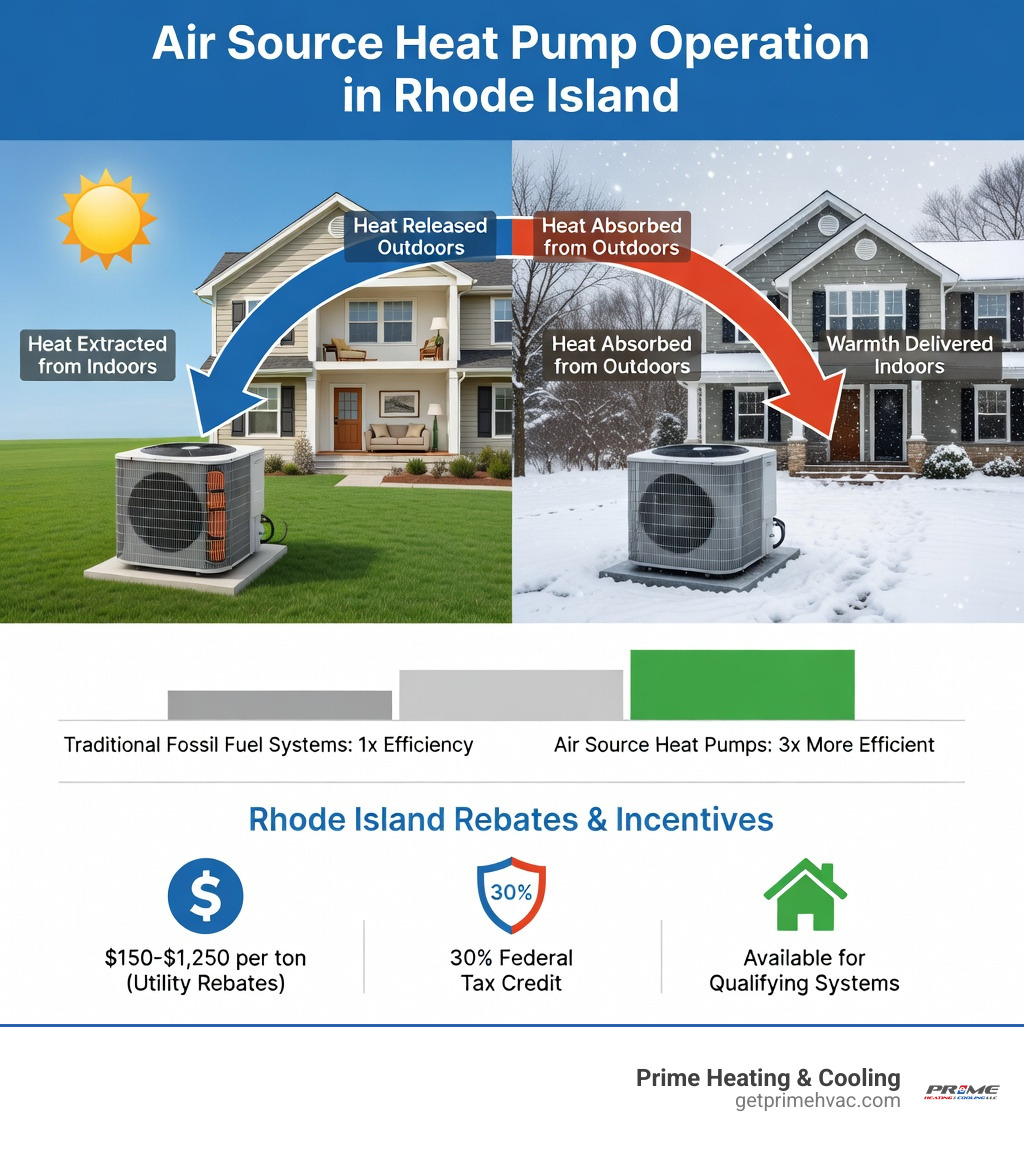
Rhode Island’s unique coastal climate creates specific challenges for home comfort systems. High humidity levels can make indoor spaces feel stuffy even when temperatures are moderate, while the hot summers demand reliable cooling. Modern air conditioning technology has evolved significantly – today’s systems offer both heating and cooling capabilities through air source heat pumps, which are at least three times more efficient than traditional fossil fuel systems.
The financial incentives for upgrading are substantial. Rhode Island homeowners can access federal tax credits of 30% of project costs (up to $2,000 for air-source heat pumps), plus utility rebates ranging from $150 to $1,250 per ton depending on your current heating system and utility provider. These programs make high-efficiency cooling more affordable than ever.
I’m Tyler Steiner, founder of Prime Heating & Cooling, and I’ve spent my career helping Rhode Island homeowners select and maintain the right Rhode Island air conditioning systems for their unique needs. After graduating from the New England Institute of Technology and building Prime into a trusted BBB-accredited company, I understand what it takes to keep homes comfortable through our region’s demanding climate.
Why Rhode Island Air Conditioning Upgrades are Essential
Living in the Ocean State means we get the best of the coast, but we also get the brunt of the Atlantic’s humidity. If you’ve ever walked into your living room in July and felt like you were stepping into a sauna, you know exactly what we mean. An upgrade to your rhode island air conditioning isn’t just about luxury; it’s about maintaining a healthy, livable environment.

Our coastal climate presents a double whammy: high heat and even higher humidity. When humidity levels spike, your sweat doesn’t evaporate, making you feel much hotter than the actual temperature. Modern systems are designed specifically for dealing with humidity issues, acting as giant dehumidifiers that pull moisture out of the air while they cool. This significantly improves indoor air quality by reducing the risk of mold and dust mites.
Beyond comfort, there’s the financial side. Old units are energy hogs. Switching to a modern system can lead to massive energy savings. In fact, scientific research on heat pump efficiency shows that air source heat pumps are at least three times more efficient at heating than systems that burn fossil fuels, and they offer superior cooling performance as well. Plus, a new, efficient HVAC system is a major selling point that increases your property value.
Choosing the Right Rhode Island Air Conditioning System
We don’t believe in “one-size-fits-all” cooling. Choosing the right system requires a bit of science. One of the most common mistakes homeowners make is buying a unit that is too large or too small for their space. A unit that’s too small will run constantly, never reaching the desired temperature. A unit that’s too large will “short cycle,” turning on and off rapidly, which fails to remove humidity and wears out the motor.
When we evaluate a home in Providence or Warwick, we look at several factors:
- System Sizing: We use Manual J calculations to determine the exact cooling load of your home, considering windows, insulation, and square footage.
- SEER Ratings: Understanding SEER ratings is vital. The Seasonal Energy Efficiency Ratio measures how much cooling the system puts out for each unit of energy it consumes. Higher is better!
- Noise Levels: Modern units are whisper-quiet, ensuring your backyard BBQ isn’t drowned out by a roaring condenser.
choosing the right AC unit is about balancing your budget with your long-term comfort and efficiency goals.
Types of Cooling Systems for RI Homeowners
Rhode Island homes vary from historic East Side Victorians to modern Scituate builds. Because of this variety, we offer several different cooling technologies.
| Feature | Central Air Conditioning | Ductless Mini-Splits | Air Source Heat Pumps |
|---|---|---|---|
| Best For | Homes with existing ductwork | Homes without ducts/Additions | Year-round heating & cooling |
| Installation | Uses vents and registers | Wall-mounted indoor units | Ducted or ductless options |
| Efficiency | High (SEER 16+) | Very High (Zoned cooling) | Highest (Fossil-free) |
| Cost | Moderate to High | Per-unit basis | High (but highest rebates) |
Central Air Conditioning
This is the “standard” for many. It uses a network of ducts to distribute cool air throughout the entire house. If you already have a furnace and ductwork, our AC installation services can often integrate a high-efficiency central unit seamlessly.
Ductless Mini-Splits
These are the newest trend in places like Smithfield and Johnston. They don’t require ducts. Instead, an outdoor unit connects to small indoor units mounted on the wall. Ductless mini-split installation allows for “zoning,” meaning you can cool the kitchen while leaving the guest room off, saving you a fortune on electric bills.
Air Source Heat Pumps
These are the “green” champions of rhode island air conditioning. They move heat rather than creating it. In the summer, they pull heat out of your house. In the winter, they pull heat from the outside air (yes, even when it’s cold!) and bring it inside. For more information on RI air source heat pumps, you’ll find they are the preferred choice for those looking to move toward fossil-free cooling.
Navigating Rhode Island Air Conditioning Costs and Rebates
We know that a new HVAC system is a significant investment. However, between local labor rates and the current incentive landscape, there has never been a better time to buy in Rhode Island.
While the cost of AC installation varies based on the size of your home and the system type, the rebates available to RI residents can slash that price significantly.
Clean Heat RI and Utility Rebates
The Clean Heat RI incentives are designed to help Rhode Islanders transition to high-efficiency, fossil-free systems.
- Rhode Island Energy: They offer RI Energy incentive information detailing rebates for air source heat pumps ranging from $150 to $1,000 per ton.
- National Grid: Historically offered rebates of $50 per ton for central AC (SEER ≥ 16) and improved rebates for central heat pumps of $1,250 per ton for homes currently using electric resistance heating.
- Local Utilities: Residents in Pascoag or Block Island can also find specific rebates through the Pascoag Utility District ($350-$700) or Block Island Power Company ($250 per ton).
Federal Tax Credits
Don’t forget the feds! Under the Inflation Reduction Act, you can claim federal energy tax credit details that offer 30% of project costs for air-source heat pumps, with a maximum credit of $2,000. This is a direct reduction in the taxes you owe, making it a powerful tool for affordability.
Signs You Need Professional Air Conditioning Repair or Replacement
How do you know if your system just needs a quick fix or if it’s time to call it quits? Our technicians see the same “red flags” across Rhode Island.
If you notice any of these signs your AC needs repair, give us a call:
- Rattling or Banging Noises: This often indicates a loose part or a failing motor.
- Refrigerant Leaks: If your system isn’t cooling like it used to, or you see liquid pooling, you might have a leak. This requires professional AC repairs RI because refrigerant is a controlled substance.
- Uneven Cooling: If the upstairs is a furnace while the downstairs is an icebox, your airflow or ductwork is likely the culprit.
- Sky-High Bills: An unexplained jump in your electric bill usually means your system is working way harder than it should.
If your system is over 10-15 years old and requires frequent repairs, it might be time to ask: Is it time for AC replacement? Often, the cost of a major repair on an old, inefficient unit is better spent as a down payment on a new, warranted system that will save you money every month.
Maximizing Efficiency with Regular Maintenance
You wouldn’t drive a car for 100,000 miles without an oil change, right? Your AC system is the same. Regular AC maintenance RI is the single best way to protect your investment.
Annual tune-ups provide several benefits:
- Lower Energy Bills: A clean system runs more efficiently.
- Warranty Protection: Many manufacturers require annual maintenance to keep your warranty valid.
- Longer Lifespan: Catching a small problem in May prevents a total system failure in August.
During a tune-up, we handle the “dirty work” like filter replacement, coil cleaning, and checking refrigerant levels. We’ve put together 5 tips to make your AC last longer to help you between professional visits. Understanding the importance of regular AC maintenance is the key to a stress-free summer.
Local Expertise for Rhode Island Air Conditioning Services
There is a major advantage to choosing a local contractor. We know the local building codes in Smithfield and Coventry. We know how the salt air in East Greenwich can corrode outdoor units and what specialized coatings are needed to prevent it.
We provide emergency AC repair because we know that a broken AC isn’t just uncomfortable—it can be dangerous for seniors and pets during a heatwave. When you look at the list of approved RI contractors, you’ll see that we are committed to the highest standards of training and airflow protocols. We aren’t just a big national chain; we are your neighbors.
Frequently Asked Questions about RI Air Conditioning
What is the average cost of a new AC installation in Rhode Island?
While every home is different, a standard central AC installation typically ranges from $5,000 to $10,000. However, high-efficiency heat pump systems can range higher ($12,000 – $20,000+), though these qualify for the most significant rebates and tax credits, often bringing the net cost down significantly.
How much can I save with Rhode Island Energy rebates?
Depending on your current heating source, you can save anywhere from $150 to $1,000 per ton. For a typical 3-ton home system, that’s a potential $3,000 in instant savings! If you are switching from electric baseboard heat, you may even qualify for improved rebates up to $1,250 per ton.
Why is my AC struggling with the Rhode Island summer humidity?
Your AC might be “short-cycling” or it may be improperly sized. If a unit cools the air too quickly, it shuts off before it has a chance to pull the moisture out of the air. This leaves you feeling cold but clammy. A professional evaluation can determine if you need a dehumidification upgrade or a system adjustment.
Conclusion
At Prime Heating & Cooling, we bring 20 years of experience to every job site. Whether you are in Lincoln, North Providence, or the East Side of Providence, our mission is to provide energy-efficient solutions with a customer-first approach. We pride ourselves on our 24/7 availability—because we know that HVAC emergencies don’t stick to a 9-to-5 schedule.
Don’t spend another summer sweating through the humidity. From expert installations to life-extending maintenance, we have the local expertise to keep you cool. Schedule your Rhode Island HVAC services today and experience the Prime difference for yourself!