
Is Your HVAC Coil Failing? Here’s What Rhode Island Homeowners Need to Know
HVAC coil replacement is one of the most common — and most stressful — repairs a homeowner faces. Before diving in, here’s a quick overview:
Quick answers:
- What it is: Replacing the evaporator coil inside your air handler or furnace cabinet
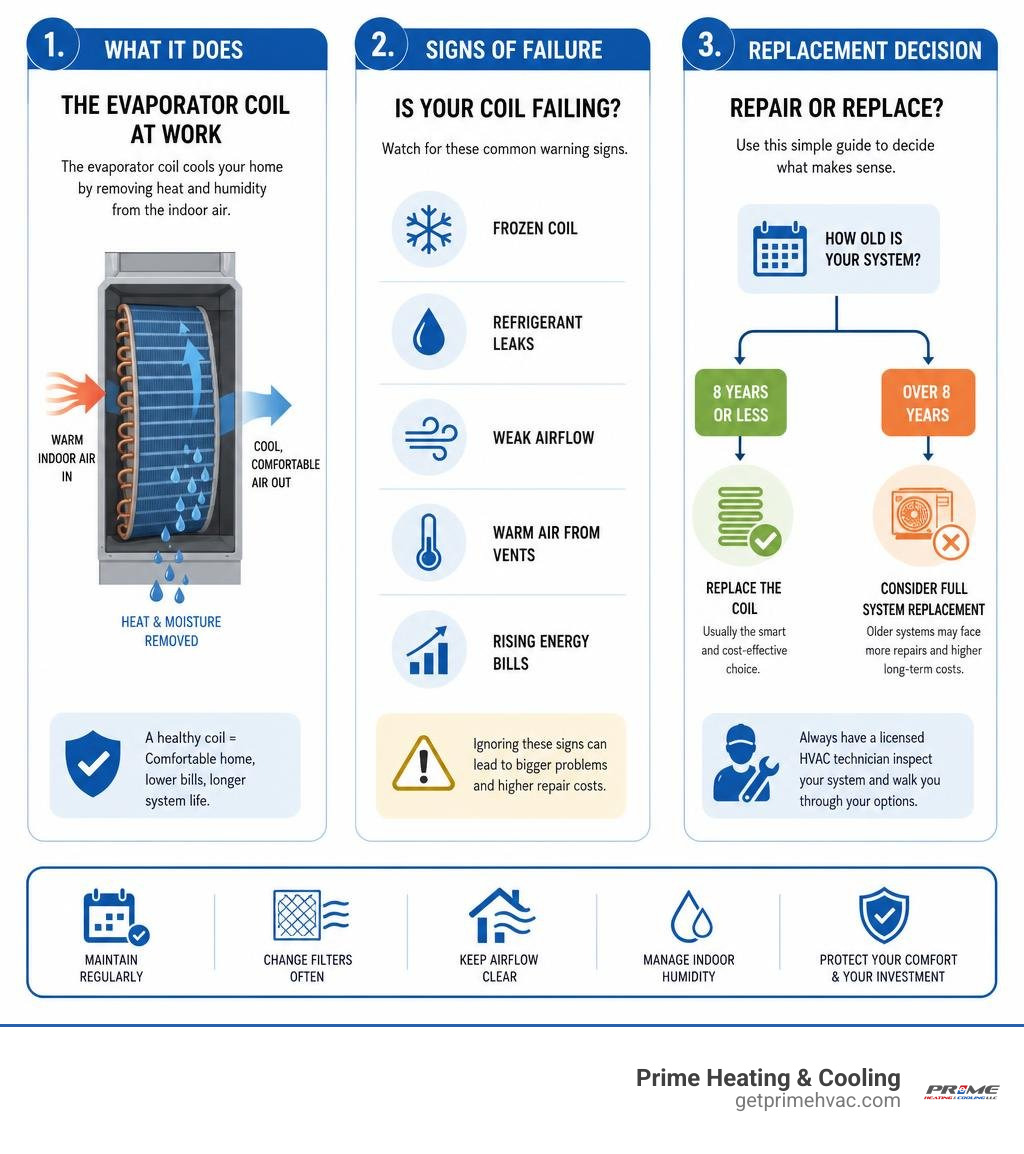
- When you need it: Refrigerant leaks, frozen coil, weak airflow, warm air from vents, rising energy bills
- How long it lasts: 10–15 years with proper maintenance
- Who should do it: A licensed HVAC technician (refrigerant handling requires EPA certification)
- Repair vs. replace: If your system is under 8 years old, coil replacement usually makes sense; older systems often warrant full replacement
Few things hit harder than your AC quitting on a hot, humid Rhode Island summer day. You call a technician, and they tell you the evaporator coil has failed. Suddenly you’re facing a major repair decision — and you’re not sure what questions to even ask.
The evaporator coil is the heart of your cooling system. It’s where warm indoor air gives up its heat, and where your home actually gets cooled. When it fails, nothing else in the system can compensate.
The good news? Understanding what’s happening — and what your options are — makes the whole process far less overwhelming.
I’m Tyler Steiner, founder of Prime Heating & Cooling, and I’ve handled hundreds of HVAC coil replacement jobs across Rhode Island, from South Kingstown to Newport to Narragansett. In this guide, I’ll walk you through everything you need to make a confident, informed decision.
Hvac coil replacement definitions:
The Complete Guide to HVAC Coil Replacement
To understand why an HVAC coil replacement is such a critical service, we have to look at the refrigeration cycle itself. Your air conditioning or heat pump system doesn’t actually “create” cold air; instead, it removes heat from your indoor spaces and transfers it outside.
This heat absorption process relies entirely on the continuous circulation of refrigerant between your indoor evaporator coil and your outdoor condenser coil. When warm, humid indoor air is blown across the cold surface of the evaporator coil, the refrigerant inside absorbs the heat and evaporates into a gas.
This process does double duty by managing your home’s latent load—meaning it pulls moisture out of the air to lower indoor humidity. In muggy coastal Rhode Island towns like Narragansett and Newport, this dehumidification is just as important for indoor air quality and comfort as lowering the actual temperature. To dive deeper into how this component keeps your home comfortable, check out this guide on the HVAC Evaporator Coil: Function, Maintenance & Replacement.
What is an Evaporator Coil and How Does It Work?
The evaporator coil is housed inside your indoor air handler or sits directly on top of your furnace. It is made of highly conductive metal tubing surrounded by thin metal fins designed to maximize surface area contact with the air.
Depending on your home’s space constraints and system design, the coil will typically feature one of three main configurations:
- A-Coil: Shaped like the letter “A,” this is the most common configuration. It consists of two angled coil panels that meet at the top, providing excellent heat transfer and efficient condensate drainage.
- N-Coil (or Z-Coil): Featuring a third coil panel angled back and forth in an “N” shape, this design fits into tighter, compact spaces while maintaining a high surface area for cooling.
- Slab Coil: A single flat panel positioned at an angle. These are typically used in horizontal air handlers where vertical clearance is limited.
No matter the shape, the core job remains the same: absorbing heat and pulling moisture out of the air. If you are experiencing issues with airflow or heat transfer, explore our breakdown of Evaporator Coil Repair: Common Issues and Solutions.

Signs You Need an HVAC Coil Replacement
How do you know if your coil is on its deathbed? Evaporator coils are highly sensitive components. Over time, they can develop several issues that make a complete HVAC coil replacement necessary:
- Refrigerant Leaks: This is the most common culprit. Pinhole leaks can form in the copper tubing due to formicary corrosion—a chemical reaction caused by household airborne acids (from cleaning products, building materials, and cosmetics) reacting with the copper. If you suspect a leak, read our guide on how to Stop the Drip: How to Tackle Your AC Evaporator Coil Leak.
- A Frozen Coil: When airflow is restricted or refrigerant levels drop, the surface temperature of the coil can fall below freezing, causing condensation to turn to ice. Operating a system with ice buildup can lead to liquid refrigerant returning to the compressor, causing catastrophic damage. Learn how to handle this safely with our resource on the Frozen Evaporator Coil Fiasco: Causes, Safest Defrost Methods and Permanent Fixes.
- Weak Airflow and High Energy Bills: If the coil is heavily corroded or fouled with dust and debris, your system has to work twice as hard to cool your home, leading to skyrocketing utility bills and weak airflow from your vents.
Copper vs. Aluminum: Which Replacement Coil is Better?
When planning an HVAC coil replacement, you will likely have to choose between copper and aluminum tubing. Historically, copper was the industry standard due to its superior thermal conductivity. However, modern HVAC manufacturing has shifted heavily toward aluminum.
| Feature | Copper Coils | Aluminum Coils |
|---|---|---|
| Thermal Conductivity | Excellent | Very Good |
| Corrosion Resistance | Vulnerable to formicary corrosion (pinhole leaks) | Highly resistant to formicary corrosion |
| Durability & Weight | Heavier, rigid copper joints | Lighter, flexible single-metal design |
| Repairability | Easier to patch/braze in the field | Difficult to repair; usually requires full replacement |
Modern all-aluminum coils have become the preferred choice because they eliminate the risk of formicary corrosion. While copper condenser coils are still common, replacing your indoor evaporator coil with an aluminum model offers outstanding long-term durability. To learn more about how your outdoor unit interacts with these materials, read about Condenser Coil Repair: Restoring Efficiency of Your Air Conditioner.
The Real Cost of HVAC Coil Replacement in 2026
When budgeting for an HVAC coil replacement, several factors will influence the final cost. Because every home and system configuration is unique, we look at the following variables to determine the scope of the project:
- Warranty Coverage: If your system is under its manufacturer’s warranty (typically 5 to 10 years if registered), the replacement coil part itself may be covered. In this case, you will only be responsible for labor, refrigerant, and administrative fees. If your system is out of warranty, you must cover the cost of both the new coil and the labor.
- Refrigerant Type: Older systems running on R-22 refrigerant face incredibly high costs because R-22 has been phased out and must be sourced from recycled stock. Modern systems use R-410A, while the newest 2026 systems utilize eco-friendly, low-GWP refrigerants like R-454B.
- Labor and Installation Complexity: Replacing a coil is labor-intensive. It requires recovering the existing refrigerant, unbrazing the old coil, modifying the sheet metal cabinet if necessary, installing the new coil, brazing the connections, pulling a deep vacuum to 500 microns to remove moisture, and recharging the system by weight. Attic or crawlspace installations in older homes across Providence or East Greenwich require more labor hours due to tight accessibility.
For a deeper dive into how these factors interact, check out What Does Evaporator Coil Replacement Cost? – Trane® and our comprehensive guide on The Ultimate Guide to Furnace Coil Replacement Costs.
Repair vs. Replace: When to Upgrade Your Entire System
One of the toughest decisions homeowners face is whether to replace just the evaporator coil or upgrade the entire HVAC system.
If your system is relatively new (under 8 years old) and still under warranty, replacing only the coil is almost always the smartest financial move. However, if your system is over 10 to 15 years old, replacing just the coil can lead to compatibility issues.
Modern air conditioners are designed to meet strict federal efficiency standards (minimum 14 SEER2 in northern states like Rhode Island). Mating a brand-new, high-efficiency evaporator coil to an aging, low-efficiency outdoor condenser can lead to mismatched operating pressures, reduced system performance, and premature compressor failure. If your compressor is already showing signs of wear, replacing the entire system is often more cost-effective in the long run.
To help make this decision, read up on the Signs Your Air Conditioner Needs Repair: Don’t Ignore These Red Flags and understand the risks of compressor issues with our guide on Understanding AC Compressor Repair: Causes, Costs and Solutions.
Professional Installation and Maintenance in Rhode Island
Because replacing an evaporator coil involves handling pressurized chemical refrigerants, it is illegal under EPA Section 608 for anyone without proper certification to perform this work. A professional installation ensures that the refrigerant is safely recovered, the line set is properly evacuated, and the new coil is sealed tightly to prevent air leaks.
Once your new coil is installed, keeping it clean is the best way to protect your investment and ensure it lasts its full 10-to-15-year lifespan. Simple steps make a massive difference:
- Change your air filters regularly: Check your air filter every 30 to 90 days. A clogged filter restricts airflow, which is the leading cause of frozen coils and system strain.
- Schedule annual professional cleanings: Dust and pet dander can bypass filters and build up on the wet surface of your coil, creating a breeding ground for mold and reducing heat transfer.
Keep your system running efficiently by checking out AC Coil Cleaning 101: Don’t Let Your Unit Lose Its Cool. For long-term peace of mind, read about The Importance of Regular AC Maintenance: Benefits and Tips and find out How an HVAC Tune-Up Can Extend the Life of Your System.
Making the Right Choice for Your Rhode Island Home
Dealing with a failing HVAC coil doesn’t have to be a headache. At Prime Heating & Cooling, we bring 20 years of experience, 24/7 emergency availability, and a customer-first approach to every home we service across Rhode Island.
Whether you need a quick diagnostic check in Smithfield, a complete coil replacement in East Greenwich, or are looking to upgrade to a highly efficient new system in South Kingstown, Newport, or Narragansett, our team of skilled, EPA-certified technicians is here to help. We focus on reliable, energy-efficient solutions tailored to the unique demands of our coastal New England climate.
Don’t let a failing coil compromise your home’s comfort and indoor air quality. Schedule expert AC repair services in Rhode Island with Prime Heating & Cooling today, and let us take the worry out of your HVAC system for good!