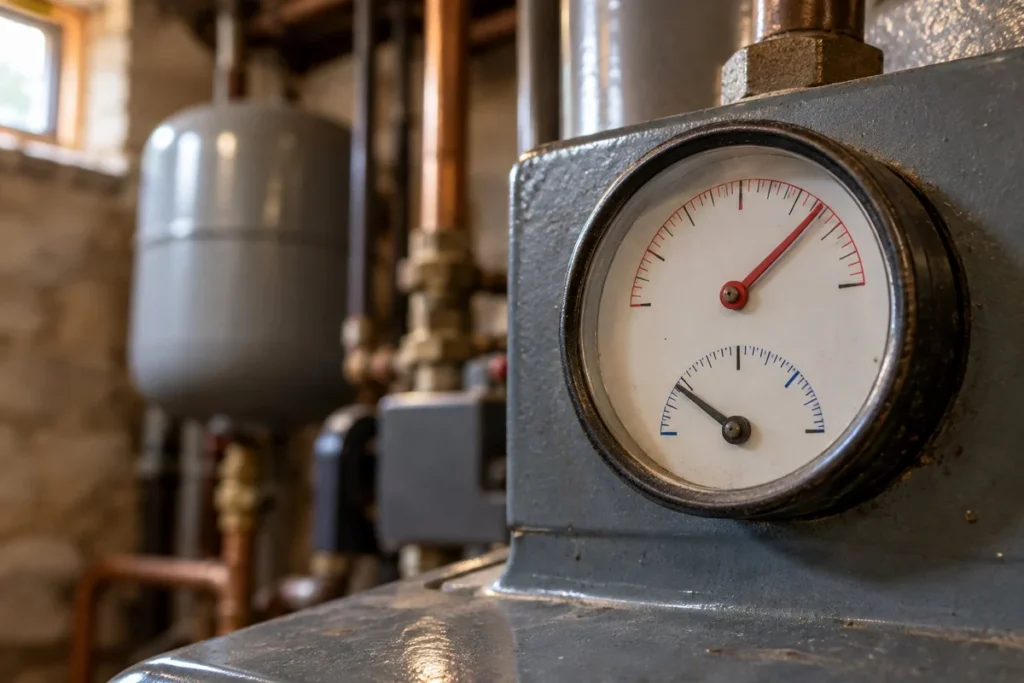
On most homes with a hot water boiler, the pressure gauge should read about 12 to 15 PSI when the boiler is cold and stay under about 25 PSI when it is hot. The round gauge on your boiler shows both water pressure and water temperature. Knowing what’s normal helps you catch a problem before it turns into no heat or a leak. This guide covers hot water boilers, not steam boilers, which run at much lower pressure.
How to Read Your Boiler Pressure Gauge
Most hot water boilers have one round gauge with two scales. One scale shows pressure in PSI, and the other shows water temperature in degrees. Some gauges also show feet of water, which is another way to measure pressure. Read it once when the boiler has been off for a while, and again when it has been running.
- Cold pressure: about 12 PSI for a one-story home and up to about 15 PSI for a two-story home
- Hot pressure: rises a few PSI as the water heats and should stay under about 25 PSI
- Water temperature while heating: often between about 140°F and 180°F
- Relief valve: most home boilers have one set to open at 30 PSI
Every system is a little different, so your technician may set yours a bit higher or lower. What matters most is that the reading stays steady from day to day. A pressure that keeps dropping or keeps climbing is a sign something is wrong. At Prime Heating & Cooling, we check the pressure, the expansion tank and the relief valve every time we service a boiler.
What Low Boiler Pressure Means
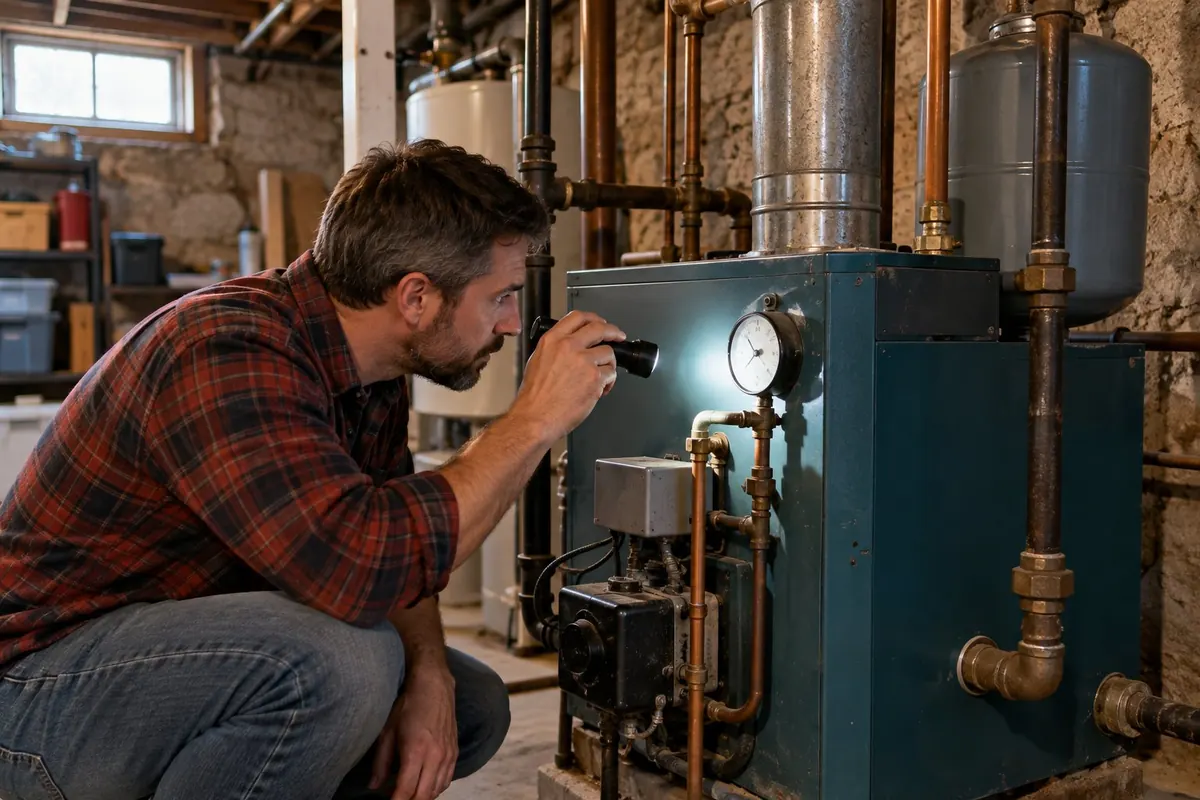
If your gauge reads below about 12 PSI when the boiler is cold, the system is likely missing water. That usually means there is a leak somewhere, such as a dripping pipe, a leaking boiler air vent, or a relief valve that let water out. Low pressure can leave upstairs radiators or baseboards cold, and you may hear gurgling as air moves through the pipes. The fill valve that adds water may also be stuck or set too low.
Don’t keep adding water without finding the cause. Fresh water brings in oxygen, which slowly rusts the inside of your boiler and pipes. If your pressure keeps dropping, have a technician find the leak and fix it. A steady leak is one of the warning signs of boiler failure worth taking seriously.
What High Boiler Pressure Means
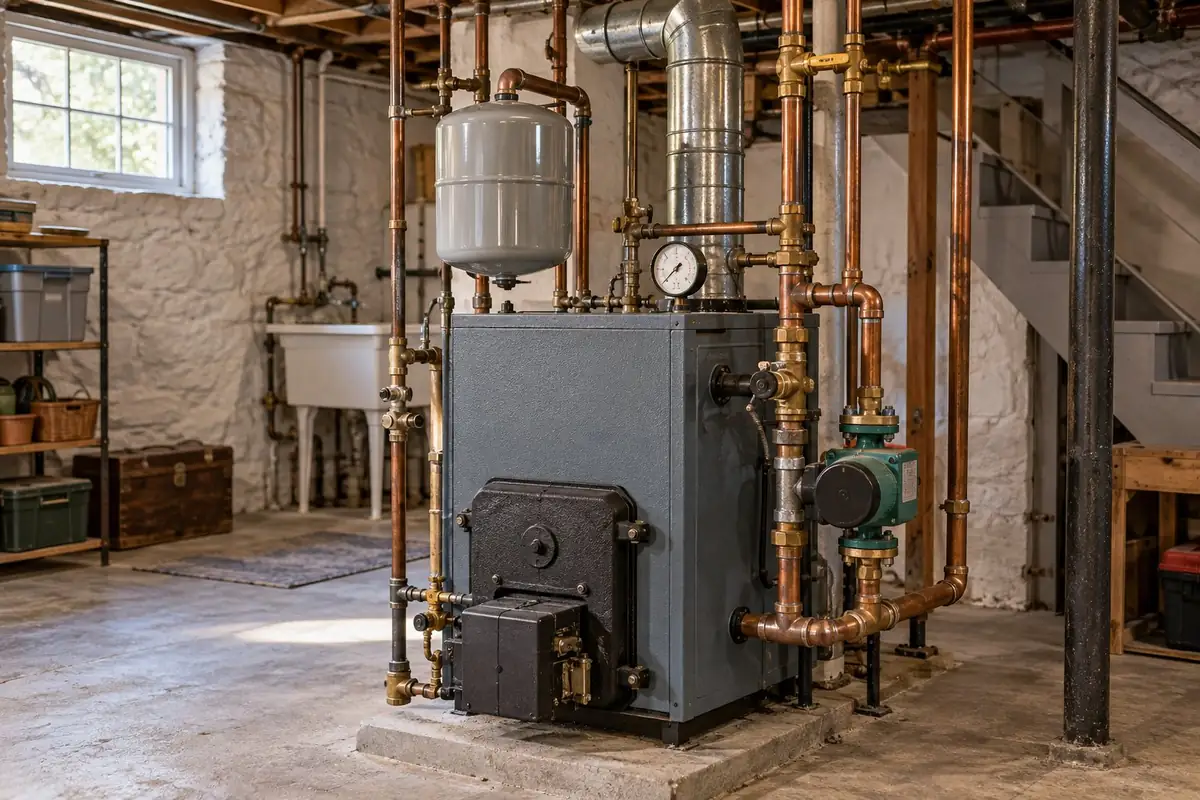
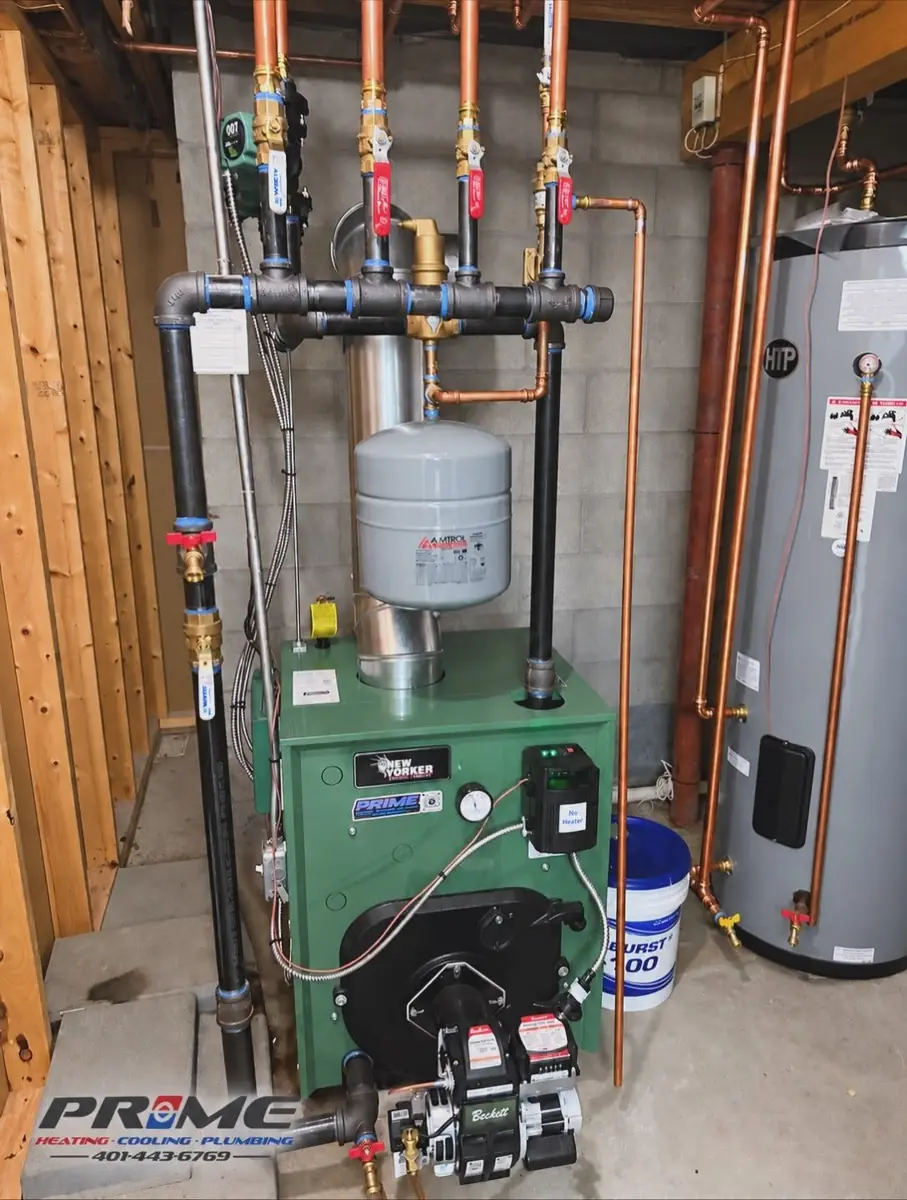
If the pressure climbs close to 30 PSI when the boiler is hot, too much water is getting in or the water has no room to expand. The most common cause is an expansion tank that has filled with water and stopped doing its job. A fill valve that won’t shut off can also push the pressure up. In boilers that also heat your tap water, a leak in the inside water heating coil can do the same thing.
Is a Leaking Boiler Relief Valve an Emergency?
A relief valve that drips is doing its job by letting out extra pressure. It is a sign you need service soon, but a few drips are not a reason to panic. If the gauge reads 30 PSI or higher, or the valve is spraying water, turn the boiler off and call right away. Never cap, plug or tighten a relief valve to stop a leak, since it keeps your boiler from building up dangerous pressure. Our post on leaking boiler relief valves covers what to do and what not to do.
Conclusion
For most hot water boilers, a normal reading is about 12 to 15 PSI cold and under about 25 PSI hot. Low pressure usually points to a leak, and high pressure usually points to the expansion tank or fill valve. A dripping relief valve is a warning you should not ignore. If your numbers look off, contact Prime Heating & Cooling to schedule boiler repair, and we will find the cause and set your pressure right.