
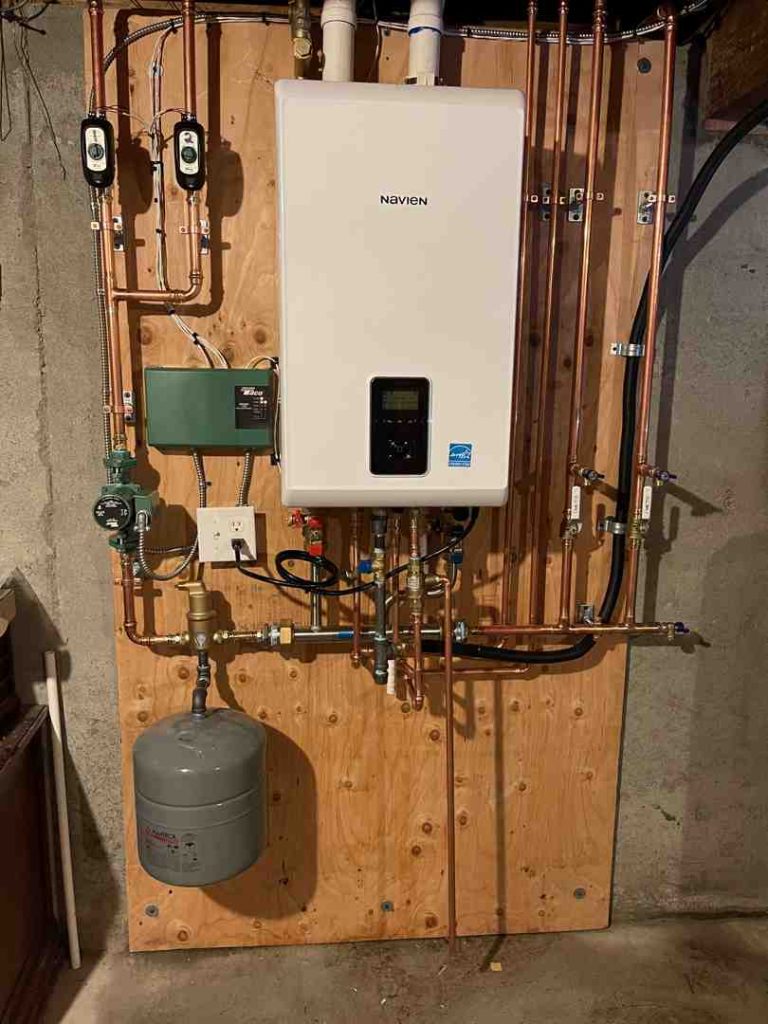
Why Every Rhode Island Homeowner Needs to Know About Boiler Service
Boiler service Rhode Island homeowners rely on is one of the most important — and most overlooked — parts of keeping a home warm and safe through a brutal New England winter.
Here’s a quick look at what you need to know:
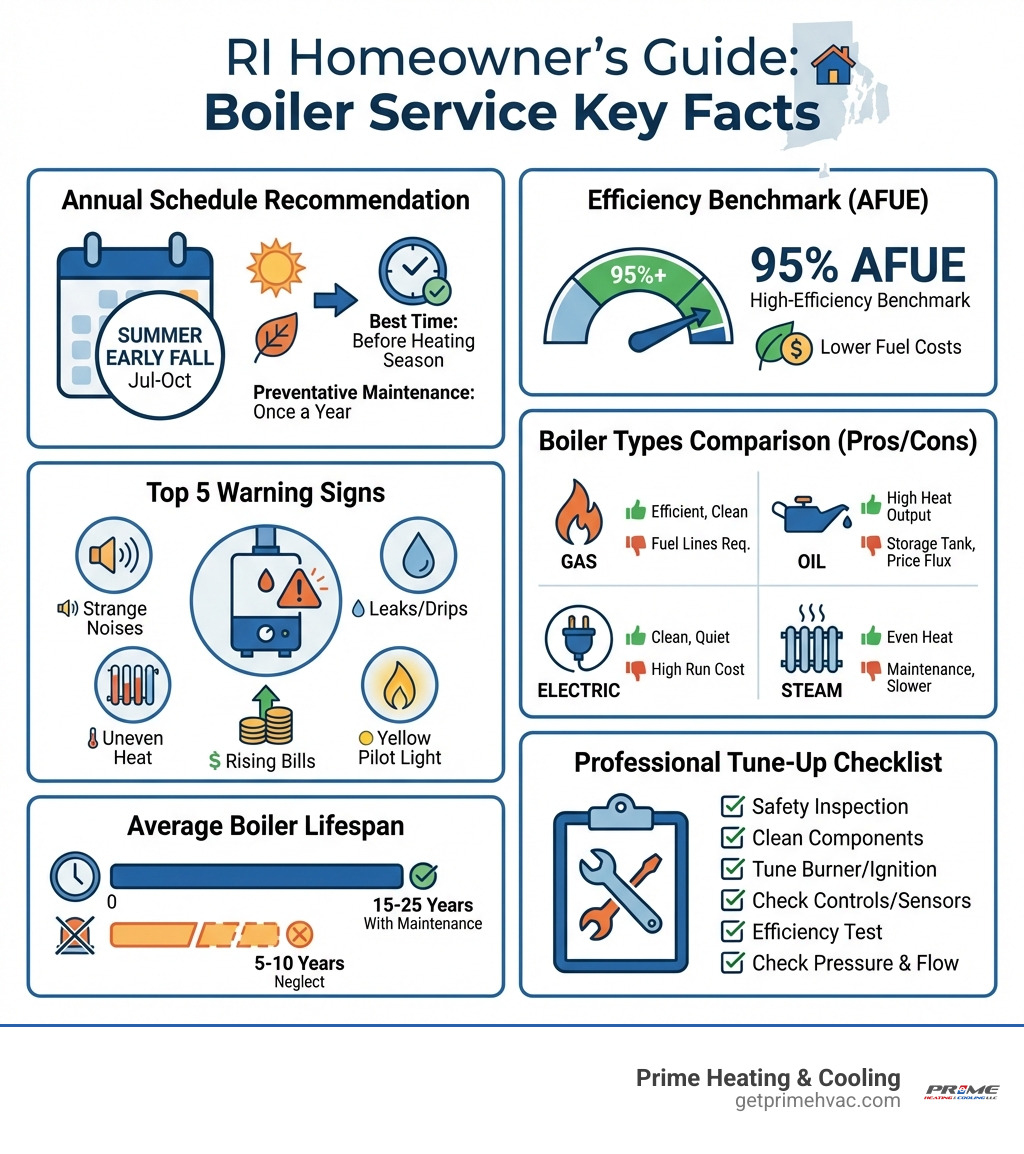
- Schedule service once a year — ideally in summer or early fall, before heating season
- Watch for warning signs — strange noises, leaks, uneven heat, rising energy bills, or a yellow pilot light
- Choose a licensed, local HVAC contractor with experience in your boiler type (gas, oil, electric, or steam)
- High-efficiency boilers (95%+ AFUE) can significantly cut your monthly fuel costs
- Boilers last 15–25 years with proper maintenance — neglect cuts that lifespan short
- Emergency service is available 24/7 from qualified local providers when things go wrong
Boilers account for over 60% of home energy use — so when something goes wrong, you feel it fast. Rhode Island’s cold winters make a reliable heating system more than a comfort issue. It becomes a safety issue.
Whether you have an older steam system in a historic Providence home or a modern gas boiler in a Warwick suburb, the fundamentals are the same: regular professional care keeps your system running efficiently and safely.
I’m Tyler Steiner, founder of Prime Heating & Cooling and a licensed HVAC professional trained at the New England Institute of Technology — I’ve spent my career providing boiler service Rhode Island homeowners can count on, from routine tune-ups to complex steam system repairs. In this guide, I’ll walk you through everything you need to know to protect your home and your heating investment.
Essential Boiler Service Rhode Island Homeowners Need
When we talk about “boiler service,” we aren’t just talking about a quick glance at the unit. A comprehensive boiler service Rhode Island residents should expect involves a deep dive into the mechanics that keep your radiators hot and your water flowing. Because boilers are pressurized systems that often involve combustible fuels like natural gas or oil, precision is everything.

A standard professional service visit typically includes:
- Visual Inspection: We check for corrosion, leaks, or any signs of physical damage on the tank and pipes.
- Cleaning Internal Components: Dust and soot can build up on burners and heat exchangers, drastically reducing efficiency.
- Safety Checks: We test the pressure relief valves and check for gas leaks.
- Combustion Analysis: We ensure the fuel is burning cleanly and not producing dangerous levels of carbon monoxide.
- System Balancing: Ensuring that the heat is distributed evenly across all rooms, which is especially important in older multi-story homes in places like Providence or Pawtucket.
To understand why your specific service might differ, it helps to know what kind of boiler you have. Rhode Island’s housing stock is diverse, meaning we see everything from 100-year-old steam systems to sleek, wall-mounted electric units.
Comparing Boiler Types in Rhode Island
| Boiler Type | Common Fuel | How it Works | Pros | Cons |
|---|---|---|---|---|
| Gas Boiler | Natural Gas | Heats water via a gas burner; circulates hot water or steam. | High efficiency, widely available in urban RI. | Requires gas line connection; risk of CO leaks. |
| Oil Boiler | Heating Oil | Uses an oil burner to heat water in a tank. | Common in rural RI (Scituate/Coventry); very hot heat. | Requires fuel delivery; tank maintenance needed. |
| Electric Boiler | Electricity | Uses heating elements (like a kettle) to heat water. | Quiet, no fuel storage, compact. | Can be expensive to run given RI electricity rates. |
| Steam Boiler | Gas or Oil | Heats water until it turns to steam; uses pressure to move heat. | Classic RI charm; excellent heat retention. | Complex to maintain; “banging” pipes if not balanced. |
Recognizing Signs You Need Boiler Service Rhode Island
Your boiler is usually a quiet worker, but when it starts acting up, it will literally try to tell you something is wrong. Ignoring these signs can lead to a complete system failure right when the temperature drops into the single digits.
- Strange Noises: If you hear “kettling” (a sound like a whistling tea kettle), it often means there is lime or sediment buildup in the heat exchanger. Banging or clanging in a steam system usually points to trapped water in the pipes or an unlevel radiator.
- Water Leaks: Any moisture around the base of your boiler is a red flag. It could be a failing seal, a cracked pipe, or a pressure valve trying to tell you the system is over-stressed.
- Inconsistent Heat: If the kitchen is a sauna but the bedroom is an icebox, your boiler isn’t distributing water or steam correctly.
- Rising Energy Bills: If your usage hasn’t changed but your bill has spiked, your boiler is likely working twice as hard to produce the same amount of heat.
- Yellow Pilot Light: For gas systems, the pilot light should always be a crisp blue. A yellow or flickering flame indicates incomplete combustion, which is a major carbon monoxide risk.
If you’re noticing these issues, don’t wait for a total breakdown. You can follow these how to get boiler repair in 3 easy to follow steps to get your system back on track quickly.
Why Annual Boiler Service Rhode Island is Critical for Winter
We often get asked, “Do I really need a tune-up every single year?” In Rhode Island, the answer is a resounding yes. Our winters are not just cold; they are damp and harsh, which puts immense strain on mechanical systems.
Annual boiler service Rhode Island homeowners schedule provides three main protections:
- Safety First: A cracked heat exchanger or a blocked flue can leak carbon monoxide into your home. This gas is colorless and odorless, making it a “silent killer.” Professional technicians use specialized sensors to ensure your air is safe.
- Reliability When It Counts: Most boiler breakdowns happen during the first major cold snap of the year. Why? Because the system has been sitting idle all summer, and the sudden demand causes weakened parts to fail. A summer or fall tune-up catches these weak points before they leave you shivering in January.
- Warranty Protection: Many manufacturers actually require proof of annual professional maintenance to keep your warranty valid. If you skip the service and the unit breaks, you might be stuck paying for the full replacement out of pocket.
For those in the Warwick or East Greenwich area, scheduling service with a licensed, local boiler specialist ensures that your system is calibrated for Rhode Island’s climate and your home’s unique layout.
High-Efficiency Installation and Energy Savings
If your boiler is more than 15 years old, you might be throwing money out the window-or rather, up the chimney. Older “standard” boilers often have an AFUE (Annual Fuel Utilization Efficiency) rating of around 60% to 70%. This means for every dollar you spend on fuel, 30 to 40 cents is wasted.
Modern high-efficiency boilers are game-changers. To be considered high-efficiency today, a boiler must provide at least 95% efficiency. These units use “condensing” technology to capture heat from exhaust gases that older units simply vent outside.
Benefits of upgrading include:
- Lower Fuel Bills: Many homeowners see a 20-30% reduction in monthly heating costs.
- Environmental Impact: Less fuel burned means a smaller carbon footprint for your household.
- Consistent Comfort: Modern units often feature “modulating” burners that adjust the flame size based on the actual outdoor temperature, preventing the “too hot/too cold” cycles of older systems.
If you are considering an upgrade, check out our boiler installation and repair services to see how a modern unit can fit into your home’s layout.
Steam Heat and Specialized RI Systems
Rhode Island is famous for its historic architecture, from the mansions of the East Side of Providence to the multi-family tenements in Pawtucket. Many of these homes still use steam heat, a system that was incredibly popular before World War II.
Steam is a “lost art” in the HVAC world. While many contractors claim they can fix it, steam requires a specific understanding of physics. Unlike hot water systems that use pumps, steam moves through the pipes using its own pressure.
Common steam issues we see in RI include:
- Radiator Banging: Usually caused by the radiator not being tilted slightly toward the pipe, allowing condensed water to pool and “clash” with incoming steam.
- Whistling Vents: If your radiator vents are constantly screaming, they are likely clogged with mineral deposits.
- System Imbalance: One radiator is scorching hot while another is stone cold.
If you’re a DIY enthusiast, you can often handle minor issues like replacing a radiator vent yourself. Check out our boiler air vent replacement guide to save a few dollars on simple fixes. However, for steam boiler service in RI involving the boiler itself, always call a pro.
Professional Maintenance vs. DIY Tasks
While we always recommend a professional for the “guts” of the machine, there are a few things Rhode Island homeowners can do to keep things running smoothly between visits:
- Clear the Area: Keep at least 3 feet of space around your boiler. Don’t use the boiler room as a closet for old newspapers, paint cans, or seasonal decorations. This is a fire hazard and prevents proper airflow.
- Dust the Pilot: If you have an older gas unit with a standing pilot light, you can gently blow dust away from the pilot assembly using a drinking straw. This helps keep the flame steady.
- Check the Pressure: Most boilers have a circular gauge. If you notice the pressure is significantly higher or lower than the “normal” range marked on the dial, it’s time to call us.
- Listen: Being familiar with the normal “hum” of your system helps you catch problems early when they start making “clunking” or “whirring” noises.
Tasks you should NEVER do yourself include:
- Adjusting the gas valve.
- Cleaning the internal burner ports.
- Attempting to “patch” a leaking tank.
- Electrical repairs on the control board.
Understanding the boiler gas valve replacement costs can help you budget for these necessary professional repairs without the shock.
Maximizing Your System’s Lifespan
A boiler is a major investment, often costing as much as a used car. Naturally, you want it to last as long as possible. With regular boiler service Rhode Island technicians provide, a high-quality boiler can last 15 to 25 years.
To reach that 25-year milestone, you need to focus on:
- Regular Flushing: Especially in areas with “hard” water, minerals can build up inside the tank. Flushing the system once a year prevents “hot spots” that can crack the heat exchanger.
- Corrosion Prevention: We check the “anode rod” (if applicable) and use water treatment chemicals to ensure the metal isn’t being eaten away from the inside out.
- Prompt Repairs: A small leak today is a flooded basement tomorrow. Fixing minor issues immediately prevents them from cascading into “system killers.”
Ensuring Reliability with Expert Local Care
At Prime Heating & Cooling, we’ve spent the last 20 years becoming the “boiler whisperers” for Rhode Island. We understand that a broken boiler in the middle of a February blizzard isn’t just an inconvenience — it’s an emergency. That’s why we offer 24/7 availability for our neighbors in East Greenwich, Johnston, Providence, and throughout the state.
Our team of licensed technicians doesn’t just “fix” things; we look for energy-efficient solutions that save you money in the long run. Whether you need a simple tune-up, a complex steam system balancing, or a brand-new high-efficiency installation, we bring a customer-first approach to every basement we enter.
Don’t wait for the first frost to find out your heating system isn’t up to the task. Whether you’re in Warwick, North Smithfield, or the East Side of Providence, we’re here to help.
Schedule your HVAC services in RI today and rest easy knowing your home will stay cozy all winter long.