Why a Ductless Mini Split in Rhode Island Makes Sense Year-Round
Ductless mini split Rhode Island homeowners are increasingly turning to for year-round comfort — and it’s easy to see why. These systems heat and cool without ductwork, cut energy bills, and work even in freezing New England winters.
Here’s what you need to know at a glance:
- What it is: A system with one outdoor unit connected to one or more indoor air handlers — no ducts required
- Best for: Older homes, additions, basements, garages, and any room that’s hard to heat or cool
- Cost range: Single-zone systems run $3,000–$7,000; whole-home multi-zone systems run $8,000–$20,000+
- Energy savings: Up to 30% less than traditional HVAC systems
- Cold-weather ready: Modern cold-climate models work reliably below 0°F
- Rebates available: Rhode Island Energy offers up to $2,750 per ton; a 30% federal tax credit also applies through 2032
Rhode Island’s older housing stock — triple-deckers, Cape Cods, colonial farmhouses — wasn’t built with central air in mind. Adding ductwork to these homes is expensive, invasive, and often impractical. That’s exactly the problem ductless mini splits solve.
Whether you’re finishing a basement, heating a sunroom, or replacing an aging system entirely, this guide walks you through everything you need to make a smart decision.
I’m Tyler Steiner, CEO and founder of Prime Heating & Cooling, and I’ve spent my career installing and servicing ductless mini split Rhode Island systems across New England. I’ll share what actually matters — from cold-climate performance to local rebates — so you can choose the right system with confidence.
Know your ductless mini split rhode island terms:
- Emergency HVAC Rhode Island
- HVAC tips for when it snows in Rhode Island
- Rhode Island air conditioning
Understanding the Ductless Mini Split in Rhode Island
To understand why a ductless mini split Rhode Island system is so effective, we first have to look at what’s missing: the ducts. Traditional central HVAC systems rely on a network of metal pipes hidden behind your walls to move air. In many of the beautiful, historic homes we see in East Greenwich or Providence, there simply isn’t room for those bulky ducts without lowering ceilings or destroying architectural charm.
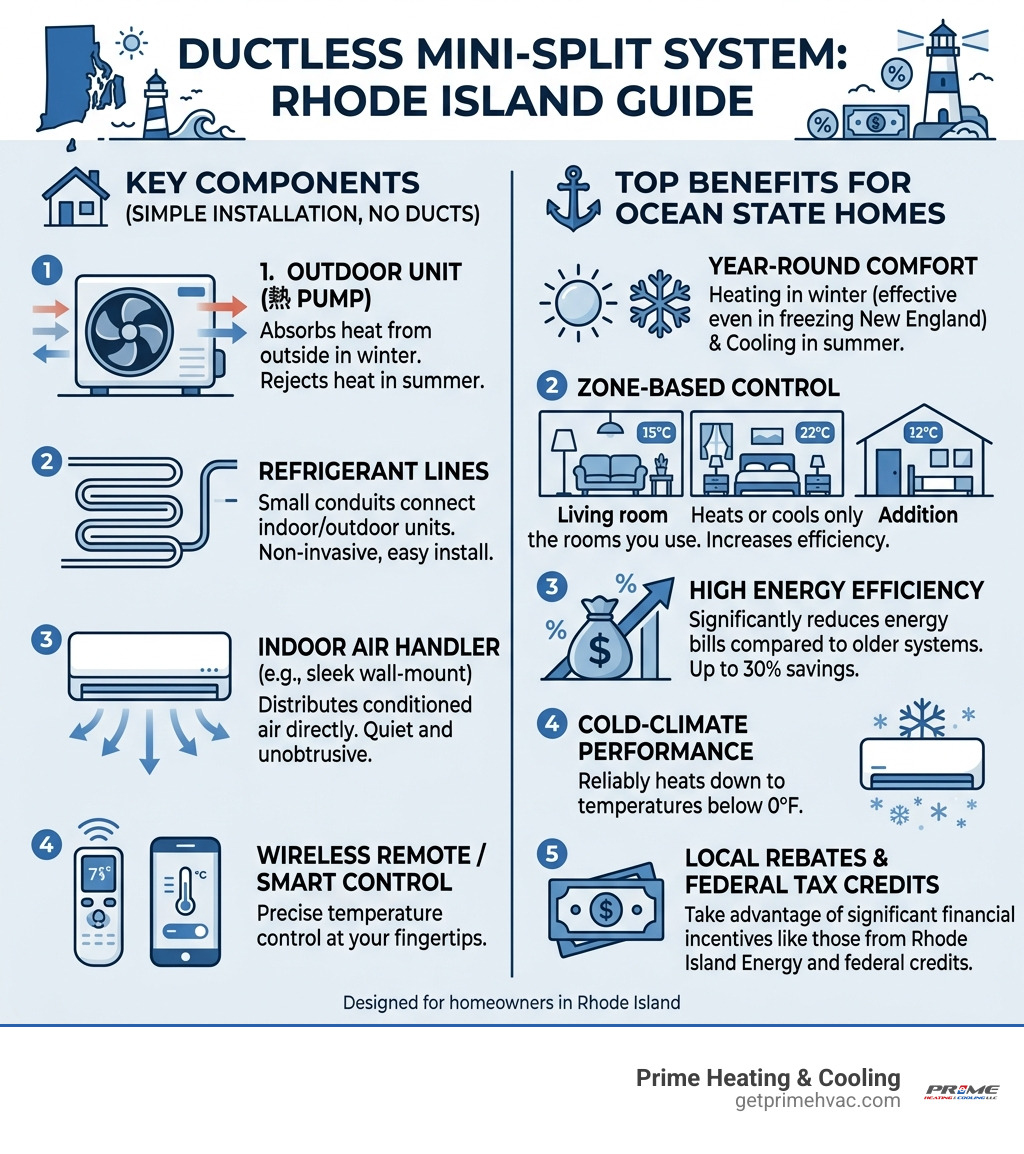
A ductless system bypasses this entirely. It consists of two main parts: an outdoor compressor (the “condenser”) and one or more indoor air handlers. These are connected by a small conduit containing refrigerant lines, a drain line, and power cables. Because there is no air traveling through dusty, leaky ductwork, you don’t lose the 20-30% of energy that usually escapes through holes in a traditional system.

The real magic, however, is in “zoned” comfort. Each indoor unit has its own thermostat. If you want your bedroom at 68 degrees but the guest room at 62, you can do that. This flexibility is a cornerstone of The Ultimate Guide To Ductless Mini Split Heat Pump Installation, which explains how these systems provide targeted comfort exactly where you need it. Whether you are in Warwick or Coventry, our HVAC Services RI team ensures these components are balanced perfectly for your home’s layout.
Ideal Applications for Local Homes
We often find that ductless technology is the “problem solver” for Rhode Island architecture. If you live in a classic Scituate farmhouse or a North Providence colonial, you know that some rooms just never seem to get warm enough in the winter or cool enough in the summer.
Common scenarios where we install these systems include:
- Older Homes: Where adding ducts would cost a fortune and ruin the aesthetics.
- Home Additions: It’s much easier to install a mini split than to try and tap into an existing, already-strained central furnace.
- Finished Basements and Garages: These areas are notorious for being damp and cold; a ductless unit provides heat and dehumidification in one go.
- Sunrooms: Often called “three-season rooms,” a mini split can turn them into “four-season rooms.”
As noted in Ductless Ac Systems A Trend In Smithfield Rhode Island, these units have become a massive trend because they solve the specific discomforts of New England living without the invasive construction of traditional HVAC.
How the Technology Works
At its heart, a ductless mini split Rhode Island homeowners use is a heat pump. It doesn’t “create” heat by burning fuel like a gas furnace; instead, it “moves” heat. In the summer, it pulls heat from inside your home and dumps it outside. In the winter, the process reverses: it finds heat in the outdoor air (yes, even when it’s cold!) and brings it inside.
The secret sauce is the inverter-driven compressor. Traditional units are either “on” or “off”—like a light switch. They blast air until the thermostat is satisfied, then shut down. Inverters are more like a gas pedal. They speed up or slow down to maintain a steady temperature. This prevents those annoying “hot and cold” swings and saves a significant amount of electricity.
For those in North Smithfield or Smithfield, understanding this cycle is key. You can learn more about the technical specifics in our guide on Ductless Mini Split Heat Pump Installation Smithfield Ri.
Performance and Efficiency in Cold Climates
A common myth we hear in Johnston and Lincoln is that heat pumps don’t work when it gets “New England cold.” While that might have been true twenty years ago, today’s technology has changed the game.
Modern “Hyper-Heat” or cold-climate models are specifically engineered to provide 100% heating capacity even when outdoor temperatures drop to 5°F, and many continue to provide reliable warmth well below -13°F. This is crucial for a ductless mini split Rhode Island installation because our winters are unpredictable.
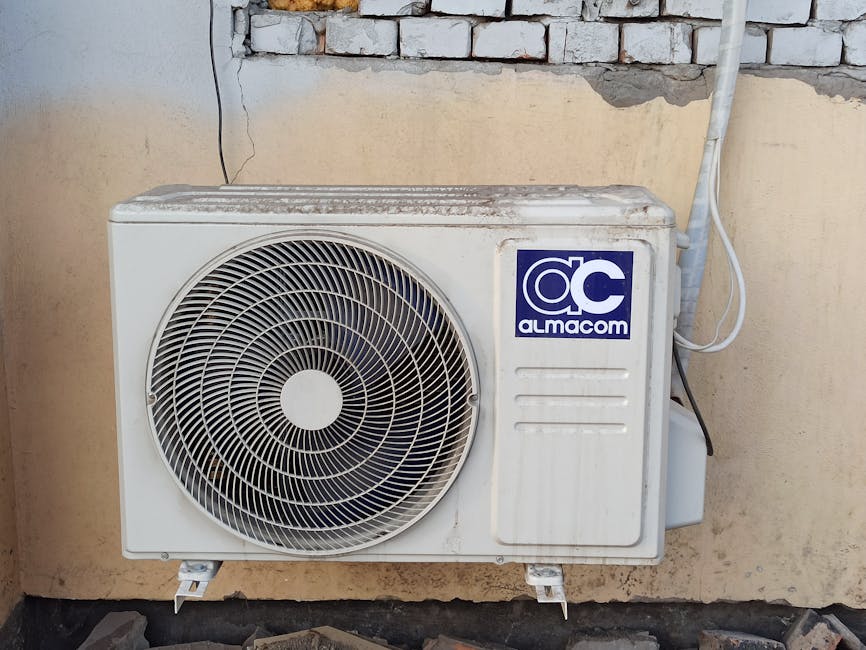
By switching from electric baseboard heat or old oil boilers to a high-efficiency mini split, many of our customers see up to 30% energy savings. In a state where heating costs can skyrocket in January, that’s a lot of money back in your pocket. Our team frequently handles Ductless Mini Split Heat Pump Installation Johnston Ri for homeowners specifically looking to slash those winter utility bills.
How a Ductless Mini Split Rhode Island System Handles Winter
When the snow starts falling in Warwick, your mini split is hard at work. It uses advanced refrigerant to extract thermal energy from the outdoor air. Even at 0°F, there is still “heat” in the air that the system can concentrate and move indoors.
For many residents, these systems serve as the primary heat source. However, they also work beautifully as “supplemental” heat. If you have a drafty living room in North Scituate, a mini split can provide that extra boost of warmth so you don’t have to crank up the expensive central furnace for the whole house. We’ve detailed this strategy in our guide to Ductless Mini Split Heat Pump Installation Warwick Ri.
Improving Indoor Air Quality
Beyond temperature, these systems are air-quality powerhouses. Because each indoor unit has its own multi-stage filtration system, they are incredibly effective at trapping dust, pollen, and allergens. This is a huge benefit for families in the East Side of Providence who might be dealing with the “old house smell” or city pollutants.
Additionally, mini splits act as highly efficient dehumidifiers. During our humid Rhode Island summers, they pull moisture out of the air much more effectively than a standard window unit. And the best part? They are “whisper-quiet.” You’ll barely know it’s running, unlike those rattling window ACs that make it impossible to hear the TV. For a deep dive into these features, check out Mastering Ductless Hvac Your Complete Installation Walkthrough.
Cost and Rebates for Rhode Island Homeowners
Let’s talk numbers. While we don’t give exact quotes without seeing your home (because every house is a unique puzzle), we can look at the typical investment ranges for the Rhode Island and Southeastern Massachusetts market.
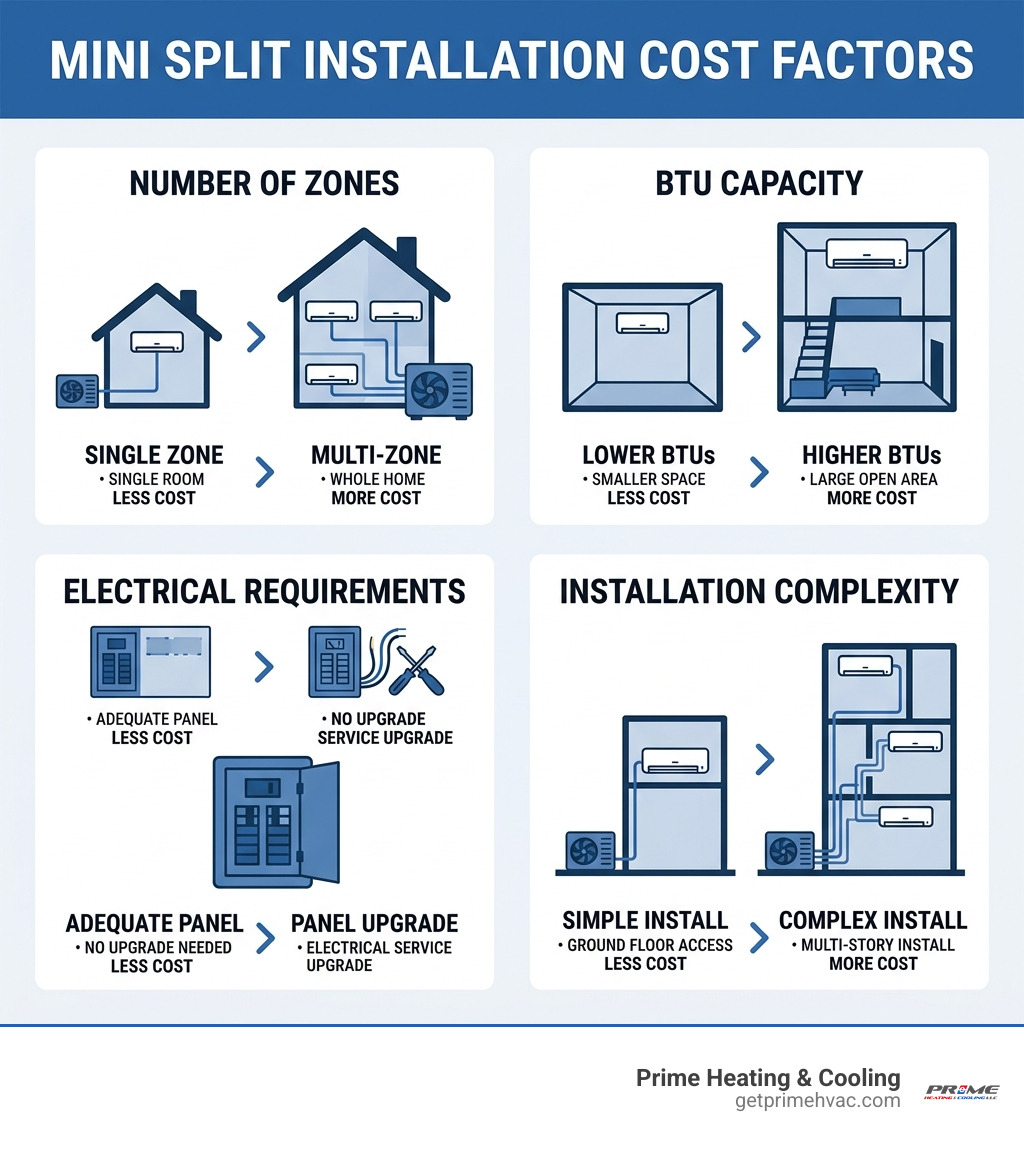
The cost of your ductless mini split Rhode Island project depends on several factors:
- Number of Zones: A single-zone (one room) setup is the most affordable. A whole-home multi-zone system (up to 8 units) is a larger investment.
- BTU Capacity: A large, open-concept living room in East Greenwich needs more “muscle” (BTUs) than a small nursery.
- Electrical Requirements: Sometimes we need to upgrade your electrical panel to handle the new load, which adds to the labor cost.
- Complexity: Running refrigerant lines through a second-story wall is more labor-intensive than a simple ground-floor install.
For a more detailed breakdown of these variables, you can read Mini Split Math What Youll Really Pay For Ductless Ac Installation.
Investing in a Ductless Mini Split Rhode Island Solution
Generally speaking, a single-zone installation in our area ranges from $3,000 to $7,000. If you are looking for a whole-home solution (multi-zone), prices typically start around $8,000 and can go up to $20,000+ for complex, high-capacity systems.
While that might seem like a significant upfront cost, you are essentially buying a furnace and an air conditioner in one. Plus, the operational savings over 15 years often pay for the system itself. We help our customers navigate these choices in our Mini Split Ac Installation Cost Guide 1 Ton Vs 2 Ton Systems.
Local Incentives and Tax Credits
This is where the news gets really good for Rhode Island residents. Because these systems are so “green,” there is a lot of money available to help you pay for them.
- Rhode Island Energy Rebates: Depending on the efficiency of the unit, you can qualify for rebates up to $2,750 per ton. For a typical 3-ton whole-home system, that’s a massive chunk of change.
- Federal Tax Credits: Under the Inflation Reduction Act, you can claim a 30% federal tax credit (up to $2,000 annually) for heat pump installations through 2032.
- Manufacturer Rebates: Brands like Mitsubishi often offer seasonal promotions that we can pass directly to you.
Navigating these can be tricky, but it’s worth it. We often help residents in the southern part of the state find the best deals, as mentioned in Top 10 Ductless Mini Split Providers In South Kingstown Ri
Professional Installation and Maintenance
You might see “DIY mini split kits” online, but we strongly advise against them. A ductless mini split Rhode Island system involves high-voltage electricity and pressurized refrigerant gases. If the lines aren’t flared and vacuumed perfectly, the system will leak, lose efficiency, and eventually burn out its compressor—which isn’t covered by warranty if a pro didn’t install it.
Our installation process at Prime Heating & Cooling is thorough:
- Site Assessment: We calculate the exact “heat load” of your rooms to ensure the system isn’t too big or too small.
- Custom Design: We find the most aesthetic placement for the indoor units and the most discreet path for the lines.
- Precision Install: We use specialized tools to ensure the refrigerant lines are bone-dry and leak-free.
- Final Walkthrough: We show you how to use the remote (or the smartphone app) so you’re comfortable from day one.
As we discuss in Installing A Ductless Mini Split Save Money Sweat And Sanity, professional installation is the only way to ensure your 12-year warranty remains valid.
Maintaining Your Ductless Mini Split Rhode Island System
The good news is that these systems are low-maintenance, but “low” doesn’t mean “no.”
- Monthly: You should pop open the front cover and rinse the plastic filters in your sink. It takes five minutes and keeps the air smelling fresh.
- Annually: We recommend a professional tune-up. We clean the internal coils (which can grow mold if neglected), check refrigerant pressures, and clear out the drain lines to prevent leaks.
With this simple care, a quality system can easily last 15 to 20 years. You can book your annual service through our HVAC Services RI page.
Why DIY Installation is Not Recommended
Beyond the safety risks, DIY installs often fail in the “fine print.” Most major manufacturers (like Mitsubishi or LG) require the system to be started by a licensed HVAC contractor to activate the warranty. If you do it yourself and a $2,000 part breaks in year three, you’re on your own. Licensed contractors also have the specialized vacuum pumps and micron gauges necessary to ensure the system is free of moisture—a “silent killer” of compressors.
Frequently Asked Questions about Ductless HVAC
How long does the installation process take?
For most single-zone systems, we are in and out in one day. Multi-zone systems for an entire house might take two to three days. We pride ourselves on leaving your home as clean as we found it—the only sign we were there is that your house is finally comfortable!
Can mini-splits replace my existing furnace?
Yes! Many Rhode Island homeowners are doing “whole-home conversions,” where they remove their old oil tank and boiler and rely entirely on ductless heat pumps. However, some prefer a “dual-fuel” approach, keeping their old system as a backup for those rare nights when it hits -20°F.
Do ductless units require a lot of maintenance?
Not at all. If you can wash a dish, you can clean the filters. The most important thing is simply not blocking the outdoor unit with snow or overgrown bushes so it can “breathe” properly.
Conclusion
At Prime Heating & Cooling, we’ve spent 20 years helping Rhode Islanders stay comfortable. We know the local climate, we know the local homes, and we know that a ductless mini split Rhode Island installation is often the best investment a homeowner can make for their long-term comfort and property value.
With our 24/7 availability and customer-first approach, we’re here to make sure your transition to ductless is smooth, affordable, and perfectly suited to your needs. From Providence to Coventry, we are your local experts.
Ready to see if a mini split is right for your home? Contact us for a consultation and let’s get your home ready for whatever the New England winter throws at us!