Why Rhode Island Homeowners Can’t Afford to Ignore Their Water Heater
If you’re looking for hot water services in RI, here’s a quick overview of what’s available and what you need to know:
Quick Answer: Hot Water Services Available in Rhode Island
- Installation — New tank, tankless, gas, electric, hybrid, and heat pump water heaters
- Repair — Same-day and emergency fixes for leaks, no hot water, strange noises, and more
- Maintenance — Annual flushing, anode rod checks, thermostat testing, and connection inspections
- Replacement — Full unit swap when repair no longer makes sense
- Emergency Service — 24/7 availability for urgent hot water failures
Think about your morning routine for a moment. Hot shower. Warm dishwater. Clean laundry. Your water heater quietly powers all of it — until it doesn’t.
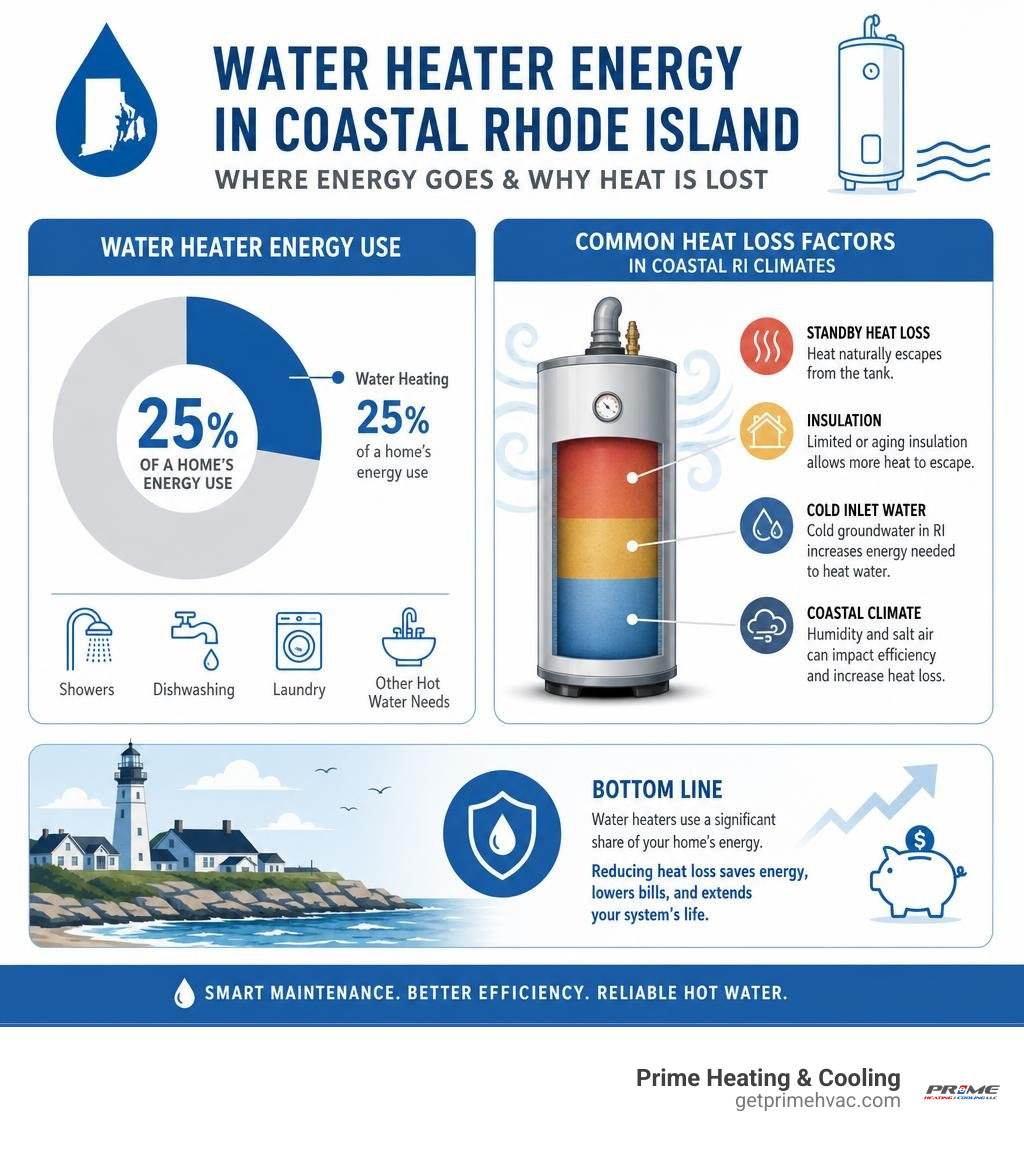
Here’s a number worth knowing: water heaters account for nearly 25% of a home’s energy use. That makes them one of the most expensive — and most overlooked — appliances in your home.
Rhode Island winters add another layer of pressure. Cold inlet water temperatures force your water heater to work harder, and coastal humidity near areas like Newport and Narragansett can accelerate corrosion on older units. The result? Systems that wear out faster and cost more to run.
What makes it worse is that over 70% of homeowners have never flushed their water heater — a simple task that can add years to its life and shave real money off monthly energy bills.
The good news: a few smart moves can protect your system, lower your bills, and keep hot water flowing all year long.
I’m Tyler Steiner, CEO and founder of Prime Heating & Cooling, and I’ve spent years helping Rhode Island homeowners navigate water heater installations, repairs, and upgrades across the state — from Providence to South Kingstown. My team and I live and work in this region, so we understand exactly what hot water services in RI demand in terms of reliability, efficiency, and local expertise.
Essential Tips for Choosing Hot Water Services RI Homeowners Trust

When selecting hot water services in RI, navigating the local climate and water conditions is key. From the hard water minerals found in Kent County municipal lines to the humid coastal air in Narragansett Bay, your water heating system faces unique regional challenges.
Achieving long-term energy efficiency starts with matching the right system to your home’s layout and usage patterns. To help you weigh your options, we have compiled a quick comparison of the two primary system types installed across Rhode Island:
| Feature | Traditional Tank Water Heaters | Tankless Water Heaters |
|---|---|---|
| Average Lifespan | 6 to 10 years (up to 12 with strict maintenance) | 20+ years |
| Energy Efficiency | Standard (subject to standby heat loss) | High (heats only on demand, up to 0.96 UEF) |
| Space Required | High (requires floor space for 40-80 gallon tank) | Low (compact, wall-mounted design) |
| Hot Water Supply | Limited to tank capacity | Endless on-demand supply |
| Upfront Cost | Lower initial equipment and installation cost | Higher initial investment |
Tip 1: Know When to Repair vs. Replace Your Water Heater
No one wants to wake up to an icy surprise in the shower, but how do you know if your system is on its last legs or simply needs a quick fix?
Most residential water heaters last from six to ten years before they need to be replaced. If your system is approaching this age range, keep a close eye out for these common warning signs:
- Rusty or Discolored Water: This often indicates internal corrosion within the tank, which can lead to sudden cracks.
- Strange Noises: Rumbling, popping, or banging noises are classic signs of heavy sediment accumulation at the bottom of the tank.
- Active Leaking: Puddles around the base of the unit usually point to a failing tank or loose valves.
- Inconsistent Temperatures: Lukewarm water or a rapid drop in hot water supply suggests failing heating elements or thermostat malfunctions.
Before you rush into a major purchase, it is helpful to understand the basics of your system. Check out our guide on Understanding Water Heaters in Your Home: What Every Homeowner Should Know to learn how these units operate.
If your tank is structurally sound, many issues-such as a faulty thermostat, a broken heating element, or a worn-out pressure relief valve-can be resolved with a targeted repair. However, if your tank is leaking from the bottom or is well past its ten-year mark, planning an Affordable Water Heater Replacement 101 is the safest and most cost-effective path forward.
For those living in historic homes or tight spaces in Johnston, consulting a local specialist can help you determine if a simple repair will suffice or if a system upgrade is necessary.
Tip 2: Compare Tank vs. Tankless Hot Water Services RI Options
When it is time for a new system, you will face a classic plumbing debate: Tank vs Tankless Water Heaters.
Traditional tank systems heat and store water continuously. While they are reliable and have a lower upfront installation cost, they suffer from “standby heat loss”-meaning they consume energy to keep water hot even when you are asleep or at work.
In contrast, tankless water heaters heat water only when you turn on a tap. These systems eliminate standby energy losses entirely, allowing some high-efficiency condensing models to achieve up to a 0.96 Uniform Energy Factor (UEF). This transition can save homeowners up to 30% on their water heating energy bills.
If you are exploring premium tankless systems, reviewing specialized high-efficiency options can give you an idea of the wall-mounted, space-saving designs available for New England homes.
Another highly efficient option to consider is the hybrid heat pump water heater. These systems pull heat from the surrounding air to warm your water, consuming up to 60% less energy than standard electric tanks. To explore how these different technologies fit into various lifestyles-from rental properties to single-family homes-take a look at our guide on RI Water Heater Wisdom From Rentals to Replacements.
Tip 3: Prioritize Annual Flushing to Prevent Sediment Buildup
If you want to keep your water heater running efficiently for as long as possible, regular maintenance is non-negotiable.
Rhode Island’s water supply can carry dissolved minerals that settle at the bottom of your tank over time. This sediment acts as a barrier between the heating burner and the water, forcing your system to work significantly harder.
Consider these critical statistics:
- Over 70% of homeowners have never flushed their water heater, which can cut its operational life by 3 to 5 years.
- Properly maintained water heaters typically last 10 to 12 years, whereas neglected units often fail at just 6 to 8 years-a potential 40% reduction in service life.
- Sediment-laden water heaters can consume up to 30% more energy than well-maintained units.
- Each inch of sediment accumulation forces a water heater to consume approximately 10% more energy.
To protect your system, we recommend scheduling Regular Hot Water Services in Cranston RI to flush out accumulated minerals. Regular maintenance should also include checking the anode rod-a sacrificial metal rod that attracts corrosive elements to protect the steel tank from rusting out.
For residents in Kent County, utilizing professional maintenance services ensures your system is thoroughly flushed and safety valves are fully tested before the cold winter months arrive.
Tip 4: Leverage Rhode Island Rebates for Energy-Efficient Upgrades
Upgrading to a high-efficiency water heater is an investment that pays off over time, especially when you take advantage of local energy-efficiency programs.
Rhode Island offers excellent incentives, utility rebates, and federal tax credits for homeowners who transition to high-efficiency heat pumps or tankless systems. These rebates can offset a significant portion of your upfront installation costs, making premium, energy-saving models much more affordable. You can also review current federal eligibility through the ENERGY STAR federal tax credits for water heaters resource before choosing a system.
By choosing a qualified system, you can secure a Steady Hot Water Supply in Cranston RI while lowering your monthly utility bills. If you live in areas like East Greenwich, pairing your water heater upgrade with broader home comfort improvements can maximize your savings.
You can learn more about local service standards to see how regional HVAC and plumbing improvements work together to enhance home efficiency.
Tip 5: Choose Local Experts for Emergency Hot Water Services RI
When a water heater fails, it rarely happens at a convenient time. A burst tank can quickly flood a basement, causing significant property damage. That is why having access to reliable, 24/7 emergency service is critical.
When dealing with pressurized water, gas lines, or high-voltage electrical connections, DIY fixes can be dangerous. Working with licensed professionals ensures your repairs are completed safely and in compliance with local plumbing codes.
For comprehensive system care, our team at Prime Heating & Cooling handles everything from minor leak repairs to complete Plumbing Installations Repairs.
Whether you need a rapid diagnostic visit in Coventry or a complete water heater installation service in Providence, choosing local experts who understand Rhode Island’s distinct housing stock is essential.
If you are dealing with a sudden breakdown, our dedicated Hot Water Services RI team is always ready to restore comfort to your home. You can also read through local feedback and reviews to see how neighbors across the state have resolved their emergency plumbing challenges.
Sizing Your Water Heater for South Kingstown, Newport, and Narragansett Homes
Sizing a water heater is not a one-size-fits-all process. If you install a unit that is too small, your family will constantly run out of hot water. If you install one that is too large, you will waste energy heating water you never use.
When sizing a traditional tank heater, we look at the First Hour Rating (FHR), which measures how much hot water the unit can deliver during a busy peak hour. For tankless systems, we calculate the flow rate (in gallons per minute) and the required temperature rise—which is particularly important during freezing Rhode Island winters when incoming groundwater is exceptionally cold.
[Average Ground Water Temp: 45°F] ---> [Target Shower Temp: 120°F] = 75°F Temperature Rise Required
In coastal communities like South Kingstown, Newport, and Narragansett, homeowners face unique demands:
- Vacation Rental High-Demand: Many coastal homes serve as summer rentals. These properties require robust water systems to handle back-to-back showers, multiple laundry loads, and dishwasher runs simultaneously.
- Coastal Salt Air Corrosion: Salt-heavy air can accelerate the deterioration of external venting and brass fittings. Selecting durable, corrosion-resistant materials is critical in these zones.
To ensure you cover all your bases before making a purchase, review our Affordable Water Heater Installation Ultimate Checklist to guide your sizing and preparation steps.
Frequently Asked Questions About RI Hot Water Services
How long do water heaters last in coastal Rhode Island?
In coastal areas like Newport and Narragansett, the combination of salty air and humid conditions can accelerate corrosion on external components and fittings. While a standard tank water heater typically lasts 6 to 10 years, coastal systems that do not receive annual maintenance may fail closer to the 6-year mark. Tankless systems built with stainless steel heat exchangers are highly resilient and can easily exceed 20 years with proper care.
What are the best energy-efficient water heaters for RI winters?
For Rhode Island’s cold winters, hybrid heat pump water heaters and high-efficiency condensing tankless water heaters are excellent choices. Hybrid systems leverage heat pump technology to deliver outstanding savings during moderate months, while tankless systems ensure you never run out of hot water, even when incoming groundwater temperatures drop significantly in January and February.
How much can I save with Rhode Island energy rebates?
Upgrading to an ENERGY STAR® certified heat pump water heater can qualify you for substantial local utility rebates and federal tax credits. These incentives often cover a significant portion of the equipment cost, and the resulting energy savings can lower your water heating bills by up to 60% annually.
Conclusion: Secure Your Home’s Comfort Today

Your water heater is the quiet workhorse of your household. Taking proactive steps—like scheduling an annual flush, checking your anode rod, or upgrading to a high-efficiency tankless system—will protect your home from unexpected leaks and keep your utility bills manageable.
At Prime Heating & Cooling, we bring 20 years of experience, a customer-first approach, and 24/7 availability to homeowners across Rhode Island, including East Greenwich, Johnston, Coventry, Warwick, and Providence. Whether you need a quick repair or a complete system replacement, our skilled technicians are here to help.
Ready to secure reliable hot water for your home? Schedule Your Hot Water Service Today with Prime Heating & Cooling!