
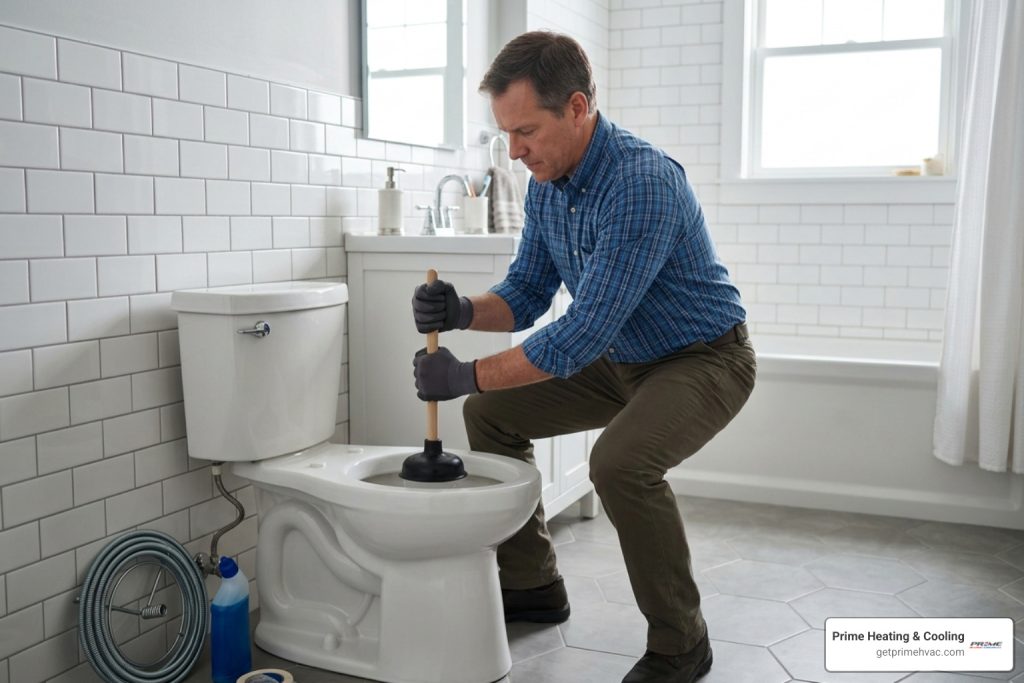
The Fastest Way to Unclog Toilet, Sink & Bathtub Drains in Rhode Island
How to Unclog Toilet, Sink & Bathtub Drains in Rhode Island is something most homeowners will need to tackle at least once — and knowing the right steps can save you time, money, and a lot of frustration.
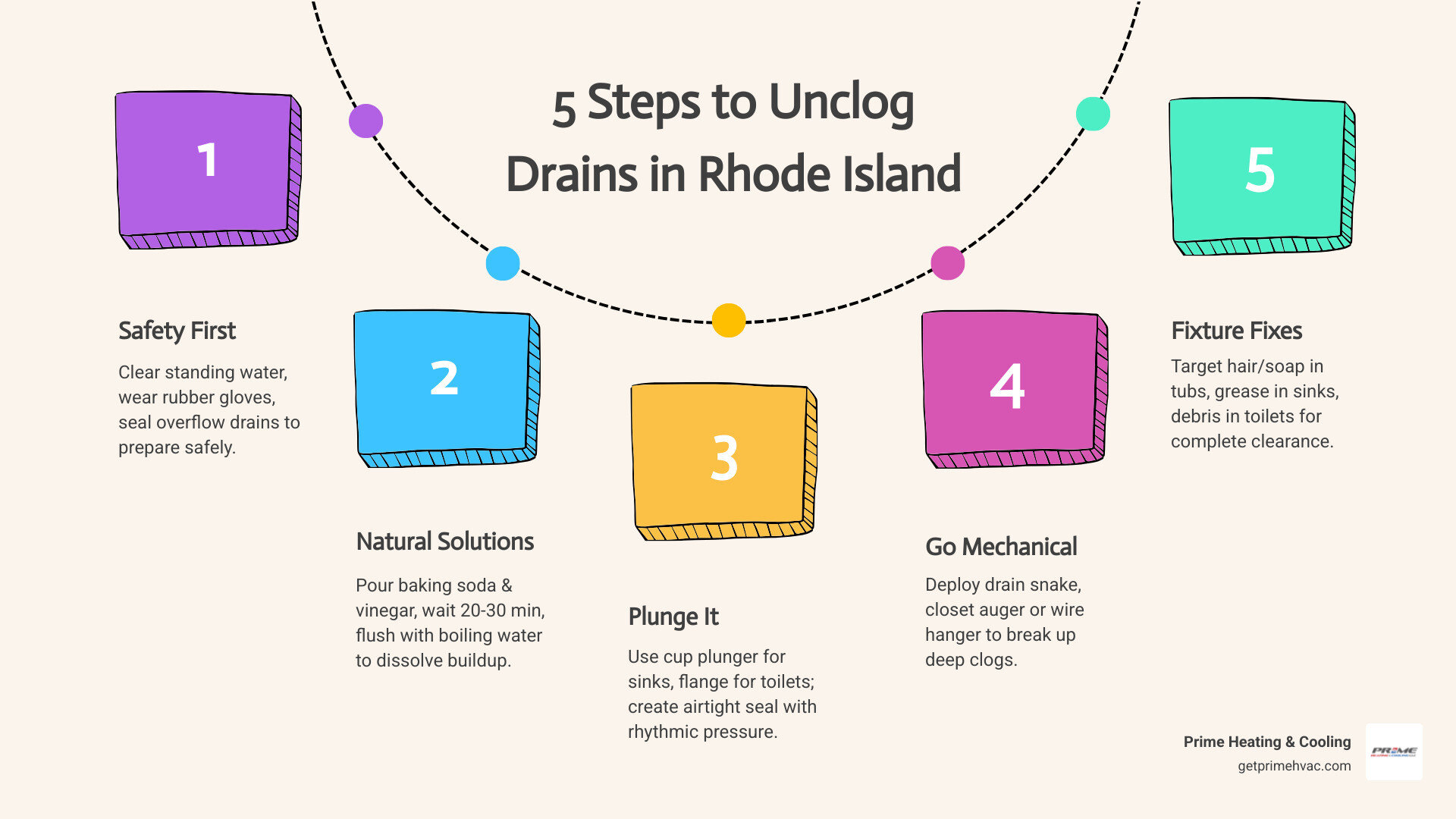
Here’s a quick overview of the 5-step process:
- Safety first — Clear standing water, put on rubber gloves, and seal overflow drains
- Natural solutions — Pour baking soda and vinegar down the drain, wait 20–30 minutes, flush with hot water
- Plunge it — Use a cup plunger for sinks and a flange plunger for toilets, creating a tight seal
- Go mechanical — Use a drain snake, wire hanger, or closet auger for deeper clogs
- Fixture-specific fixes — Target hair and soap scum in tubs, grease in kitchen sinks, and debris in toilets
Most minor clogs can be cleared with steps 1–3 alone. If the clog persists after all five steps, it’s time to call a professional.
Clogged drains are one of the most common plumbing headaches Rhode Island homeowners face. Whether it’s a slow-draining bathroom sink, a backed-up bathtub, or a toilet that won’t flush properly, the root cause is usually buildup — hair, grease, soap scum, mineral deposits, or something that simply shouldn’t have gone down the drain.
The good news? Most clogs can be cleared at home with the right tools and a little patience. But Rhode Island homes come with some unique challenges — older cast iron pipes, hard water, and freeze-thaw soil movement can all make clogs more frequent and more stubborn than in newer construction.
I’m Tyler Steiner, CEO and founder of Prime Heating & Cooling, and after years of working on plumbing systems across Rhode Island and Massachusetts, I’ve seen how the region’s aging infrastructure and seasonal conditions affect drain performance — which is exactly why I put together this guide on how to unclog toilet, sink & bathtub drains in Rhode Island. Read on for everything you need to handle the most common clogs safely and effectively.
How to Unclog Toilet, Sink & Bathtub Drains in Rhode Island terms to know:
Regional Challenges: Why Rhode Island Drains Clog
Living in the Ocean State brings a unique set of plumbing challenges that homeowners in newer parts of the country might never encounter. If you are struggling with How to Unclog Toilet, Sink & Bathtub Drains in Rhode Island, it helps to understand why these blockages happen in our local area specifically.
Aging Infrastructure and Historic Pipes
Rhode Island is home to some of the oldest housing stock in the United States. Many homes in Providence, East Greenwich, and Warwick still utilize original cast iron or even clay sewer pipes. Over decades, cast iron pipes corrode from the inside out, creating a rough, “scaled” surface that snags hair, toilet paper, and grease. Clay pipes, while durable against corrosion, are prone to shifting and cracking as the ground moves.
Tree Root Intrusion
In our beautiful, tree-lined neighborhoods like those in Lincoln or Scituate, tree roots are a primary culprit for main line clogs. Roots are naturally attracted to the moisture and nutrients inside sewer lines. They can enter through microscopic cracks or loose joints in older clay pipes, eventually growing into a thick “root ball” that completely obstructs the flow.
Hard Water and Mineral Deposits
Much of Rhode Island’s water supply contains minerals that can lead to scale buildup. Over time, these minerals combine with soap scum to create a concrete-like substance inside your bathroom drains. This narrowing of the pipe makes it much easier for a small amount of hair to turn into a total blockage.
Freeze-Thaw Cycles and Soil Movement
Our New England winters are famous for the freeze-thaw cycle. As the ground freezes and thaws, the soil shifts. This movement can cause “bellies” or sags in your underground drain lines where water pools and debris settles, or even cause pipes to crack. If you’ve noticed recurring issues, you might want to check out these 7 Plumbing Tips To Prevent Disasters In Rhode Island.
How to Unclog Toilet, Sink & Bathtub Drains in Rhode Island: A 5-Step Guide

When you’re ready to tackle a clog, having a plan is essential. Before you start, gather your supplies: rubber gloves, eye protection, a bucket, and your choice of tools (plunger or snake). Following a systematic approach ensures you don’t accidentally make the problem worse or damage your fixtures. For more help identifying the source of the problem, see our guide on How To Troubleshoot Plumbing Issues In 5 Simple Steps.
Step 1: Safety First and Initial Assessment
Before you dive in, take a moment to assess the situation. Is it just one sink, or are multiple fixtures backing up? If every drain in the house is slow, you likely have a main sewer line issue rather than a simple sink clog.
- Gear Up: Wear long rubber gloves and eye protection. You’re dealing with bacteria-laden water and potentially splashing debris.
- Clear the Area: Remove any standing water from the sink or tub using a small bucket or cup. It is much easier (and cleaner) to work when you aren’t fighting a basin full of dirty water.
- Seal the Overflows: This is the most forgotten step! Bathroom sinks and bathtubs have overflow holes. To get a good seal with a plunger, you must cover these holes with a wet rag or duct tape. If you don’t, the air pressure will just escape through the overflow instead of pushing against the clog.
Step 2: Apply Natural Dissolving Solutions
At Prime Heating & Cooling, we strongly recommend starting with natural methods before reaching for heavy tools or (heaven forbid) harsh chemicals.
- The Classic Combo: Pour 1 cup of baking soda down the drain, followed by 1 cup of white vinegar. The resulting chemical reaction creates a fizzing action that can break up organic matter like hair and soap scum. Let it sit for at least 30 minutes, then flush with a gallon of boiling water.
- The Salt and Soda Method: For tougher kitchen grease, mix 1/2 cup of salt with 1/2 cup of baking soda. Pour it down, let it sit overnight, and flush with hot water in the morning.
- The Epsom Salt Trick: If you’re looking for how to unclog a toilet without a plunger, a mixture of Epsom salt and liquid dish soap can sometimes help break down waste in a toilet bowl.
A Warning on Chemicals: Avoid commercial liquid drain cleaners. These products contain sulfuric acid or sodium hydroxide, which generate intense heat. In older Rhode Island homes, this heat can soften PVC joints or cause old, brittle cast iron to crack. Furthermore, if the chemical fails to clear the clog, you are left with a basin full of toxic “acid water” that makes it dangerous for a plumber to work on later.
Step 3: Master the Plunge for Toilets and Sinks
Plunging is an art form. Most people fail because they use the wrong tool or the wrong technique.
- Cup Plunger (Sinks and Tubs): These look like a simple rubber bowl. They work best on flat surfaces like a kitchen sink.
- Flange Plunger (Toilets): These have an extra “sleeve” or flap that folds out from the bottom. This sleeve fits into the toilet’s trapway to create the necessary airtight seal.
- The Technique: Position the plunger over the drain and push down slowly to get the air out. Once you have a seal, use firm, rhythmic “up and down” motions. The goal is to move the water back and forth to loosen the clog. After 10–15 seconds, pull the plunger away sharply.
Step 4: Deploy Mechanical Tools for Deep Clogs
If the plunger doesn’t do the trick, it’s time to go mechanical.
- The Wire Hanger: For bathroom sinks where hair is visible just below the stopper, a straightened wire hanger with a small hook at the end is surprisingly effective at fishing out “hair monsters.”
- The Drain Snake: Also known as a hand auger, this is a flexible cable that you crank into the drain. For a sink, you may need to remove the P-trap (the U-shaped pipe under the sink) and feed the snake directly into the wall pipe.
- The Closet Auger: This is a specialized snake designed specifically for toilets. It has a protective sleeve to prevent the metal cable from scratching the porcelain of your toilet bowl.
Step 5: Specialized Tips for How to Unclog Toilet, Sink & Bathtub Drains in Rhode Island
Different drains require different “finesse.”
- Kitchen Sinks: If you have a garbage disposal, the clog might be in the disposal itself or the dishwasher connection. Always check that the disposal is clear before snaking. Never put grease, coffee grounds, or fibrous veggies (like celery) down the drain.
- Bathtubs: Hair is the #1 enemy here. Often, the clog is caught right on the “crosshairs” of the drain or around the pop-up stopper mechanism. Removing the stopper and cleaning it manually clears about 50% of tub clogs. If you need a visual, How to Unclog a Tub Drain – Bath – Home Depot Videos can be very helpful.
- Bathroom Sinks: Soap scum acts like glue for hair. Use the baking soda and vinegar method monthly to keep these lines clear.
When to Seek Professional Help for How to Unclog Toilet, Sink & Bathtub Drains in Rhode Island
While DIY methods are great for minor issues, some clogs indicate a deeper problem that requires professional intervention. If you find yourself constantly researching How to Unclog Toilet, Sink & Bathtub Drains in Rhode Island, you might be dealing with a systemic issue.
Warning Signs of a Serious Issue
- Multiple Clogged Drains: If your kitchen sink, toilet, and shower are all backing up at the same time, the clog is in your main sewer line, not an individual fixture.
- Gurgling Sounds: If your toilet bubbles when you run the bathroom sink, air is being trapped in the lines by a blockage.
- Foul Odors: Persistent sewage smells coming from your drains often mean there is a buildup of organic matter that won’t wash away, or a broken sewer pipe.
- Soggy Patches in the Yard: If you notice a specific area of your lawn is always wet or the grass is suspiciously green, your underground sewer line might be leaking.
- Water Backing Up in the Tub: If you flush the toilet and water rises in the shower or bathtub, that is a classic sign of a main line blockage.
In these cases, simple snaking might only punch a small hole in the clog, leading to another backup in a few weeks. A professional can provide a more permanent solution. You might even be at the stage where you need to consider The Ins And Outs Of Plumbing System Replacement.
Professional Drain Solutions and Preventative Maintenance
When the plunger fails, the pros at Prime Heating & Cooling have the heavy-duty equipment to get things moving again.
Hydro Jetting
This is the “gold standard” of drain cleaning. While a snake just pokes a hole through a clog, hydro jetting uses high-pressure water (up to 4,000 PSI) to scour the entire inside of the pipe. It removes grease, scale, and even tree roots, leaving the pipe as clean as the day it was installed.
Camera Inspections
We don’t like to guess. By sending a waterproof camera down your lines, we can see exactly what is causing the problem — whether it’s a root ball, a collapsed pipe, or a “belly” in the line. This allows us to fix the problem correctly the first time.
Preventative Maintenance Tips
- Use Drain Strainers: These inexpensive mesh screens catch hair and food scraps before they enter your pipes.
- Never Pour Grease Down the Drain: Even with hot water, grease eventually cools and solidifies, coating your pipes like plaque in an artery.
- Monthly Flushes: A gallon of boiling water down the kitchen sink once a month can help keep grease from building up.
- Enzymatic Cleaners: Use a biological or enzymatic drain cleaner once a month. These contain “good bacteria” that eat away at organic buildup without damaging your pipes.
DIY Snaking vs. Professional Hydro Jetting
| Feature | DIY Snaking | Professional Hydro Jetting |
|---|---|---|
| Effectiveness | Pokes a hole through the clog | Cleans the entire pipe wall |
| Reach | Usually limited to 25–50 feet | Can reach 100+ feet into main lines |
| Grease Removal | Poor (moves grease around) | Excellent (washes grease away) |
| Root Removal | Temporary (roots grow back) | Comprehensive (clears roots out) |
| Risk of Damage | Low (if used correctly) | Safe for pipes in good condition |
Frequently Asked Questions about Rhode Island Drain Cleaning
Why should I avoid chemical drain cleaners in older RI homes?
As mentioned earlier, chemical cleaners are highly caustic. In the older homes found in Providence or East Greenwich, pipes are often already thinned by decades of use. The chemical reaction can cause enough heat and corrosion to create leaks in old cast iron or damage the seals on PVC. They also pose a significant health risk to you and any plumber who has to work on the line later.
What are the signs of a main sewer line clog?
The most telling sign is “cross-fixture interference.” This is when using one fixture causes a reaction in another. For example, if you run the washing machine and your basement floor drain starts to overflow, or if you flush the toilet and your shower gurgles, the main line is likely blocked. This is a plumbing emergency that requires immediate attention to prevent structural damage and health hazards.
How often should I clean my drains to prevent future issues?
For most Rhode Island homes, we recommend a professional cleaning every 1 to 2 years, especially if you have older pipes or large trees on your property. On a DIY basis, you should be cleaning your sink stoppers monthly and doing a baking soda flush every few weeks to keep things moving smoothly. If you have a sump pump, don’t forget to check that too — see Is Your Sump Pump Float Switch Failing Heres How To Fix It.
Conclusion
Mastering How to Unclog Toilet, Sink & Bathtub Drains in Rhode Island is an essential skill for any local homeowner. By following our 5-step guide — starting with safety, using natural solutions, and employing the right tools for the job — you can resolve the vast majority of household clogs on your own.
However, Rhode Island’s unique mix of historic architecture and challenging weather means that sometimes, a plunger just isn’t enough. When you’re facing a stubborn blockage, recurring issues, or signs of a main sewer line problem, don’t risk damaging your pipes with DIY guesswork.
At Prime Heating & Cooling, we’ve spent 20 years helping Rhode Island residents keep their homes running smoothly. From East Greenwich to North Providence, our skilled technicians are available 24/7 to provide reliable, energy-efficient solutions for all your plumbing and HVAC needs. Whether you need a simple drain cleaning or a complete plumbing system replacement, we are here to help.
For more information or to schedule a professional inspection, visit our HVAC and Plumbing Services page or give us a call today. Let us handle the dirty work so you can get back to enjoying your home!