
What Is AC Coil Cleaning — and Do You Really Need It?
AC coil cleaning is the process of removing dirt, dust, and debris from your air conditioner’s evaporator and condenser coils to keep your system running efficiently.
Here’s a quick overview of what you need to know:
- What it involves: Spraying a coil cleaner, brushing away buildup, and rinsing the coils on both your indoor and outdoor AC units
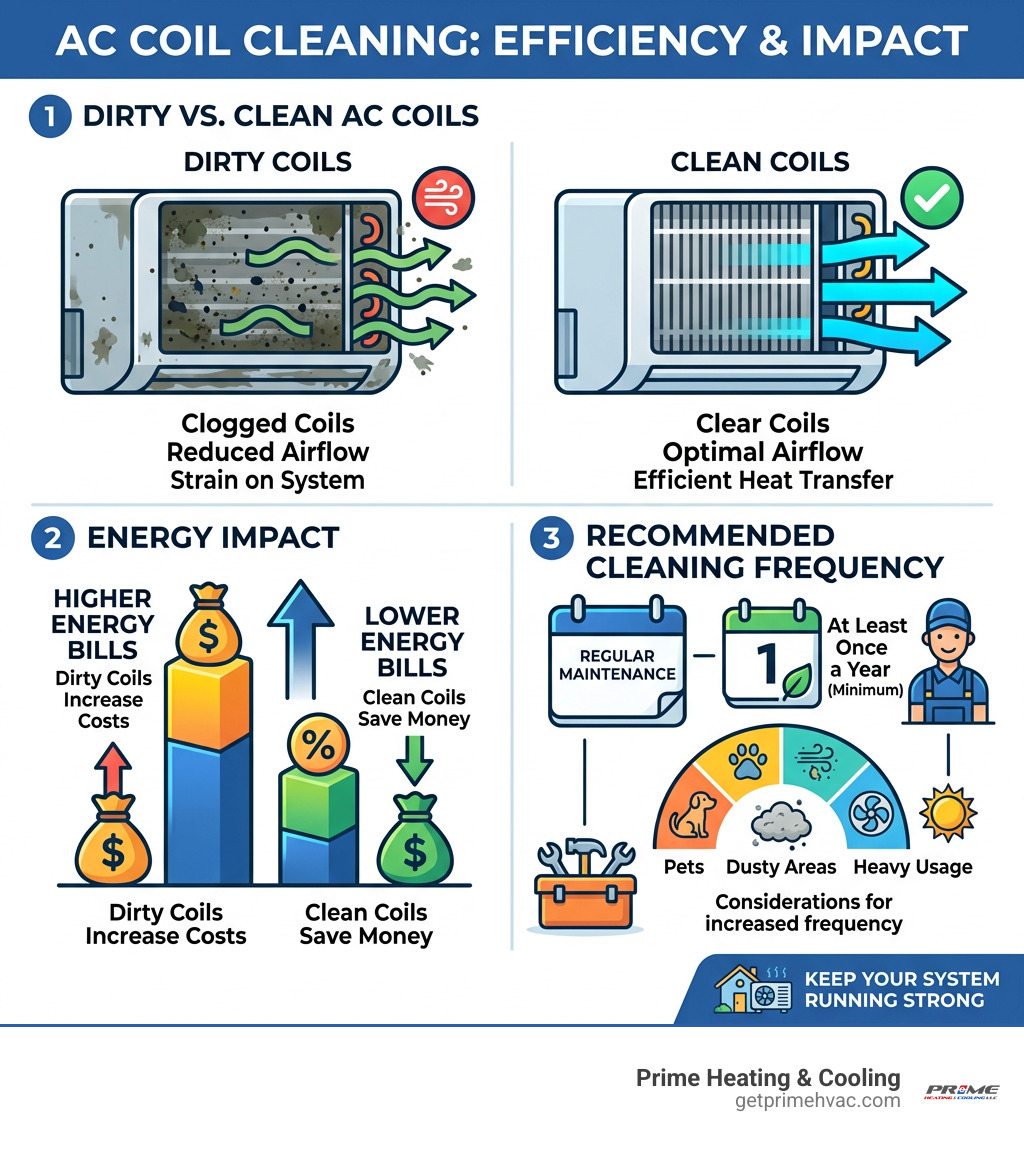
- Why it matters: Dirty coils force your system to work harder, which drives up energy bills and shortens your AC’s lifespan
- How often: At least once a year for most homes — more often if you have pets, live in a dusty area, or run your system heavily
- DIY or pro? Basic cleaning is doable for most homeowners. But if there’s ice buildup, refrigerant leaks, or heavy corrosion, call a professional
- Cost of skipping it: Evaporator coil replacement averages around $1,300 — far more than the cost of routine maintenance
Think about it this way: dirty coils are like a clogged coffee filter. The machine still runs, but nothing flows the way it should. Your AC works overtime, your home stays warmer than it should, and your electricity bill creeps up — all because of a layer of grime you can’t even see.
I’m Tyler Steiner, founder and CEO of Prime Heating & Cooling, and after years of hands-on work in residential and commercial HVAC systems across New England, I’ve seen how consistent AC coil cleaning prevents costly breakdowns and keeps systems running at peak efficiency. In this guide, I’ll walk you through everything you need to know to do it right.
AC coil cleaning terms to know:
The Essentials of AC Coil Cleaning
To understand why AC coil cleaning is so vital, we first need to look at what these coils actually do. Your air conditioner doesn’t “create” cold air; it removes heat from your home and dumps it outside. This magic happens via two main sets of coils.
Evaporator Coils vs. Condenser Coils
Every standard split-system central air conditioner has an indoor component and an outdoor component.
- Evaporator Coils (Indoor): These are located inside your home, usually tucked away in the air handler or sitting on top of your furnace. Their job is to absorb heat from your indoor air. As the warm air from your rooms blows over these cold coils, the refrigerant inside the coils soaks up the heat, turning from a liquid into a gas.
- Condenser Coils (Outdoor): These are located in that large metal box sitting in your yard or on your patio. Once the refrigerant has “grabbed” the heat from inside, it travels to these outdoor coils. Here, a large fan blows outdoor air across the coils to release that heat into the environment.
| Feature | Evaporator Coils | Condenser Coils |
|---|---|---|
| Location | Indoor (Air Handler/Furnace) | Outdoor (Condenser Unit) |
| Primary Function | Absorbs heat from indoor air | Releases heat to the outdoors |
| Common Debris | Dust, pet hair, mold, lint | Grass clippings, leaves, pollen, dirt |
| Cleaning Method | No-rinse foaming sprays/Vacuum | Water hose/Heavy-duty cleaners |
Why Regular AC Coil Cleaning Matters
Living in Rhode Island, we deal with everything from humid beach salt air in Warwick to heavy pollen seasons in Scituate. When your coils get coated in “gunk,” it creates a thermal barrier. This barrier prevents the refrigerant from effectively swapping heat with the air.
- Slash Energy Bills: According to Energy Star, dirty coils lead to higher utility bills and heat absorption issues. When the heat exchange is inefficient, your system has to run longer cycles to reach the temperature set on your thermostat.
- Extend System Lifespan: The importance of regular AC maintenance cannot be overstated. A dirty system strains the compressor—the “heart” of your AC. Compressors are incredibly expensive to replace; keeping coils clean is the best way to protect that investment.
- Improve Air Quality & Prevent Mold: Your evaporator coil is a damp environment because it pulls moisture out of the air (dehumidification). If it’s covered in dust, that dust becomes food for mold and bacteria. Clean coils mean cleaner air for your family.
- Avoid Costly Repairs: Following the top 5 AC maintenance tips helps you spot small issues before they become “I-need-a-new-unit” issues.
Signs Your Unit Needs Attention
How do you know it’s time for AC coil cleaning? Your unit will usually try to tell you something is wrong.
- Ice Formation: If you see ice on the indoor coils or the copper lines outside, it’s a major red flag. This often happens because dirt has blocked airflow so much that the coil temperature drops below freezing. Check out our guide on frozen evaporator coil causes to learn how to defrost safely.
- Reduced Airflow: If the air coming out of your vents feels “weak,” the coils might be so clogged that air literally can’t pass through the fins.
- Unusual Noises: Hissing or whistling can indicate air struggling to move through debris. These are common AC problems that often start with simple dirt.
- The “Never-Ending” Cycle: If your AC seems to run 24/7 but the house never feels truly cool, the coils are likely too dirty to dump heat effectively.
- Visible Dirt: If you pull the panel and the coils look “fuzzy” or gray instead of shiny silver, it’s time to clean.
Choosing the Right AC Coil Cleaning Supplies
Before you start, you need the right gear. Using the wrong chemicals can actually corrode the delicate aluminum fins.
- Foaming Cleaners: These are great for “lifting” dirt out from deep within the fins. As the foam expands, it pushes debris to the surface.
- Non-Foaming Cleaners: Better for lighter dust or when you want a quick “no-rinse” application on indoor coils.
- Fin Combs: These specialized tools help straighten bent aluminum fins, which is crucial for maintaining airflow.
- Soft Brushes: Never use a wire brush! Use a soft-bristled nylon brush to whisk away surface dust.
- Safety Gear: Gloves and goggles are a must. Some commercial cleaners can be quite caustic.
- Household Alternatives: For light cleaning, a mixture of mild dish soap and water—or even Simple Green—can work for outdoor units. However, for heavy grease or indoor mold, a dedicated HVAC cleaner is best.
The role of air filters is to keep these coils clean. If you find your coils are constantly filthy, you might need to change your filters more often.
Step-by-Step Guide to Cleaning Your Coils
Ready to get your hands dirty so your air stays clean? Follow this guide to perform a DIY AC coil cleaning.
Safety First: The Golden Rule
Always turn off the power at the thermostat AND the circuit breaker (or the outdoor disconnect box) before touching your AC unit. Mixing water, metal, and high-voltage electricity is a recipe for disaster.
How to Clean Indoor Evaporator Coils
Cleaning the indoor coils is a bit more delicate because you’re working inside your home.
- Access the Coils: You’ll need to remove the access panel on your indoor air handler. This usually involves removing a few screws.
- Inspect for Leaks: While you’re in there, look for any oily residue, which could indicate a refrigerant leak. If you see water pooling where it shouldn’t, read about how to stop the drip: evaporator coil leaks.
- Dust and Vacuum: Use a soft brush to gently whisk away surface dust. Use a vacuum with a brush attachment to suck up the loose debris. Be extremely careful not to bend the fins.
- Apply No-Rinse Spray: Most DIYers should use a “no-rinse” foaming evaporator coil cleaner. Spray it thoroughly onto the coils. As the AC runs later, the condensation will naturally wash the cleaner and the dirt into the drain pan.
- Clean the Drip Pan: Dirt from the coils often ends up in the pan, which can clog the drain. Wipe it out and ensure the drain line is clear. This is a key part of evaporator coil repair and prevention.
- Check the Filter: Since you’re already there, perform an AC filter replacement to ensure your freshly cleaned coils stay that way.
How to Clean Outdoor Condenser Coils
Outdoor units take a beating from the elements. In places like Providence or Warwick, they can get caked in salt, soot, and grass.
- Clear the Area: Remove any leaves, tall grass, or “cottonwood” fuzz from around the base of the unit.
- Remove the Outer Case: Depending on your model, you may need to unscrew the protective grille to get better access to the coils.
- Dry Brush: Use a stiff (but not wire) brush to remove the “blanket” of dirt on the outside.
- Wet and Spray: Wet the coils with a garden hose. Apply a dedicated outdoor AC coil cleaning solution. Let it sit for the recommended time (usually 5-10 minutes) until it foams up.
- Rinse Thoroughly: Use a garden hose with a gentle spray. Do NOT use a pressure washer. A pressure washer will flatten the aluminum fins like paper, ruining the unit. Rinse from the inside out if possible, or at a 45-degree downward angle.
- Straighten Fins: If you see any smashed or bent areas, use your fin comb to gently “comb” them back into place. This is a vital step for condenser coil repair.
- Reassemble and Test: Put the covers back on, restore power, and let the unit run. You should notice cooler air and a quieter cycle almost immediately.
For a more visual walkthrough, you can check out this How to Clean AC Coils: A Step-by-Step Guide.
When to Call a Professional
While DIY AC coil cleaning is great for annual maintenance, some jobs require the pros at Prime Heating & Cooling. We’ve been serving Rhode Island—from Lincoln to East Greenwich—for over 20 years, and we know when a coil needs more than just a spray.
Call us if:
- The coils are “impacted”: If the dirt is so deep that a hose won’t move it, we use specialized high-volume, low-pressure equipment to deep-clean without damage.
- You suspect a leak: If your AC isn’t cooling even after cleaning, you might have a refrigerant leak.
- The unit is in a hard-to-reach spot: Don’t risk a fall from a roof or a cramped attic.
- You want a total system health check: During a professional AC tune-up, we don’t just clean coils; we check electrical connections, refrigerant levels, and motor health.
Professional cleaning usually costs between $100 and $400, but considering that a new evaporator coil can cost $1,300 or more, it’s the smartest money you’ll spend on your home this year.
If you’re in North Providence, Smithfield, or anywhere in our RI service area, we’re here to help. Check out More info about HVAC services in RI to see how we can keep your home comfortable all year long.
Don’t let a little bit of Rhode Island dust steal your summer comfort. Grab a brush, or grab the phone—either way, your AC coils will thank you!


