
Why Cold Climate Heat Pumps Are Revolutionizing Winter Heating
Cold climate heat pumps are changing the way New England homeowners heat their homes—even when temperatures plunge well below zero. Unlike traditional heat pumps that struggle once the mercury drops, today’s cold climate models use advanced technology to extract warmth from frigid outdoor air and deliver it efficiently indoors.
Quick Answer: A cold climate heat pump is a heating and cooling system designed to operate efficiently in temperatures as low as -22°F to -30°F. Key features include:
- Variable-speed compressors that maintain capacity in extreme cold
- Vapor injection technology for enhanced performance below freezing
- Efficiency ratings up to 3 times higher than oil furnaces
- Dual functionality for year-round heating and cooling
- Energy savings of up to 75% compared to electric resistance heating
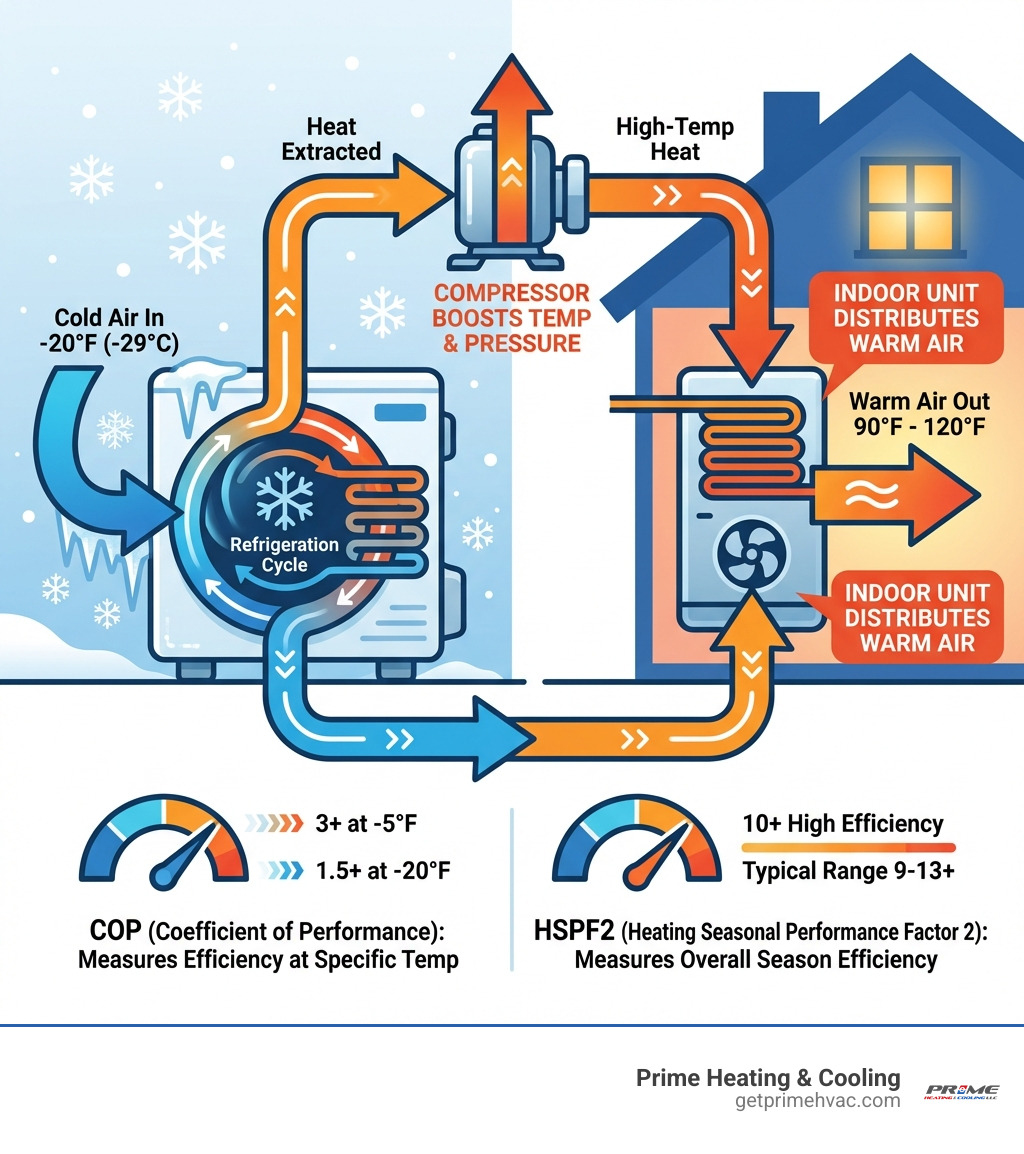
Cold climate heat pumps work because even freezing air contains thermal energy. At -18°C (-0.4°F), outdoor air still holds about 85% of the heat it contained at room temperature. The system’s refrigeration cycle captures this heat, concentrates it through compression, and transfers it indoors—essentially running your air conditioner in reverse.
Modern cold climate units maintain 100% heating capacity at temperatures where older models would fail. They achieve this through technologies like enhanced vapor injection, which boosts refrigerant flow when outdoor temperatures drop, and inverter-driven compressors that adjust speed dynamically to match your home’s heating demand.
The shift toward these systems isn’t just about comfort—it’s about energy independence and cost savings. Homeowners switching from oil or propane heating can see dramatic reductions in annual heating costs, especially as fossil fuel prices fluctuate. Meanwhile, those replacing electric baseboard heat often cut their electricity consumption by more than half.
For Rhode Island and Massachusetts homeowners, cold climate heat pumps represent a practical solution to one of winter’s biggest challenges: staying warm without breaking the bank. They’re eligible for substantial federal tax credits and local utility rebates, making the upfront investment more accessible than ever.
I’m Tyler Steiner, and after founding Prime Heating & Cooling and serving New England homeowners for years, I’ve seen how cold climate heat pump technology has evolved to handle our harsh winters while delivering real savings on energy bills. Throughout this guide, we’ll break down everything you need to know—from how these systems defy physics to extract heat from sub-zero air, to choosing the right configuration for your home, to maximizing performance when winter hits hardest.
Must-know cold climate heat pump terms:
How a Cold Climate Heat Pump Defies the Deep Freeze
To the average person, the idea of pulling “heat” out of air that feels like a freezer seems impossible. However, physics tells a different story. As we’ve noted, air at -18°C still contains a massive amount of thermal energy. A cold climate heat pump (CCHP) is engineered to tap into that energy using specialized components that traditional units simply don’t have.
One of the most critical innovations is the inverter-driven compressor. Traditional compressors are either “on” or “off,” which is about as efficient as driving a car by flooring the gas and then slamming on the brakes. Inverter technology allows the compressor to vary its speed precisely, running at 10% capacity on a mild autumn day or ramping up to 100% during a Providence blizzard.

Furthermore, many top-tier units utilize flash injection or enhanced vapor injection. This process injects a small amount of refrigerant vapor into the compressor during the compression cycle. This cools the compressor, allowing it to work harder and move more refrigerant without overheating, which is exactly what’s needed when the ambient temperature drops toward -22°F. According to scientific research on cold climate air-source heat pumps, these advancements allow systems to maintain high capacity even when the weather is brutal.
The Science of Extracting Heat from Sub-Zero Air
The magic happens within the refrigerant. These systems use refrigerants with incredibly low boiling points. When this liquid refrigerant passes through the outdoor heat exchanger, even “cold” outdoor air is warm enough to make the refrigerant boil and turn into a gas.
Once it’s a gas, the compressor squeezes it. If you’ve ever used a bicycle pump, you know that compressing air makes the pump get hot. The heat pump does this on a massive scale, concentrating that captured thermal energy until it reaches temperatures high enough to warm your home. This process is so effective that even at -18°C, where there is still 85% heat content relative to room temperature, the system can keep you cozy.
Efficiency Ratings: COP, HSPF2, and SEER2
When we talk about how “good” a cold climate heat pump is, we use three main metrics:
- COP (Coefficient of Performance): This is a real-time snapshot of efficiency. If a unit has a COP of 3.0, it is producing 3 units of heat for every 1 unit of electricity it consumes. For comparison, electric baseboard heaters have a COP of 1.0. Even in extreme cold, many CCHPs maintain a COP above 1.75.
- HSPF2 (Heating Seasonal Performance Factor 2): This measures heating efficiency over an entire season. The higher the number, the better. Most ENERGY STAR cold climate units require an HSPF2 of 8.1 or higher.
- SEER2 (Seasonal Energy Efficiency Ratio 2): While we focus on winter, these units are also world-class air conditioners. Understanding SEER Ratings is vital because a high SEER2 (often 20+) means your summer cooling bills will plummet alongside your winter heating costs.
By switching to a high-efficiency system, homeowners can achieve up to a 75% electricity reduction compared to electric resistance heating.
Choosing the Right Cold Climate Heat Pump for Your Home
Selecting a system isn’t as simple as picking a box off a shelf. In Rhode Island, we have a diverse range of homes, from historic colonials in Providence to modern builds in Warwick. Each requires a tailored approach.
We always start with a Manual J calculation. This is a professional load calculation that accounts for your home’s square footage, window types, insulation levels, and even the direction your house faces. Once we know the “load,” we use Manual S to select the specific equipment that matches those needs. This ensures the system isn’t just powerful enough for the coldest night, but also efficient enough for a mild afternoon. We focus on Energy Efficient Heating and Cooling Systems to ensure long-term satisfaction.
Ducted vs. Ductless Configurations
Depending on your existing setup, you’ll choose between two main configurations:
- Centrally Ducted Systems: If your home already has ductwork from a furnace or older AC, we can often install a central cold climate heat pump that uses those same vents. It’s a seamless transition that provides whole-home comfort.
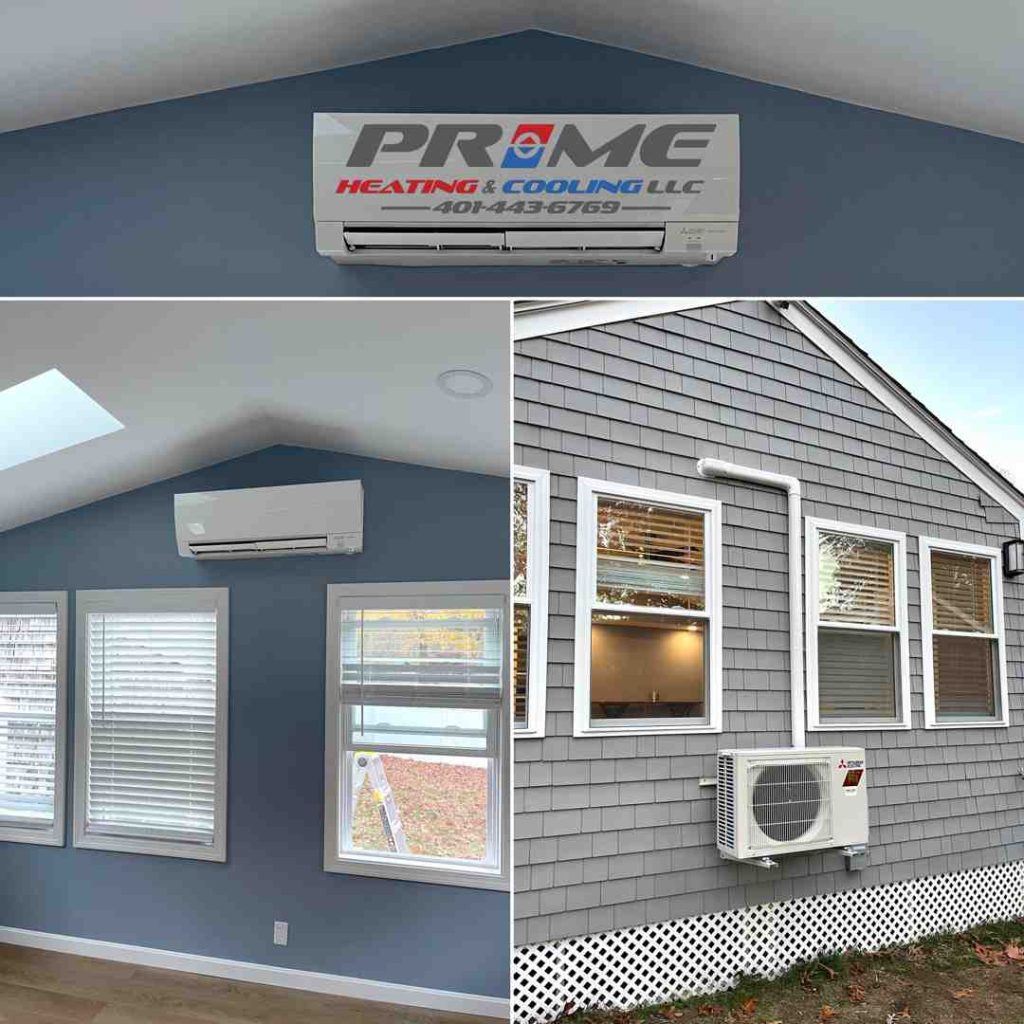
- Ductless Mini-Splits: Perfect for homes with boilers or baseboard heat that lack ducts. These involve an outdoor unit connected to one or more indoor “heads” mounted on the wall or ceiling. Ductless Mini-Split Heat Pump Installation allows for “zoned comfort,” meaning you can keep the bedroom cool and the living room warm without wasting energy on empty rooms.
Sizing Your Cold Climate Heat Pump for Peak Performance
In the HVAC world, bigger is not always better. An oversized unit will “short-cycle,” turning on and off rapidly, which wears out the compressor and fails to dehumidify the air. Conversely, an undersized unit won’t keep up when a polar vortex hits.
The goal is to find the balance point—the outdoor temperature where the heat pump’s capacity perfectly matches your home’s heat loss. For a cold climate heat pump, we often size more toward the heating load than the cooling load. According to the Guide to Sizing and Selecting ASHPs in Cold Climates, correctly matching these capacities is the secret to maximum seasonal efficiency.
Hybrid and Dual-Fuel Systems
For some homeowners, the “peace of mind” of a backup is essential. A dual-fuel system (or hybrid system) pairs a cold climate heat pump with a gas or propane furnace.
In this setup, the heat pump handles the heating about 85-90% of the time. When temperatures drop to an extreme “switchover” point (often around 0°F or 5°F), the system automatically toggles to the furnace. This provides a safety net and can be the most cost-effective way to transition away from fossil fuels in older, draftier homes. Check out The Ultimate Guide to Choosing a Heating Replacement System for more on these versatile setups.
Installation Costs and Financial Incentives
Let’s talk about the elephant in the room: the upfront cost. Yes, a cold climate heat pump is a sophisticated piece of technology, and the initial investment is higher than a standard furnace. However, the math changes quickly when you look at the incentives and operational savings.
In Rhode Island, we are lucky to have some of the best support programs in the country. When you ask, How Can I Lower My Heating Bills During a Rhode Island Winter?, the answer almost always starts with incentives.
Rebates and Tax Credits
- Federal Tax Credits: Under the Inflation Reduction Act, homeowners can claim a tax credit of 30% of the project cost, capped at $2,000 per year for heat pumps.
- Local Utility Rebates: Programs like Mass Save (for our neighbors) and Rhode Island utility programs offer massive rebates. In some cases, whole-home heat pump conversions can qualify for rebates up to $10,000.
- DSIRE Database: You can find a comprehensive list of all local subsidies at the Database of State Incentives for Renewables & Efficiency.
Long-Term ROI and Energy Savings
The “payback period” for these systems is shrinking. As oil and propane prices remain volatile, the steady efficiency of electricity (especially when paired with solar) becomes a financial anchor. Beyond the fuel savings, these systems increase property value and improve indoor air quality by eliminating onsite combustion. Pairing your new system with Smart Thermostats Save You Money by optimizing run times when you aren’t home, further accelerating your return on investment.
Maximizing Performance in Extreme Winters
Once your system is installed, a little bit of “winter IQ” goes a long way. Unlike a furnace that blasts hot air intermittently, a heat pump is designed to provide a steady, gentle flow of warmth.
Essential Maintenance for Longevity
To keep your cold climate heat pump running at peak efficiency, maintenance is non-negotiable.
- Snow Clearance: Ensure the outdoor unit isn’t buried. It needs airflow to “breathe” and extract heat. We recommend installing units on a stand (a “snow leg”) to keep them above the typical snow line.
- Filter Changes: Check your indoor filters every 1-3 months. A clogged filter restricts airflow, forcing the system to work harder and increasing your bill.
- Annual Inspections: We can’t stress The Importance of HVAC Tune-Ups for Rhode Island Winters enough. A professional check ensures refrigerant levels are perfect and the defrost cycle is functioning correctly.
- Coil Cleaning: Keep the outdoor coils free of leaves and debris. Clean coils mean better heat transfer.
Overcoming Cold Weather Challenges
If your home is drafty, the heat pump will have to work overtime. Before installing a new system, we often recommend “weatherizing”—adding insulation to the attic and sealing gaps around windows and doors. This allows you to install a smaller, less expensive heat pump.
Another tip: Don’t “set back” the thermostat. With a furnace, it makes sense to drop the temp 10 degrees at night. With a heat pump, it’s better to “set it and forget it.” Because the system is variable-speed, it is most efficient when maintaining a steady temperature rather than trying to recover from a deep drop. For more tips on whole-home comfort, explore our HVAC Services: The Key to a Comfortable Environment and Energy Efficient HVAC Solutions.
Frequently Asked Questions about Cold Weather Heating
Do cold climate heat pumps really work in -20°F?
Yes! Modern units are specifically tested and rated to provide reliable heat at -20°F and even -30°F. While their efficiency (COP) drops as it gets colder, they still provide heat much more efficiently than electric resistance heaters or oil boilers.
Is a backup furnace necessary with a heat pump?
In many Rhode Island homes, a backup isn’t strictly necessary if the system is sized correctly. However, for older homes with poor insulation, a “dual-fuel” setup with a gas furnace backup provides an extra layer of security during extreme weather events.
How long do cold climate heat pump systems last?
With proper maintenance, you can expect a high-quality cold climate heat pump to last 15 to 20 years. The outdoor units are built with rust-resistant coatings to survive New England’s salt air and heavy snow.
Conclusion
The transition to a cold climate heat pump is one of the smartest moves a Rhode Island homeowner can make. You’re not just buying a new heater; you’re investing in a year-round comfort system that slashes your carbon footprint and protects you from rising fuel costs.
At Prime Heating & Cooling, we’ve spent two decades perfecting the art of HVAC in the Ocean State. From East Greenwich to Smithfield, and Warwick to Providence, our skilled technicians are available 24/7 to ensure your home stays a sanctuary, no matter what the weather looks like outside. Whether you’re ready for a full conversion or just want to explore your options, we’re here to help with reliable, energy-efficient solutions.
Ready to upgrade your home’s comfort? Heating Installation RI is just a call away. Let’s make this the last winter you worry about your heating bill.