
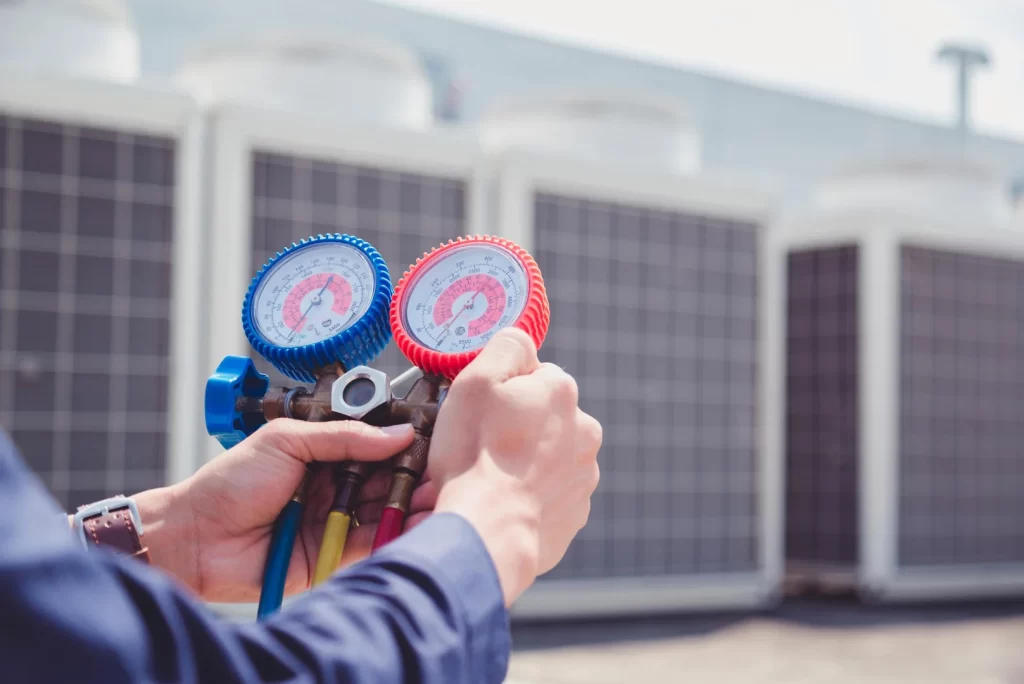
What an Evaporator Coil Does and Why HVAC Evaporator Coil Leak Problems Matter
An HVAC evaporator coil leak is one of the most common — and most disruptive — AC problems homeowners in Rhode Island face today. Here is a quick summary of what you need to know:
Quick Diagnosis Checklist: Signs of an Evaporator Coil Leak
- Your home takes much longer than usual to cool down
- Warm or weak air is coming from your vents
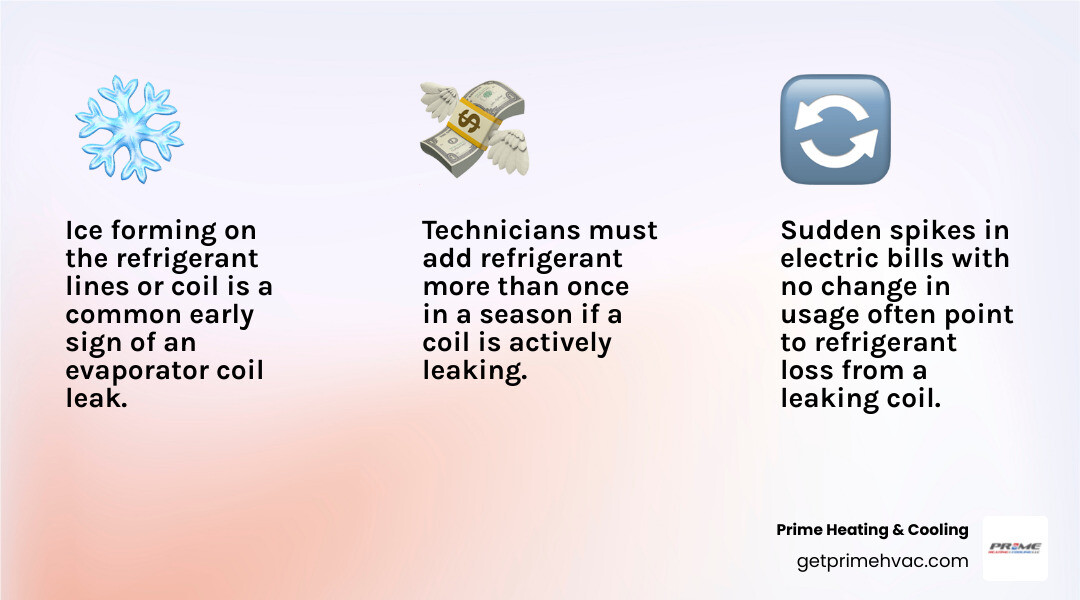
- Your electric bills have spiked without explanation
- You hear a hissing or bubbling sound near the air handler
- Ice is forming on the refrigerant line or coil
- You notice a faint sweet or chemical odor near the unit
- Your technician has had to add refrigerant more than once
If two or more of those apply to you, there is a good chance your evaporator coil is leaking refrigerant — and the problem will not fix itself.
Evaporator coils are, statistically, the first component to fail in 9 out of 10 refrigerant leak cases in modern AC systems. In New England, where humidity is high and homes are increasingly well-sealed, the conditions that cause coil corrosion are especially common — particularly in coastal communities like Newport, Narragansett, and South Kingstown.
The frustrating part? Many homeowners don’t catch the problem until their system has been slowly losing efficiency for months.
I’m Tyler Steiner, founder of Prime Heating & Cooling, and I’ve diagnosed and resolved countless HVAC evaporator coil leak cases across Rhode Island and Massachusetts throughout my HVAC career. In this guide, I’ll walk you through exactly how to identify, confirm, and address a leaking evaporator coil — so you can make a smart, informed decision fast.
Key terms for HVAC evaporator coil leak:
How the Evaporator Coil Works in an AC System
The evaporator coil sits inside your indoor unit, usually in the air handler or attached to the furnace. Its job is simple: absorb heat from the air inside your home.
Warm return air passes over the cold coil. Refrigerant inside the coil is under low pressure, so it absorbs heat quickly and changes state as part of the refrigerant cycle. Your blower then sends that cooled air back through the ductwork.
At the same time, the coil removes humidity. Moisture in the air condenses on the coil and drains away through the condensate system. That is why your AC cools and dehumidifies at once.
In a healthy system, we usually expect about a 15 to 20 degree temperature difference between return air and supply air. If that split drops, the system may be losing refrigerant, airflow, or both.

Why HVAC Evaporator Coil Leak Issues Are So Common Today
Modern coil leaks are often less about dramatic damage and more about tiny chemical attacks over time.
The biggest culprit is formicary corrosion. In plain English, that means a chemical reaction between copper, moisture, and volatile organic compounds, or VOCs. VOCs can come from everyday products like:
- Air fresheners
- Paints and stains
- Cleaning products
- Adhesives
- Foam insulation
- New furniture and cabinetry
In tightly sealed Rhode Island homes, especially in humid coastal areas, those airborne chemicals can concentrate indoors. Add condensation on the coil, and pinhole leaks can develop.
Other common contributors include:
- Aluminum or thin-wall coil materials
- Biofilm, mold, and organic buildup on the coil
- Vibration over time
- Poor airflow from dirty filters
- Lack of maintenance
- Physical damage during service or installation
That is why HVAC evaporator coil leak problems can show up surprisingly early. It is not unusual for systems under five years old to develop coil issues, and nearly every major manufacturer has faced complaints or legal scrutiny related to coil failures in recent years.
How to Diagnose an HVAC Evaporator Coil Leak at Home and What Causes It
Before we test anything professionally, homeowners can often spot the warning signs. The goal is not to handle refrigerant yourself. It is to recognize the pattern early and call for help before the compressor gets dragged into the mess.
If you are also seeing water around the system, read our guide on stopping an AC evaporator coil leak and our overview of air conditioner repair red flags.

| Symptom | Likely water drainage issue | Likely refrigerant leak |
|---|---|---|
| Water around indoor unit | Yes | Sometimes, if coil freezes then melts |
| Weak or warm airflow | Sometimes | Very common |
| Ice on coil or suction line | Possible | Very common |
| Hissing or bubbling sound | No | Common |
| High electric bills | Possible | Very common |
| Repeated refrigerant top-offs | No | Strong sign |
Top Signs of an HVAC Evaporator Coil Leak
Here are the clearest homeowner-level signs we look for:
- Weak airflow from vents
- Air that feels less cool than usual
- Long AC run times
- Uneven temperatures between rooms
- Frozen indoor coil or ice on the refrigerant line
- Hissing or bubbling noises near the air handler
- Higher electric bills without another clear cause
- Oily residue near the coil or line set
- The system needing refrigerant again after a prior visit
A frozen coil is especially important. Low refrigerant lowers pressure, which can make the coil temperature drop too far and ice over. If you want a deeper technical explanation of coil icing, this cooling coil guide is a useful reference.
One note that matters: water leaking from an AC is not the same thing as refrigerant leaking. Water usually points to condensation, icing, or drain problems. Refrigerant leaks are harder to see and need tools to confirm.
Common Causes of Evaporator Coil Leaks
The most common causes we see in Rhode Island homes include:
- High indoor VOC levels from household products
- High humidity, especially in coastal communities
- Corrosion on copper tubing
- Dirt and biofilm buildup on the coil
- Dirty air filters that reduce airflow
- Coil freezing and thawing cycles
- Vibration-related wear
- Normal age and metal fatigue
- Rare factory defects or physical damage
Dirty filters deserve a special mention. When airflow drops, the coil can get too cold. Repeated freezing, stress, and moisture problems can shorten coil life. That is one reason we strongly recommend regular maintenance. Our AC maintenance guide covers that in more detail.
How Pros Confirm an HVAC Evaporator Coil Leak
A real diagnosis should go beyond “it seems low.”
When we confirm a suspected HVAC evaporator coil leak, we typically use a mix of:
- Electronic leak detection
- Nitrogen pressure testing
- UV dye when appropriate
- Soap bubble testing at accessible joints
- System readings such as superheat and subcooling
- Visual inspection for oil residue or corrosion patterns
These tests help us answer two questions:
- Is refrigerant actually leaking?
- Is the evaporator coil truly the source?
That distinction matters, because a leak can also come from line sets, braze joints, Schrader cores, or the outdoor coil.
Homeowners should not try to handle refrigerant themselves. Federal rules require certified technicians for refrigerant recovery and charging, and topping off a leaking system without fixing the leak is usually just a temporary and expensive bandage. Our guide on why refrigerant leak repair matters explains why.
If a contractor recommends replacing the coil without clearly confirming the leak location, getting a second opinion is reasonable.
Repair, Replacement, Costs, and Prevention in Rhode Island
Once a leak is confirmed, the next question is usually the one nobody loves: repair or replace?
For related reading, see our pages on evaporator coil repair and AC coil cleaning.
Why Repairing a Leaking Coil Usually Is Not the Best Fix
In rare cases, a single accessible leak caused by obvious physical damage can be repaired. But most evaporator coil leaks are not like that.
More often, we are dealing with:
- Multiple microscopic pinholes
- Corrosion spread across the coil
- Thin metal that does not braze well
- Hard-to-reach tubing inside a compact cabinet
- Risk of damaging nearby factory joints during repair
Sealants are usually a bad idea. Stop-leak products can create bigger problems by clogging expansion valves, driers, and other components. That turns one problem into two, which is an impressive trick for all the wrong reasons.
In most cases, adding refrigerant without correcting the leak wastes money and leaves the system vulnerable to freezing, poor efficiency, and compressor damage. If your coil has already iced over, our frozen evaporator coil guide explains the risks.
Coil Replacement vs Air Handler vs Full System Replacement
The right choice depends on the age, condition, and refrigerant type of your system.
Here is how we generally think about it:
- If the system is fairly new and otherwise healthy, coil replacement may make sense.
- If the coil is out of warranty and the air handler is aging too, replacing the air handler can offer better long-term value.
- If the system is older, inefficient, or uses obsolete refrigerant, a full system replacement is often the smarter move.
A few important realities homeowners should know:
- Parts warranties often cover the coil only, not labor, refrigerant, shipping, or related materials.
- Replacement coils can be backordered for months in some cases.
- Older systems may not justify major indoor coil work.
- Matching issues between old and new components can affect efficiency and warranty coverage.
Repair-or-replace decision factors
- Age of the system
- Warranty status
- Refrigerant type
- Condition of the blower, furnace, or air handler
- Frequency of past repairs
- Energy efficiency of existing equipment
- Whether replacement parts are available
- How long you plan to stay in the home
If you are weighing broader system work, our complete AC repair guide and our Rhode Island AC repair service page can help you compare options.
How Rhode Island Homeowners Can Prevent Future Coil Leaks
No prevention plan is perfect, but you can absolutely reduce the odds of another HVAC evaporator coil leak.
We recommend:
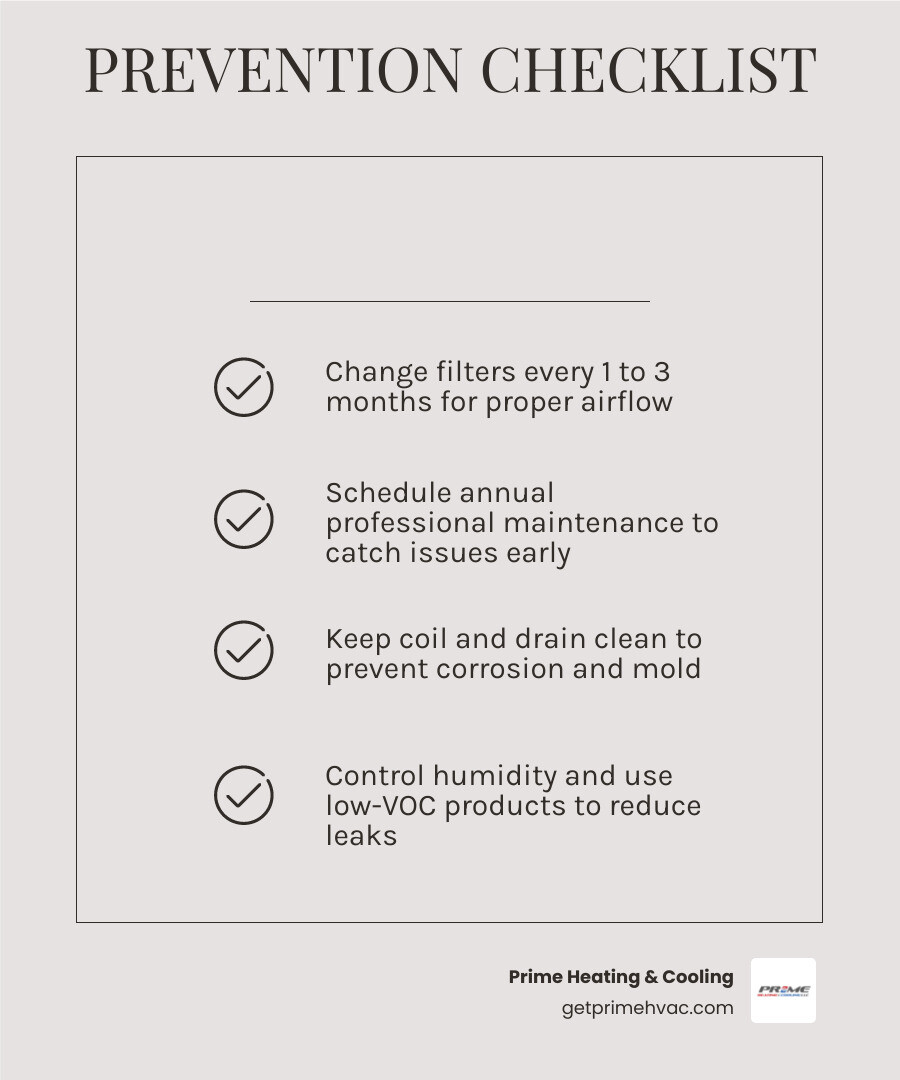
- Change filters on schedule, usually every 1 to 3 months
- Schedule annual professional maintenance
- Keep the evaporator coil clean
- Clear and inspect the condensate drain
- Control indoor humidity
- Use low-VOC paints, cleaners, and household products when possible
- Avoid storing chemicals near the air handler
- Improve ventilation with fresh air strategies or an ERV where appropriate
- Consider UV lights or air purification to reduce biofilm growth
In Rhode Island, coastal moisture can make humidity control especially important. Homes in places like Newport, Narragansett, Warwick, South Kingstown, and Providence often benefit from better ventilation and dehumidification strategies.
Routine maintenance matters because dirty coils, poor airflow, and drain problems all create the conditions that help leaks show up earlier.
At Prime Heating & Cooling, we help homeowners across Rhode Island diagnose cooling problems clearly, explain the real cause, and recommend the fix that makes the most sense for the system and the budget. If your AC is running nonstop, freezing up, or losing cooling power, do not wait for a small refrigerant leak to become a compressor replacement.
Need help now? Explore our Rhode Island AC repair services or read our full guide to air conditioning repair.